How to Choose a Die Prober in 2026?
Choosing a Die Prober in 2026 requires more than comparing advertised throughput or checking a feature list. Device designs, test requirements, and production volumes vary, so the right system depends on the work it must perform. A useful evaluation starts with practical details: die dimensions, wafer formats, probe-card compatibility, required alignment accuracy, and expected contact force. Fit matters most.
Throughput is important, but it should be assessed alongside repeatability and test conditions. Ask how the system handles temperature changes, automated loading, recipe setup, and data exchange with your existing equipment. Request a demonstration using representative wafers or test structures, and observe how operators set up a job, recover from a misalignment, and review results. Small delays add up. A specification sheet rarely shows every one.
Service access, software usability, training, and spare-part availability also affect long-term ownership. Compare the full operating cost, not only the purchase price, and ask suppliers to explain their assumptions. If possible, speak with users running similar devices and production volumes. Their feedback may reveal constraints that a polished demo misses. Still, no reference site can perfectly predict your own workflow. That deserves a second look.
This guide outlines the main criteria for selecting a Die Prober in 2026, from core capabilities to integration and support. The goal is not to identify one universally best machine. It is to help buyers ask clearer questions, verify performance against real test needs, and choose equipment that can adapt as those needs change.
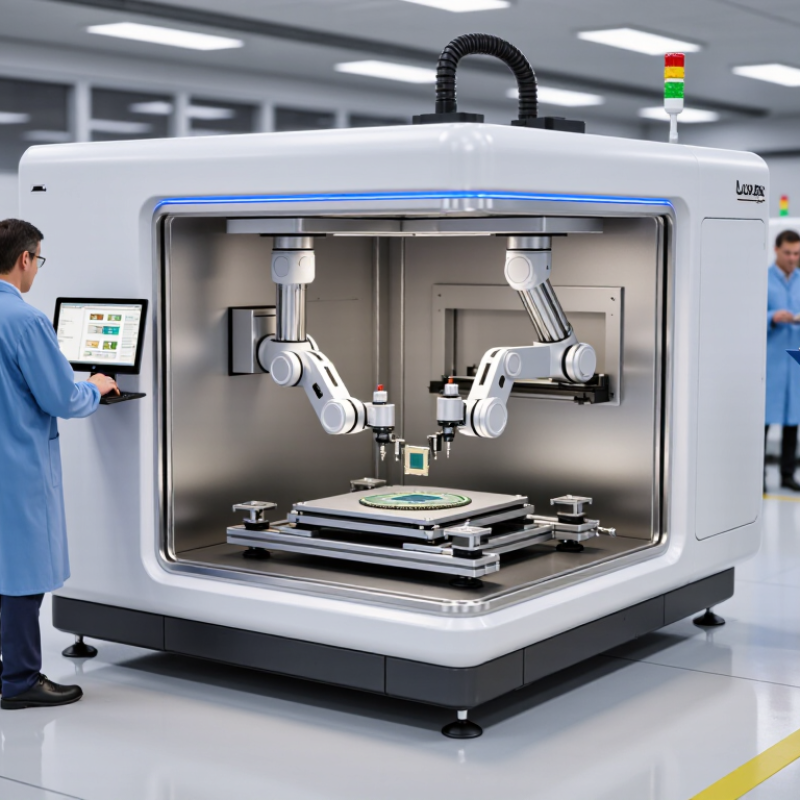
Understanding Die Probers and Their Role in Wafer Testing
A die prober contacts individual chips while they remain on a wafer, checking electrical performance before packaging. This step helps identify defective dies early and supports decisions about which chips move forward. Probe quality depends on more than contact accuracy. Temperature control, alignment, contact force, and repeatability all affect the readings. A slightly worn probe tip can create unstable results, even when the equipment appears to run normally.
SEMI’s 2024 300mm Fab Outlook projected global 300mm fab capacity would reach 9.6 million wafers per month by 2027. That growth puts pressure on test throughput, but speed alone is a poor selection metric. Compare contact stability, supported wafer sizes, thermal range, automation compatibility, and maintenance needs against your actual process. Ask for repeatability data across multiple wafers, not just a best-case demonstration. A neat spec sheet can still mislead. Small details matter.
Tips: Test with representative wafers and inspect contact marks under magnification. Track retest rates, setup time, and yield correlation during evaluation. If results shift after a temperature change, pause and investigate before treating the variation as normal. It is easy to overlook setup discipline, and that is worth questioning.
How to Choose a Die Prober in 2026: Wafer Size Matters
Nominal 200 mm and 300 mm wafer diameters correspond to ideal circular areas of approximately 314 cm² and 707 cm², respectively. When choosing a die prober, check that its wafer handling and chuck support your required wafer format. Usable test area is smaller than the ideal area because of edge exclusion and wafer features.
Defining Application, Wafer, and Throughput Requirements
Before comparing die probers, define the application at the level of the actual test. Are you checking electrical performance, screening known-good dies, or characterizing devices across temperature? Each task changes the required probe arrangement, alignment accuracy, and thermal capability. Write down the contact method and test conditions, too. Small details matter.
Wafer requirements should be equally specific. Record wafer diameter, thickness, material, and any warpage or edge-exclusion limits. Then note die dimensions, pad pitch, and whether the wafer is singulated, thinned, or still on its frame. A delicate wafer may need gentler handling and more careful chuck support. I have seen this overlooked. It can affect both setup time and contact consistency.
Throughput means more than stage speed. Estimate how many dies need testing, how many touchdowns each test requires, and how often operators must reload wafers. Separate ideal cycle time from realistic output, including alignment, probing, recipe changes, and retests. Ask vendors to demonstrate a representative wafer and test sequence, not just a best-case figure. There is some uncertainty here: early estimates are often optimistic. Track actual cycle times during evaluation, then compare them with your production target and staffing plan.
Comparing Probe Station Types and Core Specifications
How to Choose a Die Prober in 2026?
Comparing Probe Station Types and Core Specifications
A manual probe station suits occasional engineering checks and small sample counts. Semi-automatic systems help repeat positioning across wafers, while fully automatic platforms support higher-volume testing and recipe control. The right choice depends on throughput, die size, pad pitch, and how often operators need to change setups. SEMI reported that global semiconductor test-equipment sales grew 20% to $8.2 billion in 2024. That signals rising investment, but it does not make automation the best fit for every lab.
Compare positioning repeatability, chuck temperature range and stability, probe-force control, optical alignment, and vibration performance. Fine-pitch pads need accurate alignment and stable contact; thermal testing needs a chuck that holds temperature evenly. Ask suppliers for measured specifications under your actual setup, not just best-case figures. A small mismatch between probe geometry and pad layout can create intermittent contact. It happens.
Tips: Test representative dies before purchase. Record contact resistance and repeatability across several touchdowns. Check whether the software supports your workflows, and confirm service response times. One imperfect step: published specs rarely capture every lab’s vibration or operator variation, so keep a margin in your acceptance criteria. SEMI, 2025 Year-End Equipment Market Statistics.
Evaluating Automation, Software, and Compatibility
How to Choose a Die Prober in 2026?
Evaluating Automation, Software, and Compatibility
Choosing a die prober in 2026 means looking beyond peak throughput. Automation should handle wafer loading, alignment, probing, and unloading with minimal operator intervention. Watch a full shift, not just a polished demonstration. Does the system recover cleanly after a missed pick or contact failure? Small details matter. SEMI reported global semiconductor manufacturing equipment sales of $117.1 billion in 2024, up 10% year over year. This broad market figure signals investment, but it does not guarantee that a particular prober will suit your process.
Software deserves equal scrutiny. Check whether recipes, contact results, and alarms are traceable, exportable, and easy to review across lots. Ask operators to change a recipe and retrieve an earlier run; confusing screens can slow real work.
Compatibility is equally practical: confirm wafer sizes, die dimensions, probe-card formats, tester interfaces, and existing factory data systems. Request trials using your own wafers and probe cards, including edge dies and known difficult sites.
The International Federation of Robotics reported 4.28 million industrial robots operating in factories worldwide in 2023, underscoring automation’s expanding role, not proving any one workflow is effortless. A trade-off remains: greater automation may reduce handling, yet add integration work. That assumption can fail. Check recovery steps and maintenance access before purchase.
Assessing Total Cost, Support, and Long-Term Reliability
For “How to Choose a Die Prober in 2026,” compare total cost of ownership, not just the purchase quote. SEMI reported global semiconductor equipment sales of $106.3 billion in 2023, down 1.3% from 2022. That market-wide figure is not a die-prober price index, but it shows how equipment spending shifts with industry conditions. Ask suppliers to itemize installation, training, calibration, software, consumables, and service; then model costs over several years. A low initial price can look less attractive when a specialized stage or probe card takes weeks to replace. Small parts matter.
Support terms deserve a practical test. Request written response times, local technician coverage, spare-parts availability, and escalation procedures. During acceptance, track time to recover from common faults, not only peak throughput. Downtime is expensive. A prober that meets its specification on day one may still struggle with recipe changes, operator turnover, or frequent product transitions. Ask for service records or uptime data from comparable operating conditions, and clarify how uptime is calculated. Definitions vary. I’d be cautious about accepting a single headline reliability number without its measurement period and exclusions. Budget for preventive maintenance, too, and confirm which tasks your team can perform safely. A clear support plan and realistic lifecycle estimate often matter more than a small difference in quoted speed.





