How to Choose a Commercial EV Charger?
Choosing a Commercial Ev Charger is now a business decision, not merely an equipment purchase. The International Energy Agency reported in its Global EV Outlook 2024 that more than 14 million electric cars were sold worldwide in 2023. Public charging points also grew by about 40% that year. More vehicles mean greater pressure on workplaces, retail sites, hotels, fleets, and logistics facilities.
A suitable charger must match real operating conditions. Consider daily vehicle numbers, parking duration, electrical capacity, connector standards, payment systems, software integration, and weather exposure. A workplace may benefit from dependable AC charging during eight-hour shifts. A delivery depot may require high-power DC charging between routes. The fastest charger is not always the most practical choice. It can increase demand charges, installation costs, and grid stress. Small details matter, such as cable length, wheelchair access, lighting, and snow or rain protection.
The IEA estimates that public charging capacity must expand substantially by 2035 to support stated climate and transport policies. The U.S. Department of Energy’s Alternative Fuels Data Center also shows continuing growth in public charging infrastructure across the United States. However, reports use different definitions, regions, and measurement methods. Their figures should guide planning, not replace a site assessment. A reliable selection process combines published data with field experience from electricians, charge point operators, fleet managers, and drivers. A perfect charger does not exist. The best option balances charging speed, uptime, safety, maintenance, network capability, and long-term operating cost. This guide explains how to compare those factors before signing a purchase or installation contract.
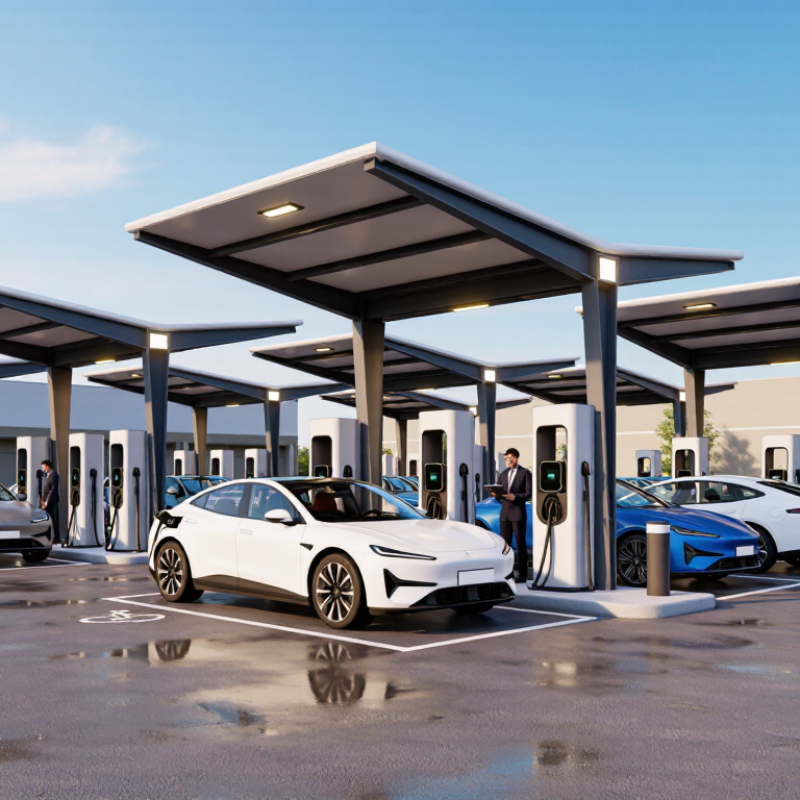
Define Charging Needs Based on Vehicle Types and Daily Usage
How to Choose a Commercial EV Charger?
The right commercial EV charger starts with the vehicles, not the charger’s advertised power. Delivery vans may need overnight charging, while taxis and service vehicles often return several times daily. Passenger cars used by employees can tolerate slower charging. Electric buses and heavy trucks require higher power, stronger cables, and suitable parking geometry. Review battery capacity, onboard charging limits, arrival times, and departure deadlines for each vehicle group.
Measure real daily energy use for at least two weeks. Record mileage, battery percentage, charging duration, and seasonal changes. A fleet traveling 180 miles daily may not need a 180-mile recharge if drivers return with usable energy. However, winter heating and heavy loads can increase consumption. Leave practical capacity for delays. Perfect schedules rarely exist.
Site conditions also shape the decision. Count available electrical capacity, cable distances, parking turnover, and space for maintenance. A shared charger may serve several vehicles, but simultaneous charging can slow every session. Load management helps, though it should not hide an undersized electrical system. Ask an electrician to verify service limits and protection requirements. I have seen projects focus on maximum output and overlook queueing, which creates driver frustration. Start with measured usage, then test the plan against busy days, not average days.
Compare Charger Power Levels, Connector Standards, and Charging Speeds
Choosing a commercial EV charger starts with the vehicles, not the charger cabinet. Review daily mileage, parking time, battery capacity, and peak arrival periods. A delivery van parked overnight may need a 7–22 kW AC charger. A taxi operating continuously may require a 50–150 kW DC charger. That matters.
Power ratings can be misleading. A 150 kW unit may deliver less when several vehicles share one electrical connection. Battery temperature, state of charge, cable limits, and vehicle acceptance rates also affect real charging speed. Speed is not constant. Charging usually slows near a full battery to protect the cells. I have seen site plans fail because they used maximum power as the daily average. Measuring actual charging sessions is wiser.
Connector standards require equal attention. AC installations commonly use Type 1 or Type 2 connectors, depending on the vehicle market. DC systems may use CCS or other regionally accepted standards. Check every vehicle in the planned fleet before ordering hardware. Adapters can add cost, handling steps, and compatibility concerns. They may also complicate maintenance. Select chargers with clear power-sharing controls, accurate energy records, and accessible service support. A qualified electrical professional should confirm capacity, protection systems, cable routing, and local installation requirements. The fastest charger is not always the most practical choice. Reliability often comes from matching charging speed to parking time, grid capacity, and real operating habits.
Evaluate Electrical Capacity, Site Layout, and Installation Requirements
Choosing a commercial EV charger starts with the building, not the charger catalog. Review service voltage, phase type, transformer rating, and spare panel capacity. A charger rated for 100 kW may require more site power than expected. Ask a licensed contractor or electrical engineer to complete a load calculation. Include HVAC, refrigeration, lighting, lifts, and seasonal demand. Peak demand matters. Smart load management can reduce upgrades, but it should not hide an undersized supply.
Walk the property with a scaled plan and tape measure. Check parking angles, cable reach, turning paths, drainage, bollards, and accessible routes. Keep equipment away from flood-prone areas and vehicle impact zones. Place chargers where drivers can connect without crossing traffic lanes. Leave room for switchgear, ventilation, maintenance access, and future expansion. Small oversights become expensive. I have seen layouts that fit every charger but left no safe space for technicians. The drawing is rarely perfect.
Installation planning should cover trench depth, conduit routes, grounding, disconnects, communications, permits, inspections, and utility coordination. Follow applicable electrical codes and utility requirements; assumptions need local verification. Confirm whether pavement can be opened and restored without disrupting business access. Document cable lengths and termination points before ordering materials. Buried utilities, weather, and delivery changes can force revisions. Build contingency into the schedule and budget. Before energizing, qualified personnel should test protection devices, charging output, emergency procedures, and network connectivity.
Calculate Total Costs, Maintenance Needs, and Future Expansion Options
How to Choose a Commercial EV Charger?
Calculate Total Costs, Maintenance Needs, and Future Expansion Options
A commercial charger costs more than its listed purchase price. Include installation, trenching, switchgear, permits, networking, payment processing, and commissioning. A site with an older electrical panel may require expensive upgrades. Utility demand charges can also exceed expected energy costs during busy periods. Request a five-year cost model, not just a hardware quote.
Maintenance affects uptime and customer trust. Review inspection schedules, software support, cable replacement, warranty coverage, and response times for service calls. Keep spare connectors and protective covers on site. Dust, standing water, vehicle impacts, and winter temperatures can shorten equipment life. A practical lesson is simple: the cheapest installation is not always the most reliable. I may still underestimate repair delays, especially when local technicians are limited.
Tips: Leave empty conduit for future chargers. Reserve panel capacity before construction begins. Ask for monthly energy and fault reports. Choose load management that balances charging without costly electrical expansion. Also measure actual usage after launch. Early assumptions can be wrong. A lightly used station may not justify rapid expansion, while a busy workplace may outgrow its original design within a year. Include accessible service space around each unit, and document cable lengths, breaker ratings, and network settings for future technicians.
How to Choose a Commercial EV Charger?
Representative 10-year planning costs per charging port in USD. The estimate includes charger hardware, installation, routine maintenance, and electrical capacity reserved for future expansion. Electricity, demand charges, permits, and incentives are excluded.
Lower-power AC charging generally has the lowest total cost and is suitable for long dwell times. DC fast charging requires higher electrical capacity and maintenance budgets, but it supports faster vehicle turnover. Designing spare conduit, switchgear capacity, and network space during the initial installation can reduce future expansion costs.





