


Why Choose the Right Coating Agent for Your Needs?

Choosing the right Coating Agent begins with understanding what the coated surface must do. A metal part exposed to moisture has different needs from a paper package that must resist scuffing. Even two plastics can respond differently to the same formulation. The details matter: surface energy, operating temperature, exposure time, and application method can all influence the result. Small differences show up fast.

A useful selection process starts with the substrate and the required performance. Consider adhesion, flexibility, appearance, drying time, and resistance to expected wear. Then check whether the agent suits the available equipment and production conditions. A coating that performs well in a laboratory may behave differently on a fast production line. That gap is easy to overlook. Product data sheets and supplier guidance can narrow the options, but a controlled trial on the actual material is more dependable than assumptions. Record the coating thickness, curing conditions, and visible defects, such as peeling at an edge or uneven gloss. These observations make comparisons clearer and help teams discuss results with suppliers.

There is rarely one perfect choice. A harder finish may sacrifice flexibility, while faster drying may complicate application. Requirements can also change as products move from prototype to routine production. Revisit the decision when materials, equipment, or use conditions change. Careful testing takes time, but it can prevent costly rework and disappointing performance. It is not a guarantee. It is a better basis for choosing.
Why Choose the Right Coating Agent for Your Needs?

Coating Agents: Core Functions, Chemistry, and Film-Formation

Why Choose the Right Coating Agent for Your Needs?

A coating agent does more than make paint spread smoothly. It helps pigments disperse, improves wetting, controls foam, and supports adhesion. The binder forms the film; additives help that film develop evenly. In water-based coatings, coalescing agents can soften polymer particles so they merge as water evaporates. In reactive systems, curing agents build a stronger network through chemical crosslinking. The choice depends on the surface, application method, drying conditions, and desired finish. A glossy panel and a porous concrete wall rarely need the same formulation.

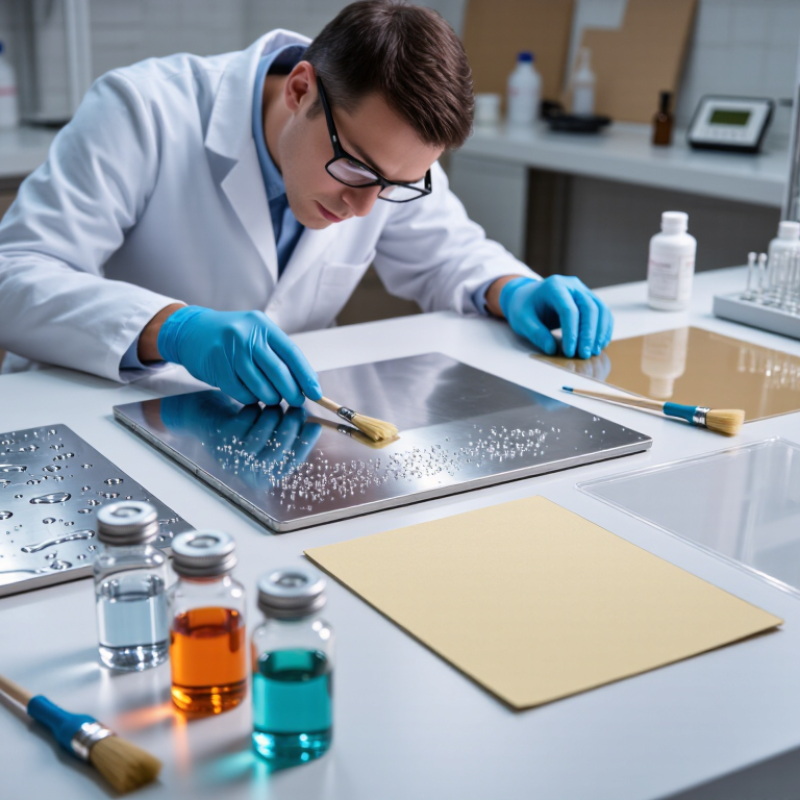
Film formation is visible in small details: a brush mark that levels, droplets that stop beading, or a dry edge that refuses to blend. ASTM D3359 rates coating adhesion using a tape test, with classifications from 0B to 5B; 5B indicates the strongest classification. That number is useful, but it does not measure every aspect of coating performance. This is where neat theory gets messy. A well-chosen agent can still underperform if the substrate is dusty or the film dries too quickly. Test the actual surface and application conditions, then compare adhesion, appearance, and drying behavior. A small trial panel often reveals more than a datasheet alone.

Why Choose the Right Coating Agent for Your Needs? - Coating Agents: Core Functions, Chemistry, and Film-Formation

Agent or component Typical chemistry Core function Role in film formation Common applications Selection considerations
Film-forming binder Acrylic, polyurethane, alkyd, epoxy, or other polymer resin Binds pigments and other ingredients; contributes adhesion, cohesion, and durability Forms the continuous polymer phase as water or solvent leaves, or as a chemical cure proceeds Architectural, industrial, wood, and protective coatings Match resin type to substrate, exposure, flexibility, chemical resistance, and application conditions
Surfactant or dispersant Anionic, nonionic, or polymeric surface-active materials Helps wet pigments and stabilize particles in the liquid coating Supports uniform particle distribution before application and reduces settling or flocculation Waterborne paints, pigment concentrates, and formulated coatings Check compatibility with the binder, pigment type, pH, and water sensitivity of the dried film
Wetting and flow additive Often silicone-based, fluorine-free surface-active, or polymeric additives Improves substrate wetting and helps the coating level during application Promotes smoother spreading and can reduce surface defects such as craters or uneven flow Spray, roll, brush, and high-gloss coatings Assess substrate surface energy and test carefully; excessive or incompatible additive may cause recoat or adhesion problems
Coalescent Low-volatility organic liquid used in some waterborne systems Temporarily softens polymer particles and supports their deformation and fusion Helps latex particles merge into a continuous film, especially when application temperatures are low Waterborne latex paints and coatings Consider minimum film-formation temperature, drying conditions, emissions requirements, and residual odor
Rheology modifier Cellulose ethers, associative polymers, clays, or other thickening materials Controls viscosity, flow, sag resistance, and suspension stability Influences how the wet layer is deposited and maintained before the film dries or cures Interior and exterior paints, textured coatings, and high-build systems Choose for the application method and desired shear behavior; verify compatibility and storage stability
Crosslinker or curing agent Chemistry varies; examples include isocyanate, epoxy, and amino-resin systems Creates chemical links between polymer chains or functional groups Builds a crosslinked network during curing, often improving hardness and resistance Industrial, floor, automotive, and chemical-resistant coatings Check mix ratio, pot life, cure temperature and humidity, safety requirements, and target resistance
Defoamer Silicone-based, mineral-oil-based, or polymeric formulations Controls foam created during manufacture, mixing, or application Helps prevent bubbles and pinholes from becoming defects in the dried or cured film Waterborne coatings, pigment dispersions, and high-speed processing Balance foam control against surface appearance, compatibility, and the risk of cratering
Corrosion inhibitor Examples include phosphate-based pigments and other passivating or barrier-forming materials Helps protect metal by reducing corrosion reactions or limiting access of water and ions Functions within the applied coating and, in some systems, at the metal–coating interface Primers and protective coatings for steel and other metals Consider metal type, surface preparation, exposure environment, regulatory limits, and the full coating system

Film formation depends on the complete formulation and application conditions. Validate performance with substrate-specific testing and the coating supplier's technical guidance.


Define the Substrate, Exposure Conditions, and Required Performance

Why Choose the Right Coating Agent for Your Needs?

Start by identifying the exact substrate, not just calling it “metal” or “plastic.” Steel, aluminum, and galvanized surfaces can respond differently to the same coating. Note existing finishes, porosity, surface oils, and preparation limits. A coating may look sound at first, then peel where dust or moisture remained. Small details matter.

Next, map the real exposure: direct sunlight, rain, salt spray, cleaning chemicals, abrasion, or changing temperatures. Include how often exposure occurs and how long surfaces stay wet. Then define the performance you need, such as adhesion, corrosion resistance, flexibility, cleanability, or a particular finish. These goals can conflict. A hard film may resist scratches but crack when a flexible part bends. It is tempting to specify every possible benefit, but that can add cost without solving the actual problem.

Check that the coating suits the substrate and application method, and review preparation and curing requirements. A small test area can reveal poor adhesion, uneven coverage, or slow curing before work expands. Test before scaling. Record the conditions and results; otherwise, comparisons become guesswork. Even a careful plan can miss a detail, especially when site conditions differ from the workshop. Use the test to revise the specification, not merely to confirm an early choice.

Why Choose the Right Coating Agent for Your Needs?

Define the substrate, exposure conditions, and required performance.

For steel structures in atmospheric environments, ISO 12944 durability categories describe the expected time to first major maintenance: Low (up to 7 years), Medium (7–15), High (15–25), and Very High (more than 25). The Very High bar is capped at 35 years for display only; the category has no upper limit. These categories are not a coating warranty or a guaranteed service life. Confirm the substrate and corrosivity category, then specify the performance target before selecting a coating system.

Compare Waterborne, Solventborne, Powder, and UV-Curable Options

Waterborne coatings use water as their main carrier and can suit indoor work where lower solvent odor matters. They clean up readily, but cool, damp conditions may slow drying and affect the finish. A test panel can reveal problems before a full run. Solventborne coatings often flow smoothly and dry reliably across varied shop conditions. Their stronger odor and need for careful ventilation may make application less convenient.

Powder coatings form a durable film when charged particles are heated and fused. They work well on metal parts that can withstand the oven cycle. Plastic components or heat-sensitive assemblies may not be suitable. Watch corners and recesses: electrostatic coverage can be uneven in deep, narrow areas. UV-curable coatings harden quickly under the correct light source, which can shorten handling time. But the light must reach the coated surface; shaded grooves may remain soft. Fast cure helps, but it does not fix poor coverage.

Compare more than cure speed. Consider the substrate, part shape, available equipment, production volume, and the finish you need. In a small trial, check film thickness, adhesion, appearance, and drying time—not just the first impression. A glossy panel can look convincing while hiding weak adhesion. Real shop conditions can also differ from a supplier’s ideal test setup.

Measure Adhesion Using ASTM D3359 (0B–5B) and ISO 2409 (0–5)

A coating can look smooth and still detach under stress. Adhesion testing helps reveal what the eye misses. ASTM D3359 uses a cross-cut or X-cut procedure, depending on the coating and test setup. Its ratings run from 0B to 5B. A 5B result means the cut edges remain intact; lower ratings indicate increasing coating removal.

ISO 2409 also uses cuts and adhesive tape, but its scale runs in the opposite direction: 0 is best, while 5 indicates the greatest flaking. Small difference. Before testing, allow the coating to cure as specified, then make clean, evenly spaced cuts through the film. Grid spacing depends on coating thickness and the test method. Press the tape consistently, remove it as directed, and inspect the exposed grid under good lighting.

Record the substrate, coating thickness, cure time, temperature, and test method with each result. These details make comparisons more meaningful across batches or surfaces. A rough panel or uneven cuts can skew the rating, so repeat the test when results seem surprising. Neither scale predicts every condition in service. Moisture, abrasion, and surface preparation can still change performance. A high rating is useful evidence, not a guarantee.

Check Product-Category VOC Limits Before Making a Final Selection

Why Choose the Right Coating Agent for Your Needs?

A coating’s VOC limit depends on its product category and intended use. Comparing one number across unrelated products can lead to a poor selection. The U.S. EPA’s architectural-coatings standards, listed in 40 CFR Part 59, set different limits by category: flat coatings are limited to 250 grams per liter, while nonflat coatings are limited to 380 grams per liter. These figures apply to specified U.S. federal categories, not every coating agent or market. Small differences matter.

Before choosing, match the product label and technical data sheet to the category used by the relevant rule. Confirm whether VOC content is reported after subtracting water and exempt compounds; otherwise, two figures may not be comparable. Then check applicable state or local requirements, which may set tighter limits. A coating for a metal railing, for example, may not fit an architectural wall-coating category. Check the test method.

VOC performance is only one part of the decision. Application temperature, drying time, substrate preparation, and film thickness affect real-world results. Ask suppliers for current test documentation, and compare products under the same conditions. A lower listed VOC value may look decisive, but it does not prove suitability or durability. I would still verify the category carefully; product descriptions can be vague, and that is easy to overlook.

Powder Coat Booths

For those larger-sized parts, or smaller quantity runs, we have 2 independent powder coat booths and ovens. The quality, durability and affordability of today’s powder coating finishes make this the process of choice for world-class companies.

Powder coating advantages over other forms of coating are many. Materials used in the Powder coating process can be metals and non-metals that come in a multitude of thicknesses, textures, colors, etc. Another of Powder coating’s biggest advantages over conventional coatings is its ability to create finishes in many different textures. Powder Coating Booths allow us the ability to apply these advantages to large products.

Wet Paint Line

Tri-State Fabricators runs a full-service conveyor line for painting. Wet painting can provide protection or decoration to many different part styles. From start to finish, every project is easier to undergo random and point-based inspection by our skilled painting team.

Advantages to our Wet Paint Line are these lines start with product prep and ends with a thorough inspection of a high quality finished product. Our ability to complete large and small projects with a superior finish and doing so in a timely and economical fashion. This passes along the savings in production to our customers. When powder coating ins not an option, our Wet Paint Line gets the job done right the first time.

Wet Paint Booths

When the parts get big and heavy we roll-out our custom paint racks and oversize booth. By utilizing our partnerships with all the major paint brands, we can match virtually any color with wet paint.

The advantages of having access to a Wet Paint Booth are many. Large projects of many different shapes can be loaded into the booth. The Wet Paint Booth offers an environment that is much more controlled than a typical parts painting operation.

Not only are they used because of their controlled environment, but they’re are also advantageous when it comes to applying paint to parts that are needed in industries that require specialty coatings such as medical, aerospace, etc.

Military CARC

Our military forces have some very high standards when it comes to the finish of their vehicles and equipment. From the first pre-treatment step to final coat, it takes a great deal of knowledge and experience to protect the men and women of our armed forces. They deserve only the best, and Tri-State Fabricators provides it.

All of our processes are closely monitored by our staff and management teams. Both of which are highly trained in the processes of metal fabrication and finishing. Tri-State Fabricators’ goal is to always fully satisfy each and every customer, including the military. We will always put a 110% into what we do.

Glass-Bead Blasting

Abrasive media blasting is an excellent way to remove old paint, rust, and increase the paint/powder adhesion. Glass beads produce a much smoother and brighter finish than angular abrasives; leaving the part clean yet without any dimensional change. Chemically inert and environmentally friendly, we can recycle our beads approximately 30 times; making them a more preferred method of metal cleaning or surface finishing.

Advantages to Glass Bead Blasting are many. Glass bead blast media is used when a project is needing rough surfaces need to become smooth for applications of coatings such as paint. It is typically used to clean paint and rust from a product surface without deforming the surface it is being used on. Overall, compared to many other blasting media, Glass Bead Blasting is a very economical choice and those savings are always passed on to our customers.

Part Washing

Tri-State Fabricators utilize a zinc phosphate wash to clean and etch the material to ensure the best paint adhesion possible. The unique design of our 3-stage wash system does the work like a 5-stage. From Cleaning and rinsing to conversion coating and post-treatment, Our Part Washing process is a complete service and works throughout the fabrication service and the finishing service.

Along with the previously mentioned benefits, Curing is a vital chemical reaction that leaves the product finish hard and relatively safe from mild abrasion and aggressive corrosion. This process can be done in more than one way; ambient air-dry or in curing ovens at temps that exceed 240°.

Burn-Off Oven

From fixing paint mistakes (someone else’s of course) to simply cleaning our paint line hooks, our burn-off oven is put to good use. After a quick burn-off, a little clean up, and a fresh coat of paint, your parts will look better than new.

Why does our Burn-Off Oven work so well? Because super heating the air around parts turns the materials into ashes. From paint and powder coatings to rubber and machining oils, high temps do the job without degrading the integrity of the part.

Masking

Masking is a vital part of producing high quality products. We have die-cut masking patterns to protect machined surfaces as well as a wide range of plugs and caps to protect threaded holes and bolts. We provide permanent and temporary masking.

Masking allows the selected sections of a product to be protected from a fabrication or finishing service. This can be with both chemicals when etching and tapes, paints when only finishing just a section of the product. Masking is great in aiding the customization process of a project.

Screen Printing

Screen printing is a photographic process that transfers artwork onto a porous nylon screen which allows colored ink to flow through the screen and be deposited on an aluminum or plastic component. We can generally have just about any design created onto a screen for your parts.

Some of the advantages of Screen Printing are, brand recognition for your business displaying on your products, assembly instructions, product warnings/hazards, etc. Tri-State Fabricators produces Screen Printing of the highest quality so you know it’s durable.

Metal Finishing

Metal Finishing is the art of treating the exterior portion of product, often metal but can also be made of other materials, so that the surface is clean and free of any debris. Then the process of applying coats or either paint of powder coat takes place. This coating process improves the quality of the product in both appearance and resistance to wear and corrosion.

Tri-State Fabricators, Inc., understands that a project typically isn’t complete until a high-quality finish has been added to your product. This is why our painting and powder coating teams continuously inspect the products throughout the Metal Finishing process.
