How to Choose the Right Carbon Steel Grade?

Choosing the right Carbon Steel grade is not a catalog exercise. It is a decision about loads, wear, corrosion, fabrication, and cost. A plate used for a welded frame faces different demands from a shaft exposed to repeated impact. The grade name alone cannot tell the whole story. Metallurgist George Krauss’s work on steel offers a useful principle: performance depends on composition, processing, and microstructure—not just the label. That distinction matters on the shop floor.

Start with the service conditions. Will the part carry a steady load, flex repeatedly, or meet abrasive material? Does it need welding, machining, or heat treatment? A carbon level that improves hardness may also make welding more demanding. That trade-off can be missed. Check the relevant material specification, mechanical-property requirements, and supplier documentation before comparing grades. Standards and product forms matter, too; a grade designation may not guarantee identical properties across every thickness or condition. Ask for traceable test documentation when the application requires it.

There is no universal winner. Not even close. The sensible choice balances performance with manufacturability, availability, and total cost. A cheaper grade may require extra processing; a stronger one may complicate forming. This guide will explain how to compare carbon content, strength, hardness, weldability, and common grade families. It will also flag a practical weakness in many selection decisions: teams sometimes choose by familiar name, then verify the fit too late. Better questions, asked early, can prevent that.
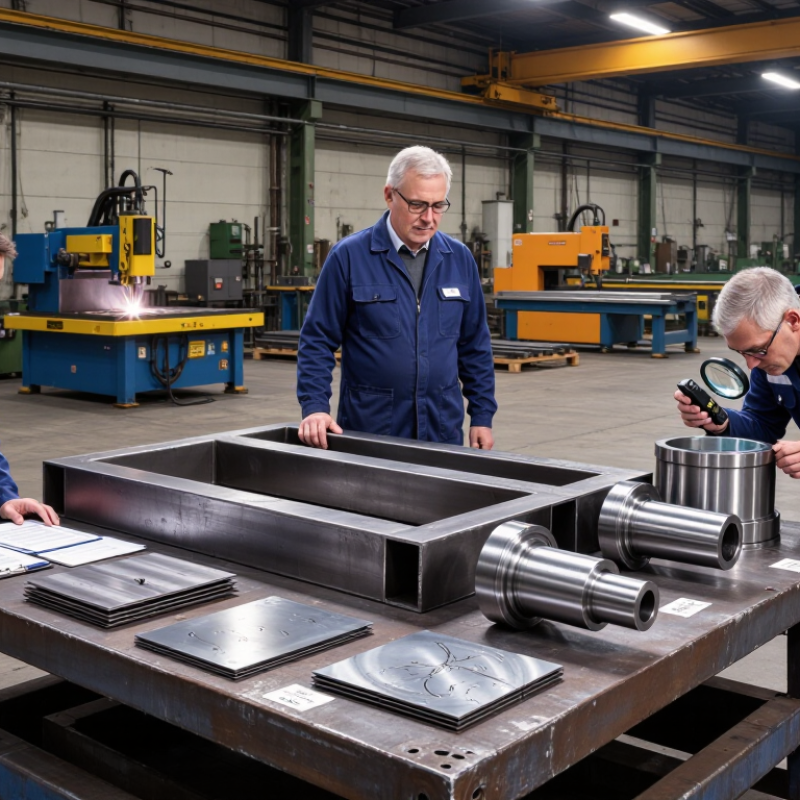
How to Choose the Right Carbon Steel Grade?

Understanding Carbon Steel Grades and Their Classification

Carbon steel grades describe composition and expected behavior, but no single naming system covers every product. A useful first distinction is carbon content. Low-carbon steel, often below about 0.25% carbon, is generally ductile and easier to form or weld. Medium-carbon grades offer greater strength and hardness, while high-carbon grades can achieve high hardness but are less forgiving. These ranges are general guides, not universal limits.

Grade labels depend on the standard and product form. SAE/AISI designations commonly use four-digit numbers; in many cases, the final digits indicate approximate carbon content. ASTM specifications, by contrast, often define requirements for a particular product, such as plate or pipe. European standards use different naming conventions. Check the applicable specification and its revision, rather than comparing numbers alone. A similar-looking label may not mean an equivalent grade.

Composition is only part of the picture. Heat treatment, thickness, rolling history, and welding conditions can change a component’s behavior. For example, a thick plate may cool differently from a thin sheet, even when both carry the same grade designation. Ask for a mill test certificate and verify the stated chemistry and mechanical properties. Small details matter. I have seen grade names treated like complete performance guarantees; that shortcut deserves a second look.

Defining the Mechanical and Performance Requirements

Choosing a carbon steel grade starts with the loads and conditions the part will actually face. Record the required yield strength, tensile strength, elongation, hardness, and impact toughness. These values describe different failure risks; a high tensile strength alone does not guarantee a part will resist denting or cracking. Not strength alone. ASTM A36/A36M specifies a minimum yield strength of 250 MPa and tensile strength of 400–550 MPa for many plate thicknesses. Check the applicable thickness and product-form requirements before using those figures. The standard’s data are a useful baseline, not a substitute for a project-specific specification.

Consider how the steel will be made and used. A bracket cut from plate may need easy drilling and welding; a formed panel needs reliable bend performance. Specify the delivery condition, thickness, service temperature, and any required impact test. Ask for a mill test report, then compare its measured chemistry and mechanical results with the purchase specification. ASTM A370 provides standard test methods for evaluating steel mechanical properties. Real production has variation, and I would not assume that two products with similar grade labels behave identically. One detail is easy to miss: coatings, heat treatment, and fabrication can change performance. Confirm those factors with the supplier and the engineer responsible for the component.

Comparing Carbon Content, Properties, and Common Grade Types

How to Choose the Right Carbon Steel Grade?
Comparing Carbon Content, Properties, and Common Grade Types

Carbon content strongly influences hardness, strength, ductility, and weldability. Low-carbon steels, often below 0.25% carbon, are generally easier to form and weld. SAE 1018 is a common example for machined parts and general fabrication. Medium-carbon grades, such as SAE 1045, can offer greater strength and wear resistance, but usually need more care during welding and heat treatment. High-carbon grades, including SAE 1095, can become very hard after heat treatment. They are less forgiving to form and may be more prone to cracking. That trade-off matters.

Choose based on the part’s actual job, not carbon content alone. A bracket that needs easy welding may suit a low-carbon grade; a shaft facing repeated loads may call for a stronger, heat-treated option. A thin coupon can reveal how a grade welds, while a supplier’s material certificate helps confirm chemistry and condition. Small detail, big difference. Grade names and carbon ranges can vary by standard, so check the governing specification before ordering. It is tempting to equate higher carbon with “better” steel, but that shortcut can lead to unnecessary machining difficulty or poor weld performance. Consider strength, forming, joining, heat treatment, and the finished part’s environment together.

How to Choose the Right Carbon Steel Grade? - Comparing Carbon Content, Properties, and Common Grade Types

Common Grade Carbon Content (wt.%) General Category Typical Characteristics Common Uses Selection Consideration
SAE/AISI 1010 0.08–0.13 Low carbon Soft and ductile; generally easy to form, machine, and weld. Lower strength and hardenability than higher-carbon grades. Sheet-metal parts, tubing, wire, and formed components Choose when formability and weldability matter more than high strength or through-hardening.
SAE/AISI 1020 0.18–0.23 Low carbon Good ductility and weldability; can gain surface hardness through carburizing, while its core remains relatively tough. Shafts, pins, lightly loaded machine parts, and carburized components A practical option for general-purpose parts, especially where a hard surface and tougher core are useful.
SAE/AISI 1045 0.43–0.50 Medium carbon Higher strength and wear resistance than low-carbon grades; responds to heat treatment. Welding generally requires more care. Gears, axles, shafts, bolts, and machine components Consider it when greater strength or heat-treatment response is needed, and welding is limited or properly controlled.
SAE/AISI 1060 0.55–0.65 High carbon Can achieve high hardness and strength after suitable heat treatment; less ductile and less readily welded than low-carbon steel. Springs, blades, and wear-resistant parts Suitable when hardness and wear resistance are priorities; design and processing should account for reduced ductility.
SAE/AISI 1095 0.90–1.03 High carbon Can attain high hardness and edge retention with appropriate heat treatment; comparatively low weldability and toughness can be a concern. Cutting blades, knives, and wear-resistant components Choose for applications requiring high hardness, with careful attention to heat treatment and fracture risk.

Note: Carbon ranges shown are typical SAE/AISI grade composition ranges. Actual mechanical properties depend on product form, section size, processing, and heat treatment; consult the applicable material specification and test data for design.

Evaluating Fabrication Methods and Service Conditions

Choosing a carbon steel grade starts with the fabrication route, not just the strength listed on a data sheet. For a formed bracket or enclosure, a low-carbon grade may bend cleanly with less springback and lower cracking risk. Check the required bend radius, sheet thickness, and direction of rolling. A tight bend can expose limits that a tensile-strength number will not show.

Welding changes the decision. Higher carbon content and thicker sections can increase hardening and cracking risks near the weld. Ask for the material’s chemistry and carbon equivalent, then match it to the joint design, welding process, and required preheat. Keep the steel dry and control heat input. Small details matter. A grade that machines well may still demand slower welding or extra inspection, adding time and cost.

Service conditions matter just as much. Consider load cycles, impact, temperature, abrasion, and exposure to moisture or chemicals. Carbon steel does not resist corrosion by itself, so coatings, drainage, and maintenance plans may be essential. For pressure or low-temperature service, verify the applicable specification and impact-test requirements rather than relying on a familiar grade name. One trade-off is easy to miss: selecting extra strength can complicate forming or welding without improving the part’s real service life. Tie the choice to the fabrication drawing and operating conditions, then confirm it with certified material records.

How to Choose the Right Carbon Steel Grade?

Carbon Content by Grade: A Fabrication and Service Consideration

These typical composition ranges show how carbon content varies among common grades. Higher-carbon steels can achieve greater hardness and strength through heat treatment, but are generally less weldable and less ductile. Consider the fabrication method, section thickness, required properties, and service conditions when selecting a grade; confirm the applicable specification for the material being purchased.


Verifying Standards, Availability, and Grade Suitability

Choosing carbon steel starts with the service conditions, not a grade name copied from an old drawing. Confirm the governing standard and its current revision, since similar grade labels can carry different limits. Check the required chemistry, tensile strength, hardness, and impact performance against the specification. Ask for a material test certificate that identifies the heat number and reported results. Details matter. If traceability is missing, pause before approving the material. A familiar designation alone is not proof of compliance.

Then confirm supply in the actual form and dimensions: plate, bar, tube, or coil. Stock can vary. A grade may be technically suitable yet unavailable in the thickness, finish, or quantity your project needs. Check lead times, minimum order quantities, cutting tolerances, and whether substitutions are permitted. Do not treat a supplier’s “equivalent” label as automatic approval; compare standards, chemistry, and mechanical limits line by line. For a welded frame, strength matters, but weldability and the fabrication procedure matter too. For a machined part, hardness and dimensional stability may deserve closer attention. In practice, one overlooked test requirement can delay approval. A neat comparison table may still hide a poor fit between service demands and available stock.

Powder Coat Booths

For those larger-sized parts, or smaller quantity runs, we have 2 independent powder coat booths and ovens. The quality, durability and affordability of today’s powder coating finishes make this the process of choice for world-class companies.

Powder coating advantages over other forms of coating are many. Materials used in the Powder coating process can be metals and non-metals that come in a multitude of thicknesses, textures, colors, etc. Another of Powder coating’s biggest advantages over conventional coatings is its ability to create finishes in many different textures. Powder Coating Booths allow us the ability to apply these advantages to large products.

Wet Paint Line

Tri-State Fabricators runs a full-service conveyor line for painting. Wet painting can provide protection or decoration to many different part styles. From start to finish, every project is easier to undergo random and point-based inspection by our skilled painting team.

Advantages to our Wet Paint Line are these lines start with product prep and ends with a thorough inspection of a high quality finished product. Our ability to complete large and small projects with a superior finish and doing so in a timely and economical fashion. This passes along the savings in production to our customers. When powder coating ins not an option, our Wet Paint Line gets the job done right the first time.

Wet Paint Booths

When the parts get big and heavy we roll-out our custom paint racks and oversize booth. By utilizing our partnerships with all the major paint brands, we can match virtually any color with wet paint.

The advantages of having access to a Wet Paint Booth are many. Large projects of many different shapes can be loaded into the booth. The Wet Paint Booth offers an environment that is much more controlled than a typical parts painting operation.

Not only are they used because of their controlled environment, but they’re are also advantageous when it comes to applying paint to parts that are needed in industries that require specialty coatings such as medical, aerospace, etc.

Military CARC

Our military forces have some very high standards when it comes to the finish of their vehicles and equipment. From the first pre-treatment step to final coat, it takes a great deal of knowledge and experience to protect the men and women of our armed forces. They deserve only the best, and Tri-State Fabricators provides it.

All of our processes are closely monitored by our staff and management teams. Both of which are highly trained in the processes of metal fabrication and finishing. Tri-State Fabricators’ goal is to always fully satisfy each and every customer, including the military. We will always put a 110% into what we do.

Glass-Bead Blasting

Abrasive media blasting is an excellent way to remove old paint, rust, and increase the paint/powder adhesion. Glass beads produce a much smoother and brighter finish than angular abrasives; leaving the part clean yet without any dimensional change. Chemically inert and environmentally friendly, we can recycle our beads approximately 30 times; making them a more preferred method of metal cleaning or surface finishing.

Advantages to Glass Bead Blasting are many. Glass bead blast media is used when a project is needing rough surfaces need to become smooth for applications of coatings such as paint. It is typically used to clean paint and rust from a product surface without deforming the surface it is being used on. Overall, compared to many other blasting media, Glass Bead Blasting is a very economical choice and those savings are always passed on to our customers.

Part Washing

Tri-State Fabricators utilize a zinc phosphate wash to clean and etch the material to ensure the best paint adhesion possible. The unique design of our 3-stage wash system does the work like a 5-stage. From Cleaning and rinsing to conversion coating and post-treatment, Our Part Washing process is a complete service and works throughout the fabrication service and the finishing service.

Along with the previously mentioned benefits, Curing is a vital chemical reaction that leaves the product finish hard and relatively safe from mild abrasion and aggressive corrosion. This process can be done in more than one way; ambient air-dry or in curing ovens at temps that exceed 240°.

Burn-Off Oven

From fixing paint mistakes (someone else’s of course) to simply cleaning our paint line hooks, our burn-off oven is put to good use. After a quick burn-off, a little clean up, and a fresh coat of paint, your parts will look better than new.

Why does our Burn-Off Oven work so well? Because super heating the air around parts turns the materials into ashes. From paint and powder coatings to rubber and machining oils, high temps do the job without degrading the integrity of the part.

Masking

Masking is a vital part of producing high quality products. We have die-cut masking patterns to protect machined surfaces as well as a wide range of plugs and caps to protect threaded holes and bolts. We provide permanent and temporary masking.

Masking allows the selected sections of a product to be protected from a fabrication or finishing service. This can be with both chemicals when etching and tapes, paints when only finishing just a section of the product. Masking is great in aiding the customization process of a project.

Screen Printing

Screen printing is a photographic process that transfers artwork onto a porous nylon screen which allows colored ink to flow through the screen and be deposited on an aluminum or plastic component. We can generally have just about any design created onto a screen for your parts.

Some of the advantages of Screen Printing are, brand recognition for your business displaying on your products, assembly instructions, product warnings/hazards, etc. Tri-State Fabricators produces Screen Printing of the highest quality so you know it’s durable.

Metal Finishing

Metal Finishing is the art of treating the exterior portion of product, often metal but can also be made of other materials, so that the surface is clean and free of any debris. Then the process of applying coats or either paint of powder coat takes place. This coating process improves the quality of the product in both appearance and resistance to wear and corrosion.

Tri-State Fabricators, Inc., understands that a project typically isn’t complete until a high-quality finish has been added to your product. This is why our painting and powder coating teams continuously inspect the products throughout the Metal Finishing process.



