How to Choose the Right Bull Dozer for Your Project?
Choosing the right Bull Dozer for your project is critical. According to industry expert John Smith, "The right equipment can make or break a project." With so many options available, this choice can feel overwhelming. Bull Dozers vary in size, power, and capability. Each project demands different specifications.
Understanding these needs is essential. For smaller landscaping tasks, a compact Bull Dozer may suffice. However, larger construction sites require more robust machines. Ensuring the Bull Dozer you select matches your project scale impacts efficiency and cost.
It's easy to overlook details during selection. We often focus on brand reputation or price, but suitability is key. Misjudging your requirements could lead to delays and increased expenses. Reflecting on your specific needs is vital for success in any project.
Understanding the Different Types of Bulldozers Available
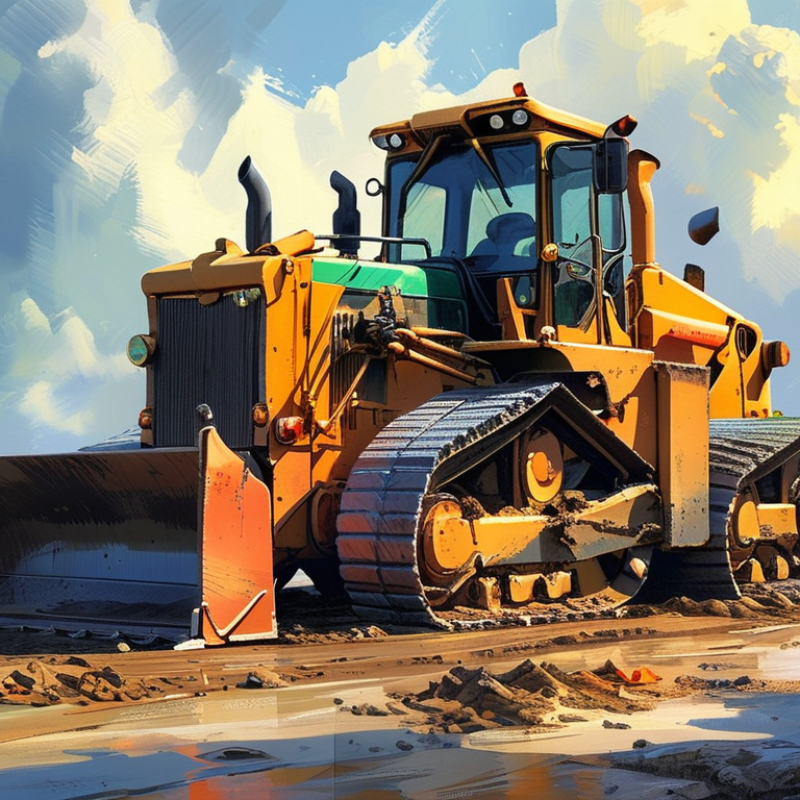
When selecting a bulldozer, understanding the various types available is crucial. There are several categories, each designed for specific applications. Crawler bulldozers are common for heavy-duty work. They distribute weight evenly, making them ideal for soft or uneven terrain. However, they can be less maneuverable in tight spaces.
Wheeled bulldozers offer flexibility and speed. They excel in less challenging conditions, like construction sites with stable ground. These machines can quickly transition between tasks. Their drawback is a lower traction capability when compared to crawlers. Another option is the midi dozer, suitable for smaller projects. They combine some features of their larger counterparts while maintaining compactness for urban environments.
It's essential to consider the project's scale and location. Do your research and evaluate the site's requirements. Think about potential obstacles and necessary adjustments. This choice impacts efficiency and safety. Sometimes, even experienced operators might struggle with unexpected conditions. A thorough analysis ensures the right decision aligns with project goals.
How to Choose the Right Bulldozer for Your Project?
This chart illustrates the comparison of different types of bulldozers based on their common use cases and engine power. Understanding these metrics can help you choose the right bulldozer for your needs.
Evaluating Project Requirements and Site Conditions
When choosing a bulldozer for your project, evaluating project requirements and site conditions is crucial. Start by assessing the terrain. Is it rocky, flat, or uneven? A study from the Construction Industry Research and Information Association found that about 40% of project delays stem from improper equipment selection based on terrain. Understanding the ground conditions helps in deciding the necessary bulldozer size and capabilities.
Next, consider the project scale. A small residential site may only require a compact bulldozer, while larger commercial projects may demand heavy-duty models. According to the American Society of Mechanical Engineers, using the wrong size can reduce efficiency by nearly 30%. Identify the specific tasks, like grading, pushing, or excavating. Each task may require different features and power levels. Reviewing the worksite layout can reveal additional factors, such as tight spaces or access points that could limit equipment size.
Finally, take into account the environment. If working near sensitive areas, like wetlands or urban settings, quieter, more eco-friendly models may be necessary. Data from the Environmental Protection Agency indicates that noise pollution is a significant concern, influencing project timelines and community relations. The right bulldozer should align not just with project goals but also with environmental standards and community impact. The decision requires careful consideration and could shape the project’s success significantly.
Key Features to Consider When Selecting a Bulldozer
When selecting a bulldozer for your project, several key features come into play. Power and track type are crucial. Larger projects often demand high horsepower. According to the Construction Equipment Institute, bulldozers over 200 horsepower are preferable for heavy-duty tasks. They provide the strength needed to move massive amounts of earth efficiently. In contrast, lighter models suffice for smaller or residential tasks. Track type influences traction and stability. For soft or muddy terrains, wide tracks are more beneficial, as they distribute weight effectively.
Hydraulic systems are another critical consideration. Advanced systems enhance maneuverability and precision. The American Society of Civil Engineers notes that bulldozers with superior hydraulic capabilities can improve performance by up to 30%. Operators benefit from better control during grading or cutting tasks. Additionally, consider the machine's size and weight. These factors impact transportability and operational efficiency. A machine that's too large may hinder access to confined spaces.
Durability is vital. The material quality directly affects a bulldozer's lifespan. Regular maintenance is also essential to ensure long-term reliability. Neglect leads to increased repair costs and downtime. Obtaining machinery with a solid warranty can be an indicator of quality. Choosing the right bulldozer requires careful evaluation of these features. Each project has unique demands, and understanding them helps in making an informed decision.
Assessing Bulldozer Performance and Efficiency Metrics
Choosing the right bulldozer for your project involves understanding performance and efficiency metrics. These factors greatly influence overall productivity. Key metrics include horsepower, operating weight, and blade capacity. Horsepower dictates how much power the machine can deliver. Higher horsepower is helpful in demanding terrains.
Operational weight is crucial as it impacts stability and traction. A heavier bulldozer can move larger quantities of earth but can also be less maneuverable in tight spaces. Blade capacity directly affects how much material the machine can handle at once. Balancing these metrics lowers operational costs and increases project efficiency.
Consider site-specific needs when selecting a bulldozer. Analyze the type of terrain and the volume of work required. A smaller machine may suffice for residential projects, while larger models are suited for commercial or industrial tasks. Sometimes, an underestimated project area can lead to the need for more power and capacity. Reflecting on past project needs can guide your current decision.
Evaluate leasing options. Sometimes, renting a bulldozer offers flexibility. This decision could lead to a more efficient project. Additionally, assess fuel efficiency. An efficient bulldozer reduces operational costs while minimizing the environmental impact. Keeping track of these metrics can greatly enhance project outcomes.
How to Choose the Right Bull Dozer for Your Project? - Assessing Bulldozer Performance and Efficiency Metrics
| Model | Engine Power (HP) | Operating Weight (lbs) | Blade Width (inches) | Fuel Efficiency (gallons/hour) | Max Dig Depth (inches) |
| Model A | 150 | 30,000 | 96 | 8 | 24 |
| Model B | 200 | 35,000 | 102 | 10 | 26 |
| Model C | 250 | 40,000 | 108 | 12 | 28 |
| Model D | 300 | 45,000 | 114 | 14 | 30 |
Determining Budget and Cost Factors for Bulldozer Acquisition
When acquiring a bulldozer, budget and cost factors are crucial. The initial purchase price can vary significantly. According to industry reports, the cost of a new bulldozer can range from $30,000 to over $1,000,000 based on size and features. These figures may seem daunting, but understanding your project’s scope can help clarify your budget.
Maintenance expenses also play a pivotal role in your total cost. Typical maintenance can consume 10% to 20% of the initial investment annually. This includes routine checks and repairs. Ignoring these aspects may lead to unexpected expenditures, reflecting a lack of foresight in planning. Additionally, fuel efficiency is essential; models vary considerably. Some can achieve 10% better fuel efficiency, providing tangible savings over time.
Operational costs should not be underestimated. Training for operators can incur additional expenses. A well-trained operator enhances productivity, which translates to cost savings. Reports indicate that an experienced operator may complete tasks 20% faster. Such data emphasizes the need for a comprehensive cost analysis before purchasing. Ignoring these factors may lead to budget overruns and affect project timelines.