7 Tips for Choosing Bottom Gusset Pouches

Choosing the right Bottom Gusset Pouches can influence shelf presence, filling efficiency, storage stability, and customer trust. The pouch must stand upright without wobbling, protect the product from moisture, and fit the filling line accurately. Small details matter. A weak seal can ruin an otherwise excellent package.

Marketing authority Philip Kotler describes packaging as “designing and producing the container or wrapper for a product.” That definition remains practical for Bottom Gusset Pouches. Packaging is not merely a printed surface. It is a working system involving film structure, gusset depth, closure type, barrier performance, and transport conditions. Experienced buyers should request material specifications, seal-strength data, and samples filled with the actual product. Empty samples can mislead.

The seven tips in this guide examine the decisions that deserve closer attention. They include product protection, pouch dimensions, material selection, opening convenience, printing quality, sustainability claims, and supplier reliability. A coffee pouch may need aroma retention and a degassing valve, while pet food packaging may require stronger seals and tougher film. Different products create different risks. There is no perfect pouch.

That is worth admitting.

A lower price may look attractive, yet poor fit can create waste, slower packing, or damaged cartons. I have seen packaging decisions focus heavily on appearance while ignoring warehouse humidity and rough handling. That approach needs reconsideration. Reliable selection combines visual testing, production trials, and honest communication with the manufacturer. With these checks, Bottom Gusset Pouches can support both practical performance and a more credible brand experience.
7 Tips for Choosing Bottom Gusset Pouches

Define the Product’s Purpose and Filling Requirements

Define the Product’s Purpose and Filling Requirements

A bottom gusset pouch should match the product, not just the shelf design. Start by identifying what the pouch will hold, how it will be filled, and how customers will use it. Powdered products may settle into corners and strain weak seals. Granules can create pressure during filling. Liquids require stronger leak resistance and careful seal placement. I have seen attractive packaging fail because the filling line was ignored.

Tip 1: Measure the product’s density and volume. A lightweight product may need more internal space than its weight suggests. Record the filled pouch height, width, and gusset expansion. Do not rely on empty samples. They often look misleading.

Tip 2: Check the filling method before choosing pouch dimensions. Hand filling, auger filling, and automated systems create different stresses. The pouch must open smoothly and remain stable during dosing. A wider bottom gusset usually improves standing performance, but it may reduce packing efficiency. This trade-off deserves testing.

Tip 3: Simulate real handling. Fill trial pouches, seal them, stack them, and move them repeatedly. Inspect the corners and seal lines afterward. I would also test slight overfilling, since operators may not always fill perfectly. That is an imperfect detail, but it reveals practical weaknesses. Keep notes on filling speed, product dust, seal cleanliness, and pouch deformation.

Select the Appropriate Bottom Gusset Structure and Size

Bottom gusset selection starts with the product, not the artwork. A Doyen-style bottom creates a stable base for stand-up pouches. K-seal structures can provide stronger support for heavier contents. For powders, granules, or irregular pieces, test how the product settles after filling. A pouch that stands empty may collapse when filled.

Size must match both capacity and equipment. Measure product density, fill weight, seal width, and headspace before choosing pouch dimensions. As a practical starting point, allow 10–15% extra volume for settling and handling. This is not universal. Fragile products may need more space, while compact products may need less. The bottom gusset should open fully without overstressing the corner seals. Small changes matter.

The Flexible Packaging Association reported estimated U.S. flexible packaging sales of about 39.8 billion dollars in 2023. Smithers also identifies lightweight, high-performance flexible formats as continuing growth areas. These figures support careful material and size planning, but they do not replace filling trials. Check seal strength, drop resistance, shelf stability, and machine alignment. ASTM test methods can improve consistency across samples. A perfect calculation rarely survives the first trial. Run at least three production-like tests, record the failures, and revise the gusset width or pouch height when needed.

7 Tips for Choosing Bottom Gusset Pouches: Select the Appropriate Bottom Gusset Structure and Size

The chart shows practical starting-point dimensions for stand-up bottom gusset pouches used for dry products with a bulk density of approximately 0.6–0.8 kg/L. As the target fill size increases, a deeper gusset is generally needed to improve stability, usable volume, and shelf presentation. Final dimensions should be verified through product testing because density, filling method, seal width, and headspace affect the required pouch size.

Evaluate Materials, Barrier Properties, and Product Protection

7 Tips for Choosing Bottom Gusset Pouches

Evaluate Materials, Barrier Properties, and Product Protection

Choosing a bottom gusset pouch is not only about appearance. It is a protection decision.

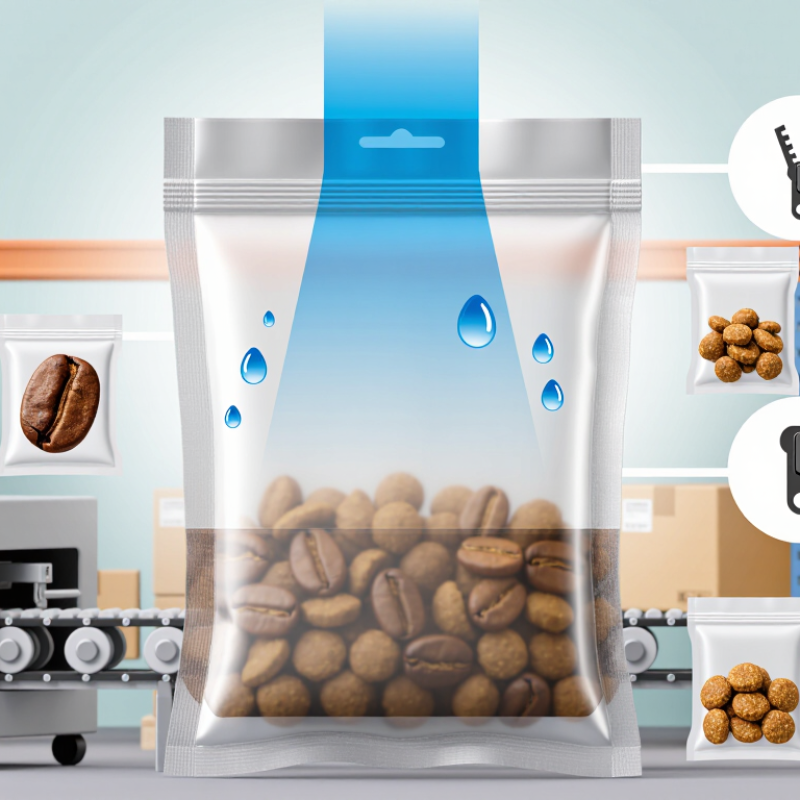
Start with the product’s actual risks. Moisture-sensitive powders need strong water vapor resistance. Aromatic products need reliable oxygen and aroma barriers. Oily contents may weaken unsuitable films or adhesives. A practical material review should examine film structure, seal strength, puncture resistance, and product compatibility.

Material Review Film structure
Seal strength
Puncture resistance
Product compatibility

The pouch must stand upright without stressing its bottom seals. Check the gusset design with the filled product, not an empty sample. A heavier fill can change the pouch shape and create leaks during transport. I have seen attractive packaging fail because the seal area became contaminated with fine particles. That detail is easy to overlook. It should not be.

Ask for barrier test data, but read the conditions carefully. Temperature, humidity, and test methods can change the results. Oxygen transmission and water vapor transmission values are useful only when they reflect real storage conditions. Laboratory data helps, yet physical trials remain essential. Fill samples, stack them, drop them, and inspect the seals afterward.

Product protection also depends on closure quality and handling. A resealable feature should close smoothly after repeated use. Select a suitable pouch size to limit excess air and movement. Consider light protection when the contents are sensitive to exposure. Material choices sometimes involve compromise, and a perfect structure may not exist. Reliability comes from testing those compromises before production.

Compare Closures, Seals, and User Convenience Features

Tip 1: Compare closure types before judging appearance. A zipper suits repeated access, while a tear notch supports quick, one-time opening. I have found that stiff zippers frustrate users with wet or cold hands. Test opening with one hand, not just clean, dry fingers.

Tip 2: Inspect the seal under realistic pressure. A strong bottom seal should remain flat when the pouch stands full. Heat, dust, and uneven filling can weaken poor seals. Ask for samples, then fill them with the actual product. Squeeze, drop, and store them for several days. Laboratory results help, but real handling often reveals small failures.

Tip 3: Measure everyday convenience carefully. A wide opening helps users pour without spilling, while a clear window improves product visibility. Rounded corners can feel safer and reduce snagging inside bags. Consider tactile marks for easier opening in low light. Some features sound useful but add cost without improving the experience. I once favored a larger zipper, then noticed it reduced shelf stability. That mistake changed how I evaluate convenience: every feature must support handling, protection, or both.


Review Supplier Quality, Customization, and Overall Value

7 Tips for Choosing Bottom Gusset Pouches

Supplier quality should lead your evaluation, not the lowest quotation.

1) Request certificates of analysis, lot traceability, and documented quality controls. 2) Check seal strength, drop resistance, and leak-test results on production samples. 3) Confirm the supplier measures gusset width consistently. Small variations can affect filling and shelf stability. Ask for evidence. The Flexible Packaging Association reported that U.S. flexible packaging sales reached $39.5 billion in 2022. That scale increases supplier choice, but it also makes verification essential. A factory tour or independent inspection can reveal dusty packing areas, weak sampling procedures, or poorly stored film.

Customization deserves practical questions.

4) Confirm the film structure matches the product, filling temperature, and required barrier performance. 5) Test zipper alignment, opening force, print registration, and pouch balance. The pouch should stand firmly, even when partly filled. 6) Review minimum order quantities, cylinder or plate charges, sampling fees, and artwork revisions. A polished sample may hide expensive production limits. I once treated a low quote as efficiency; it created rework and delayed shipping. That judgment was too narrow. Test the seal.

Overall value includes more than unit price.

7) Compare usable pouch yield, defect allowances, delivery reliability, technical support, and after-sales response. Ask how the supplier handles nonconforming lots. The PMMI Packaging Compass reports continuing pressure on packaging operations to improve efficiency and manage supply-chain risk. A slightly higher price may be sensible when defect rates and downtime are lower. Request a written specification, retention samples, and a pilot order before scaling. Details matter. Recheck assumptions after real filling trials.

Powder Coat Booths

For those larger-sized parts, or smaller quantity runs, we have 2 independent powder coat booths and ovens. The quality, durability and affordability of today’s powder coating finishes make this the process of choice for world-class companies.

Powder coating advantages over other forms of coating are many. Materials used in the Powder coating process can be metals and non-metals that come in a multitude of thicknesses, textures, colors, etc. Another of Powder coating’s biggest advantages over conventional coatings is its ability to create finishes in many different textures. Powder Coating Booths allow us the ability to apply these advantages to large products.

Wet Paint Line

Tri-State Fabricators runs a full-service conveyor line for painting. Wet painting can provide protection or decoration to many different part styles. From start to finish, every project is easier to undergo random and point-based inspection by our skilled painting team.

Advantages to our Wet Paint Line are these lines start with product prep and ends with a thorough inspection of a high quality finished product. Our ability to complete large and small projects with a superior finish and doing so in a timely and economical fashion. This passes along the savings in production to our customers. When powder coating ins not an option, our Wet Paint Line gets the job done right the first time.

Wet Paint Booths

When the parts get big and heavy we roll-out our custom paint racks and oversize booth. By utilizing our partnerships with all the major paint brands, we can match virtually any color with wet paint.

The advantages of having access to a Wet Paint Booth are many. Large projects of many different shapes can be loaded into the booth. The Wet Paint Booth offers an environment that is much more controlled than a typical parts painting operation.

Not only are they used because of their controlled environment, but they’re are also advantageous when it comes to applying paint to parts that are needed in industries that require specialty coatings such as medical, aerospace, etc.

Military CARC

Our military forces have some very high standards when it comes to the finish of their vehicles and equipment. From the first pre-treatment step to final coat, it takes a great deal of knowledge and experience to protect the men and women of our armed forces. They deserve only the best, and Tri-State Fabricators provides it.

All of our processes are closely monitored by our staff and management teams. Both of which are highly trained in the processes of metal fabrication and finishing. Tri-State Fabricators’ goal is to always fully satisfy each and every customer, including the military. We will always put a 110% into what we do.

Glass-Bead Blasting

Abrasive media blasting is an excellent way to remove old paint, rust, and increase the paint/powder adhesion. Glass beads produce a much smoother and brighter finish than angular abrasives; leaving the part clean yet without any dimensional change. Chemically inert and environmentally friendly, we can recycle our beads approximately 30 times; making them a more preferred method of metal cleaning or surface finishing.

Advantages to Glass Bead Blasting are many. Glass bead blast media is used when a project is needing rough surfaces need to become smooth for applications of coatings such as paint. It is typically used to clean paint and rust from a product surface without deforming the surface it is being used on. Overall, compared to many other blasting media, Glass Bead Blasting is a very economical choice and those savings are always passed on to our customers.

Part Washing

Tri-State Fabricators utilize a zinc phosphate wash to clean and etch the material to ensure the best paint adhesion possible. The unique design of our 3-stage wash system does the work like a 5-stage. From Cleaning and rinsing to conversion coating and post-treatment, Our Part Washing process is a complete service and works throughout the fabrication service and the finishing service.

Along with the previously mentioned benefits, Curing is a vital chemical reaction that leaves the product finish hard and relatively safe from mild abrasion and aggressive corrosion. This process can be done in more than one way; ambient air-dry or in curing ovens at temps that exceed 240°.

Burn-Off Oven

From fixing paint mistakes (someone else’s of course) to simply cleaning our paint line hooks, our burn-off oven is put to good use. After a quick burn-off, a little clean up, and a fresh coat of paint, your parts will look better than new.

Why does our Burn-Off Oven work so well? Because super heating the air around parts turns the materials into ashes. From paint and powder coatings to rubber and machining oils, high temps do the job without degrading the integrity of the part.

Masking

Masking is a vital part of producing high quality products. We have die-cut masking patterns to protect machined surfaces as well as a wide range of plugs and caps to protect threaded holes and bolts. We provide permanent and temporary masking.

Masking allows the selected sections of a product to be protected from a fabrication or finishing service. This can be with both chemicals when etching and tapes, paints when only finishing just a section of the product. Masking is great in aiding the customization process of a project.

Screen Printing

Screen printing is a photographic process that transfers artwork onto a porous nylon screen which allows colored ink to flow through the screen and be deposited on an aluminum or plastic component. We can generally have just about any design created onto a screen for your parts.

Some of the advantages of Screen Printing are, brand recognition for your business displaying on your products, assembly instructions, product warnings/hazards, etc. Tri-State Fabricators produces Screen Printing of the highest quality so you know it’s durable.

Metal Finishing

Metal Finishing is the art of treating the exterior portion of product, often metal but can also be made of other materials, so that the surface is clean and free of any debris. Then the process of applying coats or either paint of powder coat takes place. This coating process improves the quality of the product in both appearance and resistance to wear and corrosion.

Tri-State Fabricators, Inc., understands that a project typically isn’t complete until a high-quality finish has been added to your product. This is why our painting and powder coating teams continuously inspect the products throughout the Metal Finishing process.



