


How to Choose the Right Air Separation Unit ASU?

Choosing the right Air Separation Unit(ASU)starts with the gases your plant actually needs, not a catalog headline. Define required oxygen, nitrogen, or argon flow, purity, delivery pressure, and expected operating hours. A steel furnace needing steady oxygen has different demands from a food plant using nitrogen for packaging. Small differences matter.

The process also shapes the decision. Cryogenic systems can serve large, continuous demand and recover multiple products, while pressure swing adsorption or membrane systems may suit other flow and purity ranges. These are not automatic rules. Feed-air conditions, local climate, available space, power supply, and cooling-water access can change the picture. A tidy equipment comparison may miss those details.

A reliable evaluation looks beyond purchase price. Compare energy use at realistic load, maintenance access, spare-parts availability, expected uptime, and the supplier’s commissioning and service experience. Ask for references from plants with similar operating patterns, and have qualified engineers check performance assumptions against site data. This is where estimates can be wrong; even a carefully prepared spreadsheet cannot replace measurements from the facility. The best ASU is not necessarily the largest or most advanced. It is the one that meets documented process needs safely, consistently, and at a sensible lifetime cost. Define those needs clearly, then compare systems on the same basis.
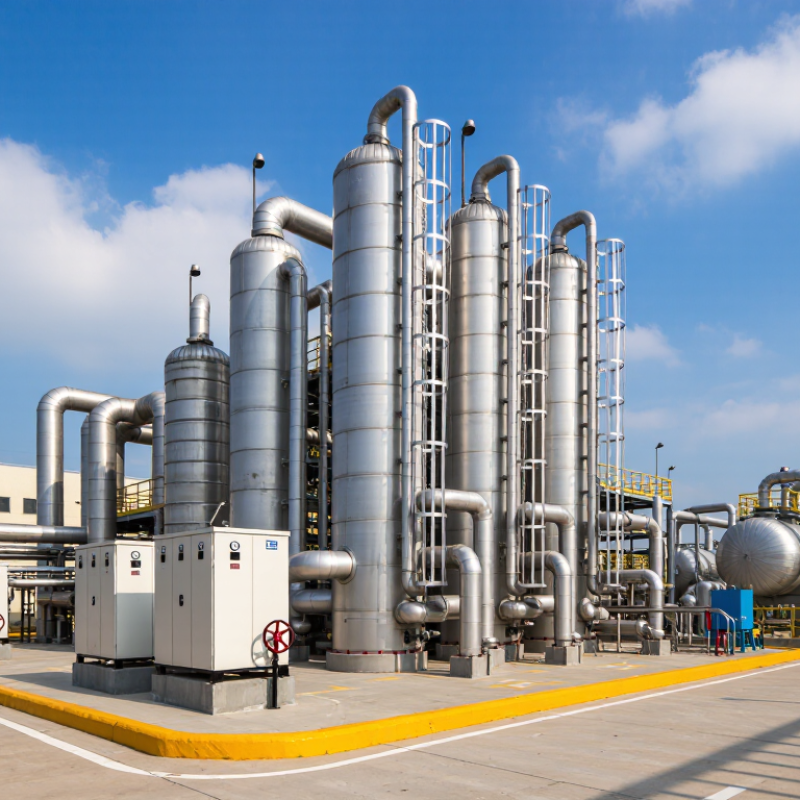
How to Choose the Right Air Separation Unit ASU?

Define the Required Gas Products, Purity, and Production Capacity

An air separation unit should match the gases your process actually consumes. List each product, such as oxygen for combustion, nitrogen for purging, or argon for specialist applications. Then confirm the required purity and delivery pressure at the point of use. A purity figure without a measurement basis can be misleading, so align specifications with the process and supplier.

Measure real demand, not just nameplate capacity. Record average and peak flow, operating hours, seasonal changes, and expected expansion. A plant using oxygen steadily may need a different design from one with sharp production swings. Small details matter. Check whether backup supply is needed during maintenance or demand spikes.

Purity also affects energy use and equipment requirements; specifying the highest possible grade may add cost without improving the process. I would verify consumption data against operating records, though those records are not always complete. That uncertainty should be stated, not hidden.

Provide the required flow in consistent units and clarify whether figures describe normal, peak, or future demand before comparing ASU proposals.


Compare Air Separation Technologies and Their Operating Principles

Choosing an air separation unit starts with the gases, purity, and flow your process needs. Cryogenic distillation cools filtered, compressed air until its components separate by boiling point. It can provide large, steady volumes of high-purity oxygen and nitrogen, and sometimes argon. The cold box, heat exchangers, and columns require careful control. Startup takes time, and energy use can be significant. This technology often suits continuous demand better than short, irregular runs.

Pressure swing adsorption (PSA) uses adsorbent beds to capture selected gases under pressure, then release them as pressure drops. Alternating beds provide a practical supply for smaller or changing flows, but purity and recovery depend on cycle settings.

Membrane systems separate gases as they pass through selective fibers at different rates. They are compact and start quickly, but may be better suited to moderate purity requirements. No option is best for every site. A comparison chart can hide important trade-offs in feed-air quality, outlet pressure, power costs, and maintenance access.

Tips: Compare energy use at your actual flow and purity, not just peak ratings. Check turndown, startup time, and service access. Small details matter. Ask how hot weather or dusty intake air could affect performance; estimates may need checking against site data.

Assess Site Conditions, Utilities, Safety, and Regulatory Requirements

Choosing an air separation unit starts with the site, not just the required gas flow. Check available plot space, ground conditions, drainage, and access for heavy equipment. A narrow delivery route can delay installation, even when the process design is sound. Wind, ambient temperature, and seasonal water availability also affect operating plans. Small details matter.

Map the utilities the unit will actually receive. Estimate electrical demand and confirm grid capacity, voltage stability, and backup arrangements with the utility provider. Review cooling-water quality and supply, instrument air, and drainage capacity. A power interruption may affect more than production; recovery procedures should be discussed with the supplier and site operations team. These assumptions deserve a second look.

Safety and regulatory reviews should reflect the specific process and location. Cryogenic equipment brings cold-contact and pressure hazards, while oxygen-enriched areas can intensify combustion. Nitrogen releases can displace oxygen in enclosed spaces, so ventilation and gas detection need careful assessment. Define safe access, isolation points, emergency routes, and operator training before finalizing the layout. Requirements vary by jurisdiction. Confirm applicable pressure-equipment, fire, building, environmental, and workplace rules with qualified local professionals. Noise limits and permitting timelines can also shape where equipment sits. A checklist helps, but it cannot replace a site-specific hazard review.

How to Choose the Right Air Separation Unit (ASU)

Typical oxygen product purity ranges by technology

PSA and VPSA units commonly supply oxygen at about 90–95% purity, while cryogenic ASUs can serve applications requiring higher purity. These indicative ranges vary with equipment design and operating conditions. Compare required flow and pressure alongside site space, reliable power, cooling utilities, oxygen-service safety measures, and applicable local regulations before selecting a technology.

Evaluate Energy Use, Reliability, and Total Lifecycle Cost

How to Choose the Right Air Separation Unit ASU?
Evaluate Energy Use, Reliability, and Total Lifecycle Cost

An air separation unit should be assessed against the plant’s actual demand, not only its rated output. Compare energy use per unit of product at several load levels, especially if demand shifts between day and night. Energy figures deserve scrutiny. Ask whether they include compression, cooling, and auxiliary equipment. A low figure may describe ideal conditions that rarely occur on site. Check the required oxygen or nitrogen purity, too; tighter specifications can increase power consumption. A practical review uses operating data, utility costs, and expected production hours rather than a single brochure value.

Reliability affects cost in less obvious ways. Examine maintenance intervals, access to critical components, and the time needed to restore production after a fault. Small details matter. A crowded service area can turn a routine filter change into a longer outage. Consider whether the plant needs backup capacity, and price its energy and upkeep alongside its protection against lost production. Lifecycle cost should include installation, electricity, maintenance labor, spare parts, and major component replacement. It is tempting to rank options by one total, but estimates depend on future power prices and operating patterns. Record those assumptions, then test how the choice changes under heavier use or an unexpected shutdown.

How to Choose the Right Air Separation Unit ASU? - Evaluate Energy Use, Reliability, and Total Lifecycle Cost

Evaluation Dimension Cryogenic Air Separation VPSA Oxygen System PSA Oxygen System
Best-Fit Production Scale Typically suited to large, continuous-demand operations and applications requiring multiple products from air. Often considered for medium-to-large oxygen demand where pipeline oxygen is needed without cryogenic liquefaction. Often suited to smaller or more modular oxygen requirements, including applications with variable or distributed demand.
Typical Oxygen Purity Can provide a broad range of oxygen purities; commonly selected when high-purity oxygen or multiple product streams are required. Commonly produces oxygen in the approximate 90–95% range, depending on design and operating conditions. Commonly produces oxygen in the approximate 90–95% range, depending on design and operating conditions.
Other Products Can produce nitrogen and, with suitable process design, argon as co-products; liquid products may also be available. Primarily an oxygen-production option; it does not typically provide the same range of co-products as a cryogenic plant. Primarily an oxygen-production option; it does not typically provide the same range of co-products as a cryogenic plant.
Energy Use Specific energy use depends on scale, product purity, delivery pressure, and whether products are supplied as gas or liquid. Large, well-loaded plants can benefit from economies of scale. Electricity is used to operate the vacuum and air-compression equipment. Compare consumption at the required oxygen purity and delivery pressure. Electricity is used to compress air and operate the adsorption cycle. Compare consumption at the required oxygen purity and delivery pressure.
Demand Flexibility Best evaluated against the planned continuous load and turndown range. Frequent large swings can affect operating efficiency and should be checked with the supplier. Can accommodate changes in demand within its designed operating range; confirm turndown and part-load performance for the specific design. Modular configuration can support staged capacity; confirm how cycling and part-load operation affect output and energy use.
Reliability Considerations Assess compressor and turbine redundancy, planned maintenance requirements, backup supply, and the availability of critical spares. Assess blower and vacuum-pump redundancy, valve-cycle design, adsorbent condition, and backup oxygen arrangements. Assess compressor redundancy, valve-cycle design, adsorbent condition, and backup oxygen arrangements.
Maintenance Focus Rotating equipment, heat exchangers, cold-box cleanliness, instrumentation, and controls require a planned maintenance program. Key checks include blowers, vacuum pumps, valves, filters, adsorbent performance, and control-system operation. Key checks include compressors, valves, filters, adsorbent performance, and control-system operation.
Capital Cost Factors Usually involves a larger, more complex installation. Cost depends on capacity, product slate, storage, compression, and site requirements. Cost depends on capacity, vacuum equipment, oxygen compression, storage, and installation requirements. Cost depends on capacity, modularity, oxygen compression, storage, and installation requirements.
Lifecycle Cost Factors Include electricity, staffing, maintenance, spare parts, product storage or liquefaction, and any value from nitrogen or argon co-products. Include electricity, maintenance, adsorbent replacement when required, backup supply, and oxygen compression. Include electricity, maintenance, adsorbent replacement when required, backup supply, and oxygen compression.
Key Questions Before Selection Will demand remain high and steady? Are high purity, liquid products, or nitrogen and argon co-products valuable? What delivery pressure is required? Is the required oxygen purity compatible with the process? Is demand large enough to justify the system, and is vacuum-pump maintenance support available? Is the required capacity and purity compatible with a modular system? How will variable demand affect cycle operation and backup requirements?
Recommended Comparison Basis Compare options using the same annual oxygen demand, purity, delivery pressure, operating schedule, electricity tariff, redundancy level, and backup-supply assumptions.

Total lifecycle cost: Evaluate installed capital cost plus discounted electricity, maintenance, staffing, consumables, backup supply, and end-of-life costs over the same study period. Actual performance and costs are site- and design-specific; request guaranteed figures at the required operating conditions.

Select an ASU Design and Verify Supplier Capabilities

How to Choose the Right Air Separation Unit ASU?

Select an ASU Design and Verify Supplier Capabilities

Start with the required gases, purity, flow, and pressure—not a standard capacity label. Cryogenic ASUs generally fit large, continuous demand for oxygen, nitrogen, or argon. Pressure swing adsorption may suit smaller or less demanding nitrogen applications. Map hourly demand, including peak loads and planned shutdowns. A clear demand profile helps prevent oversizing, which can leave equipment running inefficiently.

Ask suppliers to state guaranteed product purity, output, power use, turndown range, and startup time under your actual feed-air conditions. Check what each figure includes. Does power use cover compression and purification, or only the cold box? For an integrated hydrogen project, the IEA’s 2019 report The Future of Hydrogen estimates electrolyzer electricity use at about 50–55 kWh per kilogram of hydrogen. That is not ASU consumption, but it shows why site-wide energy boundaries matter.

Request operating references for similar capacity and product specifications, plus maintenance schedules and local service arrangements. Compare guarantees on the same measurement basis, then define an acceptance test before signing. Details matter. A polished efficiency figure can still hide assumptions about ambient temperature, load, or product pressure. I would challenge those assumptions early; some will prove irrelevant, but leaving them unchecked is a costly gamble.

Powder Coat Booths

For those larger-sized parts, or smaller quantity runs, we have 2 independent powder coat booths and ovens. The quality, durability and affordability of today’s powder coating finishes make this the process of choice for world-class companies.

Powder coating advantages over other forms of coating are many. Materials used in the Powder coating process can be metals and non-metals that come in a multitude of thicknesses, textures, colors, etc. Another of Powder coating’s biggest advantages over conventional coatings is its ability to create finishes in many different textures. Powder Coating Booths allow us the ability to apply these advantages to large products.

Wet Paint Line

Tri-State Fabricators runs a full-service conveyor line for painting. Wet painting can provide protection or decoration to many different part styles. From start to finish, every project is easier to undergo random and point-based inspection by our skilled painting team.

Advantages to our Wet Paint Line are these lines start with product prep and ends with a thorough inspection of a high quality finished product. Our ability to complete large and small projects with a superior finish and doing so in a timely and economical fashion. This passes along the savings in production to our customers. When powder coating ins not an option, our Wet Paint Line gets the job done right the first time.

Wet Paint Booths

When the parts get big and heavy we roll-out our custom paint racks and oversize booth. By utilizing our partnerships with all the major paint brands, we can match virtually any color with wet paint.

The advantages of having access to a Wet Paint Booth are many. Large projects of many different shapes can be loaded into the booth. The Wet Paint Booth offers an environment that is much more controlled than a typical parts painting operation.

Not only are they used because of their controlled environment, but they’re are also advantageous when it comes to applying paint to parts that are needed in industries that require specialty coatings such as medical, aerospace, etc.

Military CARC

Our military forces have some very high standards when it comes to the finish of their vehicles and equipment. From the first pre-treatment step to final coat, it takes a great deal of knowledge and experience to protect the men and women of our armed forces. They deserve only the best, and Tri-State Fabricators provides it.

All of our processes are closely monitored by our staff and management teams. Both of which are highly trained in the processes of metal fabrication and finishing. Tri-State Fabricators’ goal is to always fully satisfy each and every customer, including the military. We will always put a 110% into what we do.

Glass-Bead Blasting

Abrasive media blasting is an excellent way to remove old paint, rust, and increase the paint/powder adhesion. Glass beads produce a much smoother and brighter finish than angular abrasives; leaving the part clean yet without any dimensional change. Chemically inert and environmentally friendly, we can recycle our beads approximately 30 times; making them a more preferred method of metal cleaning or surface finishing.

Advantages to Glass Bead Blasting are many. Glass bead blast media is used when a project is needing rough surfaces need to become smooth for applications of coatings such as paint. It is typically used to clean paint and rust from a product surface without deforming the surface it is being used on. Overall, compared to many other blasting media, Glass Bead Blasting is a very economical choice and those savings are always passed on to our customers.

Part Washing

Tri-State Fabricators utilize a zinc phosphate wash to clean and etch the material to ensure the best paint adhesion possible. The unique design of our 3-stage wash system does the work like a 5-stage. From Cleaning and rinsing to conversion coating and post-treatment, Our Part Washing process is a complete service and works throughout the fabrication service and the finishing service.

Along with the previously mentioned benefits, Curing is a vital chemical reaction that leaves the product finish hard and relatively safe from mild abrasion and aggressive corrosion. This process can be done in more than one way; ambient air-dry or in curing ovens at temps that exceed 240°.

Burn-Off Oven

From fixing paint mistakes (someone else’s of course) to simply cleaning our paint line hooks, our burn-off oven is put to good use. After a quick burn-off, a little clean up, and a fresh coat of paint, your parts will look better than new.

Why does our Burn-Off Oven work so well? Because super heating the air around parts turns the materials into ashes. From paint and powder coatings to rubber and machining oils, high temps do the job without degrading the integrity of the part.

Masking

Masking is a vital part of producing high quality products. We have die-cut masking patterns to protect machined surfaces as well as a wide range of plugs and caps to protect threaded holes and bolts. We provide permanent and temporary masking.

Masking allows the selected sections of a product to be protected from a fabrication or finishing service. This can be with both chemicals when etching and tapes, paints when only finishing just a section of the product. Masking is great in aiding the customization process of a project.

Screen Printing

Screen printing is a photographic process that transfers artwork onto a porous nylon screen which allows colored ink to flow through the screen and be deposited on an aluminum or plastic component. We can generally have just about any design created onto a screen for your parts.

Some of the advantages of Screen Printing are, brand recognition for your business displaying on your products, assembly instructions, product warnings/hazards, etc. Tri-State Fabricators produces Screen Printing of the highest quality so you know it’s durable.

Metal Finishing

Metal Finishing is the art of treating the exterior portion of product, often metal but can also be made of other materials, so that the surface is clean and free of any debris. Then the process of applying coats or either paint of powder coat takes place. This coating process improves the quality of the product in both appearance and resistance to wear and corrosion.

Tri-State Fabricators, Inc., understands that a project typically isn’t complete until a high-quality finish has been added to your product. This is why our painting and powder coating teams continuously inspect the products throughout the Metal Finishing process.
