


Choosing the best Wiper Motor Equipment requires more than comparing price, voltage, and advertised speed. It requires matching the motor to vehicle design, climate, duty cycle, and service conditions. OICA reported approximately 93.5 million motor vehicles were produced worldwide in 2023. That volume reflects a broad equipment environment, from compact passenger cars to heavy commercial vehicles. Each application may demand different torque, linkage geometry, connector design, and protection against water or road debris.
Compliance also matters. In the United States, Federal Motor Vehicle Safety Standard No. 104 addresses windshield wiping and washing systems. Comparable requirements apply in other markets. Buyers should verify whether the selected motor supports the vehicle’s original safety and electrical specifications. A reliable evaluation should include rated voltage, current draw, park function, intermittent operation, shaft dimensions, ingress protection, operating temperature, and expected service life. It should also consider replacement availability and technical support.
Real workshop experience often reveals what catalogues hide. A motor may perform well on a test bench but stall when ice, dust, or worn linkage increases resistance. No single motor fits every vehicle. The best choice balances measured performance with practical maintenance needs. Reports from organizations such as OICA and the U.S. National Highway Traffic Safety Administration provide useful industry and safety context, but they cannot replace application testing. This guide examines those factors carefully, while acknowledging one uncomfortable point: specifications are sometimes incomplete. Buyers should request test data, confirm compatibility, and inspect sample units before committing to large-volume procurement.
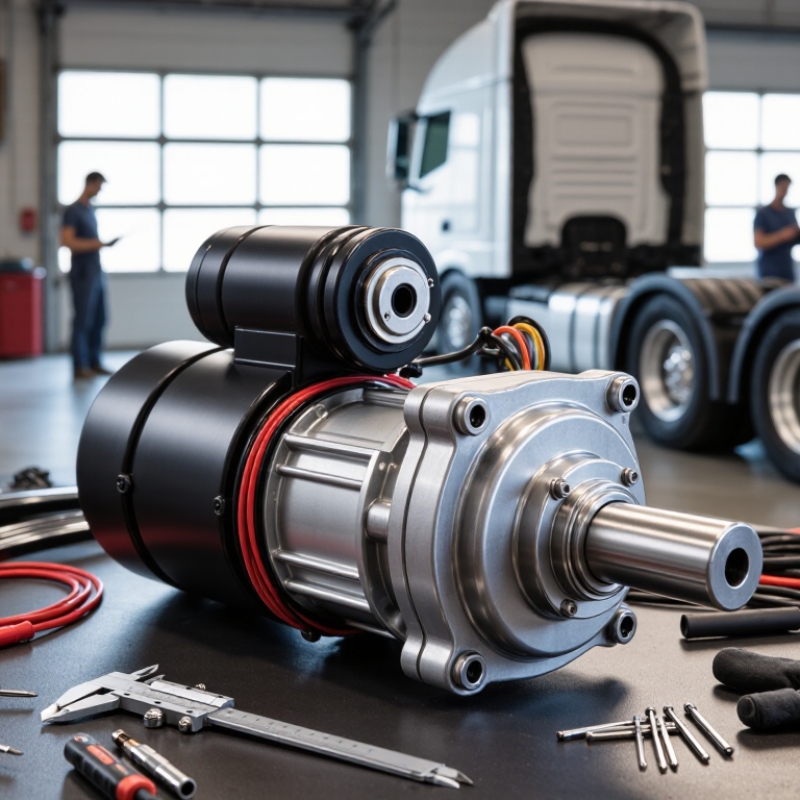
A wiper motor converts electrical energy into controlled blade movement. Its real role is broader than simply moving the arms. It must maintain visibility through rain, dust, snow, and washer fluid. Start with the glass. Measure the required sweep angle, blade length, park position, and wiping speed. A motor that fits physically may still fail under resistance.
Operating requirements should come from the vehicle’s actual environment. Check voltage variation, current draw, duty cycle, noise, thermal load, and water exposure. SAE J903 provides testing guidance for windshield wiping performance. It helps engineers assess visibility, sweep coverage, and repeatable operation. In workshop checks, test the motor with the correct linkage installed. Linkage friction can raise the load sharply. That assumption fails.
Market data also supports careful specification. Fortune Business Insights valued the global automotive wiper market at about USD 7.75 billion in 2024. It projects the market to reach nearly USD 10.99 billion by 2032. This growth reflects increasing vehicle production and stronger expectations for safety and comfort. The report also indicates steady demand for electrically controlled wiping systems. However, market growth does not guarantee suitability. A higher-rated motor can still cause excessive noise, poor parking, or unnecessary battery demand. Measure the load. Select torque with a practical margin, not an exaggerated one. Recheck performance after cold starts, repeated cycles, and partially frozen conditions.

Choosing a wiper motor starts with the vehicle, not the motor catalog. Check the vehicle voltage, available space, shaft size, and mounting points. A 12-volt system needs a compatible motor, while heavy vehicles may require 24 volts. Measure the windshield before selecting the sweep angle. A motor with excessive travel can push the blade beyond the glass edge. That mistake can damage the linkage or scratch nearby trim.
Match motor torque to blade length, arm pressure, and expected weather conditions. Longer blades create greater resistance, especially under snow or thick road grime. Confirm the motor’s duty cycle for the vehicle’s operating pattern. Passenger vehicles may need intermittent operation, while commercial equipment often requires longer running periods. Also inspect the park position, connector layout, and current draw. A technically powerful motor may still fail if the linkage has friction or poor alignment. I have seen installations where the motor was suitable, but the mechanism was not. That detail is easy to overlook.
Tips: Test the complete wiper system, not only the motor. Measure current during startup and normal sweeping. Check movement by hand after disconnecting power. It should feel smooth. Leave space for service access. Recheck the sweep on a wet windshield, because dry glass can hide excessive resistance. When specifications are uncertain, record the original motor data and compare every mounting dimension before ordering.
Wiper motor performance starts with stable torque, not impressive laboratory speed. FHWA data indicates that about 21% of annual vehicle crashes are weather-related. Wet pavement contributes to roughly 74% of those incidents. Therefore, engineers should test wiping consistency during heavy rain, not only under dry conditions. Check sweep speed, stall torque, current draw, and recovery after repeated blade reversals. The motor should maintain contact when water pools near the windshield edge.
Durability requires more than a high cycle count. A practical evaluation should combine thermal cycling, vibration, humidity, and salt exposure. ISO 16750 defines environmental testing approaches for road-vehicle electrical equipment. ISO 9227 provides salt-spray methods for assessing corrosion resistance. Test results should include gearbox wear, brush condition, connector sealing, and shaft corrosion. Small leaks matter. They often become expensive failures later.
FHWA also reports that rainfall is involved in about 46% of weather-related crashes. That figure makes environmental resistance a safety concern, not a cosmetic feature. Ask suppliers for traceable test records, sample sizes, and failure criteria. A motor can pass a bench test and still disappoint after winter grit, ultraviolet exposure, and low-temperature starts. That is the uncomfortable part. No single test reproduces every road. Field trials remain necessary, and engineers should document failures rather than hide them.
A reliable wiper motor begins with accurate vehicle compatibility. Check the vehicle’s model, production year, connector shape, shaft length, and mounting points. Do not rely only on appearance. Two motors may look identical but use different wiring or rotation directions. I once trusted a similar housing and missed a connector difference. That mistake created unnecessary installation work.
Installation should be clear and controlled. Look for stable mounting brackets, labeled terminals, and accessible fasteners. A practical motor should fit without forced alignment or improvised wiring. Confirm the fuse rating and grounding path before testing. Keep hands away from moving linkages. Test the low, high, and intermittent settings with the blades removed. This reduces risk during the first inspection.
Safety features deserve close attention. Choose equipment with overload protection, sealed electrical connections, and dependable park positioning. The motor should stop the blades in the correct resting area, even after repeated cycles. Maintenance is easier when inspection points remain accessible. Check linkage joints for stiffness, listen for unusual noise, and clean corrosion from connectors. Replace worn parts early. Maybe not every slow wipe indicates motor failure. A weak ground or damaged linkage can produce similar symptoms. I still verify the whole system before replacing the motor, because assumptions often cost more than careful testing.
A wiper motor should be judged by total cost, not purchase price alone. S&P Global Mobility reported an average U.S. vehicle age of 12.6 years in 2024. Older vehicles often need dependable replacement equipment. Compare connector fit, torque, operating speed, installation time, and warranty coverage. A low-cost motor may create extra labor if access is difficult. Small savings can disappear quickly.
Support has practical value. Ask whether technical drawings, wiring guidance, and test procedures are available. Confirm replacement parts and response times before ordering. NHTSA’s FMVSS 104 requires windshield wiping systems to provide at least two speeds and effective operation. A motor that meets basic requirements still needs correct vehicle compatibility. Do not rely on catalog photos alone. Test the park function, current draw, noise, and linkage movement.
Long-term value depends on predictable performance. The Auto Care Association’s 2024 Factbook shows the U.S. aftermarket remains a large, recurring maintenance economy. That suggests service access matters for years, not weeks. Choose equipment with corrosion protection, stable output, and documented quality checks. I would also record failure symptoms before replacing the motor. The motor may not be the real fault. This part is easy to overlook. A slightly higher purchase cost can be reasonable when it reduces diagnostic time, repeat labor, and vehicle downtime. Still, warranty language deserves careful reading. Length alone proves little.
| Equipment Category | Typical Purchase Cost | Installation Complexity | Expected Service Life | Electrical Compatibility | Warranty and Support | Maintenance Requirements | Long-Term Value | Best Use Case |
|---|---|---|---|---|---|---|---|---|
| Economy Replacement Motor | Approximately US$35–80 per motor | Low to moderate; usually designed as a direct replacement | Typically 2–4 years under normal operating conditions | Usually available for 12-volt systems; connector and mounting points must be verified | Commonly includes a 6–12 month limited warranty; technical support may be basic | Requires correct linkage alignment, electrical connector inspection, and periodic pivot lubrication | Moderate | Budget repairs, low-mileage vehicles, and short-term replacement needs |
| Standard Replacement Motor | Approximately US$80–160 per motor | Moderate; installation generally requires removal of the wiper arms and cowl panel | Typically 4–7 years with normal use and proper maintenance | Available in common 12-volt configurations; speed settings and connector layout must match the vehicle | Often includes a 12–24 month warranty and basic installation guidance | Check the ground connection, linkage condition, and water sealing during installation | Good | Daily-use vehicles and general repair workshops seeking a balanced purchase |
| Heavy-Duty Replacement Motor | Approximately US$150–300 per motor | Moderate to high; heavier components may require additional access and alignment checks | Typically 6–10 years in demanding operating environments | Designed for higher-load applications; current draw, fuse rating, and control signals must be confirmed | Commonly includes a 24–36 month warranty and more detailed technical assistance | Requires regular inspection of linkage resistance, pivot wear, wiring, and corrosion protection | Very good | Commercial vehicles, frequent rain or snow exposure, and high-duty operating cycles |
| Complete Motor-and-Linkage Assembly | Approximately US$180–400 per assembly | Moderate; replaces several worn components at the same time | Typically 5–9 years, depending on operating conditions and component quality | Must match the vehicle's motor voltage, connector, linkage geometry, and control system | Often includes a 12–24 month warranty; installation support is generally more useful than for a motor-only purchase | Reduces the risk of excessive linkage load; inspect mounting points and drainage channels during installation | Very good | Vehicles with noisy, stiff, bent, or heavily worn linkage mechanisms |
| Rebuilt or Professionally Remanufactured Motor | Approximately US$60–150 per motor, often with a refundable core charge | Low to moderate when the replacement is application-specific | Typically 3–6 years, depending on rebuild standards and remaining component wear | Must be checked against the original motor's voltage, connector, mounting design, and park function | Commonly includes a 12–24 month warranty; return and core-replacement policies are important | Inspect brushes, commutator condition, bearings, seals, and connector corrosion before installation | Good | Cost-conscious repairs where sustainability and serviceable components are priorities |
| Programmable or Network-Controlled Motor | Approximately US$250–600 per motor | High; may require diagnostic tools, calibration, and network communication checks | Typically 6–10 years when correctly configured and protected from moisture | Requires exact compatibility with the vehicle's control module, communication protocol, voltage, and software configuration | Often includes a 24–36 month warranty; supplier diagnostic support is highly valuable | Requires software calibration, connector protection, fault-code checks, and proper battery voltage | High for compatible applications | Modern vehicles with rain sensors, variable-speed control, or integrated electronic systems |


For those larger-sized parts, or smaller quantity runs, we have 2 independent powder coat booths and ovens. The quality, durability and affordability of today’s powder coating finishes make this the process of choice for world-class companies.
Powder coating advantages over other forms of coating are many. Materials used in the Powder coating process can be metals and non-metals that come in a multitude of thicknesses, textures, colors, etc. Another of Powder coating’s biggest advantages over conventional coatings is its ability to create finishes in many different textures. Powder Coating Booths allow us the ability to apply these advantages to large products.
Tri-State Fabricators runs a full-service conveyor line for painting. Wet painting can provide protection or decoration to many different part styles. From start to finish, every project is easier to undergo random and point-based inspection by our skilled painting team.
Advantages to our Wet Paint Line are these lines start with product prep and ends with a thorough inspection of a high quality finished product. Our ability to complete large and small projects with a superior finish and doing so in a timely and economical fashion. This passes along the savings in production to our customers. When powder coating ins not an option, our Wet Paint Line gets the job done right the first time.
When the parts get big and heavy we roll-out our custom paint racks and oversize booth. By utilizing our partnerships with all the major paint brands, we can match virtually any color with wet paint.
The advantages of having access to a Wet Paint Booth are many. Large projects of many different shapes can be loaded into the booth. The Wet Paint Booth offers an environment that is much more controlled than a typical parts painting operation.
Not only are they used because of their controlled environment, but they’re are also advantageous when it comes to applying paint to parts that are needed in industries that require specialty coatings such as medical, aerospace, etc.
Our military forces have some very high standards when it comes to the finish of their vehicles and equipment. From the first pre-treatment step to final coat, it takes a great deal of knowledge and experience to protect the men and women of our armed forces. They deserve only the best, and Tri-State Fabricators provides it.
All of our processes are closely monitored by our staff and management teams. Both of which are highly trained in the processes of metal fabrication and finishing. Tri-State Fabricators’ goal is to always fully satisfy each and every customer, including the military. We will always put a 110% into what we do.
Abrasive media blasting is an excellent way to remove old paint, rust, and increase the paint/powder adhesion. Glass beads produce a much smoother and brighter finish than angular abrasives; leaving the part clean yet without any dimensional change. Chemically inert and environmentally friendly, we can recycle our beads approximately 30 times; making them a more preferred method of metal cleaning or surface finishing.
Advantages to Glass Bead Blasting are many. Glass bead blast media is used when a project is needing rough surfaces need to become smooth for applications of coatings such as paint. It is typically used to clean paint and rust from a product surface without deforming the surface it is being used on. Overall, compared to many other blasting media, Glass Bead Blasting is a very economical choice and those savings are always passed on to our customers.
Tri-State Fabricators utilize a zinc phosphate wash to clean and etch the material to ensure the best paint adhesion possible. The unique design of our 3-stage wash system does the work like a 5-stage. From Cleaning and rinsing to conversion coating and post-treatment, Our Part Washing process is a complete service and works throughout the fabrication service and the finishing service.
Along with the previously mentioned benefits, Curing is a vital chemical reaction that leaves the product finish hard and relatively safe from mild abrasion and aggressive corrosion. This process can be done in more than one way; ambient air-dry or in curing ovens at temps that exceed 240°.
From fixing paint mistakes (someone else’s of course) to simply cleaning our paint line hooks, our burn-off oven is put to good use. After a quick burn-off, a little clean up, and a fresh coat of paint, your parts will look better than new.
Why does our Burn-Off Oven work so well? Because super heating the air around parts turns the materials into ashes. From paint and powder coatings to rubber and machining oils, high temps do the job without degrading the integrity of the part.
Masking is a vital part of producing high quality products. We have die-cut masking patterns to protect machined surfaces as well as a wide range of plugs and caps to protect threaded holes and bolts. We provide permanent and temporary masking.
Masking allows the selected sections of a product to be protected from a fabrication or finishing service. This can be with both chemicals when etching and tapes, paints when only finishing just a section of the product. Masking is great in aiding the customization process of a project.
Screen printing is a photographic process that transfers artwork onto a porous nylon screen which allows colored ink to flow through the screen and be deposited on an aluminum or plastic component. We can generally have just about any design created onto a screen for your parts.
Some of the advantages of Screen Printing are, brand recognition for your business displaying on your products, assembly instructions, product warnings/hazards, etc. Tri-State Fabricators produces Screen Printing of the highest quality so you know it’s durable.
Metal Finishing is the art of treating the exterior portion of product, often metal but can also be made of other materials, so that the surface is clean and free of any debris. Then the process of applying coats or either paint of powder coat takes place. This coating process improves the quality of the product in both appearance and resistance to wear and corrosion.
Tri-State Fabricators, Inc., understands that a project typically isn’t complete until a high-quality finish has been added to your product. This is why our painting and powder coating teams continuously inspect the products throughout the Metal Finishing process.

