How to Choose the Best Transparent LED Display?

Choosing the right Transparent Led Display means balancing visibility, image quality, and the building behind the screen. There is no universal winner. A storefront facing afternoon sun needs different performance from an indoor atrium viewed at close range. The OAAA’s 2023 Out of Home Advertising Revenue Report recorded $9.1 billion in U.S. out-of-home advertising revenue. This figure is not specific to transparent LED, but it shows the scale of investment in public-facing digital media. Careful specification matters.

Before comparing prices, define viewing distance, installation location, and the content people will see. Pixel pitch affects image detail and viewing comfort; a finer pitch can also raise the cost. Transparency percentage needs careful interpretation, too. It does not guarantee readable content or an unobstructed view through every installation. Ask suppliers for measured specifications, not just headline figures. Check brightness in the actual lighting conditions, cabinet weight, power use, heat management, refresh performance, and access for maintenance. Request a sample video or on-site test when possible. Small details matter. A beautiful daytime demo may look very different behind sunlit glass. I would not judge a product by transparency alone; that is an easy number to compare, but not the whole experience. This guide explores the practical questions that help buyers choose a display suited to their site, budget, and long-term operating needs.
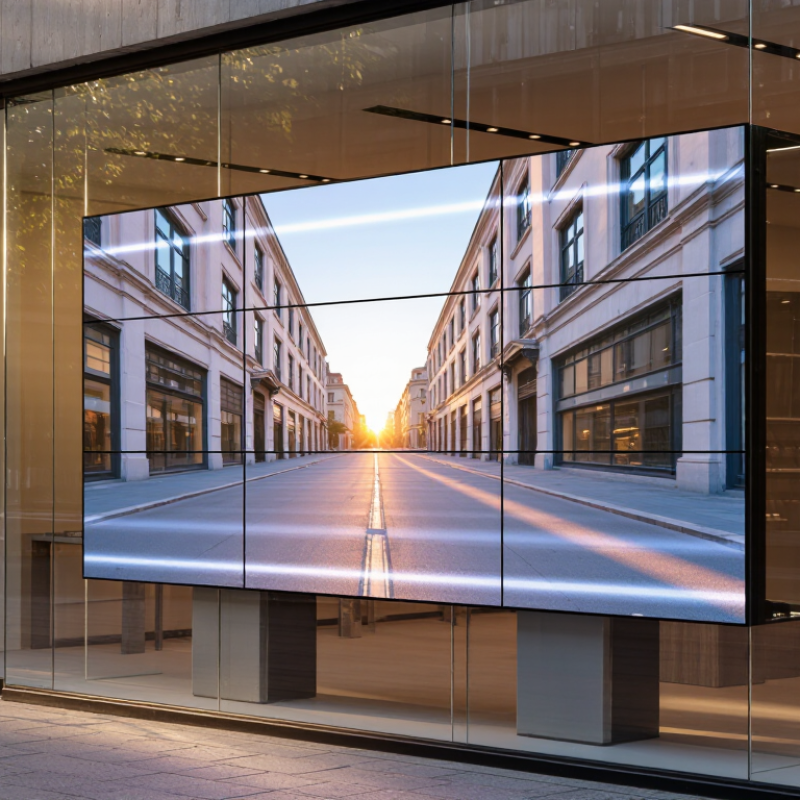
How to Choose the Best Transparent LED Display?

Identify the Display’s Purpose and Viewing Requirements

Before comparing transparent LED displays, define the job the screen must do. A shop window may need to show prices and motion graphics while keeping products visible behind it. A lobby screen might prioritize clear announcements across a larger viewing area. These uses call for different content, layouts, and levels of detail. Be specific about what viewers should notice.

Then map the viewing conditions. Measure the usual distance, the viewing angles, and the amount of daylight hitting the glass. A screen viewed from a few steps away needs finer detail than one viewed across a wide atrium. Bright sunlight can wash out content, while excessive brightness may feel uncomfortable indoors. That detail matters. Check whether people will watch from inside, outside, or both, since reflections and sightlines can change the experience.

If possible, test sample content at the actual site before choosing a display. Use the intended font size, colors, and motion—not just a dramatic demo clip. Ask staff to read a short message from the expected viewing distance. A common planning mistake is focusing on transparency alone. It can look impressive in a specification, yet small text may remain hard to read. Even careful measurements cannot predict every reflection, so leave room to reassess after an on-site test.

Compare Transparency, Brightness, Pixel Pitch, and Image Quality

Choosing a transparent LED display means balancing visibility through the glass with a clear, readable image. Transparency ratings can look impressive on paper, but framing, wiring, and nearby reflections affect the finished view. Check a sample against the actual window, with daylight behind it and interior lighting switched on. A perfect spec sheet can still disappoint.

Brightness should suit the installation, not simply reach the highest number. Sunlit storefronts often need more output than indoor partitions, while excessive brightness can cause glare after dark. Pixel pitch matters too: finer pitch gives sharper detail at close viewing distances, but usually raises cost. Stand at the expected viewing point and inspect text, faces, and moving video. There is no neat winner; a full-size mock-up may change your decision.

Tips: Ask for brightness data and viewing conditions, then compare samples in the space where the display will operate. Check color consistency, contrast, and motion for flicker or blur. Use the same video content on each sample. Small text is a useful test, though it may not reflect every real-world use. Reconsider the choice if the image looks washed out or blocks too much of the view.

Assess Installation Conditions, Structure, and Maintenance Needs

A transparent LED display should fit the building, not just the design concept. Inspect the glass, frame, and available fixing points before choosing a panel layout. A lightweight screen still adds load, and wind can affect exposed façades. Have a qualified structural professional check the proposed support. Measure twice. Record daylight levels at different times, since strong sun can reduce contrast and make content harder to read. Check viewing distance, sightlines, and reflections from nearby windows. Also map power and data routes, and confirm that cables can be protected without blocking access or airflow.

Maintenance needs shape the installation just as much as appearance does. Decide whether technicians can reach the display from indoors, outdoors, or both. That choice affects mounting details, service time, and cost. Ask how individual modules, connectors, and control components can be replaced, and keep practical access clear in the final layout. Small details matter. Dust, moisture, and heat may affect performance, even when a display has an open structure. Confirm the cleaning method and inspection schedule with the supplier, rather than assuming ordinary glass-cleaning routines are suitable. A neat drawing can still miss an awkward service route. Review a mock-up or site photos with the installer; one overlooked bracket can complicate future repairs.

Evaluate Control Systems, Compatibility, and Safety Standards

How to Choose the Best Transparent LED Display?

Evaluate Control Systems, Compatibility, and Safety Standards

A transparent LED wall is only as dependable as its control chain. Check that the processor supports the required refresh rate, grayscale depth, and pixel mapping. Then test it with the actual media server, cables, and content formats—not just a showroom demo. AVIXA’s 2024 Industry Outlook and Trends Analysis forecast global professional audiovisual revenue at $325 billion in 2024, rising to $402 billion by 2029. That growth reflects increasingly connected installations, but more equipment also means more compatibility checks. Ask for a signal-flow diagram and confirm how the system behaves after a power interruption. Small detail. Big difference.

Safety deserves the same scrutiny as image quality. Verify electrical and fire-safety documentation against IEC 62368-1, and check electromagnetic compatibility requirements for the installation environment. For outdoor or dusty locations, confirm the specified ingress-protection rating; do not assume “weather-resistant” means suitable for every site. Review heat output, cable routing, mounting loads, and access for maintenance. A bright display can still be a poor choice if it traps heat behind glass or blocks an exit route. Have qualified installers review local building and electrical requirements. One honest caveat: published specifications rarely capture glare from nearby windows, so test a sample panel at the real viewing angle and time of day.

Transparent LED Display Compatibility: Interface Link Rates

Compare maximum specified link rates when checking whether a display’s control system and video source can support the required signal.

How to use this: Higher link rates can provide more headroom, but actual resolution and refresh rate depend on the full signal chain, including the source, processor, cables, and display. Values shown are maximum specified link rates, not usable video payload. Also verify the control system’s supported interfaces and check applicable electrical and installation safety requirements, such as IEC 62368-1 and local regulations.

Compare Total Costs, Warranty, and Supplier Support

A transparent LED display’s price is only the first line of its cost. Compare the full installation: mounting, control equipment, electrical work, calibration, cleaning access, and future module replacement. A low quote can hide expensive custom brackets or a difficult service route. Ask suppliers to price the same screen area, brightness, pixel pitch, and operating hours. Then request a five-year cost sheet, including spare parts and labor. Small omissions matter.

Check warranty terms line by line. Does coverage include labor, shipping, power supplies, and dead-pixel thresholds? How quickly will replacement modules arrive? The U.S. Department of Energy’s solid-state lighting guidance cites 25,000–50,000 hours as a common LED product lifetime range. Treat that as a component reference, not a promise for a complete display; heat, dust, and continuous high brightness can change real-world performance. Get the supplier’s repair-time commitment in writing. Vague promises are not support.

Supplier capability matters after installation. Ask for a named service contact, remote diagnostics, local technician coverage, and documented spare-part availability. AVIXA’s Industry Outlook reports track ongoing growth in professional audiovisual services, but market growth alone does not prove that one supplier can support your site. Request references for comparable installations and ask what failed, how long repair took, and what it cost. Be specific. A test visit is useful, though it may not reveal every weakness. I would still compare the warranty exclusions twice.


Powder Coat Booths

For those larger-sized parts, or smaller quantity runs, we have 2 independent powder coat booths and ovens. The quality, durability and affordability of today’s powder coating finishes make this the process of choice for world-class companies.

Powder coating advantages over other forms of coating are many. Materials used in the Powder coating process can be metals and non-metals that come in a multitude of thicknesses, textures, colors, etc. Another of Powder coating’s biggest advantages over conventional coatings is its ability to create finishes in many different textures. Powder Coating Booths allow us the ability to apply these advantages to large products.

Wet Paint Line

Tri-State Fabricators runs a full-service conveyor line for painting. Wet painting can provide protection or decoration to many different part styles. From start to finish, every project is easier to undergo random and point-based inspection by our skilled painting team.

Advantages to our Wet Paint Line are these lines start with product prep and ends with a thorough inspection of a high quality finished product. Our ability to complete large and small projects with a superior finish and doing so in a timely and economical fashion. This passes along the savings in production to our customers. When powder coating ins not an option, our Wet Paint Line gets the job done right the first time.

Wet Paint Booths

When the parts get big and heavy we roll-out our custom paint racks and oversize booth. By utilizing our partnerships with all the major paint brands, we can match virtually any color with wet paint.

The advantages of having access to a Wet Paint Booth are many. Large projects of many different shapes can be loaded into the booth. The Wet Paint Booth offers an environment that is much more controlled than a typical parts painting operation.

Not only are they used because of their controlled environment, but they’re are also advantageous when it comes to applying paint to parts that are needed in industries that require specialty coatings such as medical, aerospace, etc.

Military CARC

Our military forces have some very high standards when it comes to the finish of their vehicles and equipment. From the first pre-treatment step to final coat, it takes a great deal of knowledge and experience to protect the men and women of our armed forces. They deserve only the best, and Tri-State Fabricators provides it.

All of our processes are closely monitored by our staff and management teams. Both of which are highly trained in the processes of metal fabrication and finishing. Tri-State Fabricators’ goal is to always fully satisfy each and every customer, including the military. We will always put a 110% into what we do.

Glass-Bead Blasting

Abrasive media blasting is an excellent way to remove old paint, rust, and increase the paint/powder adhesion. Glass beads produce a much smoother and brighter finish than angular abrasives; leaving the part clean yet without any dimensional change. Chemically inert and environmentally friendly, we can recycle our beads approximately 30 times; making them a more preferred method of metal cleaning or surface finishing.

Advantages to Glass Bead Blasting are many. Glass bead blast media is used when a project is needing rough surfaces need to become smooth for applications of coatings such as paint. It is typically used to clean paint and rust from a product surface without deforming the surface it is being used on. Overall, compared to many other blasting media, Glass Bead Blasting is a very economical choice and those savings are always passed on to our customers.

Part Washing

Tri-State Fabricators utilize a zinc phosphate wash to clean and etch the material to ensure the best paint adhesion possible. The unique design of our 3-stage wash system does the work like a 5-stage. From Cleaning and rinsing to conversion coating and post-treatment, Our Part Washing process is a complete service and works throughout the fabrication service and the finishing service.

Along with the previously mentioned benefits, Curing is a vital chemical reaction that leaves the product finish hard and relatively safe from mild abrasion and aggressive corrosion. This process can be done in more than one way; ambient air-dry or in curing ovens at temps that exceed 240°.

Burn-Off Oven

From fixing paint mistakes (someone else’s of course) to simply cleaning our paint line hooks, our burn-off oven is put to good use. After a quick burn-off, a little clean up, and a fresh coat of paint, your parts will look better than new.

Why does our Burn-Off Oven work so well? Because super heating the air around parts turns the materials into ashes. From paint and powder coatings to rubber and machining oils, high temps do the job without degrading the integrity of the part.

Masking

Masking is a vital part of producing high quality products. We have die-cut masking patterns to protect machined surfaces as well as a wide range of plugs and caps to protect threaded holes and bolts. We provide permanent and temporary masking.

Masking allows the selected sections of a product to be protected from a fabrication or finishing service. This can be with both chemicals when etching and tapes, paints when only finishing just a section of the product. Masking is great in aiding the customization process of a project.

Screen Printing

Screen printing is a photographic process that transfers artwork onto a porous nylon screen which allows colored ink to flow through the screen and be deposited on an aluminum or plastic component. We can generally have just about any design created onto a screen for your parts.

Some of the advantages of Screen Printing are, brand recognition for your business displaying on your products, assembly instructions, product warnings/hazards, etc. Tri-State Fabricators produces Screen Printing of the highest quality so you know it’s durable.

Metal Finishing

Metal Finishing is the art of treating the exterior portion of product, often metal but can also be made of other materials, so that the surface is clean and free of any debris. Then the process of applying coats or either paint of powder coat takes place. This coating process improves the quality of the product in both appearance and resistance to wear and corrosion.

Tri-State Fabricators, Inc., understands that a project typically isn’t complete until a high-quality finish has been added to your product. This is why our painting and powder coating teams continuously inspect the products throughout the Metal Finishing process.



