


When comparing timer switches for lights sold in China, begin with the room, lamp type, and control routine. A dependable Timer Switch For Lights should match the supply voltage, connected load, and switching method listed by its manufacturer. For home use, check whether it supports LED lamps, countdown or weekly scheduling, and manual override. That matters. Check the enclosure rating before placing a switch near dust, moisture, or changing temperatures. Small details count: a clear display, readable buttons, and settings that recover after a power interruption can make daily use easier.
“China best” does not point to one universal model; products differ in design, support, and intended installation. There is no perfect choice. A low price can be appealing, but it should not replace checking the product label, warranty terms, and seller documentation. This guide explains how to compare timer types, load ratings, scheduling features, and installation requirements without treating marketing claims as proof. It also suggests questions to ask suppliers, such as whether a model is designed for wall mounting or plug-in use. If wiring is involved, follow the product instructions and consult a qualified electrician when compatibility or safe installation is uncertain. A timer can simplify a routine, but incorrect ratings may cause unreliable operation or damage connected equipment. I would give clear specifications and practical support more weight than a long feature list; that is easy to overlook. The right choice is the one that fits the actual lamp, location, and daily schedule.
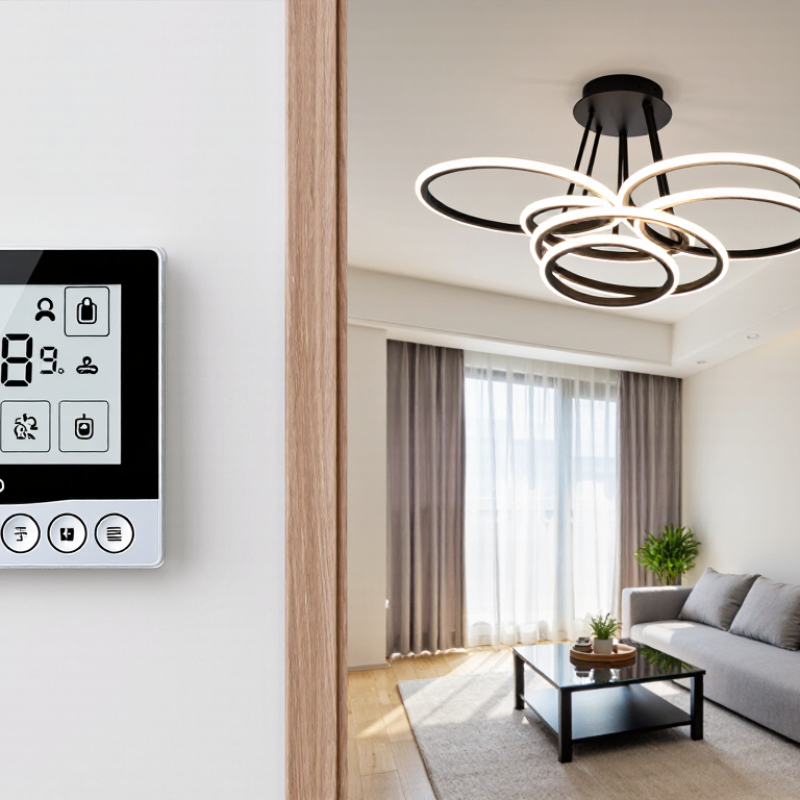
Mechanical, digital, astronomical, and smart switches solve different timing problems. A mechanical timer uses a rotating dial and small pins; it suits a lamp that follows the same daily schedule. Digital models allow weekday-specific settings and often keep time through brief outages with backup batteries. Check the actual backup specification, though. Not every model includes one.
Astronomical timers use your location to adjust switching times around sunrise and sunset. They are useful for outdoor lights that should track changing daylight without monthly resets. Smart switches add app control, remote changes, and sometimes sensor-based automation. That convenience depends on a stable connection, and setup can be fiddly. Small detail: confirm voltage, load rating, and LED compatibility before buying.
The U.S. Department of Energy’s Energy Saver guidance reports that LED bulbs use at least 75% less energy than incandescent bulbs. A timer cannot guarantee that saving; it helps only when lights would otherwise stay on unnecessarily. The IEA’s Energy Efficiency 2023 report estimates buildings use about 30% of global final energy, making practical controls worth considering alongside efficient bulbs. For a hallway light, a simple digital schedule may be enough. For a garden lamp, seasonal adjustment matters more. I would still check the timer’s minimum switching interval: a schedule that looks precise on paper may not fit how people actually use a room.

A timer switch rated 10 A or 16 A at 250 V AC may look suitable for a lighting circuit, but the printed rating alone is not enough. Check whether it applies to resistive loads or specifically covers LED lighting. LED drivers can draw a brief inrush current when switched on, even when their steady operating current is low. That first pulse matters.
For example, several ceiling fixtures may each use only a few watts, yet their driver capacitors can create a sharp combined surge. Compare the switch’s stated LED load limit, maximum inrush current, and switching endurance with the actual lamps or fixtures. A 16 A rating does not automatically mean better LED compatibility. Ratings describe different conditions. Read the datasheet carefully.
Also consider how often the timer will operate. A hallway light that switches several times each day may wear contacts faster than a porch light used once nightly. Keep the lamp count and model details handy when checking specifications. It is easy to overlook inrush. I would not guess from wattage alone; if the product documentation is unclear, ask a qualified electrician to verify the match and installation.
For a light timer switch, compare the schedule it can actually keep with your daily routine. A 24-hour model repeats the same on-and-off times every day. It suits a porch lamp that should turn on at 6 p.m. and off at 11 p.m. year-round, but seasonal sunset changes may make that schedule less useful.
A 7-day timer lets you set different hours for weekdays and weekends. That can help when a hallway light is needed earlier on workdays, while a weekend schedule runs later. Check how many on/off periods it supports each day; some routines need more than one cycle. Dusk-to-dawn models use a light sensor instead of fixed clock times. They adapt as daylight shifts, though nearby lamps, deep shade, or a covered sensor can affect readings. Placement matters. Test it after installation.
Tips: Write down your desired times for a typical week before buying. Confirm the switch works with your wiring and the light’s load, and check whether it needs a neutral wire. For dusk-to-dawn control, keep the sensor exposed to natural light. A short test period can reveal schedule gaps; settings that look perfect on paper may need adjustment.
When choosing a timer switch for lights, check the exact safety standard listed for its design. IEC 60669-2-3 covers time-delay switches for household and similar fixed electrical installations. A label alone is not proof of compliance. Ask for a test report that identifies the model, rated voltage, load type, and applicable standard.
For use in China, confirm which current GB requirements apply to the product’s construction and intended installation. The relevant standard can depend on whether the switch is mechanical or electronic, and how it is mounted. Check that the documentation matches the product in your hand, not just a similar model. Small details matter. A timer tested with one load type may not suit every LED lamp, especially where inrush current is high.
Tips: Before buying, compare the switch’s rated load with your lights, inspect terminal markings, and check whether the instructions specify neutral wiring. Request verifiable compliance documents from the seller. If the paperwork is unclear, pause and ask a qualified electrician; I would not guess from the casing or packaging alone.
| Selection Dimension | What to Check | Practical Buying Guidance | Evidence to Request |
|---|---|---|---|
| Product type and intended use | Confirm that the device is a time-delay switch (TDS) intended for fixed household or similar electrical installations. | Choose a fixed-installation timer for permanently wired lighting. A plug-in timer or smart controller may fall under different product standards and certification scopes. | Product specification identifying the intended installation method and applicable product category. |
| International product standard | IEC 60669-2-3 covers particular requirements for time-delay switches, and is used together with the relevant general requirements in IEC 60669-1. | Check that the test report or declaration identifies the exact standard edition and the switch model or model family covered. A reference to the standard alone does not prove that a product was tested. | Test report from a competent laboratory, with product identification, standard edition, test results, and any limitations. |
| Applicable Chinese GB requirements | For a time-delay switch within its scope, check GB/T 16915.4 (Part 2-3: Particular requirements for time-delay switches) together with the applicable general requirements of the GB/T 16915 series. | Confirm the current edition, effective status, and applicable national adoption for the product and intended market using official Chinese standards information or the relevant certification scheme. | Chinese-language test documentation or conformity documents citing the applicable GB/T standard numbers and editions. |
| CCC scope in China | Whether CCC certification is required depends on the product’s construction, ratings, intended use, and the current mandatory product catalogue and implementation rules. | Do not assume every timer switch is either covered or exempt. Verify the exact product category and scope before import, sale, or installation in China. | Where applicable, a valid CCC certificate and matching certification information for the product; otherwise, a documented scope assessment. |
| Rated voltage and frequency | Read the marked rated voltage and frequency and compare them with the installation supply. Many mainland China lighting installations use nominal 220 V, 50 Hz supply. | Check the product’s stated operating range and installation instructions rather than relying on a general description such as “universal voltage.” | Rating label, datasheet, and instructions showing voltage, frequency, and connection details. |
| Load type and switching capacity | Check the permitted load type and rated switching capacity. LED drivers, fluorescent lighting, and other electronic loads can have different switching and inrush characteristics from resistive loads. | Use the manufacturer’s stated limits for the specific load type. Do not treat a resistive-load rating as an equivalent LED or driver rating unless the documentation expressly supports it. | Load table or technical specification covering the intended lamps or drivers, including any load restrictions. |
| Timing function and operation | Confirm the delay or timing range, how the timer is activated and reset, and its behavior after a power interruption. | Match the operating sequence to the application, such as corridor lighting or a timed light circuit. Check whether settings are retained or reset as specified in the instructions. | Operating instructions and functional test results for the stated timing modes. |
| Installation and wiring | Check terminal identification, conductor requirements, mounting method, enclosure suitability, and any neutral-wire requirement. | Confirm compatibility with the existing wiring and installation location. Installation should follow the product instructions and local electrical rules. | Wiring diagram, installation manual, terminal details, and applicable environmental or enclosure ratings. |
| Safety and traceability | Check required markings, manufacturer or responsible-party information, model identification, ratings, and warnings appropriate to the market. | Ensure the supplied product, packaging, instructions, and test documents refer to the same model and configuration. A logo or claim by itself is not proof of conformity. | Clear product markings, traceable documentation, and reports that can be verified with the issuing organization. |
Note: Standards and certification obligations depend on the product design, ratings, intended use, and the editions in force. Verify the current requirements for the exact model before purchase or sale; this table is a selection aid, not a substitute for a conformity assessment or qualified electrical advice.
China Best Timer Switch for Lights: How to Choose?
When evaluating Chinese suppliers, ask for test reports tied to the exact model, not a similar product family. Check the report’s date, sample identification, test conditions, and issuing laboratory. Confirm that ratings cover your intended load, such as LED lighting, and request switching-cycle and temperature results. IEA’s Energy Efficiency 2023 report estimated global energy-intensity improvement at 1.3% in 2023, below the roughly 2% average annual pace of the previous decade. That is useful context, not proof that a timer switch will deliver specific savings.
Check the warranty in writing. It should state the coverage period, exclusions, replacement process, and who pays shipping for failed units. Ask how the supplier handles faults found after installation. A polished PDF is not enough; reports should be verifiable with the issuing laboratory, and production units should match the tested sample. Small detail. Keep a dated copy.
Installation support matters too. Request a wiring diagram, terminal labels, load limits, and guidance for setting schedules after a power cut. Ask whether support staff can answer technical questions in clear English and provide a response-time expectation. I would still be cautious: good documents cannot guarantee every batch is identical. For a first order, test samples with the actual lamps and enclosure before buying at scale.


For those larger-sized parts, or smaller quantity runs, we have 2 independent powder coat booths and ovens. The quality, durability and affordability of today’s powder coating finishes make this the process of choice for world-class companies.
Powder coating advantages over other forms of coating are many. Materials used in the Powder coating process can be metals and non-metals that come in a multitude of thicknesses, textures, colors, etc. Another of Powder coating’s biggest advantages over conventional coatings is its ability to create finishes in many different textures. Powder Coating Booths allow us the ability to apply these advantages to large products.
Tri-State Fabricators runs a full-service conveyor line for painting. Wet painting can provide protection or decoration to many different part styles. From start to finish, every project is easier to undergo random and point-based inspection by our skilled painting team.
Advantages to our Wet Paint Line are these lines start with product prep and ends with a thorough inspection of a high quality finished product. Our ability to complete large and small projects with a superior finish and doing so in a timely and economical fashion. This passes along the savings in production to our customers. When powder coating ins not an option, our Wet Paint Line gets the job done right the first time.
When the parts get big and heavy we roll-out our custom paint racks and oversize booth. By utilizing our partnerships with all the major paint brands, we can match virtually any color with wet paint.
The advantages of having access to a Wet Paint Booth are many. Large projects of many different shapes can be loaded into the booth. The Wet Paint Booth offers an environment that is much more controlled than a typical parts painting operation.
Not only are they used because of their controlled environment, but they’re are also advantageous when it comes to applying paint to parts that are needed in industries that require specialty coatings such as medical, aerospace, etc.
Our military forces have some very high standards when it comes to the finish of their vehicles and equipment. From the first pre-treatment step to final coat, it takes a great deal of knowledge and experience to protect the men and women of our armed forces. They deserve only the best, and Tri-State Fabricators provides it.
All of our processes are closely monitored by our staff and management teams. Both of which are highly trained in the processes of metal fabrication and finishing. Tri-State Fabricators’ goal is to always fully satisfy each and every customer, including the military. We will always put a 110% into what we do.
Abrasive media blasting is an excellent way to remove old paint, rust, and increase the paint/powder adhesion. Glass beads produce a much smoother and brighter finish than angular abrasives; leaving the part clean yet without any dimensional change. Chemically inert and environmentally friendly, we can recycle our beads approximately 30 times; making them a more preferred method of metal cleaning or surface finishing.
Advantages to Glass Bead Blasting are many. Glass bead blast media is used when a project is needing rough surfaces need to become smooth for applications of coatings such as paint. It is typically used to clean paint and rust from a product surface without deforming the surface it is being used on. Overall, compared to many other blasting media, Glass Bead Blasting is a very economical choice and those savings are always passed on to our customers.
Tri-State Fabricators utilize a zinc phosphate wash to clean and etch the material to ensure the best paint adhesion possible. The unique design of our 3-stage wash system does the work like a 5-stage. From Cleaning and rinsing to conversion coating and post-treatment, Our Part Washing process is a complete service and works throughout the fabrication service and the finishing service.
Along with the previously mentioned benefits, Curing is a vital chemical reaction that leaves the product finish hard and relatively safe from mild abrasion and aggressive corrosion. This process can be done in more than one way; ambient air-dry or in curing ovens at temps that exceed 240°.
From fixing paint mistakes (someone else’s of course) to simply cleaning our paint line hooks, our burn-off oven is put to good use. After a quick burn-off, a little clean up, and a fresh coat of paint, your parts will look better than new.
Why does our Burn-Off Oven work so well? Because super heating the air around parts turns the materials into ashes. From paint and powder coatings to rubber and machining oils, high temps do the job without degrading the integrity of the part.
Masking is a vital part of producing high quality products. We have die-cut masking patterns to protect machined surfaces as well as a wide range of plugs and caps to protect threaded holes and bolts. We provide permanent and temporary masking.
Masking allows the selected sections of a product to be protected from a fabrication or finishing service. This can be with both chemicals when etching and tapes, paints when only finishing just a section of the product. Masking is great in aiding the customization process of a project.
Screen printing is a photographic process that transfers artwork onto a porous nylon screen which allows colored ink to flow through the screen and be deposited on an aluminum or plastic component. We can generally have just about any design created onto a screen for your parts.
Some of the advantages of Screen Printing are, brand recognition for your business displaying on your products, assembly instructions, product warnings/hazards, etc. Tri-State Fabricators produces Screen Printing of the highest quality so you know it’s durable.
Metal Finishing is the art of treating the exterior portion of product, often metal but can also be made of other materials, so that the surface is clean and free of any debris. Then the process of applying coats or either paint of powder coat takes place. This coating process improves the quality of the product in both appearance and resistance to wear and corrosion.
Tri-State Fabricators, Inc., understands that a project typically isn’t complete until a high-quality finish has been added to your product. This is why our painting and powder coating teams continuously inspect the products throughout the Metal Finishing process.

