How to Choose the Best Shelving System for Your Business
Choosing shelving is not just a matter of filling empty wall space. The right system should fit your products, workflow, floor plan, and plans for growth. A busy stockroom may need clear labels and fast access. A workshop may need sturdy shelves for uneven loads and frequently used tools. Measure the space carefully. Note doorways, columns, ceiling height, and the turning room needed for carts. Small details matter.
As [Expert Name], a shelving specialist with Achieve Shelving System, puts it: “Choose shelves for the work your team does every day.” Treat that as a starting point, not a complete specification. Check the weight and dimensions of stored items, how often staff retrieve them, and whether inventory changes by season. Consider installation, adjustment, and routine inspections, too. The cheapest option can become costly when it slows picking or leaves awkward gaps. Yet a complex system is not automatically better. Keep the plan practical.
This guide explains how to compare shelving types, assess capacity, and use available space more effectively. It also highlights questions to ask before purchase, from future expansion to safe access at busy workstations. Bring actual product measurements to the planning stage; estimates can miss the bulky carton or oddly shaped part. Some choices will remain uncertain until your team tests a layout. That is worth admitting. A reliable shelving decision begins with real operating needs, careful measurements, and a willingness to revise the plan.
Define Storage Needs and Inventory Requirements
Before choosing a shelving system, list what your business stores and how those items move. Record each product’s dimensions, weight, quantity, and typical turnover. Include packaging, not just the item itself. A box measuring 30 centimeters wide may need extra room for labels or safe handling. Note seasonal peaks and reserve stock, too. They can change the space you need.
Think about daily work as well as capacity. Fast-moving items often belong near packing areas, while slower stock can sit farther away. Measure aisle widths, ceiling height, and doorways before planning shelf locations. Check the load requirements for each shelf level, and leave room for clear labels and replenishment. Planning to use every inch sounds efficient, but it can make access awkward. Storage needs also change; review your inventory after product or packaging changes.
Tips: Measure a sample of each product. Weigh the heaviest typical load. Keep a little spare capacity. Recheck the plan after busy seasons. I would not treat one inventory count as permanent; it is only a snapshot.
Define Storage Needs and Inventory Requirements
Illustrative sample inventory audit—not an industry benchmark. Count inventory by storage profile before choosing shelving. Small parts may need bins, cartons need accessible shelf space, and long or heavy items may require purpose-built bays. Check item dimensions, weight, turnover, and required load ratings when planning your system.
Compare Shelving Types, Materials, and Load Capacities
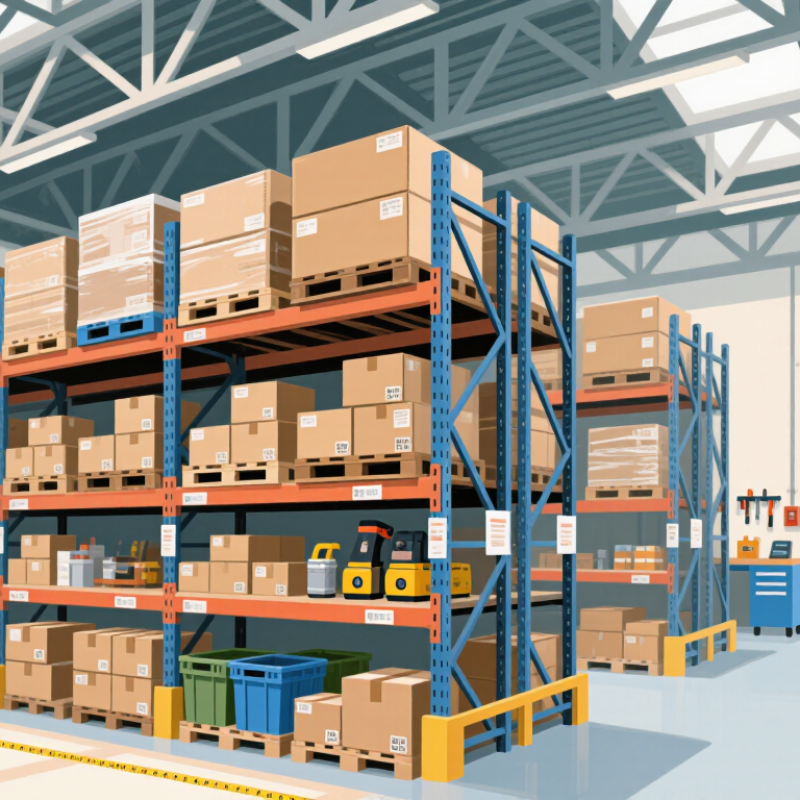
Choose shelving by the shape and weight of each item, not by appearance alone. Wire shelving suits small cartons and allows airflow; steel longspan shelving supports larger, hand-loaded goods. Pallet racks are designed for palletized loads and forklift access. Steel generally offers durability, while wire decks can reduce dust buildup. Particleboard decking may suit dry storage, but moisture can weaken it.
Capacity varies by design. Check the rated load per shelf and per bay, and confirm whether the rating assumes evenly distributed weight. Twelve cartons weighing 18 kilograms each create a 216-kilogram shelf load; one heavy crate concentrates that load differently. Not interchangeable. For pallet racks, the Rack Manufacturers Institute’s ANSI MH16.1 standard covers structural design and testing. Follow the system’s posted ratings rather than estimating from material thickness.
MHI’s 2024 Annual Industry Report found that 55% of surveyed companies planned to increase supply-chain technology investment. That points to a practical question: will your layout still work as stock and handling methods change? Measure clear aisle widths, shelf spans, and the tallest item before ordering. I would still verify a supplier’s load documentation against your actual goods; a tidy spreadsheet can miss a dense, awkward crate.
Assess Available Space, Layout, and Workflow
Before selecting shelving, map the space as it operates, not merely as it appears on a floor plan. Measure clear aisle widths, doorways, columns, ceiling height, and sprinkler clearance. Then observe a normal shift: where do workers receive cartons, replenish stock, pick orders, and stage outgoing goods? Mark cart turning points and places where people cross paths. A few minutes of observation can expose a costly bottleneck. A tidy drawing can still mislead.
Match shelf depth and location to the items and movement patterns they support. Fast-moving products may belong near packing stations, while reserve stock can sit farther away. Leave enough room for safe access and replenishment; a tightly packed layout can increase handling and block useful routes. MHI’s 2024 Annual Industry Report found that 55% of surveyed organizations planned to increase supply-chain technology investment. That makes flexibility worth considering: modular shelving can accommodate scanners or changing inventory, but only if the layout supports the actual workflow. Test a proposed arrangement with taped floor lines and loaded carts before installation. It is not a perfect simulation. Still, it may reveal awkward turns and obstructed sightlines before they become daily problems.
Evaluate Safety, Durability, and Compliance Needs
A shelving system must suit the real load, not just the number on a product sheet. Record each shelf’s maximum load, then check how weight is distributed. Dense cartons on one end can strain a beam even when the total load seems acceptable. Look for bent uprights, loose anchors, and impact marks near forklift routes. A tidy inspection sheet can still miss a damaged post.
Safety data makes this practical. The U.S. Bureau of Labor Statistics reported a 4.8 total recordable case rate per 100 full-time workers for transportation and warehousing in 2022, versus 2.7 across private industry. That figure covers a broad sector, not shelving alone, but it underscores why storage design and inspection deserve attention. OSHA’s 29 CFR 1910.176(b) also requires stored materials to be secured against sliding or collapse. Small details matter.
Check that the system’s rated capacities match your goods, handling equipment, and floor conditions. Ask for load plaques, installation documents, and inspection guidance. Compare the design with applicable standards, such as ANSI MH16.1, and confirm local fire, seismic, and building requirements with qualified professionals. Keep required sprinkler and exit clearances visible on the floor. They’re easy to overlook. Reassess after layout changes, new equipment, or repeated impacts; not every upgrade improves safety if it narrows an aisle. The right choice may take more measuring than expected.
Compare Costs and Choose a Scalable Shelving System
How to Choose the Best Shelving System for Your Business
Compare Costs and Choose a Scalable Shelving System
Shelving costs include more than the purchase price. Compare delivery, installation, floor preparation, and staff assembly time. A cheaper system may need extra bracing or frequent repairs. Measure aisle widths, ceiling height, and your largest items before requesting quotes. Boxed stock may need deep shelves, while small parts often suit shallow bins. Leave room for safe access and everyday picking.
Compare the cost per usable storage position, not just the price per bay. Ask for itemized quotes and confirm load limits, adjustment options, and replacement-part availability. Modular shelves may cost more upfront but can adapt as inventory changes. Check how easily you can add bays or reposition shelves without interrupting work. Growth plans are rarely exact. Spare capacity helps, but too much can waste floor space.
Tips: Sketch the layout and mark doors, columns, and busy routes. Price a realistic expansion phase, not an optimistic guess. Compare maintenance needs in writing. Recheck measurements; they are easy to get wrong. Test a sample bay with actual cartons and picking routines before committing. A trial may reveal awkward reach distances or shelf heights that looked fine on paper.
How to Choose the Best Shelving System for Your Business — Compare Costs and Choose a Scalable Shelving System
Compare typical system costs, storage needs, and expansion options before choosing. Cost ranges below are illustrative U.S. planning estimates in USD, not quotes; actual prices vary by dimensions, load ratings, materials, location, freight, installation, and safety requirements.
| Shelving system | Typical budget (USD) | Best suited for | Space and access | Scalability | Key trade-off |
| Boltless steel shelving | About $100–$400 per standard bay | Hand-loaded cartons, supplies, and small parts | Uses fixed aisles; items are generally picked by hand | Easy to add compatible bays; check that added units match the original system | Not intended for forklift handling or loads beyond its rated capacity |
| Longspan shelving | About $250–$900 per bay | Bulkier cartons, bins, and medium-weight items | Hand access from aisles; wider spans can reduce the number of uprights | Usually expandable by adding bays and adjusting shelf levels within rated limits | Requires aisle space and may need different components from light-duty shelving |
| Selective pallet racking | About $300–$1,200 per bay, before installation | Palletized inventory needing direct access to each pallet | Forklift-accessible aisles; straightforward access can require more aisle area | Can be extended with compatible frames and beams; design for future loads and layout changes | Requires appropriate material-handling equipment and careful load and safety planning |
| Cantilever racking | About $500–$2,000 per starter bay | Long or awkward items such as pipes, lumber, and sheet goods | Open-front arms allow loading from the side; equipment access must be planned | Capacity can be expanded by adding columns or arms designed for the intended loads | Specialized design; arm length, column spacing, and load distribution affect capacity |
| Mobile shelving | Often several thousand dollars per mobile aisle section; project pricing varies substantially | Records, archives, or other items where floor space is limited | Shelves move to open one working aisle at a time, reducing permanent aisle space | Can be extended, but track layout, floor conditions, and system components constrain changes | Higher initial cost and slower simultaneous access than fixed open-aisle shelving |
Planning note: Confirm the maximum load per shelf, beam, bay, and floor area with the supplier or a qualified designer. Compare like-for-like quotes that include the same scope, such as decking, guards, anchoring, delivery, installation, and any required inspections.





