How to Choose the Best Screw Vacuum Pump for Your Needs?
When selecting the right Screw vacuum pump, you'll face various options and features. Your individual needs can influence the decision-making process. This equipment serves diverse applications, from industrial manufacturing to laboratory use.
Understanding the technical specifications of a screw vacuum pump is crucial. Factors such as pumping speed, ultimate vacuum, and power consumption matter significantly. Each parameter can impact performance and operational efficiency.
It is easy to overlook quality and reliability. Yet, with a well-informed choice, you can ensure durability and consistent performance. Choose models that have proven track records. Look for brands with industry recognition and expert recommendations. Trusting the right sources can guide you toward making a confident selection.
Understanding the Basics of Screw Vacuum Pumps
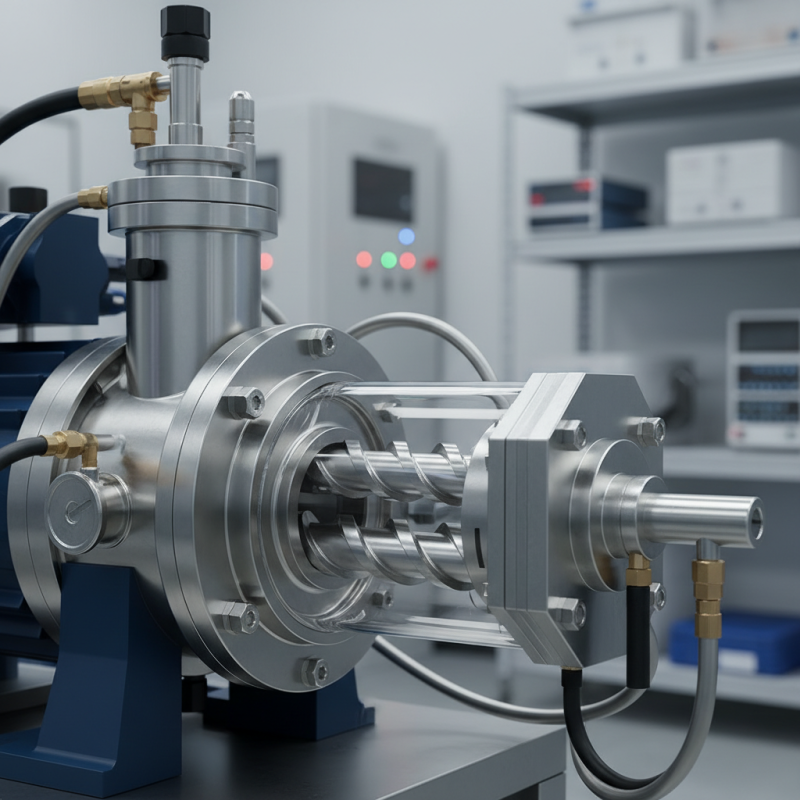
Screw vacuum pumps are essential in various industries. Understanding their basics helps in making informed choices. These pumps operate using two helical rotors, which create a vacuum without oil contamination. As a result, they are suitable for sensitive processes. Their design allows for steady, continuous operation. This feature is critical for industries like pharmaceuticals and food processing.
Tips for selecting the right screw vacuum pump include assessing your specific application needs. What is the desired vacuum level? How much air must be evacuated? Identifying these requirements prevents purchasing a pump that's insufficient for your tasks. Additionally, consider the pump’s maintenance. Regular upkeep is necessary to ensure consistent performance.
Another key aspect is energy efficiency. Some pumps consume more power than others. Always evaluate the energy costs against the pump's performance. This approach could reveal a model that offers better long-term savings. Understanding these factors promotes better decision-making when choosing a screw vacuum pump.
Identifying Your Specific Pumping Requirements
When selecting a screw vacuum pump, understanding your specific pumping requirements is essential. The application dictates the needed specifications. For example, if the task involves handling volatile substances, pumps must have enhanced sealing capabilities. The global market for screw vacuum pumps is projected to grow significantly, rising from $1.1 billion in 2022 to over $1.6 billion by 2028, showing a compound annual growth rate of 7.3% (source: Industry Research Report 2023).
Consider the required flow rate. For many industries, such as food packaging or pharmaceuticals, the flow rate must be precise. A common requirement can be around 100 m³/h. If the pump is under or over-specified, efficiency drops, causing higher operational costs. It’s also important to evaluate the ultimate vacuum pressure. Depending on the process, a pressure range of 0.01 to 10 mbar may be necessary. Selecting a pump that doesn't fit these parameters could lead to less reliable performance.
Another factor is the environmental conditions. High-temperature or humid environments can affect pump longevity. Studies show that about 15% of pump failures are due to inappropriate environmental conditions. Regular maintenance is crucial, yet many overlook this aspect. Skipping maintenance can lead to drastic inefficiencies and even complete pump failure, highlighting the need for vigilance in maintaining operational standards.
Comparing Different Types of Screw Vacuum Pumps
When comparing different types of screw vacuum pumps, it's essential to understand their distinct features. These pumps can generally be classified into two main categories: dry and liquid-ring screw vacuum pumps. Dry screw pumps operate without fluid, making them ideal for applications where contamination must be minimized. According to a report from Grand View Research, the dry vacuum pump market is expected to grow at a CAGR of 6.2% from 2021 to 2028. This growth reflects the increasing demand across various industries, including pharmaceuticals and semiconductors.
On the other hand, liquid-ring screw vacuum pumps use a liquid to create a seal, which can be beneficial in some applications. They are often more suitable for handling wet, humid gases. The choice depends on your application's specific needs and the type of gases being processed. A recent study indicated that the efficiency of liquid-ring pumps can be affected by the viscosity of the liquid used, potentially leading to inefficiencies if not properly managed.
Moreover, the installation and maintenance costs can vary widely between the two types. Dry screw pumps require lesser maintenance but have higher initial costs. On the contrary, liquid-ring pumps may have lower initial costs but require more frequent maintenance checks. These factors should be weighed carefully to ensure that you select the pump that best suits your operational needs.
Evaluating Pump Performance Characteristics
When evaluating screw vacuum pumps, critical performance characteristics come into play. Look at the pumping speed, which affects how quickly the pump can evacuate a chamber. A higher pumping speed can lead to quicker process times. However, not every application requires max speed. Sometimes, a pump with moderate performance suffices.
Another important characteristic is ultimate vacuum. It indicates the lowest pressure the pump can achieve. If your application demands extremely low pressures, choosing a pump designed for that capability is essential. Keep in mind that achieving an ultimate vacuum often comes with trade-offs, like increased power consumption. This could influence operational costs.
Consider the machine's compatibility with your system. This involves checking the pump's size, weight, and connection types. A pump that fits well in the available space enhances efficiency. Additionally, noise levels can impact your work environment. A quieter pump may justify a higher initial investment if it improves working conditions. Pay attention to these details; they can significantly affect pump performance and longevity.
How to Choose the Best Screw Vacuum Pump for Your Needs? - Evaluating Pump Performance Characteristics
| Performance Characteristic | Description | Importance Rating (1-5) |
| Pumping Speed | Rate at which the pump can evacuate gases, usually measured in m³/h. | 5 |
| Ultimate Vacuum | The lowest pressure the pump can achieve, typically expressed in mbar or Pa. | 4 |
| Noise Level | Sound produced by the pump during operation, measured in dB. | 3 |
| Energy Efficiency | The ratio of output work to the energy consumed; higher ratio indicates efficiency. | 5 |
| Maintenance Frequency | Interval of routine maintenance needed to ensure optimal performance. | 4 |
| Port Size and Type | Size and configuration of the inlet and outlet ports for compatibility. | 3 |
Considering Maintenance and Support Services
When selecting a screw vacuum pump, maintenance and support services are crucial factors. Regular maintenance ensures optimal performance and extends the pump's lifespan. Well-maintained pumps operate efficiently, preventing downtime in your operations. Inadequate maintenance can lead to unexpected breakdowns. This situation increases costs and affects productivity. It's essential to establish a maintenance schedule that works for your facility.
Consider the support services offered by the manufacturer or distributor. Reliable support can simplify troubleshooting and repairs. A knowledgeable team can help identify issues quickly, minimizing downtime. Evaluate the response time for service requests. Quick, effective support is invaluable during emergencies. Many users underestimate the importance of adequate support until they face a problem.
Think about your specific needs. Are you in an environment that requires frequent use? Or do you expect potential operational stresses? A pump may need a different service frequency in these cases. Reflecting on these factors can lead to better decisions. Choose a vacuum pump that aligns with your operational requirements and ensures reliable support.
Comparative Analysis of Screw Vacuum Pump Maintenance Costs