


How to Choose the Best Rescue Drone in 2026

Choosing a Rescue Drone in 2026 means matching equipment to the conditions responders actually face. A compact aircraft may fit through narrow streets, while a larger model can carry brighter lights or specialized sensors. Neither is automatically the better choice. The right answer depends on mission type, terrain, weather, and the skills of the people operating it. Details matter.

This guide compares practical features, including flight time under load, camera clarity, thermal imaging, wind tolerance, signal reliability, and battery-swap speed. A screen image that looks sharp in a showroom may be harder to interpret through rain, smoke, or glare. Buyers should examine manufacturer specifications alongside independent testing and feedback from experienced emergency-response teams. They should also consider training, maintenance access, spare parts, and how the aircraft fits existing procedures. These factors affect readiness long after the initial purchase.

No model is perfect. A longer flight time may come with added weight, and advanced sensors can increase cost and training needs. This overview explains how to weigh those trade-offs, compare models fairly, and identify claims that need closer verification. It is not a substitute for hands-on evaluation or local operational guidance. Use it as a practical starting point before selecting a Rescue Drone for real-world response.
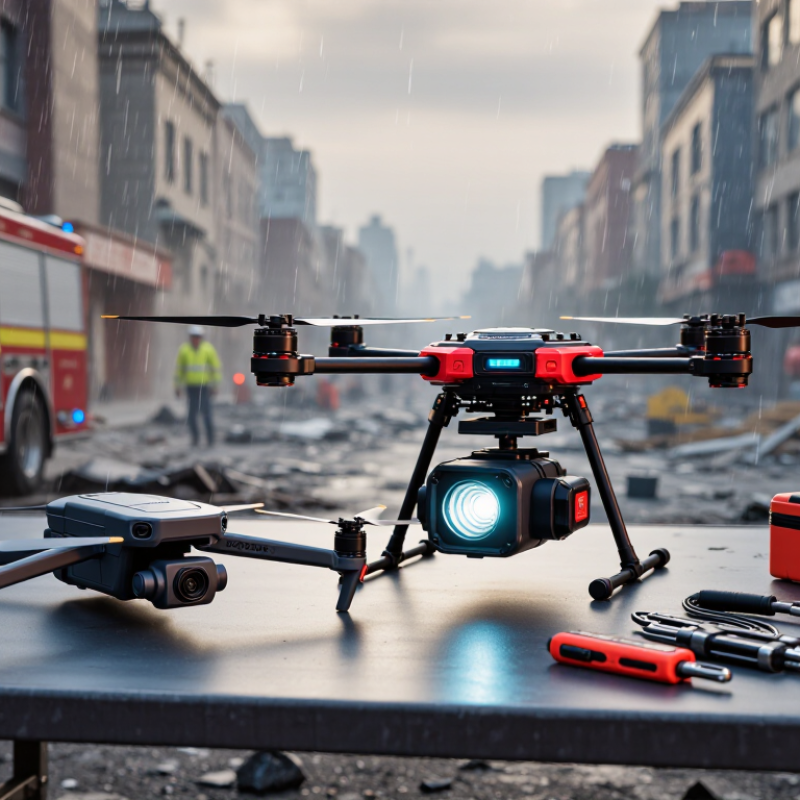
How to Choose the Best Rescue Drone in 2026

Define the Rescue Mission and Operational Requirements

Before comparing aircraft, define the rescue mission in plain, measurable terms. Are crews searching a wooded hillside, a flooded road, or a wide stretch of coastline? Estimate the search area, likely flight time, launch points, and visibility. Be specific. A thermal camera may help locate a person beneath light cover, while a zoom camera can inspect distant terrain. Neither replaces trained observers or ground teams.

Set minimum requirements for endurance, wind tolerance, image quality, and reliable communication at the scene. Note obstacles such as trees, steep slopes, and buildings that could weaken a signal. Consider whether the aircraft must carry a small medical item, a loudspeaker, or only a camera; extra weight can shorten flight time. Night searches need suitable sensors and clear procedures for handoffs between crews. Check how quickly batteries can be changed, too.

Real incidents rarely follow a neat checklist. A planned launch site may be blocked, or cold weather may reduce battery performance. Leave a practical reserve rather than treating the advertised maximum flight time as usable search time. Record who will pilot, observe, interpret images, and coordinate with responders. Then test the proposed setup in similar terrain and weather. The first plan may be wrong. Revise it using measured results, not hopeful assumptions.


How to Choose the Best Rescue Drone in 2026: Define the Rescue Mission and Operational Requirements

Start by defining the search area, operating environment, payload, and required flight time. For U.S. flights under the standard FAA Part 107 rules, these distance limits are important baseline constraints.

How to use this chart: The 400-foot altitude limit is generally measured above ground level; the cloud-clearance figures are minimum separation distances. Match your drone’s capabilities to the mission while planning for these operating constraints. Rules may have exceptions or require authorization. Source: U.S. FAA Part 107.51

Assess Terrain, Weather, and Communication Conditions

Terrain should shape the rescue drone before camera features do. In a narrow canyon, walls can block control signals and hide people from a downward-facing camera. A compact aircraft may pass between trees, while a larger model may carry a stronger thermal sensor. Check launch space, obstacles, and safe return routes on foot. A neat map can still mislead.

Weather changes both flight time and image quality. Cold air can shorten battery life, and gusts may push a drone off course near cliffs or rooftops. Look for tested wind limits, rain protection, and batteries that can be monitored in the field. Wind changes fast. Do not treat a published maximum as a comfortable operating target. Wet leaves, glare, and low cloud can also make spotting a person harder than expected.

Communication matters as much as flight performance. In forests or urban blocks, buildings and ridges may interrupt the video feed even when the drone remains airborne. Range is not enough. Assess line-of-sight limits, signal-loss behavior, and whether the crew can use a lawful relay point. Practice handoffs between pilot and search coordinator before an incident; small misunderstandings happen. I would also test the system with gloves and noise nearby, because controls that seem obvious indoors may not be obvious outdoors.

Compare Payload, Flight Time, Range, and Sensor Capabilities

A rescue drone should be judged by what it can do over a search area, not by its best-case specification. The FAA’s 2024 Aerospace Forecast reports more than 1.7 million registered U.S. drones, a reminder that operators have many platforms to compare. But fleet growth does not make every aircraft suitable for emergency work. Payload must include the camera, lights, and any delivery equipment—not just the rescue item. A heavier load can shorten flight time. Test the aircraft with its working load, in wind and cold.

Range figures can also mislead. Separate control-link range from useful mission radius, then reserve power for the return flight. NIST’s small unmanned aircraft test-method research supports repeatable performance testing; compare aircraft under the same conditions. A practical trial should record minutes aloft, distance flown, and remaining battery after landing. Small details matter. A drone that reaches a distant ridge but cannot return safely is a poor choice.

Sensor capability depends on the search task. Thermal imaging can help locate a warm body in darkness, while a zoom camera can inspect a shoreline or steep slope from safer distance. Check image clarity, stabilization, and performance in rain or haze—not just sensor resolution. FAA figures describe registrations, not rescue outcomes. That gap matters. Specifications alone cannot prove field value, and teams should verify results with realistic exercises before relying on them.

Verify Safety Features, Reliability, and Regulatory Compliance

When assessing a rescue drone in 2026, treat safety evidence as more important than advertised range. Inspect the aircraft, controller, and payload system as one working unit. Ask how it handles lost links, low batteries, and sudden wind near buildings. A clear return-to-home plan matters, but it should not replace a trained operator.

Request maintenance intervals, battery-cycle guidance, and documented flight-test results. Confirm emergency landing behavior has been tested with the intended camera or medical payload attached. Check weather limits carefully; a water-resistant body does not make every flight safe in rain. Small details count. Can replacement parts arrive quickly, and can your team inspect motors without special tools?

Judge reliability through repeatable performance, not a single polished demonstration. Review service records, software update procedures, and how faults are reported and corrected. Before purchase, verify applicable aviation rules, pilot qualifications, operating permissions, imaging privacy requirements, and local emergency-service protocols. Get compliance in writing. Requirements vary by location and mission, so confirm them with the relevant aviation authority rather than relying on sales material.

Evaluate Training, Support, and Total Ownership Cost

How to Choose the Best Rescue Drone in 2026

Training, Support, and Total Ownership Cost

A rescue drone is only useful when the team can deploy it safely under pressure. Training should reflect real tasks: launching in gloves, reading thermal images, and locating a test target in low light. Ask how much hands-on instruction is included and who can train new staff when the original operators leave. A short demonstration is not a training plan. That matters.

Check whether practice covers battery changes, signal loss, weather limits, and safe landing procedures. Teams should also know how to interpret image quality, not just operate the controls. Keep time for repeat exercises; skills fade between deployments. Training schedules are easy to underestimate.

Support can determine how quickly equipment returns to service. Ask about repair turnaround, spare-part availability, and support hours, then get the answers in writing. Review warranty exclusions and any recurring fees for software, mapping, or data storage. Compare the full cost over several years, including batteries, maintenance, replacement parts, transport cases, and refresher training. A spreadsheet may still miss costs that appear after field use, so leave room in the budget for the unexpected.

How to Choose the Best Rescue Drone in 2026 — Evaluate Training, Support, and Total Ownership Cost

Rescue Drone Type Best-Fit Missions Training to Plan For Support to Require Ownership-Cost Profile Key Limitations to Check
Compact multirotor Rapid visual searches, scene overviews, and operations in confined areas. Basic flight practice, mission planning, battery handling, and camera operation. Add role-specific instruction for night or complex operations. Confirm access to replacement batteries, propellers, repairs, software updates, and a clear process for diagnosing faults. Usually the lowest initial equipment and transport burden. Include spare batteries, repairs, training time, and eventual replacement in the five-year budget. Shorter endurance and limited payload capacity compared with larger aircraft. Wind, precipitation, and temperature can affect flight performance.
Thermal-imaging multirotor Searches where heat signatures may help locate people, including low-light conditions and some obscured environments. Train operators to interpret thermal imagery alongside visible imagery; apparent heat patterns are not, by themselves, proof that a person is present. Check camera calibration guidance, sensor repair options, image-export compatibility, and access to technical help during deployment. Higher acquisition and repair exposure than a basic visual aircraft. Budget for sensor servicing, batteries, training, and data-storage needs. Thermal cameras do not see through walls, and environmental conditions, distance, vegetation, and surface temperatures can affect detection.
Long-endurance multirotor Extended-area searches, repeated observation, and missions where additional flight time reduces battery-change interruptions. Include advanced mission planning, battery-cycle management, return-to-home settings, and contingency procedures in recurrent practice. Ask for documented repair turnaround, battery availability, firmware support, and a practical loaner or replacement arrangement. Generally higher purchase and battery costs. Compare the cost of extra flight time with charging equipment, spare batteries, maintenance, and operator hours. “Maximum flight time” is not a guaranteed field duration; payload, wind, temperature, battery age, and operating procedures can reduce it.
Heavy-payload multirotor Specialist tasks requiring a larger sensor or equipment payload, when the mission and aircraft configuration permit it. Plan for advanced handling, payload-specific procedures, weight-and-balance checks, and more demanding emergency drills. Verify payload integration support, approved configuration documentation, parts availability, and repair capability for both aircraft and payload. Typically the highest acquisition, transport, maintenance, and training burden among these multirotor types. Model each payload configuration separately. Greater payload capacity does not remove legal limits or operational risks. Confirm takeoff weight, environmental limits, and performance with the intended payload.
Fixed-wing or vertical-takeoff fixed-wing Searching large areas where longer-distance coverage is more important than hovering over a single point. Requires aircraft-specific launch, recovery, route-planning, and emergency training; vertical-takeoff models also require multirotor-mode practice. Check access to airframe parts, flight-control support, repair expertise, and field-recovery guidance. Costs depend heavily on airframe and sensor configuration. Include launch/recovery equipment, repairs, training, batteries, and specialist maintenance. Most fixed-wing aircraft cannot hover. Launch and landing space, recovery conditions, and the ability to inspect a target closely may constrain use.
Tethered multirotor Persistent observation over a fixed incident location when a ground power unit and tether arrangement are suitable. Train crews in tether deployment, cable management, ground-unit operation, emergency lowering, and coordination around the flight area. Require support for the aircraft, tether, ground power unit, and cable; confirm repair and replacement options for the complete system. Often involves substantial ground equipment and setup costs. Compare these with the value of persistent operation and reduced battery-swap frequency. The tether restricts movement and introduces cable-management hazards. Weather, site layout, power needs, and safe anchoring affect deployment.

Five-year total ownership cost: Compare purchase price + required sensors and accessories + training and recurrent exercises + batteries and charging equipment + repairs and maintenance + software or data fees + insurance and transport. Ask suppliers to itemize each cost and state warranty coverage, repair turnaround, parts availability, and any recurring fees. Relative cost descriptions are general planning guidance, not quotations.

Regulatory check: Rules depend on the country and mission. In the United States, confirm applicable FAA requirements for the operation, including pilot qualification, airspace authorization where required, night operations, and Remote ID obligations or exceptions. Verify current rules before deployment.

Powder Coat Booths

For those larger-sized parts, or smaller quantity runs, we have 2 independent powder coat booths and ovens. The quality, durability and affordability of today’s powder coating finishes make this the process of choice for world-class companies.

Powder coating advantages over other forms of coating are many. Materials used in the Powder coating process can be metals and non-metals that come in a multitude of thicknesses, textures, colors, etc. Another of Powder coating’s biggest advantages over conventional coatings is its ability to create finishes in many different textures. Powder Coating Booths allow us the ability to apply these advantages to large products.

Wet Paint Line

Tri-State Fabricators runs a full-service conveyor line for painting. Wet painting can provide protection or decoration to many different part styles. From start to finish, every project is easier to undergo random and point-based inspection by our skilled painting team.

Advantages to our Wet Paint Line are these lines start with product prep and ends with a thorough inspection of a high quality finished product. Our ability to complete large and small projects with a superior finish and doing so in a timely and economical fashion. This passes along the savings in production to our customers. When powder coating ins not an option, our Wet Paint Line gets the job done right the first time.

Wet Paint Booths

When the parts get big and heavy we roll-out our custom paint racks and oversize booth. By utilizing our partnerships with all the major paint brands, we can match virtually any color with wet paint.

The advantages of having access to a Wet Paint Booth are many. Large projects of many different shapes can be loaded into the booth. The Wet Paint Booth offers an environment that is much more controlled than a typical parts painting operation.

Not only are they used because of their controlled environment, but they’re are also advantageous when it comes to applying paint to parts that are needed in industries that require specialty coatings such as medical, aerospace, etc.

Military CARC

Our military forces have some very high standards when it comes to the finish of their vehicles and equipment. From the first pre-treatment step to final coat, it takes a great deal of knowledge and experience to protect the men and women of our armed forces. They deserve only the best, and Tri-State Fabricators provides it.

All of our processes are closely monitored by our staff and management teams. Both of which are highly trained in the processes of metal fabrication and finishing. Tri-State Fabricators’ goal is to always fully satisfy each and every customer, including the military. We will always put a 110% into what we do.

Glass-Bead Blasting

Abrasive media blasting is an excellent way to remove old paint, rust, and increase the paint/powder adhesion. Glass beads produce a much smoother and brighter finish than angular abrasives; leaving the part clean yet without any dimensional change. Chemically inert and environmentally friendly, we can recycle our beads approximately 30 times; making them a more preferred method of metal cleaning or surface finishing.

Advantages to Glass Bead Blasting are many. Glass bead blast media is used when a project is needing rough surfaces need to become smooth for applications of coatings such as paint. It is typically used to clean paint and rust from a product surface without deforming the surface it is being used on. Overall, compared to many other blasting media, Glass Bead Blasting is a very economical choice and those savings are always passed on to our customers.

Part Washing

Tri-State Fabricators utilize a zinc phosphate wash to clean and etch the material to ensure the best paint adhesion possible. The unique design of our 3-stage wash system does the work like a 5-stage. From Cleaning and rinsing to conversion coating and post-treatment, Our Part Washing process is a complete service and works throughout the fabrication service and the finishing service.

Along with the previously mentioned benefits, Curing is a vital chemical reaction that leaves the product finish hard and relatively safe from mild abrasion and aggressive corrosion. This process can be done in more than one way; ambient air-dry or in curing ovens at temps that exceed 240°.

Burn-Off Oven

From fixing paint mistakes (someone else’s of course) to simply cleaning our paint line hooks, our burn-off oven is put to good use. After a quick burn-off, a little clean up, and a fresh coat of paint, your parts will look better than new.

Why does our Burn-Off Oven work so well? Because super heating the air around parts turns the materials into ashes. From paint and powder coatings to rubber and machining oils, high temps do the job without degrading the integrity of the part.

Masking

Masking is a vital part of producing high quality products. We have die-cut masking patterns to protect machined surfaces as well as a wide range of plugs and caps to protect threaded holes and bolts. We provide permanent and temporary masking.

Masking allows the selected sections of a product to be protected from a fabrication or finishing service. This can be with both chemicals when etching and tapes, paints when only finishing just a section of the product. Masking is great in aiding the customization process of a project.

Screen Printing

Screen printing is a photographic process that transfers artwork onto a porous nylon screen which allows colored ink to flow through the screen and be deposited on an aluminum or plastic component. We can generally have just about any design created onto a screen for your parts.

Some of the advantages of Screen Printing are, brand recognition for your business displaying on your products, assembly instructions, product warnings/hazards, etc. Tri-State Fabricators produces Screen Printing of the highest quality so you know it’s durable.

Metal Finishing

Metal Finishing is the art of treating the exterior portion of product, often metal but can also be made of other materials, so that the surface is clean and free of any debris. Then the process of applying coats or either paint of powder coat takes place. This coating process improves the quality of the product in both appearance and resistance to wear and corrosion.

Tri-State Fabricators, Inc., understands that a project typically isn’t complete until a high-quality finish has been added to your product. This is why our painting and powder coating teams continuously inspect the products throughout the Metal Finishing process.
