


Choosing a Renishaw Raman spectrometer in 2026 starts with a practical question: what must the instrument reveal about your sample? A powder, a thin film, and a biological specimen can demand different sampling accessories, laser wavelengths, and microscope configurations. The best choice is not automatically the model with the longest feature list. It is the system that answers your research question reliably, fits your workflow, and can be operated by your team.
A useful buying principle, presented here as an editorial paraphrase rather than a verified quotation, is: “Match the Raman system to the sample and the question before comparing specifications.” Raman specialist Dr. Paul Monaghan is a relevant industry name to consult for product-specific guidance; this wording should not be treated as his verbatim statement. Ask vendors to demonstrate your sample under realistic conditions. Check signal quality, fluorescence, mapping speed, software usability, and the time needed to train new users. Small details matter: a sample holder that is awkward to change can slow a busy laboratory.
This guide compares key Renishaw Raman options through those practical considerations. It also covers budget, upgrade paths, service, and application fit. Specifications can look decisive on a screen, yet performance depends on the sample and setup. That is easy to overlook. A demo may not reproduce every real-world constraint, so document your requirements before making a decision. The right system should deliver useful data, not merely impressive specifications.
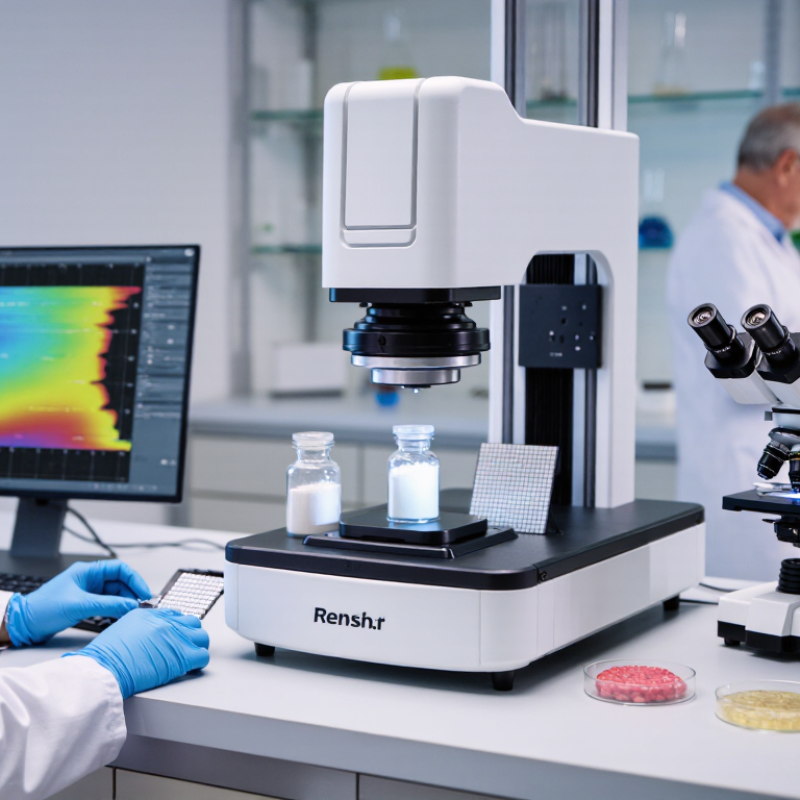
A useful instrument choice starts with a precise question. Are you identifying unknown compounds, mapping ingredients across a surface, or tracking changes during a process? Each goal calls for different priorities. Chemical identification may need broad spectral coverage and dependable reference comparisons. A tiny inclusion inside a material may require finer spatial resolution. Time matters, too. Ten samples per day is a different workload from hundreds.
Know the samples before comparing specifications. Note their size, shape, surface texture, and expected variation. A dark, rough coating can behave differently from a clear liquid in a clean vial. Some materials fluoresce strongly or change when exposed to laser light. Test representative samples when possible, using realistic exposure times and handling conditions. Small details count. Sample preparation can also introduce variation, and it is easy to overlook.
Translate these observations into practical requirements: suitable excitation wavelength, laser-power control, microscope capability, measurement speed, and access for awkward samples. Consider who will collect and interpret the data. Clear software workflows and repeatable settings can matter as much as headline resolution. Keep a record of baseline spectra, calibration checks, and measurement conditions. The first requirements list may be imperfect; revise it after a pilot study reveals what your samples actually do.

Comparing Raman spectrometer platforms starts with the sample, not the catalogue. A confocal microscope suits microscopic particles, layered coatings, and precise mapping. A fiber-probe configuration reaches sealed vessels or awkward production lines. For routine powder checks, a simpler single-point system may be faster and easier to maintain. Small detail, big difference. Ask vendors to measure a representative sample, including its weakest expected signal.
Configuration matters as much as platform. Compare excitation wavelengths, spectral range, resolution, detector cooling, and mapping speed. Shorter wavelengths can reduce fluorescence in some samples, but may increase heating risk. Check power control with heat-sensitive materials. MarketsandMarkets’ Raman Spectroscopy Market report estimated a 2023 market value of about USD 1.2 billion and projected roughly USD 1.8 billion by 2028. That growth signals wider adoption, not proof that one configuration fits every lab. I still find specification sheets easy to overread. Request raw spectra, acquisition settings, and repeatability results from your own sample type. Also test software export and service response; these practical checks are often overlooked.
When comparing Raman spectrometers in 2026, start with the samples you actually measure. A narrow spectral range may be adequate for routine identification, but broader coverage helps when unexpected peaks matter. Check spectral resolution in inverse centimeters, not just a headline performance claim. Closely spaced bands can blur together. Signal-to-noise performance also matters, especially with weak signals or short acquisition times. Ask how specifications were measured; test conditions can differ from a busy laboratory.
Sampling options shape daily usability. A microscope can target small particles, while a fiber-optic probe reaches samples inside containers or on hard-to-move equipment. Vial holders support repeatable checks, and automated mapping can reveal how composition varies across a surface. Convenient, but not magic. Compare laser wavelengths and adjustable power, since fluorescence or heat-sensitive materials may limit usable settings. A higher laser power is not automatically better. Request a demonstration with a representative sample, including its container and preparation method.
I would record acquisition time, repeatability, and any sample damage during that trial. One awkward detail: a polished reference sample may behave nothing like a rough, mixed real-world sample. Check whether software flags poor-quality spectra, and confirm that the detector and calibration approach suit your expected range. Leave room for uncertainty; specifications cannot predict every sample.
| Instrument Type | Typical Spectral Resolution | Common Spectral Coverage | Typical Excitation Options | Sampling Options | Best-Suited Applications | Key Trade-Off to Check |
|---|---|---|---|---|---|---|
| Portable or handheld Raman | Approximately 6–15 cm−1, depending on the optical design | Often focused on fingerprint-region measurements; some configurations extend into higher wavenumbers | Commonly 785 nm or 1064 nm; available wavelengths vary by configuration | Direct contact or short-distance measurement through a probe nose, vial, or container wall | Incoming-material checks, field identification, and rapid screening | Prioritize portability and measurement speed, but confirm that resolution and spectral range are sufficient for the materials being distinguished. |
| General-purpose benchtop Raman | Approximately 1–5 cm−1 in many configurations | Commonly covers part or all of the fingerprint region; detector and grating choices affect the usable range | Often 532 nm, 633 nm, 785 nm, or 1064 nm, depending on the system | Free-space sampling, sample holders, cuvettes, vials, and optional fiber-optic probes | Routine laboratory identification, material comparison, and method development | Compare resolution, detector sensitivity, wavelength choice, and the ability to change sampling accessories. |
| Confocal Raman microscope | Typically about 1–3 cm−1, depending on the spectrograph and measurement settings | Ranges vary with laser, grating, and detector; multiple spectral regions may require separate settings | Common choices include 532 nm, 633 nm, and 785 nm; other configurations are possible | Microscope objectives for point analysis, line scans, and two-dimensional chemical mapping | Microscopic inclusions, layered materials, particles, and spatially resolved chemical analysis | Assess spatial resolution, mapping speed, sample access, objective working distance, and fluorescence sensitivity. |
| Fiber-probe or process Raman system | Often approximately 3–10 cm−1; performance depends on the analyzer and probe configuration | Typically optimized for selected analytical bands rather than every possible spectral region | Commonly near-infrared excitation, such as 785 nm or 1064 nm, where fluorescence reduction may be useful | Remote fiber probe, immersion probe, or fixed sampling head; compatibility depends on the process environment | Reaction monitoring, process measurements, and sampling in enclosed or hard-to-reach locations | Check probe materials, working distance, temperature and pressure limits, fiber length, and validation requirements. |
| High-resolution research Raman system | Can reach approximately 0.5–2 cm−1 with suitable optics and settings | May support broad or selectable spectral coverage; coverage and resolution can vary with configuration | May support several visible and near-infrared laser wavelengths | Microscope, macro-sampling, low-temperature, polarization, or other specialized accessories may be available | Fine peak separation, materials research, crystallinity studies, and advanced spectroscopy | Higher resolution may reduce signal throughput or require longer acquisition; confirm performance under the intended measurement conditions. |
Selection note: These are representative ranges for common Raman instrument configurations, not guaranteed specifications for a particular model. Actual spectral range, resolution, laser power, sensitivity, and accessory compatibility depend on the instrument configuration and measurement conditions. Ask for measured performance data using representative samples before making a purchase.
When comparing Raman spectrometers in 2026, test the software with real samples, not only a polished demonstration. Ask an analyst to locate a peak, compare spectra, and export results during the trial. Check whether reports preserve acquisition settings and whether data can move into your existing analysis or laboratory information systems. A clear interface matters when several operators share instruments. So does a reliable spectral library.
Integration can shape daily productivity. Confirm the instrument fits your microscope, sample holders, and available bench space. Test the workflow with your actual sample types, including awkward shapes or weak signals. Ask what training is included and how long routine setup takes. A clean demo is useful, but it may hide small frustrations.
Service and total cost deserve the same scrutiny as performance. Request written details on response times, calibration, preventive maintenance, software fees, and replacement parts. Estimate costs over several years, including installation, training, and downtime—not just the purchase price. Compare service coverage in your region. I would also ask current users about support after installation; polished brochures rarely describe a delayed repair. That question can feel uncomfortable. Ask it anyway. The spreadsheet may still miss unexpected costs, so leave room for them.
A shortlist looks convincing on a specification sheet. Real samples are less polite. Test materials that reflect your actual work: dark polymers, mineral powders, coated parts, or samples with weak Raman signals. Record acquisition time, laser power, spot size, and the number of repeat scans. Compare raw spectra as well as processed results. A smooth baseline can hide useful differences.
Check performance with a reference before judging unknowns. Silicon’s characteristic Raman band near 520.7 cm−1 provides a practical wavenumber check. ASTM E1840, Standard Guide for Raman Shift Standards, describes reference materials for this purpose. For intensity correction, NIST’s SRM 2241 certificate supplies correction data for 785-nm Raman systems. Then test representative samples across several locations and repeat measurements on different days. A single excellent scan proves little.
Tips: Bring a blank, a known reference, and at least three real samples. Ask the vendor to repeat measurements without changing settings. Compare peak position, signal-to-noise, and time per result. Keep a note of any sample that behaves oddly; it may reveal a limitation your shortlist missed.


For those larger-sized parts, or smaller quantity runs, we have 2 independent powder coat booths and ovens. The quality, durability and affordability of today’s powder coating finishes make this the process of choice for world-class companies.
Powder coating advantages over other forms of coating are many. Materials used in the Powder coating process can be metals and non-metals that come in a multitude of thicknesses, textures, colors, etc. Another of Powder coating’s biggest advantages over conventional coatings is its ability to create finishes in many different textures. Powder Coating Booths allow us the ability to apply these advantages to large products.
Tri-State Fabricators runs a full-service conveyor line for painting. Wet painting can provide protection or decoration to many different part styles. From start to finish, every project is easier to undergo random and point-based inspection by our skilled painting team.
Advantages to our Wet Paint Line are these lines start with product prep and ends with a thorough inspection of a high quality finished product. Our ability to complete large and small projects with a superior finish and doing so in a timely and economical fashion. This passes along the savings in production to our customers. When powder coating ins not an option, our Wet Paint Line gets the job done right the first time.
When the parts get big and heavy we roll-out our custom paint racks and oversize booth. By utilizing our partnerships with all the major paint brands, we can match virtually any color with wet paint.
The advantages of having access to a Wet Paint Booth are many. Large projects of many different shapes can be loaded into the booth. The Wet Paint Booth offers an environment that is much more controlled than a typical parts painting operation.
Not only are they used because of their controlled environment, but they’re are also advantageous when it comes to applying paint to parts that are needed in industries that require specialty coatings such as medical, aerospace, etc.
Our military forces have some very high standards when it comes to the finish of their vehicles and equipment. From the first pre-treatment step to final coat, it takes a great deal of knowledge and experience to protect the men and women of our armed forces. They deserve only the best, and Tri-State Fabricators provides it.
All of our processes are closely monitored by our staff and management teams. Both of which are highly trained in the processes of metal fabrication and finishing. Tri-State Fabricators’ goal is to always fully satisfy each and every customer, including the military. We will always put a 110% into what we do.
Abrasive media blasting is an excellent way to remove old paint, rust, and increase the paint/powder adhesion. Glass beads produce a much smoother and brighter finish than angular abrasives; leaving the part clean yet without any dimensional change. Chemically inert and environmentally friendly, we can recycle our beads approximately 30 times; making them a more preferred method of metal cleaning or surface finishing.
Advantages to Glass Bead Blasting are many. Glass bead blast media is used when a project is needing rough surfaces need to become smooth for applications of coatings such as paint. It is typically used to clean paint and rust from a product surface without deforming the surface it is being used on. Overall, compared to many other blasting media, Glass Bead Blasting is a very economical choice and those savings are always passed on to our customers.
Tri-State Fabricators utilize a zinc phosphate wash to clean and etch the material to ensure the best paint adhesion possible. The unique design of our 3-stage wash system does the work like a 5-stage. From Cleaning and rinsing to conversion coating and post-treatment, Our Part Washing process is a complete service and works throughout the fabrication service and the finishing service.
Along with the previously mentioned benefits, Curing is a vital chemical reaction that leaves the product finish hard and relatively safe from mild abrasion and aggressive corrosion. This process can be done in more than one way; ambient air-dry or in curing ovens at temps that exceed 240°.
From fixing paint mistakes (someone else’s of course) to simply cleaning our paint line hooks, our burn-off oven is put to good use. After a quick burn-off, a little clean up, and a fresh coat of paint, your parts will look better than new.
Why does our Burn-Off Oven work so well? Because super heating the air around parts turns the materials into ashes. From paint and powder coatings to rubber and machining oils, high temps do the job without degrading the integrity of the part.
Masking is a vital part of producing high quality products. We have die-cut masking patterns to protect machined surfaces as well as a wide range of plugs and caps to protect threaded holes and bolts. We provide permanent and temporary masking.
Masking allows the selected sections of a product to be protected from a fabrication or finishing service. This can be with both chemicals when etching and tapes, paints when only finishing just a section of the product. Masking is great in aiding the customization process of a project.
Screen printing is a photographic process that transfers artwork onto a porous nylon screen which allows colored ink to flow through the screen and be deposited on an aluminum or plastic component. We can generally have just about any design created onto a screen for your parts.
Some of the advantages of Screen Printing are, brand recognition for your business displaying on your products, assembly instructions, product warnings/hazards, etc. Tri-State Fabricators produces Screen Printing of the highest quality so you know it’s durable.
Metal Finishing is the art of treating the exterior portion of product, often metal but can also be made of other materials, so that the surface is clean and free of any debris. Then the process of applying coats or either paint of powder coat takes place. This coating process improves the quality of the product in both appearance and resistance to wear and corrosion.
Tri-State Fabricators, Inc., understands that a project typically isn’t complete until a high-quality finish has been added to your product. This is why our painting and powder coating teams continuously inspect the products throughout the Metal Finishing process.

