How to Choose the Best Remote Gates for Your Property
Choosing the best Remote Gates for your property starts with how you use the entrance each day. A steep driveway, narrow pillars, or a long walk from the house can change which system feels practical. Before comparing remotes or smart features, note the gate’s width, weight, opening direction, and available power. Small details matter.
Security technologist Bruce Schneier’s reminder, “Security is a process, not a product,” is useful when assessing remote access. A dependable setup involves more than a transmitter: consider the operator, safety sensors, backup power, access permissions, and routine maintenance. Ask installers how the system responds when a sensor detects an obstacle or the power fails. Their answers should be clear and specific to your site. If they are vague, pause.
This guide explains how to compare swing and sliding gates, choose controls, and assess installation requirements. It also considers weather exposure, daily traffic, upkeep, and the needs of children, visitors, and delivery drivers. A feature-packed model may look impressive, yet prove awkward on a narrow drive. And a simple system can still disappoint if its range is poor near your house. There is no perfect choice for every property. Use the options here to form a shortlist, then have a qualified installer assess the site before you commit.
Define Your Property’s Access Needs and Site Conditions
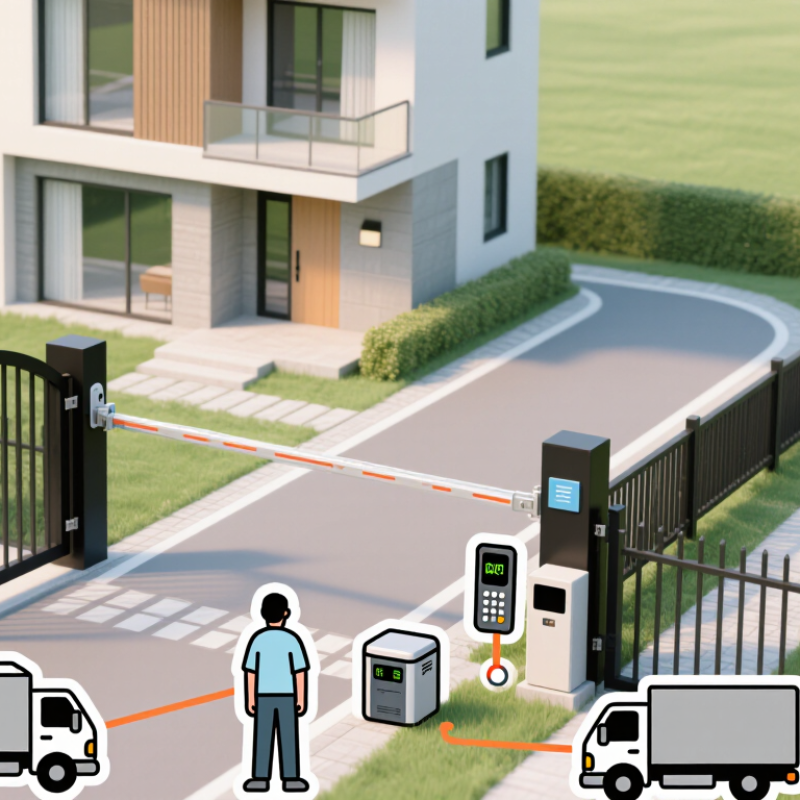
Before comparing remote gates, list every routine user: residents, staff, delivery drivers, visitors, and emergency responders. Note peak arrival times and whether vehicles need separate entry and exit lanes. Measure the widest vehicle and the clear opening it requires. A delivery van should not block a public road while waiting.
The FBI’s 2022 Crime in the Nation report recorded 847,522 burglaries across the United States. That national figure offers context, not a prediction for your property or proof that a gate prevents crime. Assess local risks and decide whether you need controlled entry, visitor intercoms, or an audit trail.
Then inspect the site: slope, drainage, soil stability, wind exposure, snow buildup, and cellular signal can all affect operation. Measure after rain. Check where cars can wait without blocking sightlines or access routes.
Ask the installer how the system behaves during a power or network outage, and confirm emergency access arrangements with local responders. Small details matter.
A gate that fits the opening may still be awkward if a vehicle cannot turn safely or reach the keypad without reversing. Recheck your measurements; it is easy to overlook a curb or a delivery truck’s wider turning path.
Compare Remote Gate Designs and Opening Mechanisms
A swing gate opens like a broad door, leaving a clear arc across the driveway. It suits level, spacious entrances, but slopes or parked cars can obstruct its path. A sliding gate travels sideways along a fence, making it practical where the entrance is short or wind exposure is high. It needs room beside the opening and a track kept clear of grit, leaves, and winter debris. Small details matter.
For exposed sites, compare open-bar designs with solid panels: solid surfaces catch more wind. ASCE 7-22 provides location-specific design wind speeds and risk categories, useful inputs for checking posts, hinges, and foundations with a qualified installer. Do not choose a heavier gate by appearance alone. Weight affects operator sizing and wear. The Door and Access Systems Manufacturers Association’s technical guidance emphasizes matching gate operators to the gate and providing entrapment protection; ask installers to document these choices.
Opening mechanisms also change daily use. A tracked slider is predictable on a straight, well-maintained run, while a cantilever slider avoids a ground track but needs more side clearance and stronger support. Swing operators may use articulated arms or buried mechanisms; buried units look tidy, yet inspection can be less convenient. Check manual release access and backup-power arrangements during a site visit. Then test the route in rain. That can change your mind.
Assess Safety Features and Remote Access Controls
A remote gate should stop safely, not merely open from a distance. Check for obstruction sensors that detect a person, pet, or bicycle in the gate’s path. Ask whether the gate reverses when it meets resistance, and how that function is tested. Test it at dusk. A narrow driveway can make moving panels harder to judge, especially in rain or glare. Ask the installer to demonstrate the safety features on your actual entrance, not just describe them. Sensor placement may need adjustment as landscaping changes.
Remote controls need practical safeguards, too. Look for encrypted signals, individual user access, and a way to remove a lost remote without resetting every household device. A phone-based system should let you review access activity and revoke permissions promptly. Give each regular user a separate credential; shared codes are convenient, but they make access harder to track. Ask what happens during a power or internet outage, and whether a manual release is accessible. That detail is easy to miss. Remote alerts can be useful, but they do not replace checking that the gate has fully closed. Compare these controls with how your household actually uses the entrance; the most advanced option may not be the clearest one.
Choose Suitable Materials, Power, and Installation Options
Choose a gate material by considering weather, weight, and maintenance. Steel handles frequent use well, but it needs a suitable protective finish in damp or coastal conditions. Aluminum is lighter and resists rust, though a wide panel may flex in strong winds. Timber offers privacy and a softer appearance, but requires periodic sealing. Check the posts and hinges, too. Even a good gate can sag on weak supports.
Match the power system to the gate’s size and daily use. A heavy sliding gate may need a different motor capacity than a light swing gate. Ask an installer to check the gate’s weight, travel distance, and expected opening frequency before recommending equipment. Think about power interruptions. A battery backup or manual release can help, but confirm how it works before you need it. Solar power may suit a sunny site, though shade and winter daylight can limit charging.
Installation depends on the driveway, slope, and space beside the entrance. Sliding gates need a clear track area; swing gates need room to open without striking parked cars or rising ground. Measure carefully. Mark the gate’s full movement with tape or stakes, then check pedestrian access and visibility from the road. A site survey can reveal drainage problems or uneven ground that are easy to miss in photos. Some details are awkward to plan, and I would rather revise the layout early than discover the issue after installation.
Check Local Rules, Maintenance Needs, and Long-Term Costs
Before ordering a remote gate, check local planning and building requirements. Ask the local building or fire department about permits, setbacks, emergency access, and required safety devices. Confirm that the operator and gate design meet applicable standards, such as UL 325 and ASTM F2200. Rules can vary by location. Small details matter.
Choose materials and mechanisms you can maintain. A coastal driveway may need corrosion-resistant finishes, while dusty conditions can demand more frequent cleaning.
NACE International’s 2016 IMPACT study estimated global corrosion costs at $2.5 trillion, or about 3.4% of global GDP. The study also estimated that corrosion-control practices could reduce costs by 15–35%. That figure covers many industries, not gates alone, but it highlights the value of preventive care.
Ask installers for a written schedule covering hinges, rollers, sensors, batteries, and weather seals. Compare the purchase price with expected service calls and replacement-part costs over several years.
Keep a small repair fund. Not glamorous, but useful. A spreadsheet may still miss one surprise.





