7 Tips to Choose the Best POS Terminal for Global Buyers

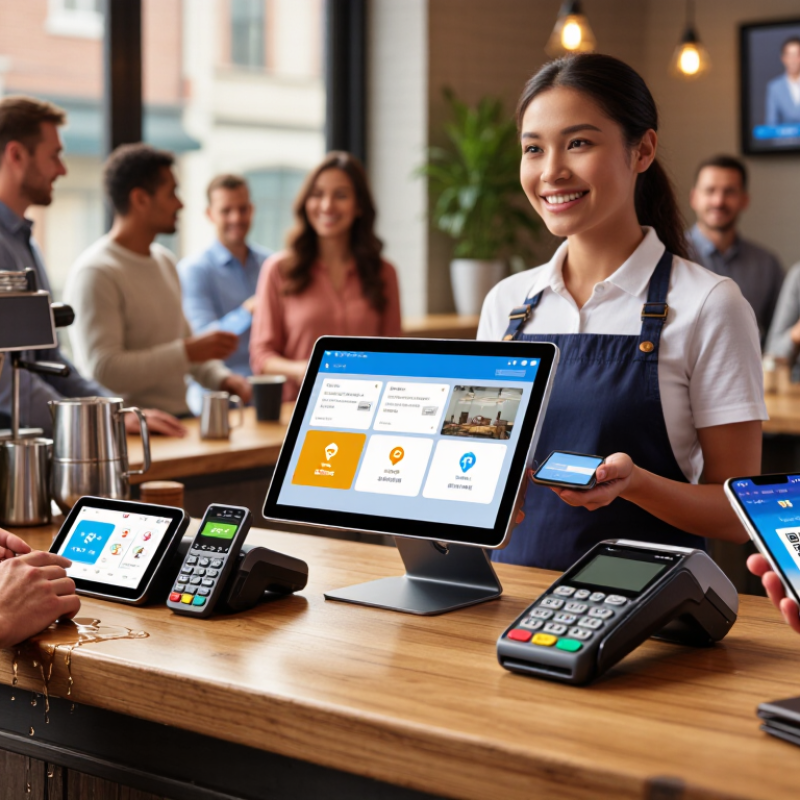
Choosing the best pos terminal for global buyers is not simply a hardware decision. It affects checkout speed, customer trust, reporting quality, and daily staff routines. A busy café needs a compact device that survives spilled coffee. A hotel may need multilingual screens, tipping support, and reliable mobile connectivity.

The Worldpay Global Payments Report 2024 found that digital wallets represented about 30% of global point-of-sale transaction value in 2023. This figure signals a clear shift toward flexible, contactless payments. However, regional payment habits remain different. Debit cards dominate some markets, while QR payments or local wallets lead elsewhere. A terminal that performs well in London may disappoint merchants in Jakarta or São Paulo.

Rick Oglesby, a payments strategist and founder of AZ Payments Group, has described the modern POS as “the center of the customer experience, not merely a cash register.” That perspective matters when comparing processors, operating systems, connectivity, security controls, and after-sales support. Industry forecasts can also disagree because they measure shipments, transaction value, or installed devices differently. That is easy to overlook. Therefore, this guide examines seven practical selection points, including payment acceptance, certifications, total ownership cost, software integration, portability, support coverage, and data security. The best pos terminal is not always the newest or cheapest model. It should fit the buyer’s actual environment, including unstable networks, seasonal demand, local currencies, and staff training needs. No shortlist is perfect. Careful testing still beats impressive specifications.

7 Tips to Choose the Best POS Terminal for Global Buyers

Define Your POS Needs Across Markets and Business Models

Choosing a POS terminal starts with defining the business, not comparing screens. A café needs fast contactless payments and a small footprint. A wholesale store may require invoices, barcode scanning, and stable wired connectivity. List your sales channels, average transaction value, peak hours, and refund process. Then identify local payment methods, currencies, language needs, and receipt preferences. These details shape the right terminal.

Markets also change the technical requirements. Check whether each location depends on Wi-Fi, mobile data, or a backup connection. Confirm support for chip cards, contactless wallets, QR payments, and currency conversion. Review local data protection and payment security requirements with qualified advisers. A terminal should fit the checkout area, staff habits, and customer flow. Do not overlook battery life. Field testing often reveals practical problems that product sheets miss.

Business models deserve equal attention. A retailer with several branches may need centralized reporting and role-based access. A mobile seller needs a lightweight device with dependable connectivity. Subscription businesses may prioritize recurring billing and customer records. Ask how quickly staff can learn the system. Ask how support handles outages. Cheap hardware can become expensive when service is slow. I have seen teams overestimate advanced features and underestimate training time. That mistake is easy to repeat. Measure real checkout times before committing, and leave room for market-specific adjustments.

Evaluate Payment, Connectivity, and Currency Support

7 Tips to Choose the Best POS Terminal for Global Buyers

Tip 1: Test payment flexibility in real conditions. A 2024 Global Payments Report estimates digital wallets reached 50% of global e-commerce value in 2023. They also represented about 30% of in-store payment value. Your terminal should accept cards, contactless payments, mobile wallets, and local payment methods. Test each option with a small purchase. A successful demonstration is not enough.

Tip 2: Check connectivity before comparing screen size or design. A reliable terminal should support Wi-Fi, 4G, and, ideally, Ethernet. Ask how it behaves when the signal drops. Can it store transactions securely and reconnect automatically? PCI DSS guidance emphasizes protecting payment data during transmission and storage. Weak connectivity can create duplicate payments, delayed receipts, or frustrated customers.

Tip 3: Examine currency support carefully. The terminal should display the customer’s currency clearly and show the exchange rate before confirmation. It should also handle refunds in the original currency when possible. International card acceptance alone does not guarantee smooth currency processing. I have seen systems support many currencies but provide confusing settlement reports. That weakness matters.

Tip 4: Review settlement timing, tax settings, receipt languages, and reporting. These details affect daily operations more than a bright touchscreen. Ask for a live test across two currencies and one refund. A perfect terminal is unrealistic, but unclear fees and hidden conversion rules are avoidable. Choose the device that remains understandable under pressure.

7 Tips to Choose the Best POS Terminal for Global Buyers - Evaluate Payment, Connectivity, and Currency Support

Tip Evaluation Dimension Recommended Requirement Relevant Standard or Fact Buyer Verification Checklist
1 Card and Contactless Payment Acceptance Support EMV chip cards, contactless cards, and NFC mobile wallets used in the target markets. EMV chip technology helps authenticate card transactions, while NFC contactless payments operate at 13.56 MHz. Request payment-scheme certification, test chip-and-PIN transactions, and confirm contactless acceptance limits by country.
2 Payment Security Choose a terminal with PCI PTS approval, secure key management, encrypted communication, and tamper detection. PCI PIN Transaction Security requirements address device protection, PIN security, and resistance to physical attacks. TLS 1.2 or later is commonly required for secure data transmission. Check the current PCI approval status, supported encryption method, remote-key-injection process, and tamper-response behavior.
3 Connectivity and Network Resilience Prefer multiple connection options: Wi-Fi, cellular data, Ethernet, and Bluetooth, with automatic failover where available. 4G LTE provides broader geographic coverage than older 2G or 3G networks in many markets, but network availability still varies by country and operator. Confirm supported cellular bands, SIM or eSIM configuration, offline transaction rules, roaming capability, and reconnection behavior.
4 Currency and Localization Support Support the required currencies, local decimal rules, date formats, languages, tax displays, and receipt formats. ISO 4217 defines three-letter currency codes, such as USD, EUR, GBP, and JPY. Currency minor units differ; for example, JPY normally uses zero decimal places while EUR uses two. Test currency rounding, refunds, tips, tax calculations, receipt language, and settlement currency for every intended market.
5 Transaction Speed and Reliability Target a smooth customer experience with clear prompts, fast authorization, durable hardware, and reliable battery performance. Actual authorization time depends on the acquirer, network quality, issuer response, transaction type, and risk checks; supplier claims should therefore be validated in field tests. Measure completed transactions in busy periods, test low-signal conditions, review battery endurance, and check failed-payment recovery steps.
6 Integration and Management Select a terminal compatible with the required POS software, payment gateway, APIs, inventory tools, and remote device management. Common integration methods include REST APIs, Android-based applications, cloud dashboards, and standardized receipt or transaction exports. Confirm API documentation, sandbox access, software-update controls, role-based permissions, audit logs, and data-export formats.
7 Total Cost and Local Support Compare hardware, payment processing, connectivity, currency conversion, maintenance, replacement, and deployment costs. The total cost of ownership can exceed the purchase price when recurring connectivity fees, chargebacks, repairs, software subscriptions, and cross-border settlement charges are included. Request a country-by-country fee schedule, warranty terms, spare-unit policy, service-level targets, training plan, and local-language support details.

Note: Certification, payment-method availability, network coverage, tax requirements, and settlement options vary by country and payment service provider. Confirm local compliance before deployment.

Compare Hardware, Software, and Integration Options

Choosing a POS terminal starts with the checkout scene, not the product brochure. Check whether staff need a fixed counter device or a lightweight handheld unit. Compare screen brightness, battery life, receipt speed, NFC support, and cellular backup. A busy café cannot tolerate a dead battery at noon. Test the terminal with wet hands and poor Wi-Fi. Small details matter.

Software deserves equal attention. Compare multi-currency pricing, tax settings, language options, offline sales, user permissions, and automatic updates. The 2024 Global Payments Report estimated that digital wallets represented 50% of global e-commerce value and 30% of in-person payment value in 2023. Your terminal should therefore handle contactless payments smoothly. It should also support clear refunds and searchable transaction records. Do not trust every “real-time” claim. Ask for a live demonstration.

Integration often decides the real cost. Check APIs, inventory synchronization, accounting exports, e-commerce links, and webhook support. Request a sandbox before signing. Confirm data ownership, encryption, tokenization, and PCI DSS alignment. The 2024 Cost of a Data Breach Report placed the global average breach cost at 4.88 million dollars, making weak integration controls expensive. Compare contract terms, update policies, support hours, and replacement procedures. A cheaper terminal may create longer queues and manual reconciliation. I would also run a two-week pilot across different locations. No scorecard replaces that evidence.

Check Security, Compliance, and Global Certifications

7 Tips to Choose the Best POS Terminal for Global Buyers

Security should be checked before screen size, battery life, or design. A reliable terminal should support PCI PTS POI requirements and secure key management. It should also accept EMV chip transactions and contactless payments through certified kernels. EMVCo certification matters because payment behavior changes across regions. Do not treat one certificate as universal approval. It is not.

PCI DSS v4.0.1 places stronger attention on customized controls, authentication, and continuous monitoring. The PCI Security Standards Council also emphasizes documented responsibility across payment environments. Ask suppliers for current certificates, validation dates, and scope statements. A copied logo proves little. The Verizon 2024 Data Breach Investigations Report found that the human element appeared in 68% of breaches. Therefore, review admin access, password rules, remote support, and staff training. Small gaps become expensive.

Regional compliance can be less visible. Confirm radio approvals, encryption rules, data-storage requirements, and tax features for every target market. Check whether firmware updates are signed and whether logs can be exported for audits. Nilson Report estimated global payment card fraud losses at about 33.83 billion dollars in 2022. The figure is a warning, not a buying formula. In practical evaluations, a terminal may pass laboratory testing but fail through weak deployment controls. That deserves reflection. Request independent penetration-test summaries and a clear incident-response process before placing a large order.

Assess Pricing, Support, Scalability, and Supplier Reliability

7 Tips to Choose the Best POS Terminal for Global Buyers

Tip 1: Compare the full price, not only the terminal quote.

Include software fees, payment integration, shipping, customs, repairs, and replacement parts. A low unit price can become expensive after six months.

Tip 2: Request a written support schedule.

Check response times, service languages, remote diagnosis, and escalation contacts. Test the support channel before ordering. Silence is costly.

Tip 3: Assess scalability through real business scenarios.

Ask whether one system can manage several stores, currencies, tax settings, and user permissions.

Tip 4: Check hardware flexibility.

The terminal should support barcode scanners, receipt printers, cash drawers, and stable network connections. Growth rarely follows the original plan.

Tip 5: Review supplier reliability beyond online claims.

Request company documents, production records, quality procedures, and recent customer references. A polished website proves little.

Tip 6: Examine warranty and replacement terms carefully.

Confirm who pays freight when a device fails in another country. Ask about spare-unit availability and repair turnaround.

Tip 7: Test a sample in realistic conditions, including weak Wi-Fi, long queues, and daily charging.

I once trusted a smooth demonstration too quickly; field use exposed overheating and delayed updates. A perfect spreadsheet still misses practical friction. Leave room for doubt, then verify every important promise in writing.

Powder Coat Booths

For those larger-sized parts, or smaller quantity runs, we have 2 independent powder coat booths and ovens. The quality, durability and affordability of today’s powder coating finishes make this the process of choice for world-class companies.

Powder coating advantages over other forms of coating are many. Materials used in the Powder coating process can be metals and non-metals that come in a multitude of thicknesses, textures, colors, etc. Another of Powder coating’s biggest advantages over conventional coatings is its ability to create finishes in many different textures. Powder Coating Booths allow us the ability to apply these advantages to large products.

Wet Paint Line

Tri-State Fabricators runs a full-service conveyor line for painting. Wet painting can provide protection or decoration to many different part styles. From start to finish, every project is easier to undergo random and point-based inspection by our skilled painting team.

Advantages to our Wet Paint Line are these lines start with product prep and ends with a thorough inspection of a high quality finished product. Our ability to complete large and small projects with a superior finish and doing so in a timely and economical fashion. This passes along the savings in production to our customers. When powder coating ins not an option, our Wet Paint Line gets the job done right the first time.

Wet Paint Booths

When the parts get big and heavy we roll-out our custom paint racks and oversize booth. By utilizing our partnerships with all the major paint brands, we can match virtually any color with wet paint.

The advantages of having access to a Wet Paint Booth are many. Large projects of many different shapes can be loaded into the booth. The Wet Paint Booth offers an environment that is much more controlled than a typical parts painting operation.

Not only are they used because of their controlled environment, but they’re are also advantageous when it comes to applying paint to parts that are needed in industries that require specialty coatings such as medical, aerospace, etc.

Military CARC

Our military forces have some very high standards when it comes to the finish of their vehicles and equipment. From the first pre-treatment step to final coat, it takes a great deal of knowledge and experience to protect the men and women of our armed forces. They deserve only the best, and Tri-State Fabricators provides it.

All of our processes are closely monitored by our staff and management teams. Both of which are highly trained in the processes of metal fabrication and finishing. Tri-State Fabricators’ goal is to always fully satisfy each and every customer, including the military. We will always put a 110% into what we do.

Glass-Bead Blasting

Abrasive media blasting is an excellent way to remove old paint, rust, and increase the paint/powder adhesion. Glass beads produce a much smoother and brighter finish than angular abrasives; leaving the part clean yet without any dimensional change. Chemically inert and environmentally friendly, we can recycle our beads approximately 30 times; making them a more preferred method of metal cleaning or surface finishing.

Advantages to Glass Bead Blasting are many. Glass bead blast media is used when a project is needing rough surfaces need to become smooth for applications of coatings such as paint. It is typically used to clean paint and rust from a product surface without deforming the surface it is being used on. Overall, compared to many other blasting media, Glass Bead Blasting is a very economical choice and those savings are always passed on to our customers.

Part Washing

Tri-State Fabricators utilize a zinc phosphate wash to clean and etch the material to ensure the best paint adhesion possible. The unique design of our 3-stage wash system does the work like a 5-stage. From Cleaning and rinsing to conversion coating and post-treatment, Our Part Washing process is a complete service and works throughout the fabrication service and the finishing service.

Along with the previously mentioned benefits, Curing is a vital chemical reaction that leaves the product finish hard and relatively safe from mild abrasion and aggressive corrosion. This process can be done in more than one way; ambient air-dry or in curing ovens at temps that exceed 240°.

Burn-Off Oven

From fixing paint mistakes (someone else’s of course) to simply cleaning our paint line hooks, our burn-off oven is put to good use. After a quick burn-off, a little clean up, and a fresh coat of paint, your parts will look better than new.

Why does our Burn-Off Oven work so well? Because super heating the air around parts turns the materials into ashes. From paint and powder coatings to rubber and machining oils, high temps do the job without degrading the integrity of the part.

Masking

Masking is a vital part of producing high quality products. We have die-cut masking patterns to protect machined surfaces as well as a wide range of plugs and caps to protect threaded holes and bolts. We provide permanent and temporary masking.

Masking allows the selected sections of a product to be protected from a fabrication or finishing service. This can be with both chemicals when etching and tapes, paints when only finishing just a section of the product. Masking is great in aiding the customization process of a project.

Screen Printing

Screen printing is a photographic process that transfers artwork onto a porous nylon screen which allows colored ink to flow through the screen and be deposited on an aluminum or plastic component. We can generally have just about any design created onto a screen for your parts.

Some of the advantages of Screen Printing are, brand recognition for your business displaying on your products, assembly instructions, product warnings/hazards, etc. Tri-State Fabricators produces Screen Printing of the highest quality so you know it’s durable.

Metal Finishing

Metal Finishing is the art of treating the exterior portion of product, often metal but can also be made of other materials, so that the surface is clean and free of any debris. Then the process of applying coats or either paint of powder coat takes place. This coating process improves the quality of the product in both appearance and resistance to wear and corrosion.

Tri-State Fabricators, Inc., understands that a project typically isn’t complete until a high-quality finish has been added to your product. This is why our painting and powder coating teams continuously inspect the products throughout the Metal Finishing process.