


How to Choose the Best Portable Ring Light?

A Portable Ring Light can improve a video call, makeup tutorial, or product photo without taking over a desk. But the brightest model is not always the best choice. Harsh light can flatten facial features, while a small, poorly positioned lamp may leave uneven shadows around the eyes.

Choosing well means looking beyond the product photos. Consider adjustable brightness, color temperature, light quality, mounting options, and how the device is powered. A light that clips securely to a phone may suit quick recordings, while a compact stand can offer steadier framing at a desk. Small details matter. Check whether the controls are easy to reach and whether the light stays stable when adjusted.

Your setting matters, too. A warm bedroom lamp, a bright office window, and a dim hotel room create different lighting conditions. A useful ring light should adapt to the space rather than force you into one setup. Look for clear specifications, realistic battery information, and consistent reviews that describe actual use. Claims can sound impressive. They still deserve a closer look.

This guide explains how to compare portable ring lights for everyday needs, from video calls to travel photography. It covers brightness, color options, power, portability, and practical accessories, so you can weigh trade-offs before buying. No single model suits everyone. A compact design may sacrifice light output, and a powerful model may feel awkward in a small bag. Knowing what matters most can help you choose a light that works in real conditions—not just on a product page.
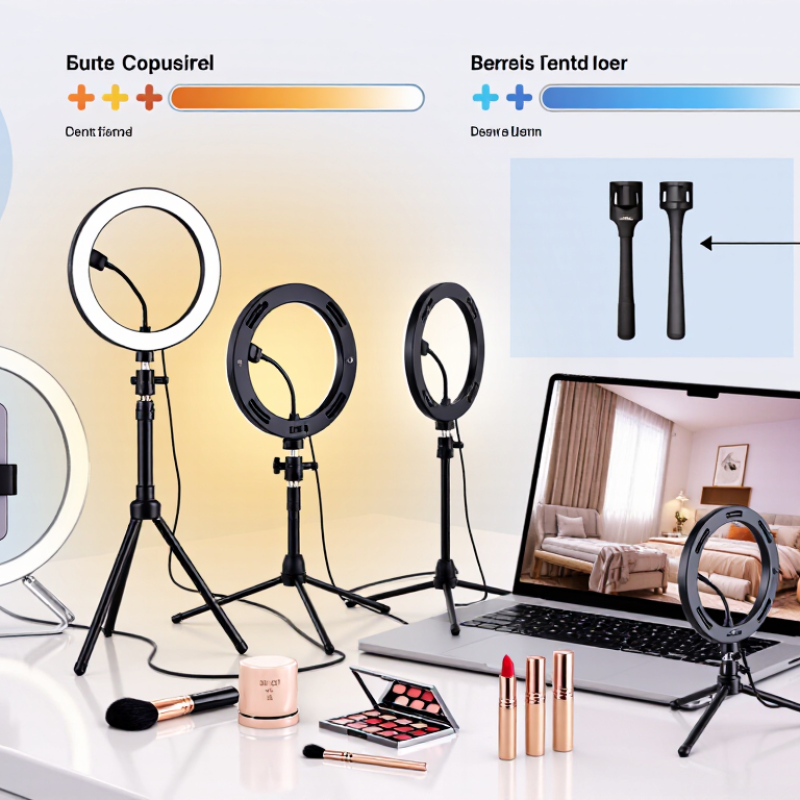
How to Choose the Best Portable Ring Light?

What a Portable Ring Light Is and How It Works

How to Choose the Best Portable Ring Light?

A portable ring light is a compact circular lamp designed to illuminate a face or small subject evenly. Its central opening lets a phone or camera sit near the light’s axis, which helps reduce harsh shadows around the eyes and nose. The effect is usually soft and direct, not studio-perfect. That distinction matters.

Most models use small LEDs around a plastic or metal frame. Power comes from a rechargeable battery, a USB connection, or both. Controls adjust brightness, and some lights also offer warmer or cooler color settings. Warmer light can make skin look less stark indoors, while cooler light may suit a bright, daylight-style setup. A diffuser softens individual LED points, but it cannot fully correct poor placement. Keep the light near eye level and slightly in front of the subject; placing it too close can create shiny highlights.

The circular shape often leaves a small catchlight in the eyes, a detail that can make video calls and close-up photos feel more lively. But results depend on room lighting, camera exposure, and distance. A ring light may flatten facial features if it is the only light source. I sometimes expect a brighter setting to solve everything, but it can wash out skin instead. Check the light on your actual device, then lower the brightness before moving it farther away.


Which Lighting Specifications Matter Most

How to Choose the Best Portable Ring Light?
Which Lighting Specifications Matter Most

Brightness is useful only when you know the measurement distance. Compare lux ratings taken at the same distance, such as 0.5 metres, and check whether brightness can be dimmed smoothly. A high maximum output may help near a window at dusk, but it can look harsh on a face at arm’s length. Look for adjustable colour temperature, commonly around 2700K to 6500K, so the light can better match warm room lamps or cool daylight. Small changes matter.

For natural-looking skin tones, check the CRI rating; 95 or higher is a useful benchmark, though it cannot guarantee flattering light on its own. Flicker-free performance is important when recording video, especially at higher frame rates. If possible, test footage for pulsing or bands. The ring’s diameter and diffuser also affect the result. A larger, softened light tends to create gentler shadows, while a compact, bare ring can leave sharp reflections in glasses.

Portability depends on more than weight. Check battery runtime at the brightness you actually plan to use, since maximum output often drains power faster. A clear runtime figure beats a vague promise. I would also inspect the mount: a loose phone clamp can slowly tilt during a take. Even so, neat specifications can mislead; room colour, distance, and skin tone change what looks good. Test the light in the place you will use it.

How to Choose the Best Portable Ring Light? — Which Lighting Specifications Matter Most

Specification What to Look For Why It Matters Priority
Illuminance Compare brightness in lux at a stated distance. For close-up use, a practical target is roughly 500–1,500 lux at 0.5 m, with adjustable output. Lux readings change with distance, so a brightness figure without a measurement distance is difficult to compare. Dimming helps avoid harsh, overexposed lighting. High
Color temperature Look for adjustable white light in the approximate 2,700–6,500 K range. Warmer settings can suit indoor ambient light; cooler settings can look closer to daylight. Adjustable temperature helps match the surrounding light. High
Color Rendering Index (CRI) Choose CRI 90 or higher when accurate skin tones and product colors matter. CRI indicates how faithfully a light source renders colors compared with a reference source. A higher rating is useful for video calls, portraits, and product demonstrations. High
Brightness controls Prefer multiple brightness levels or smooth dimming, with controls that are easy to reach while mounted. Fine control makes it easier to balance the ring light with window light or room lighting and reduce glare. High
Light diffusion Look for a diffused front surface or a design that softens the LEDs. Diffusion can make close-range light appear less harsh and reduce distracting LED points reflected in glasses or shiny surfaces. Medium
Ring diameter Compact portable designs commonly use rings around 3–6 inches (about 8–15 cm); larger rings provide a broader light source. Smaller lights are easier to carry and mount on a phone. A larger light can illuminate a wider area but may be bulkier. Medium
Battery runtime Check runtime at a stated brightness level. About 1.5–4 hours at medium output is a useful comparison range for small rechargeable lights. Runtime varies with brightness, battery capacity, and operating conditions. Maximum-brightness runtime is usually shorter than medium-output runtime. High for mobile use
Charging and power USB charging is convenient; USB-C is a useful connector. Check whether the light can operate while connected to power. Rechargeable power suits travel, while plug-in operation can be helpful for longer recording sessions. Connector type alone does not indicate charging speed. Medium
Weight and mounting For phone-mounted use, a lightweight design—often under about 300 g—can reduce strain. Check clip compatibility and grip padding. A secure, well-fitting mount helps keep the light stable and reduces the chance of scratching or obstructing the phone. High for phone use
Heat and build quality Look for a sturdy housing, secure hinges, and product guidance for continuous use. Portable lights are often used close to the face or phone. A stable build and sensible operating instructions improve everyday usability. Medium

Quick tip: Compare lux only when the measurement distance is specified, and check color temperature, CRI, and battery runtime alongside maximum brightness. A balanced, adjustable light is often more useful than a high brightness rating alone.

How to Compare Power, Mounting, and Portability

A portable ring light should match the way you actually film, not just look bright on a product page. Compare brightness and battery life together. A high setting may make a face look clear near a window, yet drain a small battery during a longer recording. Check whether brightness adjusts smoothly, and note the rated runtime at the settings you expect to use. Those figures can vary with temperature and battery age. I would leave some margin rather than trust a best-case estimate. Annoying, but practical.

Mounting affects both stability and setup time. A standard threaded mount can attach to many small tripods, while a phone clamp needs a firm grip and room for your charging cable. If you film overhead or at an angle, test whether the head stays in position without slowly sagging. A light that wobbles when you tap the desk is not much help. Check that controls remain reachable after your phone is installed. Some compact designs place them awkwardly.

Portability is more than low weight. Measure the folded light, mount, and stand together, then see whether they fit in your usual bag. A slim kit may travel easily but offer a narrow adjustment range. A larger stand can be steadier on a hard floor, though less welcome on a crowded café table. Think about where you will set it down, and how quickly you need to pack up. I still find this trade-off easy to underestimate.

How to Match a Ring Light to Your Device and Use

Match the light to the device before judging its brightness. For a phone, check the clamp’s width and whether it leaves the camera unobstructed. A laptop setup usually needs a stable desk stand; a small clip may wobble when the screen moves. For tablets, confirm both the holder’s weight limit and its grip. Also check the light’s input rating against your power bank or USB adapter. A mismatch can mean dimming or interrupted use.

Color matters as much as brightness. The U.S. Department of Energy explains that the Color Rendering Index (CRI) runs from 0 to 100, with higher scores generally indicating more accurate color. For calls or close-up tutorials, look for a stated CRI of 90 or higher and adjustable color temperature. Neutral light can keep skin tones from looking too orange or blue. Still, a high CRI cannot fix harsh shadows if the light sits too low or too close.

Tips: Place the ring just above eye level, then angle it toward your face. Keep it slightly farther away for softer light. Test the setup using your actual camera; screen previews can hide uneven skin tones. I sometimes find the “best” setting looks a little flat, so adjust it to the room rather than trusting the spec sheet alone.

How to Evaluate Controls, Durability, and Price

Portable ring light shopping should start with its controls. Try changing brightness and color temperature while holding the light in one hand. Buttons should be easy to find by touch, not just visible in a product photo. A smooth dial may feel precise, while tiny touch controls can be awkward with cold fingers. Check whether settings remain saved after switching the light off. That detail is easy to overlook.

Durability matters when the light rides in a backpack or sits on a crowded desk. Inspect the hinge, clamp, and charging port, since these parts take repeated strain. A stand that wobbles when tapped can shift during a call. Plastic is not automatically weak, but thin joints deserve a closer look. Price should match useful features, not a long list of modes. Compare battery runtime at a practical brightness; maximum output often drains power quickly. I would still leave room for uncertainty: advertised runtime rarely matches every user’s setup.

Tips: Test the buttons, fold the hinge several times, and check for looseness. Test it. Compare warranty terms and replacement-cable availability. Pay a little more only when sturdier construction or reliable controls solve a real need.

How to Choose the Best Portable Ring Light?

Compare controls, durability, and price using the practical checks below.

How to use this chart: The bars count the checklist prompts in each category; they are not product ratings or market statistics.

  • Controls (4): Check brightness adjustment, color-temperature options, ease of operation, and whether settings are easy to change while filming.
  • Durability (3): Inspect the frame and joints, test the phone holder or mount for stability, and check how securely the light packs for travel.
  • Price (3): Compare the price with included accessories, check the warranty and return policy, and consider whether the features fit your needs.

Powder Coat Booths

For those larger-sized parts, or smaller quantity runs, we have 2 independent powder coat booths and ovens. The quality, durability and affordability of today’s powder coating finishes make this the process of choice for world-class companies.

Powder coating advantages over other forms of coating are many. Materials used in the Powder coating process can be metals and non-metals that come in a multitude of thicknesses, textures, colors, etc. Another of Powder coating’s biggest advantages over conventional coatings is its ability to create finishes in many different textures. Powder Coating Booths allow us the ability to apply these advantages to large products.

Wet Paint Line

Tri-State Fabricators runs a full-service conveyor line for painting. Wet painting can provide protection or decoration to many different part styles. From start to finish, every project is easier to undergo random and point-based inspection by our skilled painting team.

Advantages to our Wet Paint Line are these lines start with product prep and ends with a thorough inspection of a high quality finished product. Our ability to complete large and small projects with a superior finish and doing so in a timely and economical fashion. This passes along the savings in production to our customers. When powder coating ins not an option, our Wet Paint Line gets the job done right the first time.

Wet Paint Booths

When the parts get big and heavy we roll-out our custom paint racks and oversize booth. By utilizing our partnerships with all the major paint brands, we can match virtually any color with wet paint.

The advantages of having access to a Wet Paint Booth are many. Large projects of many different shapes can be loaded into the booth. The Wet Paint Booth offers an environment that is much more controlled than a typical parts painting operation.

Not only are they used because of their controlled environment, but they’re are also advantageous when it comes to applying paint to parts that are needed in industries that require specialty coatings such as medical, aerospace, etc.

Military CARC

Our military forces have some very high standards when it comes to the finish of their vehicles and equipment. From the first pre-treatment step to final coat, it takes a great deal of knowledge and experience to protect the men and women of our armed forces. They deserve only the best, and Tri-State Fabricators provides it.

All of our processes are closely monitored by our staff and management teams. Both of which are highly trained in the processes of metal fabrication and finishing. Tri-State Fabricators’ goal is to always fully satisfy each and every customer, including the military. We will always put a 110% into what we do.

Glass-Bead Blasting

Abrasive media blasting is an excellent way to remove old paint, rust, and increase the paint/powder adhesion. Glass beads produce a much smoother and brighter finish than angular abrasives; leaving the part clean yet without any dimensional change. Chemically inert and environmentally friendly, we can recycle our beads approximately 30 times; making them a more preferred method of metal cleaning or surface finishing.

Advantages to Glass Bead Blasting are many. Glass bead blast media is used when a project is needing rough surfaces need to become smooth for applications of coatings such as paint. It is typically used to clean paint and rust from a product surface without deforming the surface it is being used on. Overall, compared to many other blasting media, Glass Bead Blasting is a very economical choice and those savings are always passed on to our customers.

Part Washing

Tri-State Fabricators utilize a zinc phosphate wash to clean and etch the material to ensure the best paint adhesion possible. The unique design of our 3-stage wash system does the work like a 5-stage. From Cleaning and rinsing to conversion coating and post-treatment, Our Part Washing process is a complete service and works throughout the fabrication service and the finishing service.

Along with the previously mentioned benefits, Curing is a vital chemical reaction that leaves the product finish hard and relatively safe from mild abrasion and aggressive corrosion. This process can be done in more than one way; ambient air-dry or in curing ovens at temps that exceed 240°.

Burn-Off Oven

From fixing paint mistakes (someone else’s of course) to simply cleaning our paint line hooks, our burn-off oven is put to good use. After a quick burn-off, a little clean up, and a fresh coat of paint, your parts will look better than new.

Why does our Burn-Off Oven work so well? Because super heating the air around parts turns the materials into ashes. From paint and powder coatings to rubber and machining oils, high temps do the job without degrading the integrity of the part.

Masking

Masking is a vital part of producing high quality products. We have die-cut masking patterns to protect machined surfaces as well as a wide range of plugs and caps to protect threaded holes and bolts. We provide permanent and temporary masking.

Masking allows the selected sections of a product to be protected from a fabrication or finishing service. This can be with both chemicals when etching and tapes, paints when only finishing just a section of the product. Masking is great in aiding the customization process of a project.

Screen Printing

Screen printing is a photographic process that transfers artwork onto a porous nylon screen which allows colored ink to flow through the screen and be deposited on an aluminum or plastic component. We can generally have just about any design created onto a screen for your parts.

Some of the advantages of Screen Printing are, brand recognition for your business displaying on your products, assembly instructions, product warnings/hazards, etc. Tri-State Fabricators produces Screen Printing of the highest quality so you know it’s durable.

Metal Finishing

Metal Finishing is the art of treating the exterior portion of product, often metal but can also be made of other materials, so that the surface is clean and free of any debris. Then the process of applying coats or either paint of powder coat takes place. This coating process improves the quality of the product in both appearance and resistance to wear and corrosion.

Tri-State Fabricators, Inc., understands that a project typically isn’t complete until a high-quality finish has been added to your product. This is why our painting and powder coating teams continuously inspect the products throughout the Metal Finishing process.
