


How to Choose the Best Pivot Crane in 2026?

Choosing the best Pivot Crane in 2026 requires more than comparing lifting capacity and purchase price. Modern workplaces demand safer handling, accurate positioning, and dependable uptime. A crane that looks efficient on paper may struggle beside a crowded production line or under frequent side loading.

Market research supports this shift. Grand View Research reports continued growth in the global crane market, driven by infrastructure investment, manufacturing expansion, and warehouse modernization. MHI’s 2024 Industry Report also highlights labor shortages, automation, and operational resilience as major material-handling priorities. These findings suggest a practical direction: buyers should evaluate the complete lifting system, not only the boom and hoist.

Safety remains non-negotiable. OSHA’s overhead and gantry crane requirements emphasize rated loads, inspections, operator training, and controlled operating conditions. ASME B30.16 and ASME B30.26 provide additional guidance for hoists and rigging hardware. Standards do not replace engineering judgment. They support it.

A reliable selection process starts with real measurements. Record the maximum load, lift frequency, working radius, floor condition, ceiling height, and available swing clearance. Imagine a 500-kilogram motor moving past a finished workbench. A small clearance error can become an expensive interruption.

The right Pivot Crane should match the application, not merely exceed the advertised capacity. Consider corrosion exposure, duty classification, rotation range, mounting structure, controls, maintenance access, and spare-parts support. Energy use matters too, especially in facilities tracking emissions and operating costs.

No checklist is perfect. Field experience may reveal constraints that drawings miss. This guide combines recognized standards, market evidence, and practical evaluation methods to help decision-makers choose with greater confidence in 2026.
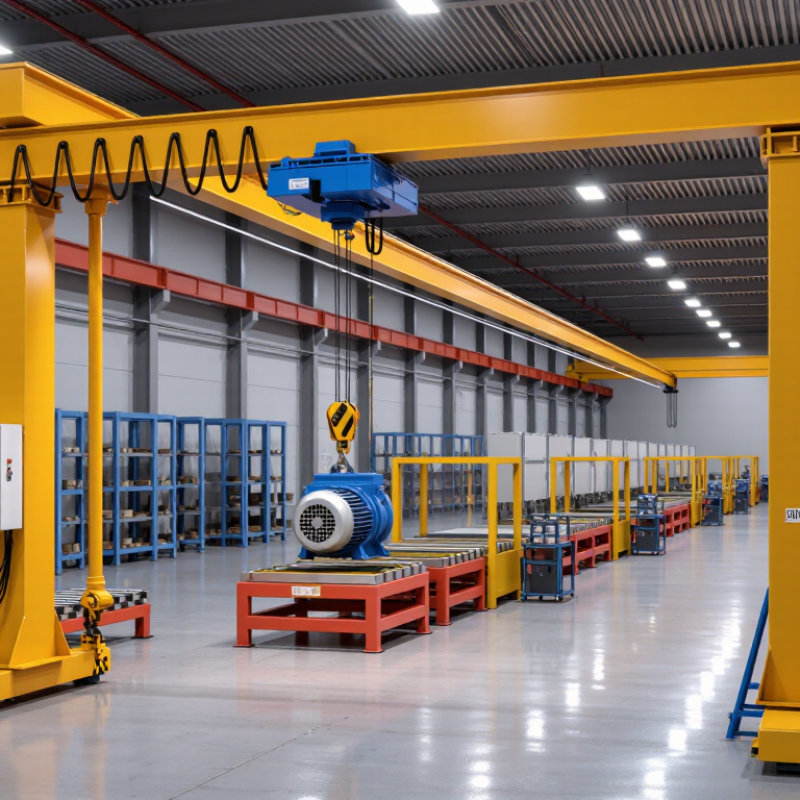
How to Choose the Best Pivot Crane in 2026?

What Is a Pivot Crane and How Does It Work?

How to Choose the Best Pivot Crane in 2026?

A pivot crane is a lifting machine with a rotating arm, often called a jib. It moves loads across a working area without relocating its base. The arm pivots around a fixed column or wall-mounted point. A trolley travels along the arm, while a hoist raises and lowers the load. In a workshop, this may mean moving a 500-kilogram motor from a pallet to a repair bench. The rotation range depends on the design. Some cranes cover a limited angle, while others approach a full circle.

Real selection depends on daily work, not impressive specifications alone. Check the safe working load, lifting height, arm length, and available floor space. A longer arm provides wider reach but can increase structural stress. Measure the mounting surface carefully. Concrete thickness, anchor quality, and column stability matter greatly. I have seen projects delayed because the crane fit the load but not the building. That mistake is expensive and avoidable. Controls should feel responsive, and emergency stopping must be easy to access.

Tips: Watch the load path during a trial lift. Keep people away from suspended loads. Inspect hooks, wire rope, brakes, bolts, and limit switches regularly. Ask for load charts, installation requirements, and inspection records. Do not rely on assumptions. A small error in capacity or clearance can affect the entire lifting operation.

How to Choose the Best Pivot Crane in 2026? - What Is a Pivot Crane and How Does It Work?

A pivot crane, commonly called a jib crane, uses a horizontal or articulated boom that pivots around a vertical mounting point. A trolley, hoist, or lifting device travels along the boom to move loads within a defined working area.

Pivot Crane Configuration How It Works Typical Capacity Typical Reach Typical Rotation Best Application
Free-Standing Pivot Crane A vertical mast is fixed to a reinforced foundation or base. The boom pivots around the mast while a trolley positions the load. Approximately 250 kg–10,000 kg Approximately 2–8 m Typically 180°–360° Production areas, machine loading, outdoor yards, and workstations without suitable columns
Wall-Mounted Pivot Crane The boom is attached to a structural wall or column and swings horizontally to serve an adjacent work area. Approximately 125 kg–5,000 kg Approximately 1.5–6 m Typically 180°–200° Workstations beside reinforced building columns or walls
Base-Plated Pivot Crane A mast is secured to a designed steel base plate and anchor-bolt arrangement, allowing the crane to be installed on an existing slab when structural capacity is adequate. Approximately 250 kg–5,000 kg Approximately 2–6 m Typically 180°–360° Indoor facilities where foundation work must be minimized
Articulated-Arm Pivot Crane Two connected boom sections pivot at separate joints, allowing the hook to reach around obstacles and into corners. Approximately 50 kg–1,000 kg Approximately 1–4 m Often up to 270°–360° combined movement Ergonomic lifting, assembly benches, tooling, and confined work cells
Under-Braced Pivot Crane The boom is supported by a tie rod or brace above it, reducing boom deflection and allowing efficient coverage of a workstation. Approximately 125 kg–2,000 kg Approximately 2–6 m Typically 180°–360° Light and medium-duty lifting where overhead clearance is available

Key Selection Criteria for 2026

Selection Dimension What to Check Practical Recommendation
Rated Load Capacity Maximum lifted load, including lifting accessories, and the load moment at the farthest reach Select a rated capacity above the heaviest planned load; do not treat a safety margin as permission to exceed the rated load.
Horizontal Reach Distance from the pivot centerline to the hook operating zone Choose the shortest reach that covers the required area because capacity generally decreases as reach increases.
Vertical Lift Required hook height, overhead obstructions, and the height of the load Allow clearance above the load and account for the hoist body, hook block, slings, and possible load sway.
Rotation and Coverage Required swing angle, nearby equipment, aisles, walls, and collision zones Use a 180° model for a wall-side station and a 270°–360° model when the load must move around a larger work area.
Mounting Structure Slab thickness, concrete strength, anchor layout, wall or column strength, and foundation requirements Have a qualified structural professional verify the supporting structure before installation.
Duty Cycle Lifts per hour, operating hours per day, load spectrum, and starting frequency Choose the hoist and crane duty classification based on actual usage rather than maximum load alone.
Power and Controls Available voltage, manual or powered rotation, pendant controls, radio controls, and emergency-stop requirements Use powered movement for frequent lifting and manual movement for light, occasional workstation handling.
Environment Indoor or outdoor installation, dust, moisture, corrosive chemicals, temperature, and wind exposure Specify suitable protective finishes, electrical enclosures, drainage, and outdoor wind restraints where required.
Safety and Compliance Applicable local regulations, rated-load markings, limit devices, guards, inspections, and operator training Confirm compliance with applicable lifting-equipment regulations and recognized crane safety standards before operation.

Data note: Capacity, reach, and rotation figures are representative ranges for commonly specified pivot and jib crane configurations. Actual limits depend on boom length, mounting method, structural design, hoist selection, duty cycle, and applicable local regulations. Always verify the final design with the equipment supplier and a qualified structural professional.


Which Pivot Crane Specifications Match Your Lifting Requirements?

How to Choose the Best Pivot Crane in 2026?

Which Pivot Crane Specifications Match Your Lifting Requirements?

Choosing a pivot crane starts with the load, not the catalog photograph. Record the heaviest item, its center of gravity, and the required lifting height. Then measure the working radius from the pivot point. A 500-kilogram load at three meters creates a different demand than the same load near the column. Specify both maximum capacity and capacity at full outreach. This detail is often missed.

Check the crane’s rotation range, mounting method, and duty cycle. A 270-degree rotation may suit a loading bay, while a full-circle model can improve workflow in open areas. Confirm column height, boom length, hoist speed, and available headroom. Concrete thickness matters. So does the anchor layout. For outdoor use, require corrosion protection, sealed controls, and wind considerations. Indoor dust, heat, or washdown areas may need different enclosure ratings. Small details matter.

Controls should feel predictable when an operator wears gloves. Emergency stopping, overload protection, and visible load indicators support safer decisions. Ask for inspection records, test documentation, and clear maintenance intervals. Experience shows that a crane selected only by maximum tonnage can disappoint. It may lift safely but move too slowly, reach too little, or overload the floor. I would avoid promising perfect performance. Real sites change. Leave practical allowance for future loads, but do not oversize without checking structural and energy costs.

How to Choose the Best Pivot Crane in 2026?

Which pivot crane specifications match your lifting requirements?

The chart compares typical pivot crane configurations by rated lifting capacity and maximum working radius. Select a crane according to the heaviest load, required outreach, mounting location, duty cycle, and available headroom.

Light-duty models are suitable for maintenance and workstation handling, while medium- and heavy-duty models provide greater capacity and reach for production, assembly, and material-transfer applications.

How to Compare Crane Capacity, Reach, Height, and Rotation

How to Choose the Best Pivot Crane in 2026?

Choosing a pivot crane starts with the real load, not the largest number in a brochure. I used to compare headline capacity first. That was a mistake. A crane rated for 1,000 kilograms near the column may lift far less at full reach. Check the load chart at your actual radius, height, and duty cycle. Include the hook, sling, grab, and any sudden movement. A neat capacity chart can still mislead.

Reach defines working freedom, but longer reach increases overturning forces. Measure the distance from the pivot center to the load’s center, not just the boom length. Height matters when clearing pallets, truck sides, ceilings, or stacked materials. A higher lift may require a taller column, stronger foundation, and extra space above the boom. Measure twice.

Rotation is often underestimated. A 180-degree model may suit a loading station, while a wider rotation range can serve several work areas. However, the swept zone must remain clear of people, walls, vehicles, and stored goods. Review the mounting surface, anchor design, and surrounding structure with a qualified engineer. Local safety requirements also matter. I sometimes prefer extra capacity over maximum reach, even when it costs more space. That choice is not always perfect. Real work rarely matches the drawing.

What Safety Features and Standards Should You Check?

When choosing a pivot crane in 2026, safety features deserve more attention than lifting speed. The International Labour Organization estimates that 2.78 million workers die annually from work-related causes. That figure is not crane-specific, but it shows why risk controls cannot be treated as paperwork.

Check the rated load, working radius, duty class, and maximum rotation angle. A visible load indicator should match the actual configuration, not only the crane’s headline capacity. Look for overload protection, upper and lower travel limits, emergency stop controls, mechanical brakes, guarded pinch points, and stable foundation anchoring. The hook should include a working latch. Small detail.

Ask for documented proof of design calculations, material traceability, factory testing, and inspection intervals. In the United States, verify alignment with applicable OSHA requirements and relevant ASME B30 standards. European installations may require conformity with the Machinery Regulation and EN 13001 principles. Local rules still control. A certificate alone is not enough.

Industry guidance from the U.S. Bureau of Labor Statistics repeatedly links serious incidents to struck-by hazards, falls, and equipment failure. Therefore, check pendant control labeling, wireless-control safeguards, visibility around the swing path, and clearly marked exclusion zones. Inspect welds, bolts, bearings, ropes, and electrical cables under realistic conditions. A clean paint finish proves almost nothing. I would also question unusually low inspection costs; that saving may hide weak engineering, poor training, or missed defects.

How to Select, Install, and Maintain the Right Pivot Crane

Choosing a pivot crane in 2026 starts with the work, not the catalogue. Record the load, reach, lift height, rotation angle, and daily cycles. Add the weight of tools and attachments. Do not estimate by eye. A small error can distort every later decision. For outdoor work, check wind exposure, moisture, temperature, and floor drainage. A crane that fits indoors may struggle beside an open loading area. Ask a qualified engineer to verify the structure, especially when fixing to a wall or elevated platform. Follow applicable local codes and recognized lifting standards.

Installation should begin with a measured layout and a clear exclusion zone. Confirm the base can resist vertical, horizontal, and turning forces. Use rated anchors and tighten them with calibrated equipment. Check the boom’s full sweep before connecting power or hydraulic lines. Keep controls visible from the operating position. Test one unloaded movement cycle, then increase the load gradually. It feels slow. Skipping it can hide alignment problems. My planning can become too optimistic when access is tight. Leave room for tools and future inspection.

Maintenance needs a written schedule that people actually follow. Inspect pins, bushings, welds, fasteners, hooks, cables, and limit devices. Look for fresh metal dust, oil marks, unusual noise, or uneven motion. Lubricate only where service instructions allow it. Record inspections, repairs, and rejected parts. Stop operation when cracks, deformation, or uncontrolled movement appears. Have competent personnel investigate before returning the crane to service. Review the installation after layout changes, even when the crane still appears normal.

Powder Coat Booths

For those larger-sized parts, or smaller quantity runs, we have 2 independent powder coat booths and ovens. The quality, durability and affordability of today’s powder coating finishes make this the process of choice for world-class companies.

Powder coating advantages over other forms of coating are many. Materials used in the Powder coating process can be metals and non-metals that come in a multitude of thicknesses, textures, colors, etc. Another of Powder coating’s biggest advantages over conventional coatings is its ability to create finishes in many different textures. Powder Coating Booths allow us the ability to apply these advantages to large products.

Wet Paint Line

Tri-State Fabricators runs a full-service conveyor line for painting. Wet painting can provide protection or decoration to many different part styles. From start to finish, every project is easier to undergo random and point-based inspection by our skilled painting team.

Advantages to our Wet Paint Line are these lines start with product prep and ends with a thorough inspection of a high quality finished product. Our ability to complete large and small projects with a superior finish and doing so in a timely and economical fashion. This passes along the savings in production to our customers. When powder coating ins not an option, our Wet Paint Line gets the job done right the first time.

Wet Paint Booths

When the parts get big and heavy we roll-out our custom paint racks and oversize booth. By utilizing our partnerships with all the major paint brands, we can match virtually any color with wet paint.

The advantages of having access to a Wet Paint Booth are many. Large projects of many different shapes can be loaded into the booth. The Wet Paint Booth offers an environment that is much more controlled than a typical parts painting operation.

Not only are they used because of their controlled environment, but they’re are also advantageous when it comes to applying paint to parts that are needed in industries that require specialty coatings such as medical, aerospace, etc.

Military CARC

Our military forces have some very high standards when it comes to the finish of their vehicles and equipment. From the first pre-treatment step to final coat, it takes a great deal of knowledge and experience to protect the men and women of our armed forces. They deserve only the best, and Tri-State Fabricators provides it.

All of our processes are closely monitored by our staff and management teams. Both of which are highly trained in the processes of metal fabrication and finishing. Tri-State Fabricators’ goal is to always fully satisfy each and every customer, including the military. We will always put a 110% into what we do.

Glass-Bead Blasting

Abrasive media blasting is an excellent way to remove old paint, rust, and increase the paint/powder adhesion. Glass beads produce a much smoother and brighter finish than angular abrasives; leaving the part clean yet without any dimensional change. Chemically inert and environmentally friendly, we can recycle our beads approximately 30 times; making them a more preferred method of metal cleaning or surface finishing.

Advantages to Glass Bead Blasting are many. Glass bead blast media is used when a project is needing rough surfaces need to become smooth for applications of coatings such as paint. It is typically used to clean paint and rust from a product surface without deforming the surface it is being used on. Overall, compared to many other blasting media, Glass Bead Blasting is a very economical choice and those savings are always passed on to our customers.

Part Washing

Tri-State Fabricators utilize a zinc phosphate wash to clean and etch the material to ensure the best paint adhesion possible. The unique design of our 3-stage wash system does the work like a 5-stage. From Cleaning and rinsing to conversion coating and post-treatment, Our Part Washing process is a complete service and works throughout the fabrication service and the finishing service.

Along with the previously mentioned benefits, Curing is a vital chemical reaction that leaves the product finish hard and relatively safe from mild abrasion and aggressive corrosion. This process can be done in more than one way; ambient air-dry or in curing ovens at temps that exceed 240°.

Burn-Off Oven

From fixing paint mistakes (someone else’s of course) to simply cleaning our paint line hooks, our burn-off oven is put to good use. After a quick burn-off, a little clean up, and a fresh coat of paint, your parts will look better than new.

Why does our Burn-Off Oven work so well? Because super heating the air around parts turns the materials into ashes. From paint and powder coatings to rubber and machining oils, high temps do the job without degrading the integrity of the part.

Masking

Masking is a vital part of producing high quality products. We have die-cut masking patterns to protect machined surfaces as well as a wide range of plugs and caps to protect threaded holes and bolts. We provide permanent and temporary masking.

Masking allows the selected sections of a product to be protected from a fabrication or finishing service. This can be with both chemicals when etching and tapes, paints when only finishing just a section of the product. Masking is great in aiding the customization process of a project.

Screen Printing

Screen printing is a photographic process that transfers artwork onto a porous nylon screen which allows colored ink to flow through the screen and be deposited on an aluminum or plastic component. We can generally have just about any design created onto a screen for your parts.

Some of the advantages of Screen Printing are, brand recognition for your business displaying on your products, assembly instructions, product warnings/hazards, etc. Tri-State Fabricators produces Screen Printing of the highest quality so you know it’s durable.

Metal Finishing

Metal Finishing is the art of treating the exterior portion of product, often metal but can also be made of other materials, so that the surface is clean and free of any debris. Then the process of applying coats or either paint of powder coat takes place. This coating process improves the quality of the product in both appearance and resistance to wear and corrosion.

Tri-State Fabricators, Inc., understands that a project typically isn’t complete until a high-quality finish has been added to your product. This is why our painting and powder coating teams continuously inspect the products throughout the Metal Finishing process.
