2026 How to Choose the Best Pipe Floats for Your Needs?
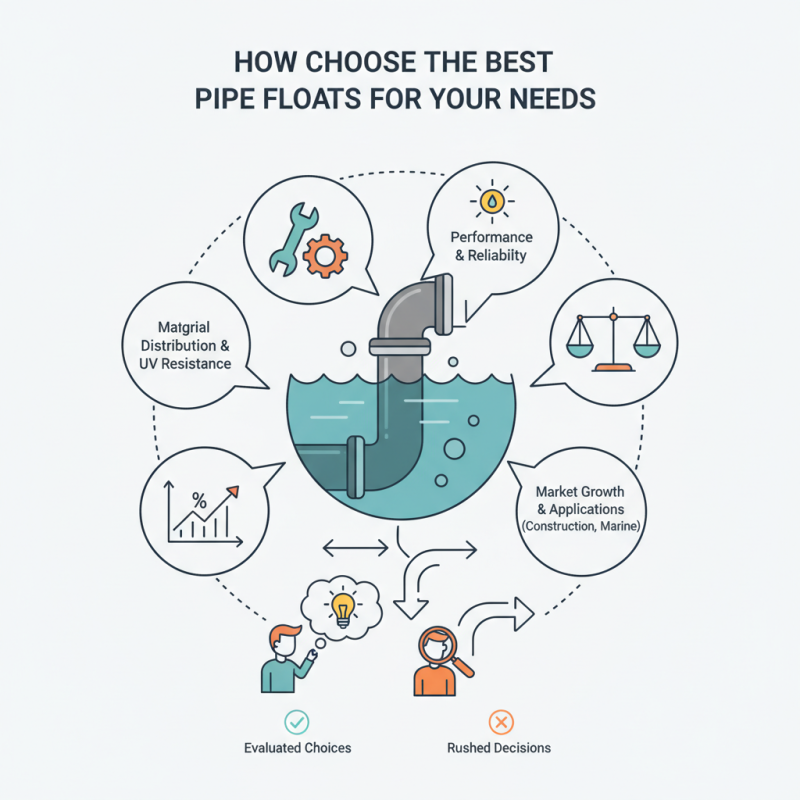
When selecting the right Pipe Floats, understanding your needs is crucial. As the industry evolves, finding the ideal float becomes more intricate. According to a recent report by Global Market Insights, the demand for Pipe Floats is projected to grow by 7.2% annually over the next five years. This growth reflects the increasing applications in various sectors, including construction and marine operations.
Expert John MacRae, a leading authority in buoyancy solutions, emphasizes, "Choosing the right Pipe Floats is not just about cost; it's about performance and reliability." His insight highlights the importance of considering factors such as material durability and flotation capacity. Many consumers overlook details like UV resistance and weight distribution, which can significantly impact effectiveness.
As the market expands, so do the choices. With numerous options available, it’s easy to feel overwhelmed. Rushing through decisions may lead to poor outcomes and unexpected expenses. Thus, taking the time to evaluate your specific requirements and expert recommendations can lead to satisfactory results. The right Pipe Floats can enhance project efficiency, ensuring safety and functionality in water-based applications.
Understanding the Role of Pipe Floats in Fluid Transport Systems
Pipe floats play a crucial role in fluid transport systems. These devices assist in maintaining the buoyancy of pipelines during installation and operation. A well-chosen pipe float can improve efficiency and reduce costs. According to a report by the American Society of Mechanical Engineers, improper float selection can lead to significant pipeline issues, including leaks and inefficiencies.
When considering pipe floats, it is essential to understand their specifications. Materials, size, and buoyancy can greatly affect performance. For instance, polyethylene floats may withstand harsh conditions better than others. Industry data suggests that using floats with higher buoyancy can decrease the risk of pipeline damage by up to 30%. However, not every project requires oversized floats. Misjudging buoyancy can lead to instability.
Design is another consideration. The right float design can enhance operational stability. However, maintaining the perfect balance can be challenging. Regular inspections can identify wear and tear, ensuring continued compliance with safety standards. Some reports indicate that nearly 20% of pipeline failures stem from unnoticed float degradation. Acknowledging these factors is vital in making informed decisions.
Key Factors to Consider When Selecting Pipe Floats
When selecting pipe floats, several key factors come into play. The buoyancy capacity is crucial. It determines how much weight a float can support. An accurate match between the float's buoyancy and the pipe’s weight ensures stability. Materials also matter. Some floats resist corrosion better than others. This is especially important in harsh environments.
Another factor to consider is the float's size and shape. Larger floats may provide more buoyancy but can be less maneuverable. Shape affects how the float behaves in water. For instance, more streamlined designs reduce drag.
Lastly, assess the connection method. Some floats use straps, while others employ clamps. Evaluating ease of attachment can save time during installation.
Beyond technical specifications, consider personal experiences or feedback from users. Real-world usage can reveal issues not apparent in specifications. For instance, a float may be ideal in theory but unsatisfactory in practice. Therefore, do not overlook the importance of testing. Reflecting on these aspects leads to a well-informed decision.
Types of Pipe Floats and Their Applications in Various Industries
When selecting pipe floats, understanding their types and applications is crucial. Pipe floats vary significantly across industries. For instance, in the oil and gas sector, specific floats are designed to withstand harsh environments. According to a report by the International Maritime Organization, these floats can reduce environmental risks by 30% during offshore operations.
In water treatment facilities, buoyant floats support large pipelines, keeping them elevated. This setup prevents contamination and ensures smooth water flow. Studies indicate that proper floatation can enhance operational efficiency by nearly 25%. However, the choice of material and design should align with specific site conditions to avoid failures.
The agricultural sector employs foam floats for irrigation systems. They minimize friction and assist in maneuvering pipes across fields. Reports suggest that using appropriate floats can reduce maintenance costs by up to 40%. Yet, the long-term durability of materials must be assessed, as some options may degrade faster than expected. A reflection on the quality used can save resources in the long run.
Industry Standards and Regulations for Pipe Floats
When choosing pipe floats, understanding industry standards and regulations is crucial. These guidelines ensure safety and efficiency in various applications. The American Society for Testing and Materials (ASTM) offers specifications that promote durability and reliability. Products should meet these criteria to withstand environmental pressures.
Regulations can vary by region and application. Some areas may require floats to be manufactured with specific materials. These materials must resist corrosion and UV damage. Knowing local regulations helps in selecting the right products. Non-compliance can lead to serious operational issues.
Although many manufacturers strive for compliance, inconsistencies can exist. Regularly reviewing product certifications is essential. Do not assume that all floats adhere to the same standards. Background checks can reveal important insights. Make informed choices by staying educated on these evolving regulations.
Cost Analysis: Investing in Quality Pipe Floats vs. Budget Options
When considering pipe floats, users often face a hard choice between quality and budget options. Investing in quality pipe floats can lead to improved durability and performance. According to industry reports, quality floats can last up to five times longer than budget alternatives. This longevity means fewer replacements and lower costs in the long run.
On the flip side, budget-friendly options may save money upfront but often compromise on material and design. These floats might fail under challenging conditions, leading to disruptions. A study highlighted that nearly 30% of budget floats do not meet industry safety standards, increasing risk.
While the initial expense of high-quality floats can be daunting, it often pays off over time. Quality floats are designed to withstand harsh conditions, reducing maintenance and replacement needs. However, not every high-priced option ensures value, making thorough research essential. Users should assess their specific needs carefully, weighing the potential costs of inadequate performance against the investment in a durable, reliable solution.
2026 How to Choose the Best Pipe Floats for Your Needs? - Cost Analysis: Investing in Quality Pipe Floats vs. Budget Options
| Type of Pipe Float | Material | Weight Capacity (lbs) | Average Cost ($) | Durability Rating (Years) | Suitable For |
| Standard PVC Float | PVC | 500 | 50 | 5 | Residential Use |
| Heavy-Duty Polyethylene Float | Polyethylene | 800 | 120 | 8 | Industrial Use |
| Foam Filled Float | Foam | 600 | 90 | 7 | Marine Applications |
| Metal Float | Aluminum | 1000 | 200 | 10 | Heavy Industry |
| Customizable Inflatable Float | PVC | 400 | 150 | 4 | Events & Decor |





