How to Choose the Best Packaging Machinery for Your Business?
Choosing the right Packaging Machinery can significantly impact your business. The right equipment streamlines production and improves efficiency. It helps you meet customer demands.
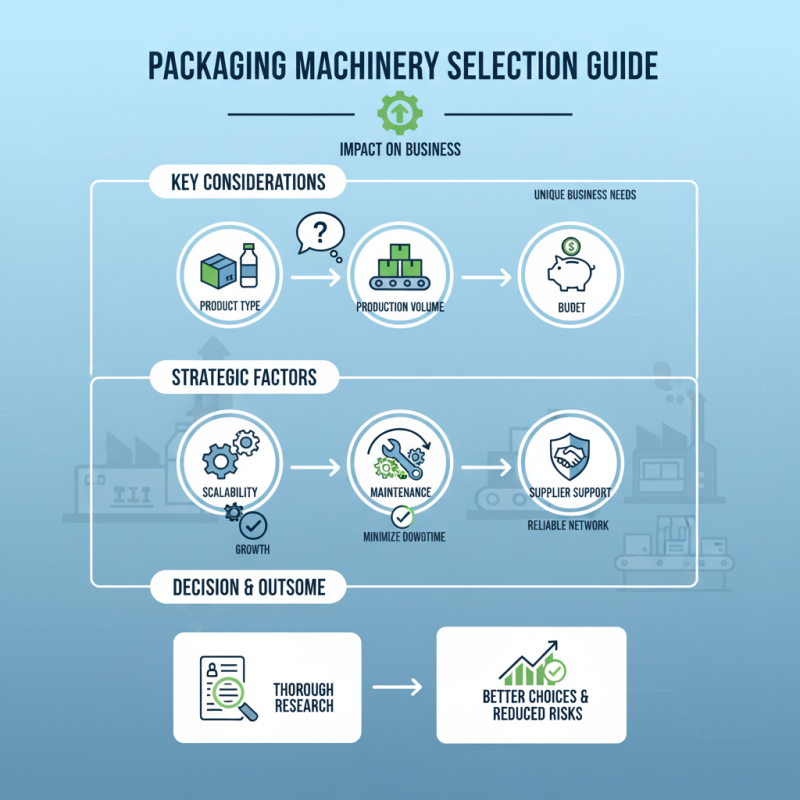
When selecting machinery, consider several factors. Think about your product type, production volume, and budget. Each business has unique needs that machinery must fulfill. The decision isn’t always easy, and mistakes can be costly. Many businesses overlook the importance of scalability. As your production grows, your machinery should grow with you.
In addition, maintenance is a key consideration. Reliable machinery minimizes downtime and builds trust with customers. However, unexpected failures can still occur. It's essential to choose suppliers with strong support networks. Doing thorough research can lead to better choices and reduce risks.
Understanding Different Types of Packaging Machinery and Their Functions
Choosing the right packaging machinery is crucial for your business. Understanding different types can help streamline operations. There are three main types of packaging machinery: filling machines, sealing machines, and labeling machines. Each type serves a unique function. For instance, filling machines efficiently dispense products into containers, ensuring consistency and reducing waste.
Industry reports indicate that the global packaging machinery market is projected to grow at a CAGR of 4.0% from 2023 to 2028. This growth highlights the increasing demand for efficient packaging solutions.
Filling machines can handle a wide range of products, from liquids to solids. Sealing machines, on the other hand, ensure the integrity of the package. They can reduce spoilage, which is critical, especially in the food and beverage sector.
Labeling machines are vital for compliance and branding. Accurate labeling reduces errors, which can be costly. A survey reveals that nearly 30% of businesses encounter labeling issues. This is a key area to address to improve overall efficiency. Understanding these machine types helps in selecting the right equipment for specific needs. Take time to assess your packaging requirements before making a decision.
Evaluating Your Production Requirements and Packaging Needs
When evaluating your production requirements and packaging needs, understanding your specific goals is crucial. Studies show that companies often overlook the importance of suitable machinery. For example, research indicates that 50% of manufacturers report inefficiencies due to improper packaging equipment. Inadequate machinery can delay production and increase costs.
Take time to assess your product type, dimensions, and volume. Each product may need unique packaging solutions. For instance, fragile items demand more robust packaging machinery, whereas high-volume items need speed. Consider investing in versatile equipment that adapts to varying production demands. This can reduce the risk of frequent equipment changes.
**Tips:**
Evaluate your current production line. Identify bottlenecks affecting efficiency.
Look into machinery with flexible features. This will help you pivot as your needs change.
Remember, the initial investment should align with long-term savings and efficiency gains.
Choosing the Best Packaging Machinery Based on Production Requirements
Assessing Automation Levels: Manual, Semi-Automatic, and Fully Automatic Options
When choosing packaging machinery, assessing the automation level is crucial. Businesses typically face three options: manual, semi-automatic, and fully automatic systems. Each choice varies in operational efficiency, labor costs, and production speed. For instance, a report from Packaging Machinery Manufacturers Institute (PMMI) indicates that fully automatic lines can increase productivity by as much as 25%. This can be a game changer for companies aiming for higher throughput.
Manual packaging systems rely heavily on human labor. They are cost-effective in the short term and suitable for small production volumes. However, they can lead to inconsistencies and higher error rates. Semi-automatic systems offer a balance. They provide flexibility and speed without the significant upfront investment of a fully automated line. Yet, it’s essential to analyze labor costs carefully. Reports suggest that even a semi-automated system can significantly reduce labor needs by about 30%, but the initial cost might deter some businesses.
Fully automatic systems are ideal for large enterprises with high demand. They involve a hefty investment but pay off with lower operational costs over time. However, businesses must consider maintenance issues and potential downtime. Finding the right fit means reflecting on current and future needs. The right machinery should align with your capacity, budget, and strategic goals.
Considering Maintenance and Support Services from Packaging Machinery Suppliers
When selecting packaging machinery, maintenance and support services are crucial factors. A reliable supplier should offer comprehensive services and prompt responses to your inquiries. Regular maintenance can avoid costly breakdowns. However, some suppliers may lack the resources or commitment to provide timely support. Research their reputation thoroughly to ensure they can meet your needs.
Consider the training provided for your team. Some companies offer in-depth training programs, while others leave you to figure things out alone. Lack of training can lead to mistakes and inefficient operation. Assess whether the supplier provides manuals and ongoing support. This can significantly impact your production efficiency.
Evaluate the flexibility of the support options available. Some suppliers might offer only standard packages. Others may tailor their services based on your specific requirements. Engaging with previous clients can reveal how responsive the support team is. This insight helps you make a w ell-informed decision, ensuring that your investment in packaging machinery pays off efficiently.
Analyzing Cost-Effectiveness and Return on Investment for Packaging Equipment
When analyzing cost-effectiveness for packaging machinery, businesses need to focus on return on investment (ROI). This means evaluating how much profit is generated relative to the equipment cost. Companies should consider not only the purchase price but also maintenance expenses and energy consumption. An effective machine can drastically reduce labor costs and minimize wasted materials, offering a compelling ROI.
Specific metrics can simplify this analysis. Calculate the payback period by determining how long it takes for the machine to earn back its cost. Conducting a thorough cost-benefit assessment will help you identify machines that truly align with your operational needs. This is where some companies falter, either by neglecting long-term analysis or by overemphasizing upfront costs.
Many businesses also overlook potential scalability. As demand grows, will the machinery adapt? Inflexible machines may limit production and lead to future investment challenges. Reflecting on both immediate needs and future growth is essential. An innovative approach to packaging equipment could yield long-term benefits, even if initial figures seem less ideal. Addressing these aspects can lead to a more informed and sustainable decision.