


Choosing the right Oil Drilling Machine is not simply a matter of comparing prices and motor power. The ground beneath a quiet worksite can contain hard rock, unstable formations, pressure changes, and unexpected water zones. A suitable machine must match drilling depth, torque requirements, borehole diameter, mobility, and the planned drilling method. It also needs dependable mud circulation, braking control, emergency shutdown systems, and practical access for maintenance.
Sheikh Ahmed Zaki Yamani, a respected former Saudi oil minister, once said, “The Stone Age did not end for lack of stone, and the Oil Age will not end for lack of oil.” His observation reminds buyers that technology changes before resources disappear. A modern Oil Drilling Machine should therefore support productivity while considering fuel use, emissions, noise, operator safety, and future operating conditions. The newest model is not automatically the best choice. Sometimes, a proven machine with stronger local service support performs better than an impressive machine with scarce spare parts.
Look closely at real field experience. Ask manufacturers for verified performance data, maintenance schedules, warranty terms, and references from comparable projects. Check the machine’s frame, rotary head, hydraulic lines, compressor, and control panel before making a decision. Small weaknesses become expensive during remote operations. No checklist is perfect. Soil conditions may still surprise even experienced crews. However, a disciplined evaluation reduces avoidable risks and helps buyers select equipment that is reliable, serviceable, and suited to the work rather than merely attractive in a brochure.
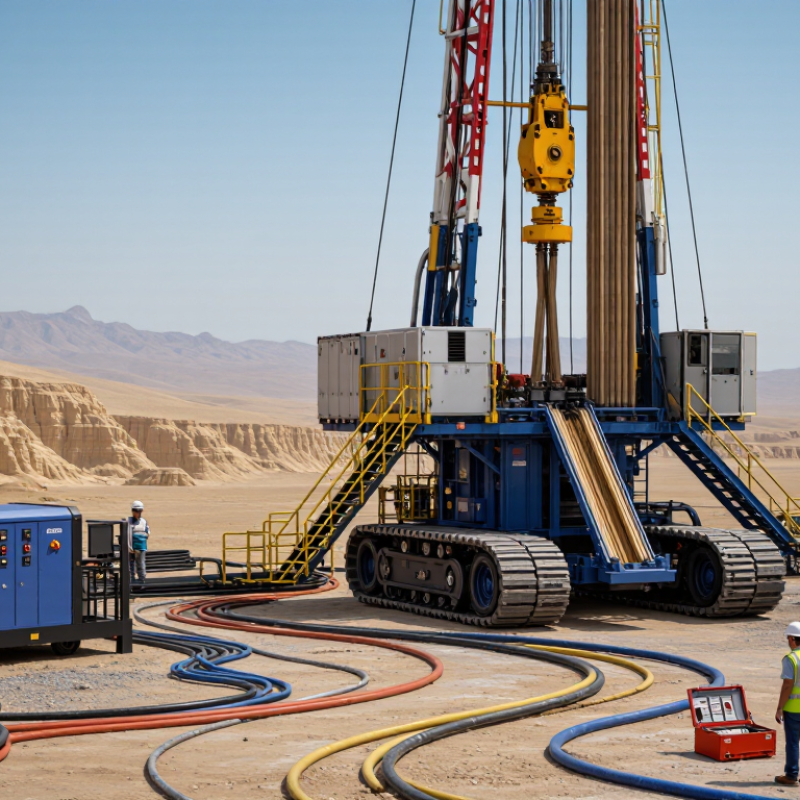
Selecting an oil drilling machine starts with the well, not the catalogue. Define target depth, hole diameter, formation hardness, and expected drilling method. A shallow water-well rig cannot replace a high-torque machine in fractured rock. Record the required torque, pullback force, rotation speed, and compressor capacity. Mud density also matters, especially when circulation must remain stable at depth.
Operating conditions can change the choice quickly. Measure ground bearing capacity, access width, temperature, dust, altitude, and available power. A machine rated for 35°C may lose performance in hotter climates. Transport limits matter too. A heavy rig may reach the site slowly or require road modifications. Field engineers often inspect hydraulic lines, mast locks, and emergency controls before purchase. Small details matter. According to the International Energy Agency’s Oil 2024 report, global oil demand is expected to reach about 105.4 million barrels per day by 2029. This points to continued activity, but not identical drilling environments. Flexible equipment may therefore protect long-term utilization.
Check rated capacity against real working loads, not maximum brochure figures. Ask for duty-cycle data, maintenance intervals, fuel consumption, and performance records from comparable formations. Confirm that safety systems and pressure components follow applicable industry requirements, including relevant API specifications. A neat specification sheet can still mislead. One overlooked clay layer may increase torque, clog circulation, and delay the project. Allow a realistic operating margin, but avoid buying unnecessary capacity. That balance requires site data, contractor input, and a second review of the drilling plan.

How to Choose the Best Oil Drilling Machine?
Compare Oil Drilling Machine Types and Their Core Features
Rotary drilling rigs are common for deep oil wells because they cut rock continuously with rotating bits. They offer strong penetration, adjustable torque, and compatibility with mud circulation systems. Top-drive models can improve pipe handling and reduce manual connections. However, they need skilled operators, stable power, and regular maintenance. A neglected mud pump can stop the entire operation.
Cable-tool rigs use repeated lifting and dropping actions to break hard formations. Their design is simpler and often easier to repair in remote areas. They usually consume less water during drilling, but their penetration speed is slower. These machines may suit shallow formations, limited infrastructure, or projects where simplicity matters more than production speed. Noise matters.
Directional drilling rigs add steering tools, measurement systems, and stronger control software. They can reach targets beneath roads, buildings, or environmentally sensitive surfaces. Look closely at steering accuracy, downhole data quality, hydraulic capacity, and emergency shutdown functions. Space changes everything. A large rig may perform well technically but fail on a crowded site.
Selection should match depth, formation hardness, hole diameter, transport access, and expected drilling hours. Check mast load ratings, torque range, pump pressure, spare-part availability, and operator training requirements. Request maintenance records and inspect welds, hoses, brakes, and control panels before purchase. I have found that impressive specifications can hide weak service support. Verify performance against recognized safety requirements and local regulations, not only the sales sheet.
| Drilling Machine Type | Operating Principle | Typical Drilling Depth | Suitable Formation | Core Features | Main Advantages | Key Limitations | Best Use Case | Overall Efficiency |
|---|---|---|---|---|---|---|---|---|
| Cable Tool Percussion Rig | A heavy drilling bit repeatedly rises and falls on a cable, crushing or fracturing the formation at the bottom of the hole. | Generally suitable for shallow to medium-depth wells, often up to approximately 1,000–1,500 m depending on the rig and formation. | Soft to hard, relatively stable formations; can also work in formations containing gravel and loose materials. | Simple hoisting system, percussion bit, casing installation capability, and relatively low fluid circulation requirements. | Simple construction, lower operating cost, easy maintenance, and reduced dependence on drilling fluid systems. | Slow penetration rate, limited directional control, and less suitable for highly deviated or complex wells. | Small oil or gas wells, shallow exploration, and remote locations with limited infrastructure. | ★★★☆☆ |
| Rotary Direct-Circulation Rig | A rotating bit cuts the formation while drilling fluid is pumped down the drill string and returns through the annulus. | Commonly used from several hundred metres to more than 3,000 m, depending on equipment size and well design. | Soft, medium, and hard formations when the correct bit, drilling fluid, and hydraulic parameters are selected. | Rotary table or top drive, mud pump, drill pipe, circulating system, hoisting system, and interchangeable roller-cone or PDC bits. | High penetration potential, good cuttings removal, broad formation compatibility, and strong control of wellbore pressure. | Requires mud preparation and solids control; operating costs and maintenance demands are higher than those of simple percussion rigs. | General-purpose oil and gas drilling, production wells, and medium- to deep-well projects. | ★★★★★ |
| Rotary Reverse-Circulation Rig | Drilling fluid or air moves down through the annulus and returns upward through the drill pipe, carrying cuttings to the surface. | Typically used for shallow to medium-depth drilling; actual depth depends on the pump, pipe diameter, and ground conditions. | Unconsolidated formations, fractured ground, and formations where rapid cuttings transport is important. | Reverse-flow circulation, large-diameter drill pipe, high-capacity pumps, and efficient sample or cuttings recovery. | Fast removal of cuttings, reduced contamination of samples, and effective performance in loose or broken formations. | More complex circulation requirements, higher water or air demand, and reduced suitability for very deep oil wells. | Shallow exploration, large-diameter boreholes, unconsolidated formations, and groundwater-related drilling. | ★★★★☆ |
| Air Rotary DTH Rig | Compressed air powers a down-the-hole hammer near the bit while also lifting rock cuttings through the borehole. | Commonly effective from shallow depths to approximately 1,000–2,000 m, subject to compressor capacity and hole conditions. | Competent hard rock, abrasive formations, and formations where water-based drilling fluid is undesirable. | Down-the-hole hammer, high-pressure compressor, rotary drive, drill rods, dust-control equipment, and optional casing systems. | High penetration rate in hard rock, accurate hole alignment, and efficient energy transfer close to the bit. | Performance decreases in unstable or water-bearing formations; requires substantial compressed-air capacity and dust management. | Hard-rock exploration, shallow oil and gas workovers, and drilling in areas with limited water availability. | ★★★★☆ |
| Top-Drive Rotary Rig | A motor mounted in the mast rotates the drill string from above while the system advances and connects pipe stands. | Frequently selected for medium- and deep-well drilling, including wells several thousand metres deep. | Wide formation range, including soft, hard, heterogeneous, and highly variable geological sections. | Top-drive motor, travelling system, mud pumps, derrick or mast, blowout-prevention equipment, and automated pipe-handling options. | Efficient drilling with long pipe stands, improved directional control, reduced connection time, and better handling of challenging well profiles. | High purchase price, complex control systems, large footprint, and demanding maintenance requirements. | Deep oil and gas wells, directional drilling, extended-reach wells, and intensive drilling programs. | ★★★★★ |
| Trailer-Mounted Hydraulic Rig | Hydraulic cylinders and motors control mast movement, rotation, feed force, and hoisting functions. | Usually selected for shallow to medium-depth wells, with capacity varying widely by mast and hydraulic system design. | Soft to medium-hard formations; performance depends on the selected rotary head, bit, and circulation method. | Compact trailer chassis, hydraulic power pack, adjustable feed system, rotary head, mud or air circulation, and quick setup. | Good mobility, short setup time, relatively small crew requirement, and lower site-preparation cost. | Limited depth and hoisting capacity compared with large land rigs; stability may be affected on difficult terrain. | Remote locations, shallow appraisal wells, service drilling, and projects requiring frequent relocation. | ★★★★☆ |
| Electric or Hybrid Land Rig | Electric motors drive the drawworks, pumps, rotary system, and auxiliary equipment, with power supplied by the grid, generators, batteries, or a combination. | Can be designed for medium- to deep-well drilling, including demanding onshore oil and gas applications. | Broad formation range, provided the rig has suitable bit selection, hydraulic capacity, and well-control equipment. | Variable-speed drives, automated controls, regenerative braking options, digital monitoring, and reduced engine dependency. | Precise control, improved energy efficiency, lower local emissions, reduced noise, and easier integration with automated systems. | Higher system complexity, dependence on reliable power management, and potentially higher upfront investment. | Long-duration drilling campaigns, environmentally sensitive sites, and operations prioritizing energy efficiency. | ★★★★★ |
Choosing an oil drilling machine starts with the formation, not the brochure. Rock hardness, pressure, and drilling angle directly affect machine performance. Review torque, rotary speed, feed force, and mud circulation together. A powerful motor cannot compensate for poor cutting control. Smooth penetration matters more than impressive peak figures.
Depth claims need careful examination. Check rated depth under realistic pipe weight and formation conditions. A machine reaching 3,000 meters in soft ground may perform differently in fractured rock. Confirm mast strength, hoisting capacity, and borehole stability. Ask for documented test results, maintenance records, and operating limits. Numbers without conditions can mislead.
Efficiency includes fuel use, drilling speed, downtime, and recovery of usable energy. Variable-speed controls can reduce unnecessary power consumption during changing rock conditions. Efficient pumps also help maintain stable pressure without overloading the engine. In field assessments, operators should record fuel burned per meter, not fuel burned per hour alone. That detail is easy to miss.
Inspect access to filters, pumps, and hydraulic lines. Shorter service time can protect production during harsh shifts. Noise, vibration, and control response also reveal machine quality. A unit may look efficient on paper but waste time during bit changes. I would leave room for doubt, because site data often challenges laboratory results. Trial drilling and independent inspection provide stronger evidence than confident sales language.
How to Choose the Best Oil Drilling Machine?
Safety systems deserve close attention before drilling capacity. In field assessments, I inspect emergency stops, pressure relief valves, guards, and control interlocks. These features should respond quickly, even with gloves or poor visibility. Check whether sensors detect overheating, low pressure, and abnormal vibration. A flashing warning panel is not enough. Ask for testing records and observe a live function check. Operators should also receive clear training, not just a manual left inside the cabin.
Maintenance needs can determine daily productivity. Look for accessible filters, grease points, hydraulic hoses, and inspection panels. If technicians must remove several heavy covers, routine service may be delayed. Request the maintenance schedule and parts availability before purchase. Examine used equipment for oil leaks, cracked hoses, loose wiring, and uneven wear on drilling components. Records may be incomplete. That should make you cautious.
Equipment durability depends on construction quality and working conditions. Inspect frame welds, corrosion protection, rotating joints, and the stability of the mast. Ask whether the machine has handled similar ground hardness and operating hours. Load-test results are useful, but they cannot replace a physical inspection. I once underestimated small hydraulic leaks; they later caused avoidable downtime. That mistake still influences my evaluations. Choose equipment with strong safety evidence, practical service access, and a repair history you can verify.
A practical selection process should give the highest priority to safety systems, followed by maintenance accessibility and long-term equipment durability. Safety systems include emergency shutdown controls, blowout prevention, pressure monitoring, and guarding. Maintenance needs cover inspection access, service intervals, spare-part availability, and ease of component replacement. Durability includes structural strength, corrosion resistance, load capacity, and reliable operation under demanding field conditions.
Assess Costs, Manufacturer Support, and Regulatory Compliance
A low purchase price can hide expensive operating problems. Assess the full ownership cost before choosing an oil drilling machine. Include transport, installation, fuel, routine maintenance, spare parts, training, and possible downtime. Ask for a written five-year estimate with clear assumptions. A cheaper machine may consume more fuel or require frequent repairs. Rock hardness, climate, drilling depth, and site access can change the economics sharply. A spreadsheet can look precise while hiding weak assumptions.
Manufacturer support should be measurable, not promotional. Request service response times, technician coverage, spare-parts availability, warranty exclusions, and training details. Ask whether manuals include maintenance schedules and emergency procedures. Speak with recent users about actual repair delays. Remote diagnostics may help, but only with stable connectivity. A support promise without nearby inventory deserves caution. I would also inspect the training materials. They may be technically correct but difficult for operators to use.
Regulatory compliance must be checked before purchase and verified locally. Requirements vary by country, worksite, and machine type. Confirm pressure ratings, guarding, emergency shutdowns, electrical protection, noise limits, and emissions documentation. Obtain certificates, inspection records, and conformity documents before signing. An independent engineer can review the equipment and identify overlooked risks. Keep compliance records organized for audits and renewals. Verbal assurances are not enough. One missing document can delay deployment. Compliance work feels tedious until it stops the project.


For those larger-sized parts, or smaller quantity runs, we have 2 independent powder coat booths and ovens. The quality, durability and affordability of today’s powder coating finishes make this the process of choice for world-class companies.
Powder coating advantages over other forms of coating are many. Materials used in the Powder coating process can be metals and non-metals that come in a multitude of thicknesses, textures, colors, etc. Another of Powder coating’s biggest advantages over conventional coatings is its ability to create finishes in many different textures. Powder Coating Booths allow us the ability to apply these advantages to large products.
Tri-State Fabricators runs a full-service conveyor line for painting. Wet painting can provide protection or decoration to many different part styles. From start to finish, every project is easier to undergo random and point-based inspection by our skilled painting team.
Advantages to our Wet Paint Line are these lines start with product prep and ends with a thorough inspection of a high quality finished product. Our ability to complete large and small projects with a superior finish and doing so in a timely and economical fashion. This passes along the savings in production to our customers. When powder coating ins not an option, our Wet Paint Line gets the job done right the first time.
When the parts get big and heavy we roll-out our custom paint racks and oversize booth. By utilizing our partnerships with all the major paint brands, we can match virtually any color with wet paint.
The advantages of having access to a Wet Paint Booth are many. Large projects of many different shapes can be loaded into the booth. The Wet Paint Booth offers an environment that is much more controlled than a typical parts painting operation.
Not only are they used because of their controlled environment, but they’re are also advantageous when it comes to applying paint to parts that are needed in industries that require specialty coatings such as medical, aerospace, etc.
Our military forces have some very high standards when it comes to the finish of their vehicles and equipment. From the first pre-treatment step to final coat, it takes a great deal of knowledge and experience to protect the men and women of our armed forces. They deserve only the best, and Tri-State Fabricators provides it.
All of our processes are closely monitored by our staff and management teams. Both of which are highly trained in the processes of metal fabrication and finishing. Tri-State Fabricators’ goal is to always fully satisfy each and every customer, including the military. We will always put a 110% into what we do.
Abrasive media blasting is an excellent way to remove old paint, rust, and increase the paint/powder adhesion. Glass beads produce a much smoother and brighter finish than angular abrasives; leaving the part clean yet without any dimensional change. Chemically inert and environmentally friendly, we can recycle our beads approximately 30 times; making them a more preferred method of metal cleaning or surface finishing.
Advantages to Glass Bead Blasting are many. Glass bead blast media is used when a project is needing rough surfaces need to become smooth for applications of coatings such as paint. It is typically used to clean paint and rust from a product surface without deforming the surface it is being used on. Overall, compared to many other blasting media, Glass Bead Blasting is a very economical choice and those savings are always passed on to our customers.
Tri-State Fabricators utilize a zinc phosphate wash to clean and etch the material to ensure the best paint adhesion possible. The unique design of our 3-stage wash system does the work like a 5-stage. From Cleaning and rinsing to conversion coating and post-treatment, Our Part Washing process is a complete service and works throughout the fabrication service and the finishing service.
Along with the previously mentioned benefits, Curing is a vital chemical reaction that leaves the product finish hard and relatively safe from mild abrasion and aggressive corrosion. This process can be done in more than one way; ambient air-dry or in curing ovens at temps that exceed 240°.
From fixing paint mistakes (someone else’s of course) to simply cleaning our paint line hooks, our burn-off oven is put to good use. After a quick burn-off, a little clean up, and a fresh coat of paint, your parts will look better than new.
Why does our Burn-Off Oven work so well? Because super heating the air around parts turns the materials into ashes. From paint and powder coatings to rubber and machining oils, high temps do the job without degrading the integrity of the part.
Masking is a vital part of producing high quality products. We have die-cut masking patterns to protect machined surfaces as well as a wide range of plugs and caps to protect threaded holes and bolts. We provide permanent and temporary masking.
Masking allows the selected sections of a product to be protected from a fabrication or finishing service. This can be with both chemicals when etching and tapes, paints when only finishing just a section of the product. Masking is great in aiding the customization process of a project.
Screen printing is a photographic process that transfers artwork onto a porous nylon screen which allows colored ink to flow through the screen and be deposited on an aluminum or plastic component. We can generally have just about any design created onto a screen for your parts.
Some of the advantages of Screen Printing are, brand recognition for your business displaying on your products, assembly instructions, product warnings/hazards, etc. Tri-State Fabricators produces Screen Printing of the highest quality so you know it’s durable.
Metal Finishing is the art of treating the exterior portion of product, often metal but can also be made of other materials, so that the surface is clean and free of any debris. Then the process of applying coats or either paint of powder coat takes place. This coating process improves the quality of the product in both appearance and resistance to wear and corrosion.
Tri-State Fabricators, Inc., understands that a project typically isn’t complete until a high-quality finish has been added to your product. This is why our painting and powder coating teams continuously inspect the products throughout the Metal Finishing process.

