


Choosing a Modular Power Wall in 2026 is not just a matter of comparing battery capacity. The right system should fit your home’s energy use, backup needs, and existing or planned inverter. A larger number on a product sheet may look appealing, but usable capacity and continuous power tell a clearer story. Check both.
Start with your daily electricity pattern. Note which appliances must keep running during an outage, such as a refrigerator, router, or medical equipment. Then compare the battery’s usable energy and power output with those loads. A system that can expand later may suit a growing household, but only if its modules, inverter, and controls are designed to work together. Compatibility matters.
This guide explains how to assess those details without relying on headline claims alone. It covers expansion limits, installation conditions, monitoring tools, warranty terms, and manufacturer support. Look for clear technical documents and safety certifications relevant to your market, and ask a qualified installer to confirm the system’s fit. Product specifications can change, too, so verify current details before buying. A tidy comparison table cannot answer every question. Real homes have awkward layouts, changing routines, and budgets that do not stretch forever. Keep those limits in view. The best Modular Power Wall is not necessarily the biggest or newest; it is the one whose verified performance, support, and expandability match your needs.
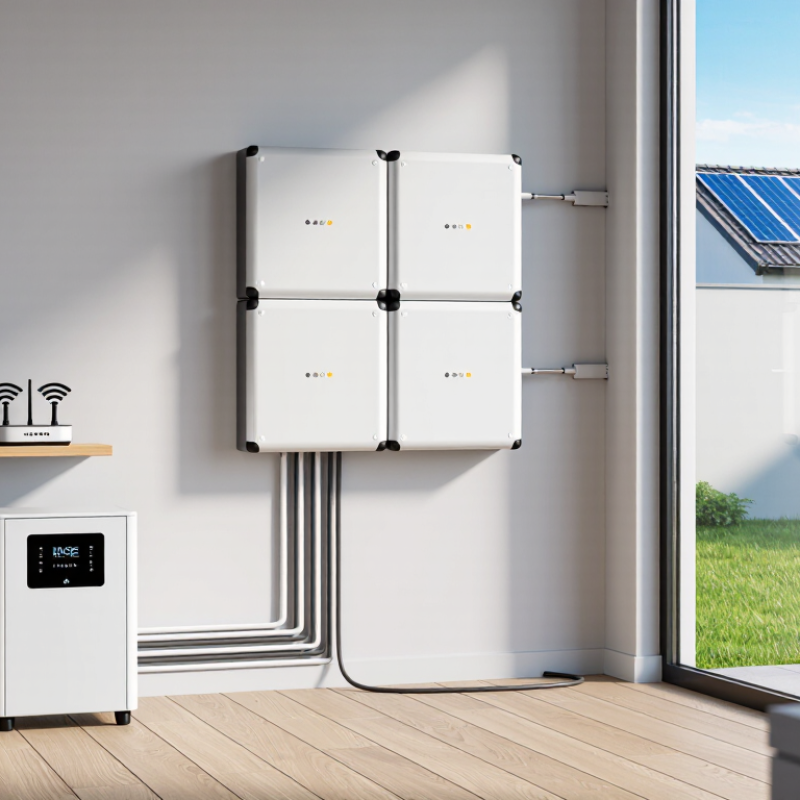
Modular home storage uses separate battery modules that can be combined to match a household’s needs. One high-voltage system in this category scales from 5.1 to 12.8 kWh. That range can suit a small evening load or provide more reserve for a heat pump and kitchen appliances. Add capacity in steps. Less guesswork, though not none.
The International Energy Agency’s Renewables 2024 report recorded 42 GW of new battery storage capacity in the power sector during 2023, more than 130% above 2022. That growth signals a fast-changing market, not a guarantee that every home needs a large battery. Check daily electricity use, solar export, and outage priorities before choosing a stack. A sunny roof and a high evening load make a different case from a home that uses most power midday.
Look beyond the headline capacity. Ask how much energy is usable, what power the inverter can deliver, and whether modules can be added later. A 12.8 kWh unit may not supply every appliance at once. Check installation space, too: a narrow garage wall can complicate service access. The International Energy Agency’s 2024 Batteries and Secure Energy Transitions report says global storage capacity must grow sixfold by 2030 in its climate-aligned pathway. Still, projections are not household forecasts. I would leave room to revise the plan.

A 13.5 kWh capacity describes stored energy; an 11.5 kW rating describes how much power the system can deliver at once. They answer different questions. The first helps estimate how long selected appliances may run. The second helps determine whether several appliances can operate together. That distinction matters. A refrigerator, lights, and internet equipment draw modest power, while an electric oven or vehicle charger can quickly use more.
To estimate runtime, list the loads you actually expect to use during an outage. Add their wattage, then consider how many hours each will run. For example, a 500-watt load running for four hours uses about 2 kWh, before accounting for system losses and reserve settings. Real results vary. Batteries may not provide their full rated energy in every setup, and output limits can depend on installation details. Check the current technical specifications and ask a qualified installer to confirm continuous output, surge capability, and usable capacity for your home. I would not size a system from headline numbers alone; that shortcut is easy to make, and easy to regret.
Illustrative runtime estimates for a system with 13.5 kWh of storage and a maximum continuous output of 11.5 kW.
Estimated runtime is calculated as 13.5 kWh ÷ power load. These are idealized estimates that exclude conversion losses, reserve capacity, and changes in load; the system’s output is limited to 11.5 kW.
When comparing modular home batteries in 2026, treat 89% round-trip efficiency as a listed specification, not a guaranteed result in every home. It means roughly 89 units of energy return for every 100 stored under stated test conditions. Real results vary with temperature, inverter use, standby consumption, and system design. A published number needs context.
The National Renewable Energy Laboratory’s 2024 Annual Technology Baseline models lithium-ion battery storage at 85% round-trip efficiency for utility-scale systems. That is a useful reference point, but not a direct test of a residential unit. Compare products using the same measurement boundaries. Also check usable capacity, continuous output, expansion limits, and warranty terms. A few percentage points can matter over repeated daily cycles. Still, a spec sheet is not a home.
Tips: Ask for the efficiency test conditions and whether the figure includes conversion losses. Check performance during a cloudy winter week, not just a sunny afternoon. Get the installer to estimate usable energy for your actual loads. Then verify the assumptions. Small details get missed.
When comparing a modular power wall, check the safety documents for the exact battery model and configuration you plan to install. UL 9540 certification applies to an energy storage system evaluated as a complete unit, not simply to one component inside it. Confirm that the listed equipment matches the proposed battery, inverter, and control system. Small changes can matter.
Ask for the UL 9540A test report, too. This test method examines how thermal runaway may develop and spread under specified conditions. Read the test setup and results, not just a headline claiming the product was tested. A test does not promise that a fire is impossible. Details matter.
NFPA 855 addresses stationary energy storage system installation, including placement and fire protection considerations. Check how its requirements apply to your site and which edition local authorities use. Ask your installer to show the planned clearances on a simple site drawing, including nearby doors, windows, and walkways. Paperwork can feel tedious. I might overlook a detail on a first read, so having a qualified installer or fire official review the documents is sensible. Look for consistency between the manuals, certification records, test report, and installation plan.
How to Choose the Best Modular Power Wall in 2026?
A low purchase price can hide the real cost of storing energy. Compare expected service life, installation fees, usable capacity, and replacement parts. A ten-year limited warranty offers a useful baseline, but it is not a promise that every repair will be free. Check what is covered, which labor costs are excluded, and whether capacity loss has a stated limit. Read the warranty before comparing quotes.
Estimate costs over the years you expect to use the system. For example, compare the total price with likely electricity savings, routine service, and possible inverter replacement. Ask installers to show their assumptions, including local electricity rates and your evening energy use. A home that runs air conditioning after sunset may value usable capacity differently from one with modest nighttime demand. Forecasts can be wrong. That is worth admitting.
Tips: Keep the warranty and quote together. Ask who handles service, how quickly parts are available, and what happens after year ten. Compare the same usable capacity across systems, not just the advertised battery size. A simple spreadsheet helps; still, its estimates depend on changing rates and real household habits.
Illustrative lifecycle-cost model for comparing modular home battery systems; figures are assumptions, not product quotes.
| Comparison dimension | 10-Year Scenario | 12-Year Scenario | 15-Year Scenario |
|---|---|---|---|
| Usable battery capacity assumed | 10 kWh | 10 kWh | 10 kWh |
| Illustrative installed cost | $10,000 | $10,000 | $10,000 |
| Round-trip efficiency assumed | 90% | 90% | 90% |
| Usage assumption | 1 full cycle per day | 1 full cycle per day | 1 full cycle per day |
| Estimated delivered energy over scenario period | 32,850 kWh | 39,420 kWh | 49,275 kWh |
| Estimated battery cost per delivered kWh | $0.30/kWh | $0.25/kWh | $0.20/kWh |
| Warranty comparison point | 10-year limited-warranty benchmark | Years 11–12 are beyond that benchmark | Years 11–15 are beyond that benchmark |
Calculation: installed cost ÷ (usable capacity × 365 cycles per year × scenario years × round-trip efficiency). This simplified estimate excludes capacity degradation, financing, electricity-price changes, maintenance, replacements, incentives, and any warranty-specific throughput or performance conditions. A limited warranty is subject to its written terms; scenario lifetimes beyond 10 years are not warranty guarantees.


For those larger-sized parts, or smaller quantity runs, we have 2 independent powder coat booths and ovens. The quality, durability and affordability of today’s powder coating finishes make this the process of choice for world-class companies.
Powder coating advantages over other forms of coating are many. Materials used in the Powder coating process can be metals and non-metals that come in a multitude of thicknesses, textures, colors, etc. Another of Powder coating’s biggest advantages over conventional coatings is its ability to create finishes in many different textures. Powder Coating Booths allow us the ability to apply these advantages to large products.
Tri-State Fabricators runs a full-service conveyor line for painting. Wet painting can provide protection or decoration to many different part styles. From start to finish, every project is easier to undergo random and point-based inspection by our skilled painting team.
Advantages to our Wet Paint Line are these lines start with product prep and ends with a thorough inspection of a high quality finished product. Our ability to complete large and small projects with a superior finish and doing so in a timely and economical fashion. This passes along the savings in production to our customers. When powder coating ins not an option, our Wet Paint Line gets the job done right the first time.
When the parts get big and heavy we roll-out our custom paint racks and oversize booth. By utilizing our partnerships with all the major paint brands, we can match virtually any color with wet paint.
The advantages of having access to a Wet Paint Booth are many. Large projects of many different shapes can be loaded into the booth. The Wet Paint Booth offers an environment that is much more controlled than a typical parts painting operation.
Not only are they used because of their controlled environment, but they’re are also advantageous when it comes to applying paint to parts that are needed in industries that require specialty coatings such as medical, aerospace, etc.
Our military forces have some very high standards when it comes to the finish of their vehicles and equipment. From the first pre-treatment step to final coat, it takes a great deal of knowledge and experience to protect the men and women of our armed forces. They deserve only the best, and Tri-State Fabricators provides it.
All of our processes are closely monitored by our staff and management teams. Both of which are highly trained in the processes of metal fabrication and finishing. Tri-State Fabricators’ goal is to always fully satisfy each and every customer, including the military. We will always put a 110% into what we do.
Abrasive media blasting is an excellent way to remove old paint, rust, and increase the paint/powder adhesion. Glass beads produce a much smoother and brighter finish than angular abrasives; leaving the part clean yet without any dimensional change. Chemically inert and environmentally friendly, we can recycle our beads approximately 30 times; making them a more preferred method of metal cleaning or surface finishing.
Advantages to Glass Bead Blasting are many. Glass bead blast media is used when a project is needing rough surfaces need to become smooth for applications of coatings such as paint. It is typically used to clean paint and rust from a product surface without deforming the surface it is being used on. Overall, compared to many other blasting media, Glass Bead Blasting is a very economical choice and those savings are always passed on to our customers.
Tri-State Fabricators utilize a zinc phosphate wash to clean and etch the material to ensure the best paint adhesion possible. The unique design of our 3-stage wash system does the work like a 5-stage. From Cleaning and rinsing to conversion coating and post-treatment, Our Part Washing process is a complete service and works throughout the fabrication service and the finishing service.
Along with the previously mentioned benefits, Curing is a vital chemical reaction that leaves the product finish hard and relatively safe from mild abrasion and aggressive corrosion. This process can be done in more than one way; ambient air-dry or in curing ovens at temps that exceed 240°.
From fixing paint mistakes (someone else’s of course) to simply cleaning our paint line hooks, our burn-off oven is put to good use. After a quick burn-off, a little clean up, and a fresh coat of paint, your parts will look better than new.
Why does our Burn-Off Oven work so well? Because super heating the air around parts turns the materials into ashes. From paint and powder coatings to rubber and machining oils, high temps do the job without degrading the integrity of the part.
Masking is a vital part of producing high quality products. We have die-cut masking patterns to protect machined surfaces as well as a wide range of plugs and caps to protect threaded holes and bolts. We provide permanent and temporary masking.
Masking allows the selected sections of a product to be protected from a fabrication or finishing service. This can be with both chemicals when etching and tapes, paints when only finishing just a section of the product. Masking is great in aiding the customization process of a project.
Screen printing is a photographic process that transfers artwork onto a porous nylon screen which allows colored ink to flow through the screen and be deposited on an aluminum or plastic component. We can generally have just about any design created onto a screen for your parts.
Some of the advantages of Screen Printing are, brand recognition for your business displaying on your products, assembly instructions, product warnings/hazards, etc. Tri-State Fabricators produces Screen Printing of the highest quality so you know it’s durable.
Metal Finishing is the art of treating the exterior portion of product, often metal but can also be made of other materials, so that the surface is clean and free of any debris. Then the process of applying coats or either paint of powder coat takes place. This coating process improves the quality of the product in both appearance and resistance to wear and corrosion.
Tri-State Fabricators, Inc., understands that a project typically isn’t complete until a high-quality finish has been added to your product. This is why our painting and powder coating teams continuously inspect the products throughout the Metal Finishing process.

