


Choosing the right Laser Equipment can shape your production quality, operating costs, and long-term business stability. A polished brochure is not enough. The machine must suit your materials, workspace, team, and daily workload.
Dr. Theodore Maiman, a pioneering laser engineer, is often credited with saying, “The laser is a solution looking for a problem.” That warning still matters. Buying powerful equipment without a defined application can create expensive downtime. A small fabrication shop may need a compact fiber laser, while a medical or cosmetic business may require carefully controlled energy levels, ergonomic design, and documented safety procedures. The best choice depends on purpose, not prestige.
Look closely at cutting speed, beam quality, cooling requirements, software, maintenance access, and operator training. Ask how the equipment performs after months of use, not only during a showroom demonstration. Check service response times, spare-part availability, warranty terms, and the supplier’s technical credentials. These details often determine whether a machine becomes a productive asset or a costly obstacle.
There is no perfect specification sheet.
A reliable evaluation should include sample testing with your actual materials. Watch the operator load the machine, align the settings, and inspect the finished edge under normal lighting. Reflect on weaknesses, too. Your team may need more training than expected. Your floor may lack sufficient ventilation or stable power. Honest planning is less exciting, but it protects customers, employees, and investment. This guide explains how to compare Laser Equipment with practical judgment, measurable criteria, and realistic expectations.
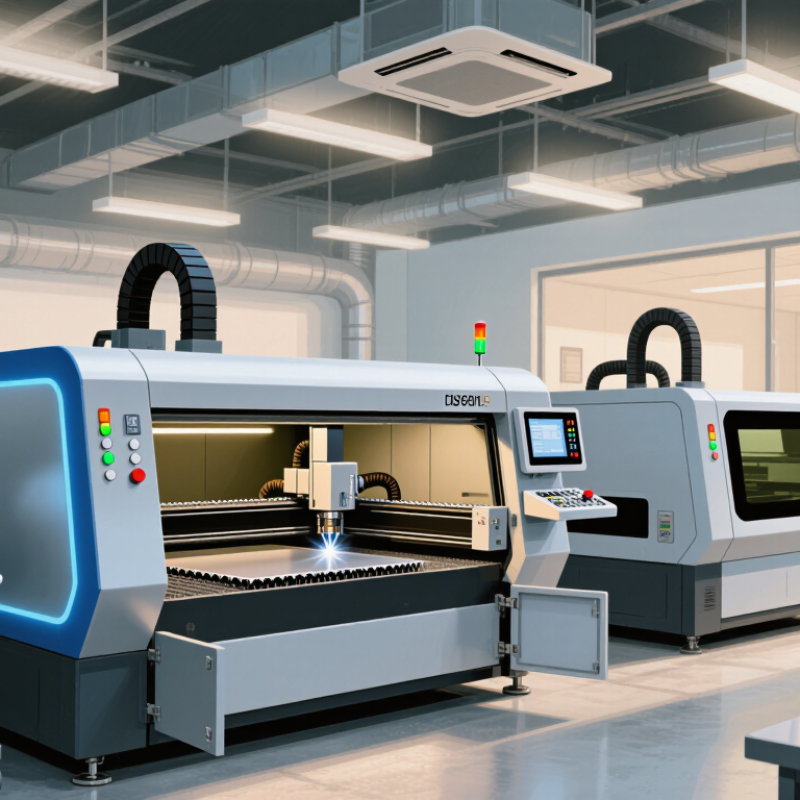
Choosing laser equipment begins with a business decision, not a machine specification. Define the products, materials, volumes, and tolerances you must handle. A sheet-metal shop may need fast cutting, while a medical-device supplier may prioritize repeatability and traceability. Different goals require different laser sources, powers, work areas, and automation levels.
According to Grand View Research, the global laser cutting machine market was valued at approximately USD 6.83 billion in 2023. Its projected growth reflects wider industrial adoption, but growth alone does not justify an expensive purchase. Estimate monthly production, acceptable scrap, operator time, maintenance, and energy consumption. Then calculate the cost per finished part. Keep it practical. A laser rated for thick steel may be wasteful for frequent thin-sheet work.
Application testing is essential. Send representative materials, including the most difficult grade and tightest tolerance, to a qualified equipment provider. Request measured results for cut speed, edge quality, kerf width, heat-affected zones, and repeatability. ISO 11553 provides safety requirements for laser processing machines, so include guarding, extraction, interlocks, and operator training in the specification. These details are often treated as secondary. They should not be.
A clean spreadsheet can still miss workflow problems. For example, loading delays may erase the productivity gained from higher power. Recheck the assumptions after a pilot run, especially when materials, staffing, or order sizes may change.
| Business Goal | Typical Laser Application | Suitable Laser Category | Common Materials | Typical Wavelength | Key Performance Requirements | Recommended Priority | Important Selection Considerations |
|---|---|---|---|---|---|---|---|
| Permanent product identification | Serial numbers, barcodes, QR codes, logos and traceability marks | Fiber marking laser | Stainless steel, aluminum, carbon steel and many engineering plastics | Approximately 1,064 nm | High marking contrast, repeatability, fast cycle time and stable focus | High | Choose based on material reflectivity, marking depth, field size and required code quality. |
| Fine engraving and detailed graphics | Jewelry engraving, instrument scales, small components and decorative patterns | Short-pulse fiber or ultrafast laser | Precious metals, stainless steel, ceramics and selected polymers | Approximately 1,064 nm; ultrafast systems may use other wavelengths | Small spot size, low heat input, precise motion control and high positional accuracy | High | Shorter pulse duration can reduce heat-affected areas, but equipment cost and process complexity are usually higher. |
| Sheet-metal cutting | Cutting profiles, brackets, panels and fabricated metal parts | Continuous-wave fiber cutting laser | Mild steel, stainless steel, aluminum, brass and copper | Approximately 1,064 nm | Optical power, cutting speed, beam quality, autofocus and assist-gas control | High | Required power depends strongly on material type, thickness, cut quality, production volume and allowable cycle time. |
| Non-metal cutting and profiling | Cutting signs, packaging components, gaskets, prototypes and interior parts | CO₂ laser | Acrylic, wood, paper, cardboard, leather, fabric and some rubber materials | Approximately 9.3–10.6 µm | Clean edge quality, suitable bed size, extraction capacity and controlled thermal input | High | Material composition must be verified before processing; chlorine-containing plastics can release hazardous gases. |
| Welding and joining | Precision welding of assemblies, housings, tubes and battery-related components | Fiber welding laser | Stainless steel, carbon steel, aluminum, copper and nickel alloys | Approximately 1,064 nm | Stable energy delivery, beam control, shielding gas management and joint fit-up | High | Reflective metals may require specialized process settings, optics and safety controls. |
| Surface cleaning and coating removal | Rust removal, paint stripping, oxide cleaning and mold maintenance | Pulsed fiber cleaning laser | Steel, aluminum, stone, selected coated surfaces and tooling | Approximately 1,064 nm | Adjustable pulse energy, scanning control, low substrate damage and effective fume extraction | Medium | The process window should be tested to remove contamination without changing the base material. |
| Plastic marking and color change | High-contrast marks, melt marking, foaming and component identification | UV, fiber or CO₂ marking laser, depending on polymer formulation | ABS, polycarbonate, nylon, POM and engineered plastics | Approximately 355 nm, 1,064 nm or 9.3–10.6 µm | Material-specific contrast, low heat distortion, fume control and repeatable focus | High | The same polymer family may respond differently because pigments, additives and fillers affect laser absorption. |
| Glass and transparent-material processing | Surface marking, internal marking, drilling and controlled micro-processing | UV or ultrafast laser | Glass, quartz, sapphire and selected transparent polymers | Approximately 355 nm or shorter-pulse infrared systems | Low thermal damage, precise focus, vibration control and suitable pulse duration | Medium | Internal marking and brittle-material processing require application trials to control cracking and optical distortion. |
| High-volume automated production | In-line marking, inspection-linked processing and robotic laser workstations | Integrated fiber, CO₂ or diode laser system | Metals, plastics, wood, packaging and assembled products | Depends on the material and process | High uptime, automation interfaces, rapid loading, process monitoring and service support | High | Evaluate total cycle time, integration effort, preventive maintenance, operator training and production downtime risk. |
| Low-volume prototyping and customized products | Short-run parts, samples, personalization and design verification | Compact fiber, CO₂ or diode laser system | Depends on the product range | Depends on the material and desired effect | Flexible software, quick setup, moderate operating cost and broad material compatibility | Medium | A versatile system may provide better business value than a high-power machine when product mix changes frequently. |
| Laboratory or research development | Process development, parameter testing and material characterization | Adjustable pulsed, ultrafast or tunable laser platform | Metals, ceramics, polymers, glass and experimental materials | Application-dependent | Wide parameter range, interchangeable optics, measurement access and precise control software | Low | Prioritize experimental flexibility and data collection rather than production speed alone. |
| Safe and compliant workplace operation | Enclosed marking, cutting, welding or cleaning workstation | Class 1 enclosed system or appropriately controlled laser workstation | All materials, depending on the process | Process-dependent | Interlocked enclosure, emergency stop, key control, extraction and documented risk assessment | High | Laser classification, protective eyewear, ventilation and operator training should be assessed before purchase and installation. |

Choosing laser equipment starts with the material, not the machine’s advertised power. Fiber lasers suit many metals, including stainless steel and aluminum. CO2 lasers commonly process wood, acrylic, leather, and selected plastics. UV lasers create finer marks on sensitive surfaces, electronics, and coated products. Diode systems can handle lighter engraving tasks, but their cutting depth may be limited.
Compare wavelength, power, pulse duration, spot size, work area, cooling, and extraction requirements. Higher wattage is not always better. A small spot can produce sharper text, while a larger bed supports bigger products. Test samples using your actual material, thickness, finish, and production speed. Material additives can change results, especially with plastics. Some plastics release hazardous fumes when heated, so verify technical documentation and use suitable ventilation.
Tips: Ask for sample testing before purchasing. Record cutting speed, edge quality, smoke, and energy use. I once focused too heavily on power and overlooked maintenance access. That mistake slowed production. Check lens replacement, calibration, software compatibility, and operator training. Leave room for imperfect trials. A machine that performs well in a showroom may behave differently beside your daily workflow. Choose equipment that offers stable results, documented support, and safe operating controls.
When comparing laser equipment, treat quality as an operating issue, not a polished casing. Ask for output stability data, documented testing, and a clear maintenance schedule. Consistent performance can improve results and reduce rejected work. Inspect the handpiece, cables, cooling system, and control screen before purchase. Small defects become expensive interruptions. Request a live demonstration with settings similar to your planned services. Marketing samples may look perfect. Real workloads are less forgiving.
Safety features deserve equal attention. Look for an accessible emergency stop, protective interlocks, temperature monitoring, and clear fault alerts. The system should prevent operation when a required safety condition is missing. Check whether users can adjust power, duration, and cooling without confusion. Confusing controls invite mistakes during busy appointments. Ask how training is documented and how incidents are recorded. A safety manual alone is not enough. Observe whether staff can explain the shutdown procedure without searching for instructions.
Calculate operating costs beyond the purchase price. Include installation, training, electricity, cooling supplies, replacement parts, software fees, servicing, and downtime. A cheaper unit may consume more supplies or require frequent calibration. That comparison is easy to miss. Estimate cost per treatment using realistic appointment volumes, not optimistic projections. Review warranty terms, response times, and access to qualified technicians. Reserve a repair fund, even when reliability claims sound convincing. No evaluation is perfect. Recheck your assumptions after three months of actual use, because the spreadsheet may not reflect cleaning time, aborted sessions, or staff learning curves.
Evaluate equipment quality, safety features, and operating costs before making a purchase.
The chart uses a 100-point planning benchmark for three common laser equipment profiles. Quality considers beam consistency, component durability, and process stability; safety considers enclosure design, interlocks, emergency controls, and fume extraction; operating cost reflects energy use, consumables, maintenance, and expected downtime. A higher operating-cost score indicates lower ongoing cost.
Choosing laser equipment is not only a technical purchase. Supplier support often determines whether a busy treatment room stays productive. Ask who answers urgent questions, how quickly they respond, and whether help is available after installation. A reliable supplier provides named contacts, clear escalation steps, and practical documentation. Request feedback from current users, not polished promises. One honest conversation may reveal delayed replies or confusing instructions.
Training should include setup, safe operating procedures, treatment parameters, cleaning, and basic fault checks. Live, hands-on instruction is more useful than a short video watched alone. Ask whether new staff can receive refresher sessions after turnover. Maintenance plans should state inspection intervals, calibration responsibilities, service charges, and expected repair times. Read the warranty carefully. Check coverage for handpieces, cooling systems, software, travel, and replacement parts. Some exclusions look minor until equipment stops during a fully booked week. Many businesses focus on purchase price and later regret ignoring downtime.
Tips: Build a support checklist before comparing prices. Ask for a sample service report and training agenda. Confirm who performs repairs and whether technicians are properly qualified. Record every promise in the contract. Keep a small downtime budget, because even excellent equipment can fail. If answers remain vague, pause the purchase. That hesitation is useful data.
Choosing the best laser equipment starts with the work, not the sales brochure. Define materials, thicknesses, tolerances, daily volume, and available floor space. A metal shop needs different power, wavelength, and cooling capacity than a plastics workshop. In my evaluations, operators often overestimate peak power and underestimate maintenance time. That mistake becomes expensive quickly. Ask for measurable results, not impressive claims. Request sample cuts using your own materials. Record edge quality, cutting speed, heat marks, and repeatability. Small differences matter.
Validate the machine through a controlled trial. Use identical files and repeat each task several times. Check dimensional accuracy with calibrated measuring tools. Inspect corners, kerf width, surface finish, and waste. Keep the test records. They expose inconsistent performance. Ask trained operators to run the equipment, not only a sales engineer. Their feedback reveals awkward loading, unclear software steps, and access problems. I would also test emergency stops, guarding, ventilation, and noise levels. Safety should be documented, verified, and understood before purchase.
Review the full operating picture. Confirm installation requirements, electrical load, extraction, cooling, training, spare parts, and response times. Check whether local regulations require certification, risk assessments, or special controls. Independent technical advice can challenge optimistic estimates. Compare total costs over several years, including lenses, filters, service, downtime, and energy. A lower purchase price may hide higher upkeep. Still, my process is not perfect. Test conditions can be too gentle. Repeat them under realistic production pressure, and leave room for a second opinion before signing.


For those larger-sized parts, or smaller quantity runs, we have 2 independent powder coat booths and ovens. The quality, durability and affordability of today’s powder coating finishes make this the process of choice for world-class companies.
Powder coating advantages over other forms of coating are many. Materials used in the Powder coating process can be metals and non-metals that come in a multitude of thicknesses, textures, colors, etc. Another of Powder coating’s biggest advantages over conventional coatings is its ability to create finishes in many different textures. Powder Coating Booths allow us the ability to apply these advantages to large products.
Tri-State Fabricators runs a full-service conveyor line for painting. Wet painting can provide protection or decoration to many different part styles. From start to finish, every project is easier to undergo random and point-based inspection by our skilled painting team.
Advantages to our Wet Paint Line are these lines start with product prep and ends with a thorough inspection of a high quality finished product. Our ability to complete large and small projects with a superior finish and doing so in a timely and economical fashion. This passes along the savings in production to our customers. When powder coating ins not an option, our Wet Paint Line gets the job done right the first time.
When the parts get big and heavy we roll-out our custom paint racks and oversize booth. By utilizing our partnerships with all the major paint brands, we can match virtually any color with wet paint.
The advantages of having access to a Wet Paint Booth are many. Large projects of many different shapes can be loaded into the booth. The Wet Paint Booth offers an environment that is much more controlled than a typical parts painting operation.
Not only are they used because of their controlled environment, but they’re are also advantageous when it comes to applying paint to parts that are needed in industries that require specialty coatings such as medical, aerospace, etc.
Our military forces have some very high standards when it comes to the finish of their vehicles and equipment. From the first pre-treatment step to final coat, it takes a great deal of knowledge and experience to protect the men and women of our armed forces. They deserve only the best, and Tri-State Fabricators provides it.
All of our processes are closely monitored by our staff and management teams. Both of which are highly trained in the processes of metal fabrication and finishing. Tri-State Fabricators’ goal is to always fully satisfy each and every customer, including the military. We will always put a 110% into what we do.
Abrasive media blasting is an excellent way to remove old paint, rust, and increase the paint/powder adhesion. Glass beads produce a much smoother and brighter finish than angular abrasives; leaving the part clean yet without any dimensional change. Chemically inert and environmentally friendly, we can recycle our beads approximately 30 times; making them a more preferred method of metal cleaning or surface finishing.
Advantages to Glass Bead Blasting are many. Glass bead blast media is used when a project is needing rough surfaces need to become smooth for applications of coatings such as paint. It is typically used to clean paint and rust from a product surface without deforming the surface it is being used on. Overall, compared to many other blasting media, Glass Bead Blasting is a very economical choice and those savings are always passed on to our customers.
Tri-State Fabricators utilize a zinc phosphate wash to clean and etch the material to ensure the best paint adhesion possible. The unique design of our 3-stage wash system does the work like a 5-stage. From Cleaning and rinsing to conversion coating and post-treatment, Our Part Washing process is a complete service and works throughout the fabrication service and the finishing service.
Along with the previously mentioned benefits, Curing is a vital chemical reaction that leaves the product finish hard and relatively safe from mild abrasion and aggressive corrosion. This process can be done in more than one way; ambient air-dry or in curing ovens at temps that exceed 240°.
From fixing paint mistakes (someone else’s of course) to simply cleaning our paint line hooks, our burn-off oven is put to good use. After a quick burn-off, a little clean up, and a fresh coat of paint, your parts will look better than new.
Why does our Burn-Off Oven work so well? Because super heating the air around parts turns the materials into ashes. From paint and powder coatings to rubber and machining oils, high temps do the job without degrading the integrity of the part.
Masking is a vital part of producing high quality products. We have die-cut masking patterns to protect machined surfaces as well as a wide range of plugs and caps to protect threaded holes and bolts. We provide permanent and temporary masking.
Masking allows the selected sections of a product to be protected from a fabrication or finishing service. This can be with both chemicals when etching and tapes, paints when only finishing just a section of the product. Masking is great in aiding the customization process of a project.
Screen printing is a photographic process that transfers artwork onto a porous nylon screen which allows colored ink to flow through the screen and be deposited on an aluminum or plastic component. We can generally have just about any design created onto a screen for your parts.
Some of the advantages of Screen Printing are, brand recognition for your business displaying on your products, assembly instructions, product warnings/hazards, etc. Tri-State Fabricators produces Screen Printing of the highest quality so you know it’s durable.
Metal Finishing is the art of treating the exterior portion of product, often metal but can also be made of other materials, so that the surface is clean and free of any debris. Then the process of applying coats or either paint of powder coat takes place. This coating process improves the quality of the product in both appearance and resistance to wear and corrosion.
Tri-State Fabricators, Inc., understands that a project typically isn’t complete until a high-quality finish has been added to your product. This is why our painting and powder coating teams continuously inspect the products throughout the Metal Finishing process.

