


What Is the Best Hole Saw for Metal?

Choosing the best Hole Saw For Metal starts with one simple fact: metal is not a single cutting material. Thin aluminum behaves differently from thick steel, and stainless steel can quickly expose a weak cutter. The right choice depends on the metal, its thickness, the hole diameter, and how often you will cut. There is no universal winner.

A Hole Saw For Metal should have teeth suited to the material and a shank compatible with your drill or arbor. Bi-metal models can serve general workshop tasks, while carbide-tipped designs may suit tougher metals or repeated cuts. Check the manufacturer’s stated applications rather than relying on appearance alone. Tooth count matters, but it is not the whole story. Even careful buyers can focus too much on specifications and overlook fit, stability, or cutting conditions.

Small details matter. Secure the workpiece, use a suitable cutting lubricant when recommended, and follow the saw maker’s speed guidance. Excessive heat can dull teeth and discolor the cut edge. Let the tool cut without forcing it. Keep protective eyewear on, and clear metal chips safely; they can be sharp. A pilot bit helps guide many cuts, but it must be firmly seated. Not every setup is perfect. If the saw chatters, binds, or produces heavy heat, stop and reassess the material, speed, and support. The best option is the one that cuts cleanly and safely in your actual working conditions.
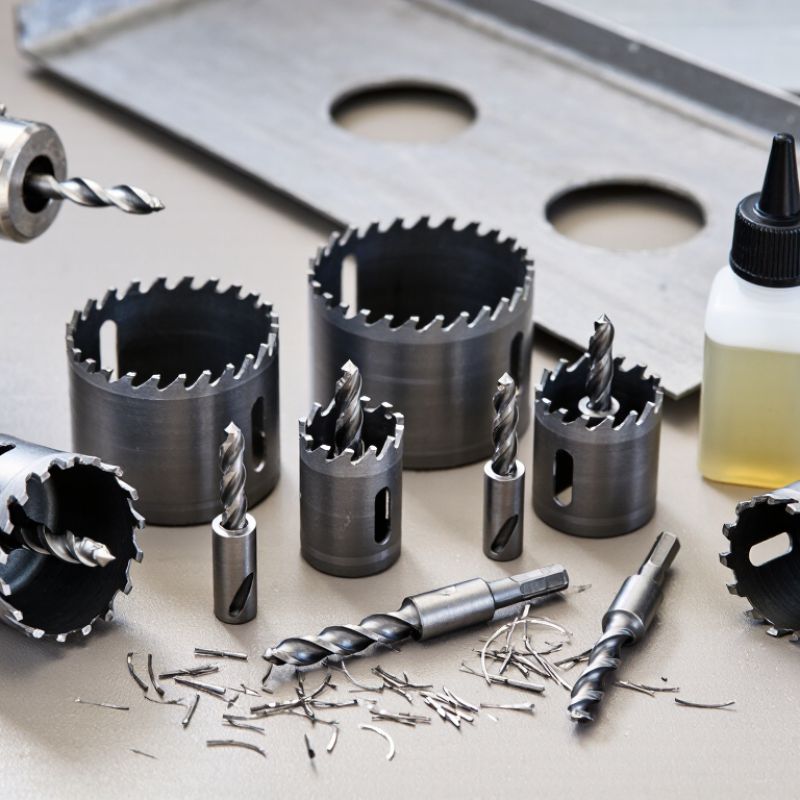
What Is the Best Hole Saw for Metal?

What a Hole Saw for Metal Is and How It Works

A hole saw for metal is a hollow, cylindrical cutter with teeth around its rim. Unlike a twist drill, it removes a ring of material and leaves a round metal core, called a slug. The cutter attaches to an arbor, which connects it to a drill. Many arbors include a small pilot bit. That bit helps guide the saw and reduce wandering as the teeth meet the surface.

The drill turns the saw while steady pressure brings its teeth into the metal. Cutting only around the edge takes less effort than boring a full circle, but the tool still needs careful control. Secure the workpiece, choose a cutter suited to the metal and its thickness, and follow the cutter maker’s speed guidance. Too much speed can overheat the teeth; too much pressure can bind the saw. Use suitable cutting lubricant when required, and clear chips safely. The slug may be hot. Let the tool cool before handling it. A clean hole is not guaranteed, either. Thin sheet can flex, and a pilot bit may mark the material beneath it. Checking the setup before cutting can prevent a small hole from becoming a rough one.


Key Materials and Tooth Designs Used in Metal-Cutting Hole Saws

A hole saw’s cutting edge matters more than its appearance. For general steel, a bi-metal design pairs high-speed steel teeth with a tougher, flexible alloy-steel body. The teeth resist wear, while the body is less likely to crack under ordinary drilling stress. Look for a smooth, even weld and teeth set consistently around the rim. Small differences show up as chatter.

Tooth design affects how the saw enters and clears the cut. Variable-pitch teeth, with uneven spacing, can reduce vibration and help break up long metal chips. A modest tooth count often clears chips more freely in sheet steel; finer teeth can give a steadier cut in thinner material. For stainless steel or other abrasive metals, cobalt-alloy teeth may last longer, while carbide-tipped versions can suit demanding cuts but are less forgiving of side pressure. Match the saw to the metal, not just the hole diameter.

Keep it cool. Cutting oil and a slower, steady feed help limit heat, which can soften teeth and discolor the workpiece. Clamp thin sheet securely and let the saw do the cutting; forcing it can snag the rim. There is no perfect tooth pattern for every job. Even a good saw may cut poorly if chips pack inside the cup.

How to Match a Hole Saw to the Metal and Hole Size

What Is the Best Hole Saw for Metal?
How to Match a Hole Saw to the Metal and Hole Size

The best choice depends on the metal, its thickness, and the hole diameter. For mild steel and occasional cuts, a bi-metal hole saw is often a practical option. Stainless steel creates more heat and resists cutting, so use a saw rated for it and work at a slower speed. Check the saw’s cutting depth against the material thickness. A shallow cup may not pass through in one cut. Small holes behave differently. Larger diameters need steady control and can bind if chips pack inside the teeth.

Tips: Clamp the work securely, mark the center, and use the pilot bit to guide the cut. Apply cutting fluid where suitable, use light pressure, and pause to clear metal chips. Wear eye protection. Let the teeth cut; forcing the saw can overheat it or snag the workpiece.

Match the saw diameter to the finished hole, not just the pilot opening. Measure twice, especially when a fitting needs a close clearance. For thin sheet metal, support the back to reduce distortion, and keep the saw square to the surface. In thicker stock, withdraw the saw periodically to clear chips and cool the cut. It may feel slower than pushing harder, but heat can dull teeth quickly. One detail is easy to overlook: hole saws leave sharp edges, so plan to deburr the opening before fitting or handling the part.

What Is the Best Hole Saw for Metal?

Match the hole saw’s diameter to the hole you need, then choose its cutting material for the metal and thickness.

Choosing the saw: Bi-metal hole saws are a common choice for mild steel and thinner metal. For stainless steel or tougher, thicker metal, choose a suitable carbide-tipped hole saw and follow its manufacturer’s cutting guidance. The chart shows common nominal diameters; check the product specifications before cutting.

Features That Distinguish the Best Hole Saws for Metal

The best metal hole saw is defined by tooth material, geometry, and heat control—not its advertised diameter alone. Bi-metal cutters combine hard high-speed-steel teeth with a tougher backing, while cobalt-alloyed teeth better retain hardness under heat. ASTM A600 specifies high-speed tool-steel grades, but it does not rank hole saws; tooth design and cutting conditions still matter. For stainless steel, look for fine, evenly spaced teeth and a rigid arbor. Variable pitch can reduce chatter. It is not a substitute for steady feed.

Cobalt content is a useful clue, not a guarantee. The USGS Mineral Commodity Summaries 2024 estimated global cobalt mine production at 230,000 metric tons in 2023; that supply figure offers context for the alloy, not proof of cutter life. For thin sheet, a finer tooth pattern helps limit snagging. For thick plate, check the saw’s cutting depth and chip clearance. Carbide-tipped teeth can cut hard materials, but they are less forgiving of vibration. Clamp the work, use suitable cutting fluid, and clear chips before they pack around the teeth. Small detail. A saw can still run hot if feed pressure is uneven, and selecting one by material label alone is an easy mistake.

How to Use and Maintain a Metal-Cutting Hole Saw Safely

A metal-cutting hole saw works safely only when its teeth match the material and its speed matches the saw’s diameter. Check the manufacturer’s speed chart; larger cutters generally need slower speeds. Clamp the workpiece firmly, and support thin sheet metal with a backing board to reduce grabbing. Wear safety glasses with side shields and hearing protection. Metal chips travel fast. OSHA’s Eye and Face Protection eTool estimates that about 2,000 U.S. workers receive medical treatment for job-related eye injuries each day. That figure covers many kinds of work, but it underscores why chip protection matters. Keep hands clear, start the pilot bit steadily, and use cutting fluid only when the saw’s instructions allow it.

Stop the drill before clearing chips or adjusting the arbor. Unplug it first. Let the teeth cool before handling the cutter; hot edges can burn skin. After each job, inspect the teeth for missing or rounded tips, check the pilot bit and arbor for looseness, then brush away chips and dry the saw. Store it where the teeth cannot strike other tools. A setup can look secure and still shift, so check the clamp again before cutting. I would not rush this check, even on a small hole. Dull teeth can wander, overheat, and make the drill harder to control; replace a damaged cutter rather than forcing it through the metal.

What Is the Best Hole Saw for Metal? - How to Use and Maintain a Metal-Cutting Hole Saw Safely

Selection or safety factor Recommended choice or practice Practical details
Best all-purpose option Bi-metal hole saw with high-speed-steel teeth A versatile choice for many general-purpose cuts in mild steel and other common metals. Check the saw’s specifications for the material and thickness before use.
Harder or thicker metal Use a hole saw specifically rated for the metal being cut; carbide-tipped designs may be suitable for some demanding applications Tool suitability depends on the metal, its thickness, and the saw design. Follow the manufacturer’s material and thickness limits rather than relying on tooth material alone.
Stainless steel Choose a saw explicitly suitable for stainless steel Use an appropriate cutting lubricant and steady, controlled feed. Excessive heat can shorten cutting life and affect the workpiece.
Hole diameter Match the saw’s stated cutting diameter to the required finished hole Check the diameter printed on the saw or packaging, and allow for the pilot drill and arbor requirements. Available sizes vary by product.
Speed Use the speed recommended for the specific saw, material, and diameter Metal cutting generally calls for lower speeds than wood cutting. Larger diameters usually require lower speeds; do not exceed the tool or saw’s rated limits.
Workpiece setup Clamp the workpiece securely to a stable surface Do not hold small metal pieces by hand. Support the material close to the cut while keeping clamps clear of the saw’s path.
Personal protection Wear safety glasses or a face shield and hearing protection Tie back long hair and remove jewelry. Keep hands, loose clothing, and gloves away from rotating parts; follow the drill manufacturer’s safety instructions.
Starting the cut Use a suitable arbor and pilot drill, and keep the saw square to the work Start carefully so the pilot drill can guide the saw. Avoid forcing the tool or allowing the saw to tilt, which can cause binding or damage.
Cutting lubricant Apply a metal-cutting lubricant when recommended for the material and saw Lubrication can reduce friction and heat. Use it according to its label, and keep liquids away from electrical components unless the tool is designed for that use.
Chip removal Stop the tool before clearing chips or removing the cut-out slug Metal chips can be sharp and hot. Use a brush or suitable tool, not fingers, and wait for the saw to stop completely.
After-use inspection Check the teeth, body, pilot drill, and arbor for wear or damage Do not use a cracked, distorted, or badly worn saw. Replace damaged parts with components specified for the arbor system.
Cleaning and storage Remove chips, dry the saw, and store it in a clean, dry place Apply a light rust-preventive treatment when appropriate. Keep cutting edges protected and avoid storing the saw where teeth can strike hard surfaces.
Always consult the hole saw and power-tool instructions for material limits, speed, arbor compatibility, and required safety precautions.

Powder Coat Booths

For those larger-sized parts, or smaller quantity runs, we have 2 independent powder coat booths and ovens. The quality, durability and affordability of today’s powder coating finishes make this the process of choice for world-class companies.

Powder coating advantages over other forms of coating are many. Materials used in the Powder coating process can be metals and non-metals that come in a multitude of thicknesses, textures, colors, etc. Another of Powder coating’s biggest advantages over conventional coatings is its ability to create finishes in many different textures. Powder Coating Booths allow us the ability to apply these advantages to large products.

Wet Paint Line

Tri-State Fabricators runs a full-service conveyor line for painting. Wet painting can provide protection or decoration to many different part styles. From start to finish, every project is easier to undergo random and point-based inspection by our skilled painting team.

Advantages to our Wet Paint Line are these lines start with product prep and ends with a thorough inspection of a high quality finished product. Our ability to complete large and small projects with a superior finish and doing so in a timely and economical fashion. This passes along the savings in production to our customers. When powder coating ins not an option, our Wet Paint Line gets the job done right the first time.

Wet Paint Booths

When the parts get big and heavy we roll-out our custom paint racks and oversize booth. By utilizing our partnerships with all the major paint brands, we can match virtually any color with wet paint.

The advantages of having access to a Wet Paint Booth are many. Large projects of many different shapes can be loaded into the booth. The Wet Paint Booth offers an environment that is much more controlled than a typical parts painting operation.

Not only are they used because of their controlled environment, but they’re are also advantageous when it comes to applying paint to parts that are needed in industries that require specialty coatings such as medical, aerospace, etc.

Military CARC

Our military forces have some very high standards when it comes to the finish of their vehicles and equipment. From the first pre-treatment step to final coat, it takes a great deal of knowledge and experience to protect the men and women of our armed forces. They deserve only the best, and Tri-State Fabricators provides it.

All of our processes are closely monitored by our staff and management teams. Both of which are highly trained in the processes of metal fabrication and finishing. Tri-State Fabricators’ goal is to always fully satisfy each and every customer, including the military. We will always put a 110% into what we do.

Glass-Bead Blasting

Abrasive media blasting is an excellent way to remove old paint, rust, and increase the paint/powder adhesion. Glass beads produce a much smoother and brighter finish than angular abrasives; leaving the part clean yet without any dimensional change. Chemically inert and environmentally friendly, we can recycle our beads approximately 30 times; making them a more preferred method of metal cleaning or surface finishing.

Advantages to Glass Bead Blasting are many. Glass bead blast media is used when a project is needing rough surfaces need to become smooth for applications of coatings such as paint. It is typically used to clean paint and rust from a product surface without deforming the surface it is being used on. Overall, compared to many other blasting media, Glass Bead Blasting is a very economical choice and those savings are always passed on to our customers.

Part Washing

Tri-State Fabricators utilize a zinc phosphate wash to clean and etch the material to ensure the best paint adhesion possible. The unique design of our 3-stage wash system does the work like a 5-stage. From Cleaning and rinsing to conversion coating and post-treatment, Our Part Washing process is a complete service and works throughout the fabrication service and the finishing service.

Along with the previously mentioned benefits, Curing is a vital chemical reaction that leaves the product finish hard and relatively safe from mild abrasion and aggressive corrosion. This process can be done in more than one way; ambient air-dry or in curing ovens at temps that exceed 240°.

Burn-Off Oven

From fixing paint mistakes (someone else’s of course) to simply cleaning our paint line hooks, our burn-off oven is put to good use. After a quick burn-off, a little clean up, and a fresh coat of paint, your parts will look better than new.

Why does our Burn-Off Oven work so well? Because super heating the air around parts turns the materials into ashes. From paint and powder coatings to rubber and machining oils, high temps do the job without degrading the integrity of the part.

Masking

Masking is a vital part of producing high quality products. We have die-cut masking patterns to protect machined surfaces as well as a wide range of plugs and caps to protect threaded holes and bolts. We provide permanent and temporary masking.

Masking allows the selected sections of a product to be protected from a fabrication or finishing service. This can be with both chemicals when etching and tapes, paints when only finishing just a section of the product. Masking is great in aiding the customization process of a project.

Screen Printing

Screen printing is a photographic process that transfers artwork onto a porous nylon screen which allows colored ink to flow through the screen and be deposited on an aluminum or plastic component. We can generally have just about any design created onto a screen for your parts.

Some of the advantages of Screen Printing are, brand recognition for your business displaying on your products, assembly instructions, product warnings/hazards, etc. Tri-State Fabricators produces Screen Printing of the highest quality so you know it’s durable.

Metal Finishing

Metal Finishing is the art of treating the exterior portion of product, often metal but can also be made of other materials, so that the surface is clean and free of any debris. Then the process of applying coats or either paint of powder coat takes place. This coating process improves the quality of the product in both appearance and resistance to wear and corrosion.

Tri-State Fabricators, Inc., understands that a project typically isn’t complete until a high-quality finish has been added to your product. This is why our painting and powder coating teams continuously inspect the products throughout the Metal Finishing process.
