


How to Choose the Best Hair Dryer for Global Buyers in 2026?

Choosing a hair dryer for international wholesale is not just a matter of comparing wattage and price. Buyers must consider where the product will be sold, who will use it, and how reliably it can perform in daily settings. A salon needs sustained airflow and durable construction. A hotel may value simple controls, compact storage, and easy maintenance. Different priorities matter.

The 2026 best hair dryer for global wholesale buyers should balance drying performance, user comfort, and dependable supply. Compare motor type, airflow, heat settings, noise levels, cord length, and safety features. Check voltage and plug options for each target market, then confirm applicable product requirements with qualified local sources. Do not rely on a supplier’s general claim alone. Request clear specifications, sample units, and documented quality checks. Test the dryer with different hair textures when possible; a short demonstration may miss problems that appear after repeated use. That takes time.

Buyers should also review packaging, spare-part availability, warranty terms, and production lead times. These details can affect customer satisfaction as much as a sleek design. Ask how defects are handled and whether the supplier can maintain consistent materials across repeat orders. A low quotation can look attractive, but hidden costs may change the calculation. Even a strong specification sheet cannot guarantee an effortless launch. Some trade-offs remain, and that is worth admitting. This guide outlines practical criteria for comparing models and suppliers, so global buyers can make informed decisions without treating one feature as the whole answer.
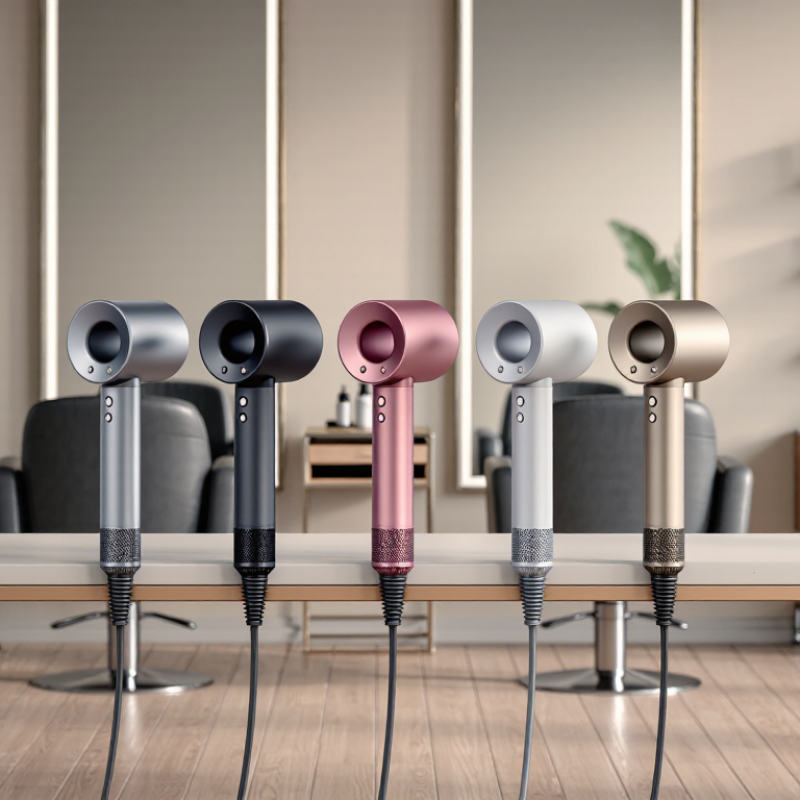
How to Choose the Best Hair Dryer for Global Buyers in 2026?

Map Target Markets: Match 100–240 V, 50/60 Hz, and Local Plug Types

Global sourcing
Global sourcing starts with a country-by-country power map, not a “universal” label. The IEC’s World Plugs reference identifies 15 household plug types, from A to O. Treat that as a planning baseline, then verify the exact socket and grounding requirements in each destination. Record nominal voltage, 50/60 Hz frequency, plug shape, and rated current for every market.

A dryer marked 100–240 V and 50/60 Hz may suit many electrical networks, but check the rating plate and manual for the full input range. Some models require a manual voltage switch; a forgotten setting can damage the appliance.

Adapters are not converters. Confirm that the plug fits securely and that the outlet can support the dryer’s stated power. IEC 60038 provides standardized supply-voltage references, but local installations can vary.

A market spreadsheet helps, yet it can miss regional socket differences. Check sample units against real outlets before placing a large order. For global buyers, small details matter.


Set Performance Targets: Compare 1,200–2,000 W with Airflow and Heat Needs

A 1,200–2,000 W rating is a useful starting point, not a drying-speed guarantee. Wattage measures electrical input; airflow and heat determine how that power feels at the nozzle. The IEC 61855:2022 performance-testing standard assesses hair-care appliances using measures that include airflow, air temperature, and drying performance. Compare those figures where manufacturers publish them, and check that tests use comparable methods. Numbers mislead.

For fine hair or travel, a 1,200–1,500 W dryer may provide enough airflow with gentler heat. Thick, long hair may benefit from 1,700–2,000 W, especially when airflow remains strong at a lower heat setting. Look for a cool-shot control and at least two heat levels. A very hot nozzle can feel fast, but it may leave roots damp while roughing up the ends. I have found that a steady stream often matters more than an impressive wattage label.

Power also affects energy use: running a 1,200 W dryer for ten minutes uses about 0.20 kWh; at 2,000 W, the same time uses about 0.33 kWh. These are simple estimates; actual consumption varies with settings and cycling. For international use, confirm voltage compatibility before comparing performance. A mismatch can make a dryer unusable. Test the weight and grip, too—small details, but tiring on a long morning.

How to Choose the Best Hair Dryer for Global Buyers in 2026?

Set performance targets: compare power, airflow, and idealized air-temperature rise.

The airflow figures are illustrative design targets, not measured product results. Temperature rise is calculated using ΔT = power ÷ (air density × specific heat capacity × airflow), assuming air density of 1.2 kg/m³, specific heat capacity of 1,005 J/(kg·°C), and no energy losses. Real dryers will differ with efficiency, voltage, airflow design, and heat settings. Compare these targets with the intended use and local electrical requirements.

Verify Safety: IEC 60335-2-23:2022 Covers Hair-Care Appliances Rated up to 250 V

When comparing hair dryers for international markets, check more than wattage and styling features. IEC 60335-2-23:2022 specifies safety requirements for skin- and hair-care appliances rated up to 250 V, including household hair dryers. It is used with IEC 60335-1, which sets general safety requirements. Check that the test documentation identifies the exact model and standard edition. Small design changes can matter.

Ask for a complete test report, not just a certificate image. Look for checks relevant to hazards such as electric shock, overheating, and abnormal operation. A dryer should not become unsafe if airflow is restricted or the motor stalls. Also inspect the cord entry, plug, and housing for damage or weak points. These details can be easy to overlook. Paperwork is not the whole story.

The standard is not a universal market-approval mark. Buyers should confirm local voltage, frequency, plug configuration, labeling, and conformity requirements for each destination. A 250 V rating does not mean one model suits every power system. Compare the declared rating with the actual product label. If a supplier cannot explain which tests were performed, pause and ask for clarification. A neat document can still leave gaps. Safety review takes patience.

How to Choose the Best Hair Dryer for Global Buyers in 2026? — Verify Safety: IEC 60335-2-23:2022 Covers Hair-Care Appliances Rated up to 250 V

Buying Dimension What to Verify Practical Guidance for Global Buyers
Safety standard Check whether the appliance has been evaluated against applicable electrical-safety requirements, including IEC 60335-1 and IEC 60335-2-23:2022 where relevant. IEC 60335-2-23:2022 covers household and similar electrical appliances for skin or hair care, including hair dryers, with a rated voltage of up to 250 V. Confirm the required national or regional approval separately; citing an IEC standard alone does not establish market approval.
Rated voltage Match the dryer’s voltage rating to the destination market’s supply and check the rating plate or product documentation. Supply voltage differs by market. For example, Japan uses nominal 100 V, while many markets use nominal 220–240 V. Do not connect a single-voltage appliance to an incompatible supply.
Dual-voltage operation For travel use, verify that the product is explicitly rated for both voltage ranges and determine whether voltage selection is automatic or manual. A plug adapter changes plug compatibility, not voltage. A dual-voltage claim should be supported by the appliance’s marked input ratings and clear operating instructions.
Frequency and electrical rating Check the marked voltage, frequency in hertz (Hz), and power input in watts (W) against the destination supply and intended use. Electricity systems commonly operate at 50 Hz or 60 Hz, depending on the market. Use the manufacturer’s stated compatibility rather than assuming every dryer supports both frequencies.
Plug and cord Confirm plug type, cord length, strain relief, and compatibility with local outlets and applicable market requirements. Plug configurations vary internationally. A travel adapter may address the physical plug shape but does not convert voltage or confirm that the appliance is approved for local sale.
Overheating protection Review the instructions and product documentation for safeguards such as over-temperature protection and guidance on keeping air inlets and outlets clear. Follow the stated operating and cleaning instructions. Do not cover the air intake or use a dryer in circumstances prohibited by its instructions.
Residual-current protection Check the instructions for warnings about use near water and the need for suitable residual-current protection where required locally. Hair dryers are electrical appliances; keep them away from water and follow the product instructions and local electrical rules, especially in bathrooms.
Performance and controls Compare the available heat and airflow settings, cool-shot control, and any stated performance information. Choose controls that suit the intended users and use case. Treat airflow or drying-time claims as comparable only when test conditions are clearly stated.
Documentation and traceability Request the rating-label details, user instructions, test documentation, and destination-market conformity documents where applicable. Check that documents identify the relevant model and match the product being supplied. Requirements vary by destination, so confirm them with the applicable regulator or qualified compliance professional.

Check Market Access: Confirm Local Electrical Certification and EMC Requirements

Before choosing a hair dryer for a new market, confirm its electrical safety and EMC requirements for that destination. Check the rated voltage, frequency, plug type, and wattage against local expectations. A dryer marked 220–240 V may not suit a market using 100–120 V. Do not assume a plug adapter makes an electrically incompatible model safe. Requirements can vary by country and product configuration, so verify them with the relevant local authority, importer, or qualified testing laboratory.

EMC checks matter because the dryer’s motor and electronic controls can create electromagnetic emissions or react to interference. Features such as adjustable heat, digital displays, or ionic functions may affect the test configuration. Ask whether reports cover the exact model, accessories, and power supply you plan to sell. Confirm which certification marks, test documents, and label details are required before production. A familiar certificate may not be accepted everywhere. Small paperwork mismatches can cause costly delays.

Tips: Request the destination market’s requirements in writing. Match the model number on test reports to the product label, and check documents before placing a large order. Keep one sample for review. It is easy to focus on appearance and airflow; compliance details deserve the same attention.

Assess Long-Term Value: Compare Warranty, Repairability, and Motor-Life Evidence

For a global buyer, the cheapest dryer may become costly when a failed motor means replacing the whole unit. The Global E-waste Monitor 2024 reports that the world generated 62 million tonnes of electronic waste in 2022; only 22.3% was documented as formally collected and recycled. That figure covers many product types, not hair dryers alone. Still, it makes repair access worth checking. Look for a written warranty, clear exclusions, and service options in the country where you will use the dryer. A long warranty sounds reassuring. Read the fine print.

Repairability is practical, not just a score. Check whether the filter, cord, and other service parts can be replaced, and whether repair instructions or authorized service are available locally. The European Commission has reported that 77% of EU consumers would rather repair goods than replace them, but repair cost and effort can get in the way. A warranty can still look good on paper; I would not treat it as proof of easy repair.

Motor-life claims need evidence. Ask whether the stated lifespan comes from documented testing, and whether the test describes operating hours, heat settings, and duty cycles. Compare like with like. There is no widely accepted, consumer-facing standard that makes every dryer’s motor-hour claim directly comparable. If a seller provides no test method, treat the number as marketing, not a promise. Also check whether warranty coverage includes the motor, since exclusions may matter more than the headline term.

Powder Coat Booths

For those larger-sized parts, or smaller quantity runs, we have 2 independent powder coat booths and ovens. The quality, durability and affordability of today’s powder coating finishes make this the process of choice for world-class companies.

Powder coating advantages over other forms of coating are many. Materials used in the Powder coating process can be metals and non-metals that come in a multitude of thicknesses, textures, colors, etc. Another of Powder coating’s biggest advantages over conventional coatings is its ability to create finishes in many different textures. Powder Coating Booths allow us the ability to apply these advantages to large products.

Wet Paint Line

Tri-State Fabricators runs a full-service conveyor line for painting. Wet painting can provide protection or decoration to many different part styles. From start to finish, every project is easier to undergo random and point-based inspection by our skilled painting team.

Advantages to our Wet Paint Line are these lines start with product prep and ends with a thorough inspection of a high quality finished product. Our ability to complete large and small projects with a superior finish and doing so in a timely and economical fashion. This passes along the savings in production to our customers. When powder coating ins not an option, our Wet Paint Line gets the job done right the first time.

Wet Paint Booths

When the parts get big and heavy we roll-out our custom paint racks and oversize booth. By utilizing our partnerships with all the major paint brands, we can match virtually any color with wet paint.

The advantages of having access to a Wet Paint Booth are many. Large projects of many different shapes can be loaded into the booth. The Wet Paint Booth offers an environment that is much more controlled than a typical parts painting operation.

Not only are they used because of their controlled environment, but they’re are also advantageous when it comes to applying paint to parts that are needed in industries that require specialty coatings such as medical, aerospace, etc.

Military CARC

Our military forces have some very high standards when it comes to the finish of their vehicles and equipment. From the first pre-treatment step to final coat, it takes a great deal of knowledge and experience to protect the men and women of our armed forces. They deserve only the best, and Tri-State Fabricators provides it.

All of our processes are closely monitored by our staff and management teams. Both of which are highly trained in the processes of metal fabrication and finishing. Tri-State Fabricators’ goal is to always fully satisfy each and every customer, including the military. We will always put a 110% into what we do.

Glass-Bead Blasting

Abrasive media blasting is an excellent way to remove old paint, rust, and increase the paint/powder adhesion. Glass beads produce a much smoother and brighter finish than angular abrasives; leaving the part clean yet without any dimensional change. Chemically inert and environmentally friendly, we can recycle our beads approximately 30 times; making them a more preferred method of metal cleaning or surface finishing.

Advantages to Glass Bead Blasting are many. Glass bead blast media is used when a project is needing rough surfaces need to become smooth for applications of coatings such as paint. It is typically used to clean paint and rust from a product surface without deforming the surface it is being used on. Overall, compared to many other blasting media, Glass Bead Blasting is a very economical choice and those savings are always passed on to our customers.

Part Washing

Tri-State Fabricators utilize a zinc phosphate wash to clean and etch the material to ensure the best paint adhesion possible. The unique design of our 3-stage wash system does the work like a 5-stage. From Cleaning and rinsing to conversion coating and post-treatment, Our Part Washing process is a complete service and works throughout the fabrication service and the finishing service.

Along with the previously mentioned benefits, Curing is a vital chemical reaction that leaves the product finish hard and relatively safe from mild abrasion and aggressive corrosion. This process can be done in more than one way; ambient air-dry or in curing ovens at temps that exceed 240°.

Burn-Off Oven

From fixing paint mistakes (someone else’s of course) to simply cleaning our paint line hooks, our burn-off oven is put to good use. After a quick burn-off, a little clean up, and a fresh coat of paint, your parts will look better than new.

Why does our Burn-Off Oven work so well? Because super heating the air around parts turns the materials into ashes. From paint and powder coatings to rubber and machining oils, high temps do the job without degrading the integrity of the part.

Masking

Masking is a vital part of producing high quality products. We have die-cut masking patterns to protect machined surfaces as well as a wide range of plugs and caps to protect threaded holes and bolts. We provide permanent and temporary masking.

Masking allows the selected sections of a product to be protected from a fabrication or finishing service. This can be with both chemicals when etching and tapes, paints when only finishing just a section of the product. Masking is great in aiding the customization process of a project.

Screen Printing

Screen printing is a photographic process that transfers artwork onto a porous nylon screen which allows colored ink to flow through the screen and be deposited on an aluminum or plastic component. We can generally have just about any design created onto a screen for your parts.

Some of the advantages of Screen Printing are, brand recognition for your business displaying on your products, assembly instructions, product warnings/hazards, etc. Tri-State Fabricators produces Screen Printing of the highest quality so you know it’s durable.

Metal Finishing

Metal Finishing is the art of treating the exterior portion of product, often metal but can also be made of other materials, so that the surface is clean and free of any debris. Then the process of applying coats or either paint of powder coat takes place. This coating process improves the quality of the product in both appearance and resistance to wear and corrosion.

Tri-State Fabricators, Inc., understands that a project typically isn’t complete until a high-quality finish has been added to your product. This is why our painting and powder coating teams continuously inspect the products throughout the Metal Finishing process.
