


How to Choose the Best Graphite Clay Crucible?

Choosing the best Graphite Clay Crucible is a process decision, not a simple price comparison. The right crucible must match the alloy, furnace temperature, melting cycle, and pouring method. Small differences matter. A rough inner surface can trap metal. Uneven heating can create visible cracks.

The U.S. Geological Survey reported approximately 1.6 million metric tons of natural graphite mine production in 2023. China supplied most of that volume. The International Energy Agency also identifies graphite as a critical material for expanding energy and manufacturing systems. These figures highlight a practical issue: raw-material availability does not guarantee consistent crucible performance. Purity, particle size, clay bonding, density, and protective coatings still require careful evaluation.

“ A crucible must match the process, not merely the metal,” says refractory engineer Dr. John R. Taylor. This principle sounds simple. It is often overlooked. Buyers should verify maximum service temperature, thermal-shock resistance, oxidation protection, wall thickness, and recommended heating speed. A crucible designed for copper may not perform well with aluminum or precious-metal alloys. Testing is essential.

Real workshops reveal the uncomfortable details. A crucible may survive its first melt, then fail after repeated thermal cycling. Supplier claims can also appear stronger than field evidence. For that reason, compare technical datasheets with operating records, batch consistency, and replacement intervals. This guide examines those factors carefully, while recognizing one limitation: no specification sheet can predict every furnace condition.
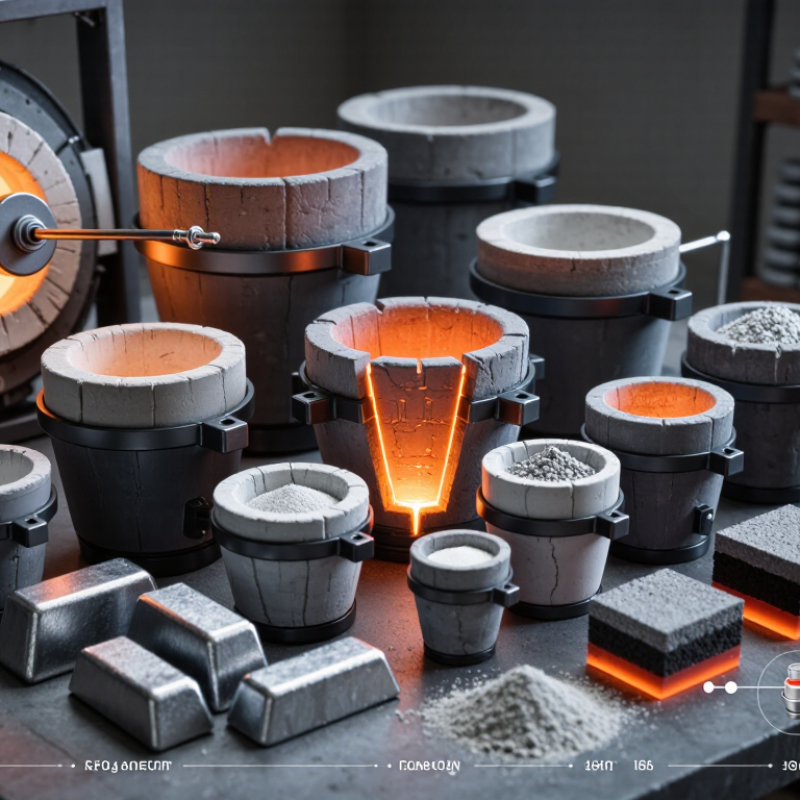
How to Choose the Best Graphite Clay Crucible?

Define Graphite-Clay Crucibles: Purity Levels Commonly Exceed 99%

How to Choose the Best Graphite Clay Crucible?

A graphite-clay crucible combines graphite’s heat transfer with clay’s structural strength. Its performance depends on fixed-carbon content, clay purity, porosity, and firing quality. The USGS Mineral Commodity Summaries 2024 identifies graphite by fixed-carbon content. It also notes that high-purity grades can reach 99.9% carbon. This explains why many graphite-clay crucibles commonly exceed 99% graphite purity.

Purity alone does not guarantee reliable melting. A crucible with low ash content leaves fewer residues in metal or ceramic batches. Dense walls reduce penetration from molten material. Fine graphite particles can improve thermal conductivity, while carefully selected clay helps resist thermal shock. The International Energy Agency reported strong growth in graphite demand for energy technologies in its Global Critical Minerals Outlook 2024. That pressure may encourage wider material testing, but product claims still require verification. I would not trust “99% pure” without a certificate.

Tips: Request a chemical analysis and maximum-use temperature. Check apparent porosity, bulk density, and thermal-shock data. Inspect the rim and base for hairline cracks before heating. Preheat gradually, especially after storage in humid conditions. Match crucible size to the furnace; oversized vessels often heat unevenly. Remember, real workshop results can differ from laboratory figures. Small batch trials remain sensible.

How to Choose the Best Graphite Clay Crucible? - Define Graphite-Clay Crucibles: Purity Levels Commonly Exceed 99%

Selection Dimension Typical or Recommended Data Why It Matters Practical Selection Guidance
Graphite Raw-Material Purity Common high-purity graphite grades: >99% fixed carbon; premium grades may reach about 99.5%–99.99%. Higher fixed-carbon content generally reduces ash and metallic contamination. Request a certificate of analysis and confirm whether the stated purity refers to the graphite ingredient or the finished crucible.
Finished-Crucible Composition Graphite-clay bodies commonly contain graphite plus refractory clay and other mineral additives; exact proportions vary by formulation. The finished product is not normally 99% graphite because clay and refractory phases provide bonding and structural strength. Compare total ash, impurity limits, and chemical compatibility rather than relying on graphite purity alone.
Maximum Recommended Temperature Approximately 1,200–1,600 °C for many graphite-clay crucible grades, depending on atmosphere, design, and heating method. Temperature capability decreases when oxidation, thermal shock, or chemical attack is severe. Choose a rated operating temperature above the actual melt temperature and follow the supplier’s heating curve.
Suitable Melting Applications Commonly used for aluminum, copper, brass, bronze, precious-metal alloys, and some nonferrous casting operations. Graphite provides thermal conductivity, while the clay-bonded structure supports repeated heating cycles. Check compatibility before melting reactive metals, iron-based alloys, or materials that strongly attack silicate refractories.
Thermal Shock Resistance Generally good when the crucible is properly dried, preheated, and handled; performance depends on porosity and wall thickness. Rapid heating, uneven flame impingement, or contact with cold materials can cause cracking. Select a uniform-wall design and use gradual heat-up and cool-down procedures.
Apparent Porosity Typical values vary considerably by manufacturing process; many dense refractory crucibles are designed in the low-to-moderate porosity range. Lower open porosity can reduce metal penetration and improve resistance to slag infiltration. Compare test values from the same standard, such as ASTM C20 or an equivalent method.
Bulk Density Often approximately 1.8–2.3 g/cm³, depending on graphite content, porosity, and refractory additives. Density influences mechanical strength, heat transfer, and resistance to molten-metal penetration. Use density as a comparison indicator, not as the sole measure of quality.
Oxidation Protection Graphite oxidizes in air at elevated temperature; protective coatings or controlled atmospheres can slow oxidation. Oxidation can increase wear, reduce wall thickness, and shorten service life. Use a suitable anti-oxidation coating when recommended, and avoid prolonged empty heating in air.
Crucible Capacity Select by the actual density of the charge metal; nominal capacity is commonly specified in kilograms or liters. Different metals have different densities, so the same crucible volume does not hold the same mass of every alloy. Keep the charge below the recommended fill level to allow expansion, stirring, and safe pouring.
Wall and Base Design Uniform walls, a stable base, and smooth internal surfaces are preferred; dimensions depend on furnace type and lifting equipment. Consistent geometry helps distribute thermal stress and reduces localized wear. Verify external dimensions, pouring-lip design, handling clearance, and compatibility with tongs or lifting devices.
Quality-Control Documents Useful data include fixed carbon, ash, apparent porosity, bulk density, dimensional tolerance, and maximum service temperature. Documented test data make products from different suppliers easier to compare objectively. Ask for batch-level inspection records and the applicable testing standards before purchasing.
Best Overall Choice A dense, uniformly formed graphite-clay crucible with verified raw-material purity, suitable temperature rating, and compatible refractory chemistry. Performance depends on the balance of purity, strength, thermal shock resistance, oxidation resistance, and chemical compatibility. Choose according to alloy type, furnace atmosphere, batch size, heating rate, pouring method, and expected reuse cycles.

Note: Values shown are representative industry ranges and selection guidelines. Actual performance varies with formulation, forming method, firing schedule, furnace atmosphere, operating temperature, and handling practice.


Match Crucible Capacity to Charge Weight and Furnace Volume

How to Choose the Best Graphite Clay Crucible?

Match the crucible capacity to the actual charge weight, not the furnace’s advertised volume. A crucible filled to the rim invites splashing, oxidation, and difficult lifting. In regular casting work, leaving 15–25% headspace allows molten metal to circulate safely during heating and pouring. This clearance also helps prevent overflow when the charge expands or settles unevenly.

Calculate the charge by volume and density. For example, a 20-kilogram metal charge may require very different crucible sizes for aluminum, copper, or iron. Check the manufacturer’s rated capacity for your specific material, because capacity figures are not always measured consistently. I have seen operators choose a larger crucible for convenience, then lose heating efficiency because the furnace cannot transfer enough heat. Bigger is not always better.

Measure the furnace chamber, lid opening, and lifting path before ordering. The crucible must fit with visible clearance around its sides and base. A tight fit creates hot spots and makes removal risky. A small furnace may also struggle with a large crucible, even when the crucible physically fits. Leave room for burners, insulation, and thermal expansion. This part is often overlooked.

A careful trial is worthwhile. Weigh the normal charge, confirm the melt level, and inspect the crucible after several cycles. Record cracking, erosion, and heating time. These observations may challenge your original choice. Temperature control, handling habits, and furnace condition can matter as much as nominal capacity.

Set Temperature Limits: Typical Service Ranges Reach 1,600–3,000°C

How to Choose the Best Graphite Clay Crucible?

Temperature limits should guide your crucible choice from the beginning. Typical service ranges reach 1,600–3,000°C, but these figures are not universal guarantees. A clay graphite crucible may tolerate intense heat while handling copper, brass, aluminum, or other suitable melts. Its actual limit depends on graphite quality, clay content, wall thickness, heating speed, and furnace atmosphere.

Check the manufacturer’s rated working temperature, not only the impressive maximum. Oxidizing air can attack graphite quickly, especially above 600°C. Protective furnace conditions may extend service life, but they cannot repair a cracked or poorly dried crucible. Leave enough space for metal expansion. A filled crucible can surge during heating. That is dangerous.

Thermal shock deserves equal attention. Moving a cold crucible directly into a hot furnace can create hidden cracks. Warm it gradually, then inspect the rim and inner wall under good light. Small flaws matter. In practical use, repeated heating cycles often cause more damage than one high-temperature cycle. I have seen temperature charts encourage overconfidence; they rarely show how fast the furnace reaches its peak. A slower ramp, stable support, and clean tools usually provide better results than chasing the highest number. The 3,000°C figure may describe a special condition, not everyday operation. Choose a crucible around your real working temperature, with a safety margin for brief fluctuations and uneven heating.

Compare Thermal Conductivity, Often Around 100–200 W/m·K

A graphite clay crucible should be judged by how efficiently it moves heat, not by its graphite content alone. Many specifications show thermal conductivity around 100–200 W/m·K. This range can support faster, more even heating in a controlled furnace. It may also reduce local temperature differences between the crucible wall and its contents.

However, the stated value needs careful reading. Graphite purity, clay proportion, porosity, wall thickness, and testing temperature can change performance. A dense crucible may transfer heat better, while a porous one may provide more thermal insulation. Check whether the figure describes the raw material or the finished crucible. That detail matters.

In practical use, I watch for hot spots near the flame path. Uneven heating can cause cracking, especially during rapid temperature changes. A crucible with higher conductivity is not automatically the safest choice. The furnace design, heating rate, and load size still matter. Small details matter.

I once compared conductivity values without checking test conditions. That shortcut was too simple. Now, I compare data measured at similar temperatures and inspect the manufacturer’s technical evidence. I also consider thermal shock resistance, maximum service temperature, chemical compatibility, and wall uniformity. A slightly lower conductivity value may perform better when the crucible has consistent structure and reliable quality control. Databases help, but direct operating records are more convincing.

Check Chemical Compatibility, Wall Thickness, Service Life, and Cost per Melt

How to Choose the Best Graphite Clay Crucible?

Check Chemical Compatibility, Wall Thickness, Service Life, and Cost per Melt

Choosing the best graphite clay crucible starts with chemical compatibility. Molten copper alloys can attack unsuitable binders or protective coatings. Aluminum may wet the surface and increase residue buildup. Check the crucible’s material data against your alloy, flux, and working temperature. Do not trust temperature ratings alone. Actual furnace conditions matter.

Wall thickness also affects performance. Thin walls heat quickly but may suffer more thermal shock. Thick walls hold heat longer and consume more energy during startup. Measure the crucible’s rim and base, not only its listed capacity. In practical furnace work, uneven heating often causes cracking before maximum temperature is reached. I once selected a heavier crucible for durability, but the slower heating reduced production efficiency.

Service life should be recorded by melts, not guessed by appearance. Note the alloy, heating cycle, cooling method, and visible wear after each use. A crucible that survives many melts may still become inefficient through wall erosion or poor heat transfer. Replace it when pouring becomes unstable or the lining shows deep damage. Small warning signs matter.

Compare cost per melt instead of purchase price. Divide the crucible cost by confirmed usable melts, then add energy, labor, downtime, and rejected metal. A cheaper unit can become expensive after early cracking. A premium option is not automatically better either. Your records should decide. Review the numbers after several batches, because the first estimate is often wrong.

Powder Coat Booths

For those larger-sized parts, or smaller quantity runs, we have 2 independent powder coat booths and ovens. The quality, durability and affordability of today’s powder coating finishes make this the process of choice for world-class companies.

Powder coating advantages over other forms of coating are many. Materials used in the Powder coating process can be metals and non-metals that come in a multitude of thicknesses, textures, colors, etc. Another of Powder coating’s biggest advantages over conventional coatings is its ability to create finishes in many different textures. Powder Coating Booths allow us the ability to apply these advantages to large products.

Wet Paint Line

Tri-State Fabricators runs a full-service conveyor line for painting. Wet painting can provide protection or decoration to many different part styles. From start to finish, every project is easier to undergo random and point-based inspection by our skilled painting team.

Advantages to our Wet Paint Line are these lines start with product prep and ends with a thorough inspection of a high quality finished product. Our ability to complete large and small projects with a superior finish and doing so in a timely and economical fashion. This passes along the savings in production to our customers. When powder coating ins not an option, our Wet Paint Line gets the job done right the first time.

Wet Paint Booths

When the parts get big and heavy we roll-out our custom paint racks and oversize booth. By utilizing our partnerships with all the major paint brands, we can match virtually any color with wet paint.

The advantages of having access to a Wet Paint Booth are many. Large projects of many different shapes can be loaded into the booth. The Wet Paint Booth offers an environment that is much more controlled than a typical parts painting operation.

Not only are they used because of their controlled environment, but they’re are also advantageous when it comes to applying paint to parts that are needed in industries that require specialty coatings such as medical, aerospace, etc.

Military CARC

Our military forces have some very high standards when it comes to the finish of their vehicles and equipment. From the first pre-treatment step to final coat, it takes a great deal of knowledge and experience to protect the men and women of our armed forces. They deserve only the best, and Tri-State Fabricators provides it.

All of our processes are closely monitored by our staff and management teams. Both of which are highly trained in the processes of metal fabrication and finishing. Tri-State Fabricators’ goal is to always fully satisfy each and every customer, including the military. We will always put a 110% into what we do.

Glass-Bead Blasting

Abrasive media blasting is an excellent way to remove old paint, rust, and increase the paint/powder adhesion. Glass beads produce a much smoother and brighter finish than angular abrasives; leaving the part clean yet without any dimensional change. Chemically inert and environmentally friendly, we can recycle our beads approximately 30 times; making them a more preferred method of metal cleaning or surface finishing.

Advantages to Glass Bead Blasting are many. Glass bead blast media is used when a project is needing rough surfaces need to become smooth for applications of coatings such as paint. It is typically used to clean paint and rust from a product surface without deforming the surface it is being used on. Overall, compared to many other blasting media, Glass Bead Blasting is a very economical choice and those savings are always passed on to our customers.

Part Washing

Tri-State Fabricators utilize a zinc phosphate wash to clean and etch the material to ensure the best paint adhesion possible. The unique design of our 3-stage wash system does the work like a 5-stage. From Cleaning and rinsing to conversion coating and post-treatment, Our Part Washing process is a complete service and works throughout the fabrication service and the finishing service.

Along with the previously mentioned benefits, Curing is a vital chemical reaction that leaves the product finish hard and relatively safe from mild abrasion and aggressive corrosion. This process can be done in more than one way; ambient air-dry or in curing ovens at temps that exceed 240°.

Burn-Off Oven

From fixing paint mistakes (someone else’s of course) to simply cleaning our paint line hooks, our burn-off oven is put to good use. After a quick burn-off, a little clean up, and a fresh coat of paint, your parts will look better than new.

Why does our Burn-Off Oven work so well? Because super heating the air around parts turns the materials into ashes. From paint and powder coatings to rubber and machining oils, high temps do the job without degrading the integrity of the part.

Masking

Masking is a vital part of producing high quality products. We have die-cut masking patterns to protect machined surfaces as well as a wide range of plugs and caps to protect threaded holes and bolts. We provide permanent and temporary masking.

Masking allows the selected sections of a product to be protected from a fabrication or finishing service. This can be with both chemicals when etching and tapes, paints when only finishing just a section of the product. Masking is great in aiding the customization process of a project.

Screen Printing

Screen printing is a photographic process that transfers artwork onto a porous nylon screen which allows colored ink to flow through the screen and be deposited on an aluminum or plastic component. We can generally have just about any design created onto a screen for your parts.

Some of the advantages of Screen Printing are, brand recognition for your business displaying on your products, assembly instructions, product warnings/hazards, etc. Tri-State Fabricators produces Screen Printing of the highest quality so you know it’s durable.

Metal Finishing

Metal Finishing is the art of treating the exterior portion of product, often metal but can also be made of other materials, so that the surface is clean and free of any debris. Then the process of applying coats or either paint of powder coat takes place. This coating process improves the quality of the product in both appearance and resistance to wear and corrosion.

Tri-State Fabricators, Inc., understands that a project typically isn’t complete until a high-quality finish has been added to your product. This is why our painting and powder coating teams continuously inspect the products throughout the Metal Finishing process.
