How to Choose the Best Geogrid Fabric for Your Project?
Choosing the right Geogrid Fabric for your project can significantly influence its success. Geogrid fabrics, made from high-quality materials, play a crucial role in soil stabilization and reinforcement. These fabrics come in various types, each designed for specific applications. Understanding the differences allows you to make informed decisions.
It is important to consider your project's unique requirements. Not all geogrid fabrics are equal. Factors such as soil type, load conditions, and environmental factors must be evaluated. Misjudging these elements can lead to costly mistakes. Your project deserves careful evaluation and attention to detail.
When selecting a geogrid fabric, expert advice can be invaluable. Consulting industry professionals ensures that you gain insights into the latest innovations and best practices. Remember that the right geogrid fabric can enhance structural integrity and prolong project lifespan.
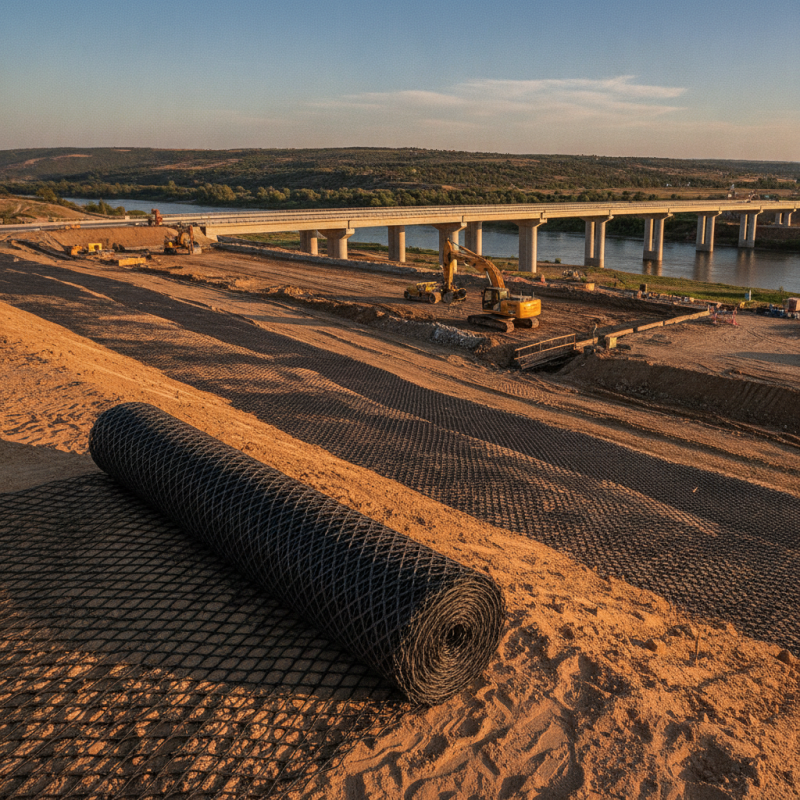
Understanding Different Types of Geogrid Fabrics and Their Applications
Geogrid fabrics play a critical role in engineering projects. They reinforce soil structures and improve stability. Understanding their types enhances decision-making. Common types include uniaxial, biaxial, and triaxial geogrids. Each type serves distinct purposes based on specific applications.
Uniaxial geogrids are often used in retaining walls and slope stabilization. They exert strength in one direction, improving load distribution. Studies indicate a 40% increase in stability when uniaxial grids are utilized.
Biaxial geogrids offer stability in both directions, making them suitable for road construction and base stabilization. Their effectiveness can reduce project time and costs.
Triaxial geogrids provide superior load-bearing, ideal for highways.
Data from industry reports show a growing demand. The geogrid market is projected to reach $1.6 billion by 2025. However, not every project requires the same geogrid type. Misjudging the appropriate application can lead to failures. Evaluating soil conditions and load expectations is essential. The right choice can ensure long-lasting performance, but the wrong choice may lead to extensive repairs.
Key Factors to Consider When Selecting Geogrid Fabric for Specific Projects
Selecting the appropriate geogrid fabric for a project can significantly impact its success. Key factors to consider include the specific application, environmental conditions, and structural requirements. Each project presents unique challenges. You'll want to assess soil types, load-bearing capacity, and even anticipated weather conditions.
Material composition is also crucial. Geogrid fabrics can vary in tensile strength and durability. Evaluate the specific materials used to ensure they meet project demands. A reliable fabric should exhibit resistance to degradation from UV exposure and chemical interactions. Attention to these details can prevent costly failures.
Cost is often a deciding factor. While cheaper options may seem tempting, they can lead to long-term issues. Scrutinizing warranties and performance specifications can help in making informed decisions. Finding the right balance between cost and quality is vital. Continuous learning and experience sharing can ultimately enhance project outcomes.
Geogrid Fabric Selection Factors
Evaluating the Mechanical Properties of Geogrid Fabrics with Industry Standards
When evaluating the mechanical properties of geogrid fabrics, it's crucial to focus on strength, stiffness, and durability. These characteristics determine how well a geogrid can withstand load and provide support in various applications. It is essential to refer to industry standards when assessing these properties. Adhering to these benchmarks ensures reliability and promotes optimal performance in your project.
Understanding tensile strength is vital. This property measures how much load a geogrid can bear before breaking. You want a fabric with high tensile strength for soil reinforcement or slope stability. Similarly, stiffness impacts how much deformation a geogrid undergoes under stress. A stiffer geogrid will maintain its shape better, enhancing stability over time.
Tips: Always request test results when selecting geogrid fabrics. Verify their compliance with industry standards. Not all products are created equal; some might perform poorly despite their claims. Regularly review your project's requirements. Sometimes, a fabric that looks great on paper does not perform well in real conditions. Be prepared to adjust your choice if initial testing results are unsatisfactory.
Cost Analysis of Geogrid Fabrics: Balancing Quality and Budget Constraints
When it comes to choosing geogrid fabrics, understanding the cost implications is crucial. According to recent industry reports, the average cost of geogrid fabrics ranges from $1 to $3 per square foot. However, the price can vary based on material type, strength, and application. For instance, high-performance geogrids may reach $5 or more per square foot, reflecting their superior quality. Balancing quality with budget constraints can be challenging.
Tips: Always assess the project's specific demands. Do not compromise on essential properties. High-quality geogrids may reduce maintenance costs in the long run. A thorough cost-benefit analysis helps in making informed decisions.
Optimal fabric choice is influenced by project type and load requirements. For roads, reinforced geogrids provide excellent stabilization. However, they come at a higher initial cost. For temporary structures, lower-cost options may suffice. Evaluate both short-term and long-term implications of your choices. It’s easy to overlook hidden costs. Consultation with industry experts can clarify your options and guide effective spending.
Cost Analysis of Geogrid Fabrics: Balancing Quality and Budget Constraints
| Geogrid Type | Material | Tensile Strength (kN/m) | Cost per Square Meter ($) | Durability (Years) | Best Use Case |
| Uniaxial Geogrid | Polymer | 30 | 2.50 | 10 | Road Reinforcement |
| Biaxial Geogrid | Polyester | 25 | 2.00 | 12 | Flexible Pavement |
| Geotextile Reinforced | Polypropylene | 20 | 3.00 | 8 | Soil Stabilization |
| High Strength Geogrid | HDPE | 40 | 3.50 | 15 | Heavy Load Applications |
Environmental Impact Assessment of Geogrid Fabrics in Construction Projects
The environmental impact of geogrid fabrics is a crucial consideration in construction projects. These materials can significantly affect soil stability and erosion control. Different types of geogrids, including polymer and metallic variants, have diverse ecological footprints. Selecting the right fabric requires a balance between performance and sustainability.
Using geogrid fabrics can enhance the longevity of construction structures. However, some fabrics leach harmful chemicals into the soil. This can impact local flora and fauna. It is essential to assess the specific types of geogrids for their environmental implications. Engaging with environmental specialists can help clarify these risks.
Life cycle assessments provide insight into the overall impact of geogrid fabrics. They reveal how production, use, and disposal affect natural resources. Understanding these factors can guide better material choices. It’s worth reflecting on whether short-term gains outweigh long-term ecological costs. Being mindful of these issues can lead to more responsible construction practices.





