How to Choose the Best Football Ball Launcher Machine?

Choosing a Football Ball Launcher Machine is not just a matter of picking the fastest model. The right machine should match the player’s level, training space, and drills. A keeper practicing close-range reactions needs different settings from a striker working on long passes. Small details matter: how quickly the feeder reloads, whether the angle changes easily, and how firmly the frame sits on grass or turf.

This guide explains the key features to compare before buying. Look at ball compatibility, launch speed, range, elevation, and control options. Check how the machine handles repeated shots, not just a single demonstration. A steady stream of balls can reveal feed delays or inconsistent direction. That matters. Noise, portability, setup time, and access to replacement parts also affect day-to-day use. A crowded training ground may call for a compact unit, while a dedicated facility may benefit from greater capacity.

Specifications are useful, but they do not tell the whole story. A high top speed may sound impressive and still be unnecessary for a beginner’s drills. Think about who will operate the machine, how often it will be used, and whether the available space allows safe practice. Review the manufacturer’s instructions, warranty, and recommended maintenance before making a decision. If possible, test the controls with the intended balls and training routine. It is easy to overlook setup until the first session. This comparison focuses on practical checks, clear trade-offs, and the details that help you choose with confidence—while leaving room to reconsider if your training needs change.
How to Choose the Best Football Ball Launcher Machine?

Understanding How a Football Ball Launcher Machine Works

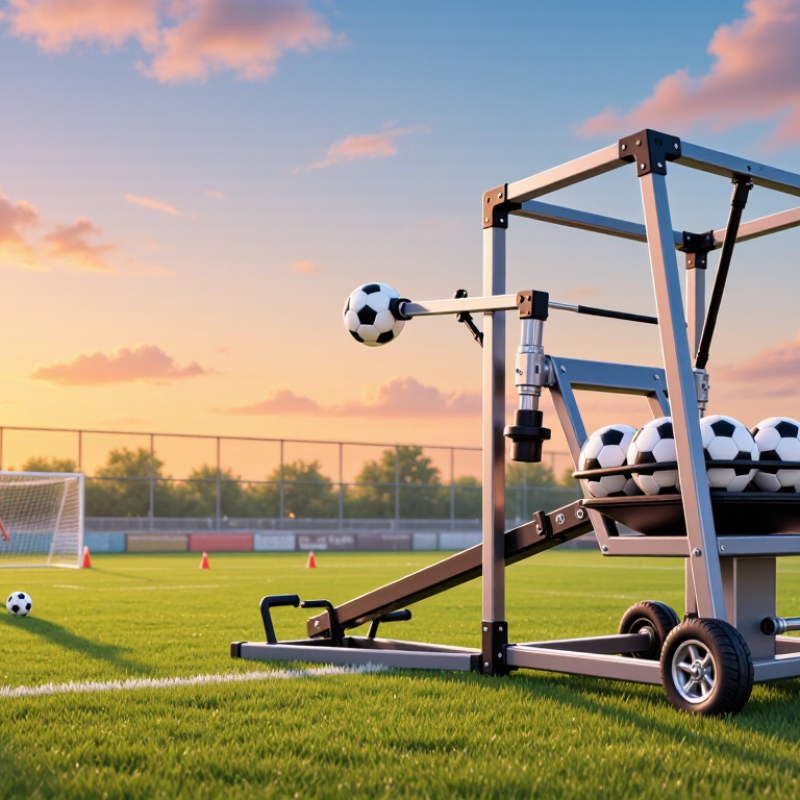
A football ball launcher machine converts stored energy into repeatable passes or shots. Many training models use a hopper and motor-driven wheels, while some use compressed air. The feeder releases one ball at a time into the launch path. Rotating wheels then grip and accelerate it. Their speed helps set the ball’s pace, while the launch angle influences height and distance.

Some machines can vary wheel speeds to add side spin or create a curving delivery. Feed intervals control how quickly the next ball arrives. Small changes matter. A slightly different angle can send a ball above a player’s chest instead of toward their feet. Coaches should test settings with the same ball type and pressure used in training, since worn or underinflated balls may travel differently.

The control panel may show precise numbers, but the result still depends on setup and surroundings. A machine on uneven turf can shift, and wind can alter a high pass. Check that the feed path is clear before operation, and keep players outside the launch line during adjustments. It is easy to trust a preset too much. Watch several deliveries, then make small corrections based on where the ball actually lands.

Matching Machine Capabilities to Training Goals and Player Levels

A football ball launcher should match the decisions players need to practise, not simply deliver the fastest shot. For beginners, choose adjustable speed, elevation, and interval settings. Short, predictable feeds let young players focus on first touch and body position. Older or advanced players benefit from varied trajectories and quicker recovery between deliveries. FIFA’s 2024/25 Laws of the Game specify a regulation ball circumference of 68–70 cm and a weight of 410–450 g. Check that the machine feeds the ball sizes your sessions use; inconsistent sizing can change both flight and rebound.

For passing drills, prioritize repeatable low feeds and accurate direction changes. For finishing, look for adjustable height and enough range to serve crosses from different angles. Goalkeeper sessions need varied placement, but maximum speed is not always useful. FIFA’s 2024/25 Futsal Laws specify a smaller ball, with a circumference of 62–64 cm and a weight of 400–440 g. That difference matters when a club trains across formats. Before buying, test the launcher with your own balls, on your actual surface, and at realistic session distances. A machine can repeat a feed precisely. It cannot read a player’s decision. I would also leave room in the budget for a few awkward trial sessions; settings that look good on paper may need adjustment on the pitch.

Suggested starting rates are 6 balls per minute for beginners, 10 for intermediate players, and 15 for advanced players. Choose a launcher with an adjustable feed interval, then adapt the rate to the drill, player age, and recovery time.

Comparing Speed, Spin, Range, and Ball-Feeding Options

A football ball launcher should match the drills you actually run, not just advertise the highest speed. For passing practice, adjustable low-to-medium settings help players control their first touch. For shooting drills, higher speeds can create more demanding reactions. Check whether speed changes in small increments; a few broad settings may make practice feel repetitive.

Spin affects the ball’s flight and bounce. Topspin can produce a dipping shot, while sidespin makes the ball curve across the field. Look for independent spin controls and test them with the same ball type you use in training. Ball pressure and surface texture can change the result. Small detail, big difference.

Range matters when you need to serve across a full pitch, but maximum distance alone can mislead. Ask whether the machine can also deliver short, consistent feeds. Feeding options vary: a hopper supports repeated drills, while manual loading gives more control over timing. Check capacity, feed intervals, and how quickly settings reset. A specification sheet can tempt buyers to overlook setup time. I would compare those details during a real session, where uneven ground or a rushed refill can interrupt the drill.

Assessing Portability, Durability, Safety, and Maintenance

Portability matters when a football ball launcher moves between a storage room and different training areas. Check its weight, handle placement, wheel quality, and whether it folds without tools. A compact frame can fit in a car boot, but measure the folded machine first. I once underestimated that detail. A lighter unit is easier to carry, yet it may feel less steady on uneven grass. That trade-off deserves a real test, not just a glance at product photos.

Durability depends on more than a tough-looking shell. Inspect the frame joints, fasteners, and ball-feeding parts for solid construction and easy access. If possible, watch several launches and listen for rattling or inconsistent feeding. Safety comes first. Look for clear controls, a stable base, and a way to stop operation quickly. Keep players behind the machine, and follow the maker’s spacing guidance. A setup that feels safe on a dry field may need extra care on wet ground.

Maintenance should be simple enough to become routine. Ask whether the wheels, rollers, and feed path can be cleaned without special tools. After use, remove grass and dirt, check for loose fittings, and store the machine somewhere dry. Small details matter. A complicated cleaning process can be skipped when practice runs late. That is not ideal, but it is realistic. Choose a design whose upkeep fits the time and skills available to your team.


Selecting a Machine for Your Budget and Training Space

A football ball launcher should fit the sessions you actually run, not an imagined full-sized academy. Set a firm budget, then include the less obvious costs: suitable balls, routine maintenance, and safe storage. A low purchase price can be misleading if replacement parts are hard to find. Ask about service access and warranty terms before comparing features.

Measure the training area before choosing a machine. Note the distance from the launcher to the goal, the width of the available lane, and any walls or nearby players. In a compact space, adjustable speed and launch angles matter more than maximum range. You may not need a large ball capacity if sessions involve short drills and frequent feedback. Leave room to move the machine and retrieve balls safely. Small detail, big difference.

Match capacity and portability to your group size. A coach working with six players may value quick setup, while a larger team may benefit from fewer reloads. Check the machine’s footprint, wheel design, power needs, and operating instructions. If possible, test it with the same ball type used in training. I have seen equipment chosen for impressive specifications, then left unused because setup took too long. That judgment can be wrong, of course; a busy club may have staff who can prepare it. Be honest about who will operate it and how often.

Powder Coat Booths

For those larger-sized parts, or smaller quantity runs, we have 2 independent powder coat booths and ovens. The quality, durability and affordability of today’s powder coating finishes make this the process of choice for world-class companies.

Powder coating advantages over other forms of coating are many. Materials used in the Powder coating process can be metals and non-metals that come in a multitude of thicknesses, textures, colors, etc. Another of Powder coating’s biggest advantages over conventional coatings is its ability to create finishes in many different textures. Powder Coating Booths allow us the ability to apply these advantages to large products.

Wet Paint Line

Tri-State Fabricators runs a full-service conveyor line for painting. Wet painting can provide protection or decoration to many different part styles. From start to finish, every project is easier to undergo random and point-based inspection by our skilled painting team.

Advantages to our Wet Paint Line are these lines start with product prep and ends with a thorough inspection of a high quality finished product. Our ability to complete large and small projects with a superior finish and doing so in a timely and economical fashion. This passes along the savings in production to our customers. When powder coating ins not an option, our Wet Paint Line gets the job done right the first time.

Wet Paint Booths

When the parts get big and heavy we roll-out our custom paint racks and oversize booth. By utilizing our partnerships with all the major paint brands, we can match virtually any color with wet paint.

The advantages of having access to a Wet Paint Booth are many. Large projects of many different shapes can be loaded into the booth. The Wet Paint Booth offers an environment that is much more controlled than a typical parts painting operation.

Not only are they used because of their controlled environment, but they’re are also advantageous when it comes to applying paint to parts that are needed in industries that require specialty coatings such as medical, aerospace, etc.

Military CARC

Our military forces have some very high standards when it comes to the finish of their vehicles and equipment. From the first pre-treatment step to final coat, it takes a great deal of knowledge and experience to protect the men and women of our armed forces. They deserve only the best, and Tri-State Fabricators provides it.

All of our processes are closely monitored by our staff and management teams. Both of which are highly trained in the processes of metal fabrication and finishing. Tri-State Fabricators’ goal is to always fully satisfy each and every customer, including the military. We will always put a 110% into what we do.

Glass-Bead Blasting

Abrasive media blasting is an excellent way to remove old paint, rust, and increase the paint/powder adhesion. Glass beads produce a much smoother and brighter finish than angular abrasives; leaving the part clean yet without any dimensional change. Chemically inert and environmentally friendly, we can recycle our beads approximately 30 times; making them a more preferred method of metal cleaning or surface finishing.

Advantages to Glass Bead Blasting are many. Glass bead blast media is used when a project is needing rough surfaces need to become smooth for applications of coatings such as paint. It is typically used to clean paint and rust from a product surface without deforming the surface it is being used on. Overall, compared to many other blasting media, Glass Bead Blasting is a very economical choice and those savings are always passed on to our customers.

Part Washing

Tri-State Fabricators utilize a zinc phosphate wash to clean and etch the material to ensure the best paint adhesion possible. The unique design of our 3-stage wash system does the work like a 5-stage. From Cleaning and rinsing to conversion coating and post-treatment, Our Part Washing process is a complete service and works throughout the fabrication service and the finishing service.

Along with the previously mentioned benefits, Curing is a vital chemical reaction that leaves the product finish hard and relatively safe from mild abrasion and aggressive corrosion. This process can be done in more than one way; ambient air-dry or in curing ovens at temps that exceed 240°.

Burn-Off Oven

From fixing paint mistakes (someone else’s of course) to simply cleaning our paint line hooks, our burn-off oven is put to good use. After a quick burn-off, a little clean up, and a fresh coat of paint, your parts will look better than new.

Why does our Burn-Off Oven work so well? Because super heating the air around parts turns the materials into ashes. From paint and powder coatings to rubber and machining oils, high temps do the job without degrading the integrity of the part.

Masking

Masking is a vital part of producing high quality products. We have die-cut masking patterns to protect machined surfaces as well as a wide range of plugs and caps to protect threaded holes and bolts. We provide permanent and temporary masking.

Masking allows the selected sections of a product to be protected from a fabrication or finishing service. This can be with both chemicals when etching and tapes, paints when only finishing just a section of the product. Masking is great in aiding the customization process of a project.

Screen Printing

Screen printing is a photographic process that transfers artwork onto a porous nylon screen which allows colored ink to flow through the screen and be deposited on an aluminum or plastic component. We can generally have just about any design created onto a screen for your parts.

Some of the advantages of Screen Printing are, brand recognition for your business displaying on your products, assembly instructions, product warnings/hazards, etc. Tri-State Fabricators produces Screen Printing of the highest quality so you know it’s durable.

Metal Finishing

Metal Finishing is the art of treating the exterior portion of product, often metal but can also be made of other materials, so that the surface is clean and free of any debris. Then the process of applying coats or either paint of powder coat takes place. This coating process improves the quality of the product in both appearance and resistance to wear and corrosion.

Tri-State Fabricators, Inc., understands that a project typically isn’t complete until a high-quality finish has been added to your product. This is why our painting and powder coating teams continuously inspect the products throughout the Metal Finishing process.



