


How to Choose the Best Foil Machine from China?

Choosing the best Foil Machine from China requires more than comparing prices and product photos. A suitable machine must match your materials, production volume, foil width, and finishing goals. It should also deliver stable pressure, accurate temperature control, and clean registration during long production runs.

David Zwang, a respected printing and packaging technology consultant, has emphasized, “Equipment value comes from repeatable quality, not impressive specifications alone.” This principle matters when reviewing Chinese suppliers. A machine may advertise high speed, yet struggle with thin paper, textured stock, or small lettering. Request test samples using your actual materials. Inspect solid coverage, edge sharpness, foil release, and registration under strong light. Small defects become expensive when thousands of sheets are processed.

Look closely at the heating system, stamping area, control interface, spare parts, and technical support. Ask whether the manufacturer provides installation guidance, operator training, maintenance instructions, and realistic delivery timelines. A factory video is useful, but it cannot replace a live demonstration or a documented acceptance test. Check the supplier’s experience with similar machines and request verifiable customer references.

Do not choose speed alone.

A lower-cost Foil Machine may seem attractive at first. However, unstable temperature control can increase waste and downtime. Even experienced buyers sometimes overlook service response times. That mistake deserves reflection. The strongest decision balances machine capability, supplier reliability, operating cost, and future expansion. Careful comparison creates a safer investment and more consistent foil-finishing results.
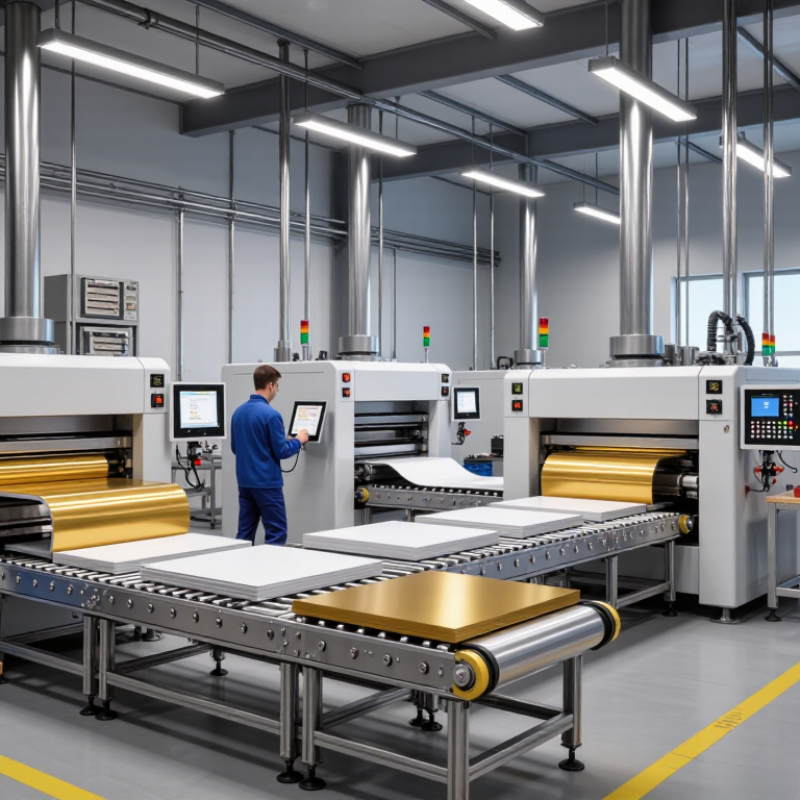
How to Choose the Best Foil Machine from China?

Define Foil Type, Substrate, Format, and Required Production Volume

How to Choose the Best Foil Machine from China?

Define Foil Type, Substrate, Format, and Required Production Volume

Choosing the best foil machine from China starts with four production facts: foil type, substrate, format, and volume. Hot stamping foil needs heat, pressure, and accurate dwell control. Cold foil usually requires adhesive application and curing coordination. Test both when your artwork includes fine lines or large solid areas. Metallic transfer is not equally stable on every surface. Ask for sample runs using your actual foil, ink, and substrate. This exposes adhesion problems early.

Name the substrate precisely. Coated paper, uncoated paper, synthetic labels, films, cartons, and laminated boards react differently. Record thickness, surface energy, moisture, and allowable heat. A machine suitable for 80 gsm paper may struggle with a rigid 600-micron board. Ask about registration tolerance, foil waste, drying conditions, and changeover time. Small details matter.

Define format before comparing machine prices. Sheet-fed work needs maximum sheet size, gripper margin, and tooling area. Roll-fed production needs web width, roll diameter, tension range, and splice handling. Then estimate realistic monthly volume, not an optimistic target. Short runs favor quick setup and modest tooling costs. Continuous orders justify automation, larger foil rolls, and faster cycle rates. Request a factory acceptance test with measurable samples and written tolerances. Confirm spare parts, training, remote diagnosis, and service response. A cheaper machine can become expensive when one sensor stops production. I would leave capacity headroom, though too much headroom wastes money. That trade-off deserves an honest calculation.

How to Choose the Best Foil Machine from China? — Define Foil Type, Substrate, Format, and Required Production Volume
Machine Category Foil Type Suitable Substrates Typical Format Typical Production Volume Key Technical Characteristics Best Selection Scenario
Sheet-Fed Hot Foil Stamping Press Hot stamping foil, including metallic, pigment, holographic, and security foils Coated and uncoated paper, paperboard, folding cartons, covers, labels, and some synthetic sheets Commonly B2 or B1 sheet formats; exact maximum sheet size depends on the press Medium to high: approximately 5,000–50,000 sheets per shift Heated stamping die, pressure-controlled impression, interchangeable foil-feeding systems, and optional multiple foil pulls Choose this option for premium packaging, book covers, certificates, invitations, and repeat orders requiring strong metallic or tactile effects.
Automatic Flatbed Foil Stamping Machine Hot stamping foil and, with suitable tooling, embossing foil Paper, cardboard, leather, coated boards, PVC sheets, and other flat materials compatible with the platen Small to large flat sheets; working areas are commonly specified by platen size Low to medium: approximately 1,000–15,000 impressions per shift Flatbed platen, die heating, adjustable dwell time, and relatively simple tooling changes Suitable for varied job sizes, short runs, custom stationery, packaging prototypes, and businesses prioritizing flexibility over maximum speed.
Roll-to-Roll Hot Foil Stamping Machine Hot stamping foil supplied from rolls Self-adhesive label stock, paper rolls, coated films, flexible packaging webs, and selected synthetic materials Narrow-web or mid-web roll widths; the usable width is determined by the machine and tooling High: approximately 50,000–500,000 linear meters per month Web tension control, servo registration, continuous foil feeding, rotary or intermittent stamping, and rewind capability Recommended for continuous label and flexible-web production where high utilization, registration accuracy, and low waste are important.
Cold Foil Transfer Unit Cold foil transfer film used with adhesive and UV or conventional curing systems Paper, coated paperboard, labels, and selected filmic webs that accept a printed adhesive layer Sheet-fed or web-fed formats, depending on the press configuration Medium to high: approximately 20,000–300,000 impressions or linear meters per month Does not use a heated stamping die; foil is transferred to an adhesive image, often inline with printing Choose cold foil when fine image coverage, fast inline production, and lower tooling costs are more important than deep embossing or heavy solid coverage.
Digital Foil Transfer Machine Digital toner-reactive foil or digitally controlled transfer foil Laser-compatible paper, coated stocks, synthetic sheets, labels, and selected specialty media Usually SRA3, A3, or other digital-printing sheet formats Low to medium: approximately 100–5,000 sheets per job No physical stamping die is normally required; variable data and rapid artwork changes are possible Best for short runs, personalized products, proofing, seasonal designs, and on-demand work with frequent artwork changes.
Roller-Type Hot Foil Stamping Machine Hot stamping foil for continuous or semi-continuous transfer Paper, labels, films, leather, synthetic sheets, and other materials with a stable, relatively even surface Roll-fed or sheet-fed; usable width is based on roller width and product dimensions Medium: approximately 10,000–100,000 pieces per month Heated roller, adjustable pressure, continuous foil movement, and efficient operation on repeated narrow products Useful for narrow strips, labels, ribbons, flexible materials, and products that require continuous decorative transfer rather than large-area flatbed stamping.
Special-Purpose Foil Machine for Leather or Irregular Items Hot stamping foil, pigment foil, and selected transfer films Leather, artificial leather, fabric-backed materials, wood veneer, plastic parts, and shaped products Determined by the fixture, working head, and product geometry rather than standard paper-sheet size Low to medium: approximately 500–20,000 pieces per month Custom fixtures, controlled heating, adjustable pressure, and product-specific positioning systems Choose this type for logos, serial marks, decorative details, and branding on three-dimensional or non-standard products.
Selection rule: Define the foil type first, then confirm substrate compatibility, maximum working format, registration tolerance, die or tooling requirements, and the required monthly output. Production figures are typical planning ranges; actual capacity depends on machine speed, artwork coverage, changeover time, operator skill, substrate thickness, and quality requirements.

Compare Foil Thicknesses of 8–12 μm and Compatible Heating Systems

Choosing the best foil machine from China starts with the foil thickness you will actually run. Foils between 8 and 12 μm behave differently under pressure, heat, and tension. An 8 μm foil uses less material, but it can wrinkle near rollers or tear during acceleration. A 12 μm foil feels more stable and tolerates minor setting errors. It may require stronger unwinding control and slightly higher heating energy.

Match the machine’s heating system to your production speed. Resistance-heated rollers offer steady contact heat and simple temperature control. Infrared heating responds quickly, but it can create uneven surfaces if the foil or substrate changes color. Hot-air systems heat larger areas, although airflow may disturb lightweight foil. Ask the supplier for temperature uniformity data across the working width. A practical test should measure the roller surface with an independent thermometer, not only the machine display.

Request samples using 8, 10, and 12 μm foil on your real material. Check transfer coverage, edge sharpness, adhesion, and waste after continuous running. Keep the line speed unchanged during comparisons. This exposes weak tension control. It also reveals whether the heating system recovers after short stops. Some specifications look impressive. They still need verification. Confirm heating-zone numbers, warm-up time, sensor location, spare-part availability, and operator training before placing an order. A small trial may cost more today, but it can prevent expensive production adjustments later.

Evaluate Speed, Pressure, Registration Accuracy, and Power Consumption

How to Choose the Best Foil Machine from China?

When choosing a foil machine from China, avoid judging performance by speed alone. A fast cycle can still produce uneven foil coverage. Ask for production videos, sample results, and measured output under similar materials. Check the actual cycle speed with your foil size, substrate, and design complexity. A machine rated for 3,000 sheets per hour may perform slower during detailed work. Real conditions matter more.

Pressure affects transfer quality and surface consistency. Look for adjustable pressure control, stable temperature, and even platen movement. Excessive pressure can damage delicate paper or create visible embossing marks. Registration accuracy is equally important for fine text and layered designs. Request test samples with narrow borders and repeated patterns. Measure alignment with a loupe or digital caliper. I once trusted a supplier’s sample without checking its dimensions, and the final result showed small but costly shifts.

Power consumption deserves practical testing. Compare rated power with average energy use during heating, standby, and continuous operation. A machine with higher wattage may heat faster, but insulation and control systems influence total cost. Ask for voltage, phase, and frequency requirements before purchase. Confirm spare-part access, operator training, and inspection records. A clear factory video helps, but it does not replace an independent acceptance test. Never skip that step.

Verify CE Compliance, ISO 9001 Certification, and Factory Quality Controls

Choosing the best foil machine from China starts with compliance, not a polished sample. CE marking should match the exact machine model. The EU Blue Guide places responsibility on manufacturers for conformity assessment and technical documentation. Request the EU Declaration of Conformity, risk assessment, wiring drawings, and test records. Check emergency stops, guards, heating zones, and electromagnetic compatibility. A logo alone proves little.

ISO 9001 matters because it structures purchasing, calibration, corrective action, and traceability. The ISO Survey 2022 recorded about 1.27 million ISO 9001 certificates worldwide. That figure shows adoption, not guaranteed machine performance. Confirm the certificate scope, factory address, validity, and issuing body. Ask for calibration dates on temperature controllers and tension sensors. Review incoming-part inspection sheets and serial-number records. Small gaps matter.

Factory quality controls should include a documented trial using your foil, substrate, speed, and temperature settings. Request an eight-hour run video, output samples, defect counts, and final inspection results. The EU Safety Gate 2023 report recorded 3,412 product alerts across Europe. It reminds buyers that market surveillance can catch failures after shipment. My practical caution is simple: remote evidence may be incomplete. Require independent pre-shipment inspection when risk or order value is high. A machine that passes paperwork but wrinkles foil is still a costly mistake.

Request Samples, Calculate Total Cost, and Audit China-Based Suppliers

How to Choose the Best Foil Machine from China?

Requesting samples is more useful than trusting polished catalog photos. Ask the supplier to run your actual foil, substrate, artwork, and production speed. Check adhesion, color consistency, edge sharpness, registration, and waste after repeated runs. Keep the finished samples and record the machine settings. Small differences often become expensive problems during mass production.

Calculate the total cost, not only the quoted machine price. Include tooling, spare parts, installation, operator training, packaging, inland transport, insurance, import duties, and maintenance. Ask for electricity requirements and expected foil consumption. A lower-priced machine may need costly upgrades. I once focused too heavily on the equipment quote and underestimated shipping-related charges. That mistake changed the purchasing decision.

Audit China-based suppliers through verifiable evidence. Review business registration, factory ownership, production capacity, quality procedures, and export experience. Request recent factory videos, but do not rely on videos alone. A live video inspection can reveal storage conditions, testing equipment, and unfinished machines. Speak with technical staff, not only sales representatives. Check whether serial records, manuals, and inspection reports match the machine offered. An independent pre-shipment inspection adds confidence, although it cannot replace your own technical judgment. Leave room for doubt. Good suppliers should answer specific questions clearly and document every change.

Powder Coat Booths

For those larger-sized parts, or smaller quantity runs, we have 2 independent powder coat booths and ovens. The quality, durability and affordability of today’s powder coating finishes make this the process of choice for world-class companies.

Powder coating advantages over other forms of coating are many. Materials used in the Powder coating process can be metals and non-metals that come in a multitude of thicknesses, textures, colors, etc. Another of Powder coating’s biggest advantages over conventional coatings is its ability to create finishes in many different textures. Powder Coating Booths allow us the ability to apply these advantages to large products.

Wet Paint Line

Tri-State Fabricators runs a full-service conveyor line for painting. Wet painting can provide protection or decoration to many different part styles. From start to finish, every project is easier to undergo random and point-based inspection by our skilled painting team.

Advantages to our Wet Paint Line are these lines start with product prep and ends with a thorough inspection of a high quality finished product. Our ability to complete large and small projects with a superior finish and doing so in a timely and economical fashion. This passes along the savings in production to our customers. When powder coating ins not an option, our Wet Paint Line gets the job done right the first time.

Wet Paint Booths

When the parts get big and heavy we roll-out our custom paint racks and oversize booth. By utilizing our partnerships with all the major paint brands, we can match virtually any color with wet paint.

The advantages of having access to a Wet Paint Booth are many. Large projects of many different shapes can be loaded into the booth. The Wet Paint Booth offers an environment that is much more controlled than a typical parts painting operation.

Not only are they used because of their controlled environment, but they’re are also advantageous when it comes to applying paint to parts that are needed in industries that require specialty coatings such as medical, aerospace, etc.

Military CARC

Our military forces have some very high standards when it comes to the finish of their vehicles and equipment. From the first pre-treatment step to final coat, it takes a great deal of knowledge and experience to protect the men and women of our armed forces. They deserve only the best, and Tri-State Fabricators provides it.

All of our processes are closely monitored by our staff and management teams. Both of which are highly trained in the processes of metal fabrication and finishing. Tri-State Fabricators’ goal is to always fully satisfy each and every customer, including the military. We will always put a 110% into what we do.

Glass-Bead Blasting

Abrasive media blasting is an excellent way to remove old paint, rust, and increase the paint/powder adhesion. Glass beads produce a much smoother and brighter finish than angular abrasives; leaving the part clean yet without any dimensional change. Chemically inert and environmentally friendly, we can recycle our beads approximately 30 times; making them a more preferred method of metal cleaning or surface finishing.

Advantages to Glass Bead Blasting are many. Glass bead blast media is used when a project is needing rough surfaces need to become smooth for applications of coatings such as paint. It is typically used to clean paint and rust from a product surface without deforming the surface it is being used on. Overall, compared to many other blasting media, Glass Bead Blasting is a very economical choice and those savings are always passed on to our customers.

Part Washing

Tri-State Fabricators utilize a zinc phosphate wash to clean and etch the material to ensure the best paint adhesion possible. The unique design of our 3-stage wash system does the work like a 5-stage. From Cleaning and rinsing to conversion coating and post-treatment, Our Part Washing process is a complete service and works throughout the fabrication service and the finishing service.

Along with the previously mentioned benefits, Curing is a vital chemical reaction that leaves the product finish hard and relatively safe from mild abrasion and aggressive corrosion. This process can be done in more than one way; ambient air-dry or in curing ovens at temps that exceed 240°.

Burn-Off Oven

From fixing paint mistakes (someone else’s of course) to simply cleaning our paint line hooks, our burn-off oven is put to good use. After a quick burn-off, a little clean up, and a fresh coat of paint, your parts will look better than new.

Why does our Burn-Off Oven work so well? Because super heating the air around parts turns the materials into ashes. From paint and powder coatings to rubber and machining oils, high temps do the job without degrading the integrity of the part.

Masking

Masking is a vital part of producing high quality products. We have die-cut masking patterns to protect machined surfaces as well as a wide range of plugs and caps to protect threaded holes and bolts. We provide permanent and temporary masking.

Masking allows the selected sections of a product to be protected from a fabrication or finishing service. This can be with both chemicals when etching and tapes, paints when only finishing just a section of the product. Masking is great in aiding the customization process of a project.

Screen Printing

Screen printing is a photographic process that transfers artwork onto a porous nylon screen which allows colored ink to flow through the screen and be deposited on an aluminum or plastic component. We can generally have just about any design created onto a screen for your parts.

Some of the advantages of Screen Printing are, brand recognition for your business displaying on your products, assembly instructions, product warnings/hazards, etc. Tri-State Fabricators produces Screen Printing of the highest quality so you know it’s durable.

Metal Finishing

Metal Finishing is the art of treating the exterior portion of product, often metal but can also be made of other materials, so that the surface is clean and free of any debris. Then the process of applying coats or either paint of powder coat takes place. This coating process improves the quality of the product in both appearance and resistance to wear and corrosion.

Tri-State Fabricators, Inc., understands that a project typically isn’t complete until a high-quality finish has been added to your product. This is why our painting and powder coating teams continuously inspect the products throughout the Metal Finishing process.


