How to Choose the Best Fine Mesh Strainer With Handle?
Choosing the right Fine Mesh Strainer With Handle can make everyday cooking cleaner, faster, and more controlled. It helps rinse rice, sift flour, strain tea, dust powdered sugar, and separate smooth sauces from unwanted particles. However, not every strainer performs equally well. Mesh size, handle design, bowl depth, material quality, and support stability all affect the result.
A reliable choice begins with the task. Very fine mesh is useful for delicate sauces and loose-leaf tea, but it may drain slowly. A slightly wider mesh suits pasta rinsing and washing berries. Stainless steel usually offers strong corrosion resistance and easy cleaning. Look for a securely attached handle, smooth edges, and a hook or resting loop that fits your pot or bowl. Small details matter.
I have found that balance is often overlooked. A long handle may protect your hands from hot steam, yet it can feel awkward over a small saucepan. A deep basket holds more food, but it may be harder to clean thoroughly. Check the joints carefully. Food residue can hide there.
Do not trust appearance alone. Product claims should be compared with verified specifications, user feedback, and practical kitchen needs. Some strainers look sturdy but bend under modest pressure. That was an easy mistake to make. The best option is not always the most expensive one. It is the tool that feels stable, drains efficiently, cleans without frustration, and remains dependable after repeated use.
What Is a Fine Mesh Strainer With Handle?
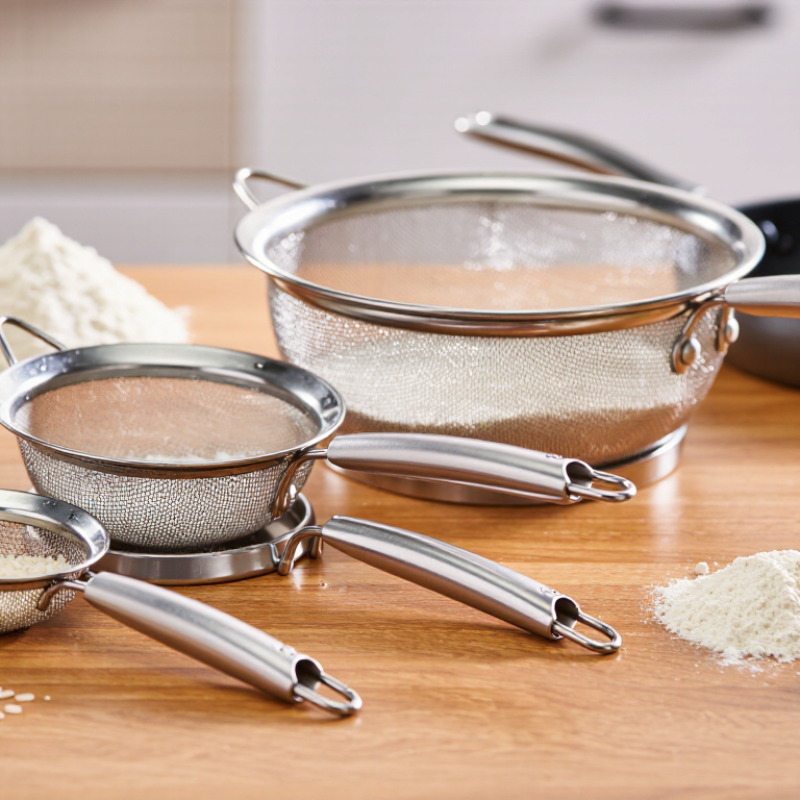
A fine mesh strainer with handle is a kitchen tool designed to separate tiny particles from liquids or soft foods. Its tightly woven metal mesh catches seeds, pulp, spice fragments, and small lumps. The handle keeps your hand away from hot water, simmering broth, or freshly cooked fruit.
In my kitchen, I use one to clarify stock and rinse delicate grains. A fine mesh surface produces a smoother result than a standard colander. The frame should feel firm, while the mesh should remain evenly stretched without loose edges. Stainless steel is practical because it resists rust, absorbs no flavors, and tolerates frequent washing. A hanging loop can also improve storage.
Handle length matters more than many shoppers expect. A short handle offers control over small bowls, but it may feel unsafe over deep pots. A longer handle improves reach, although it can make the strainer harder to balance. I once chose a very fine model for sauces, then discovered that it drained painfully slowly. That mistake still influences my choices.
Look for a comfortable grip and a stable support hook. The mesh should be fine enough for your intended ingredients, not simply the finest available. Very small openings can clog with thick mixtures and require patient cleaning. Check the rim carefully, too. Sharp or uneven edges can damage fingers and delicate cookware. A useful strainer should feel precise, but not fragile.
Which Materials and Mesh Sizes Suit Your Needs?
Choosing the right fine mesh strainer starts with the material. For everyday cooking, 304 stainless steel offers strong corrosion resistance, a neutral surface, and easy cleaning. A 316 grade can better tolerate salty or acidic ingredients, although it usually costs more. Nylon mesh feels lighter and protects delicate sauces, but it can deform near high heat. The FDA Food Code 2022 recommends food-contact equipment that is corrosion-resistant, smooth, nonabsorbent, and easily cleanable. That guidance matters. A strainer with trapped pulp around its handle is not a good tool.
Mesh size controls texture. An 8–20 mesh strainer works for rinsing rice, draining pasta, or catching large herbs. Around 40–60 mesh suits stock, gravy, and loose tea. An 80–100 mesh screen produces a noticeably finer result for powdered sugar, clarified liquids, and smooth purées. However, mesh count alone can mislead. ASTM E11 explains that opening size also depends on wire diameter, so two screens with the same mesh count may filter differently. Check the stated aperture when precision matters.
During kitchen testing, I prefer a rigid rim and a handle that stays cool. Very fine screens clog quickly with wet flour or thick fruit pulp. That weakness is easy to overlook. The World Health Organization estimates that contaminated food causes about 600 million illnesses and 420,000 deaths worldwide each year. Its food-safety findings reinforce a practical choice: select a strainer that can be scrubbed thoroughly, dried quickly, and inspected without guesswork.
How to Match the Strainer to Different Kitchen Tasks?
Choosing a fine mesh strainer starts with the kitchen task, not the handle design. A 40–60 mesh strainer suits rinsing rice, draining pasta, and washing berries. Its openings allow water to escape quickly without trapping every small particle. For powdered sugar, clarified butter, or smooth sauces, an 80–100 mesh model offers finer filtration. However, ultra-fine mesh drains slowly. That trade-off is easy to overlook.
The USDA Economic Research Service estimates that about 30% of the U.S. food supply was lost or wasted at retail and consumer levels.
Matching mesh size to the task can reduce avoidable waste. Use a wider basket for leafy vegetables and a deeper basket for stock or soup. A long, balanced handle helps when the strainer rests over a hot pot. Keep your grip dry.
For flour, select a lightweight model with a comfortable loop or support hook. For oily liquids, choose rigid stainless steel mesh, because flexible screens can hold residue.
I once used an overly fine strainer for berry pulp. It clogged quickly.
Cleaning matters as much as filtration. The FDA Food Code 2022 emphasizes cleanable, corrosion-resistant food-contact surfaces. Inspect the rim, welds, and handle joint after every use. Tiny trapped particles can spoil the next batch.
Mesh size is only one decision. Clearance, strength, and cleaning effort also shape real performance.
How to Compare Quality, Cleaning, Storage, and Price?
Choosing a fine mesh strainer with a handle requires more than counting holes. Inspect the mesh under bright light. It should look even, without loose wires or sharp edges. Stainless steel usually resists staining and odors better than coated metal. A rigid rim also matters. It prevents the basket from bending when draining hot pasta or rinsing rice.
Cleaning and storage deserve equal attention. The FDA Food Code 2022 recommends cleaning food-contact surfaces regularly and maintaining them at safe hygienic standards. After use, rinse trapped flour or pulp immediately. USDA FSIS guidance advises washing utensils with hot, soapy water, especially after contact with raw foods. Dry the strainer completely. Moisture hidden around the handle can create unpleasant smells. Store it where air can circulate, not inside a wet sink. I once ignored this detail. It was a poor choice.
Tips: Compare mesh strength, handle length, rim stability, and dishwasher instructions before checking price. A low-cost model may work well, but weak welds can fail quickly. A higher price is not proof of quality. Look for food-contact material information and clear care instructions. The FDA Food Code identifies 135°F (57°C) as a hot-holding threshold, so choose a handle that stays comfortable during brief contact with hot ingredients. Check the fit over your bowls. A strainer that wobbles is frustrating, even when its mesh is excellent.
How to Choose the Best Fine Mesh Strainer With Handle?
Compare quality, cleaning, storage, and price by using the suggested weighting below. The percentages are a practical buying framework rather than brand or market-share data.
Quality — 30%
Check stainless-steel construction, firm mesh attachment, a stable handle, and resistance to bending or rust.
Cleaning — 25%
Prefer smooth joints, accessible mesh, and dishwasher-safe materials when convenient cleaning is important.
Storage — 20%
Look for a hanging loop, nesting compatibility, and a handle that does not take excessive drawer or cabinet space.
Price — 25%
Compare the material, mesh durability, handle design, warranty, and expected service life—not price alone.





