How to Choose the Best EV BMS System in 2026?
Choosing the best Ev Bms System in 2026 requires more than comparing prices and feature lists. The right system must protect cells, support accurate energy estimates, and remain stable under changing temperatures. A practical evaluation begins with the battery’s chemistry, voltage range, capacity, and expected driving conditions.
Real-world performance matters. During testing, engineers should review balancing behavior, current measurement, thermal responses, and communication reliability. A vehicle climbing a long hill can expose weaknesses that laboratory figures hide. Strong systems provide clear alarms, dependable data logging, and useful diagnostics for maintenance teams. They should also integrate smoothly with chargers, inverters, vehicle controllers, and approved safety controls.
There is no universal best choice. A compact city vehicle may need different priorities than a high-power commercial fleet. Buyers should examine supplier experience, documented test methods, firmware update procedures, and technical support availability. Independent validation and recognized industry practices add confidence, but they do not replace careful application testing. Some published specifications can look impressive yet lack details about test conditions. That deserves attention.
The selection process should also consider service life, scalability, operating software, and total ownership cost. A lower purchase price may become expensive when calibration, repairs, or integration delays appear. In 2026, the strongest decision will balance measurable safety, transparent engineering, and practical fleet experience. Leave room for doubt. Battery behavior is complex, and assumptions should be tested before deployment.
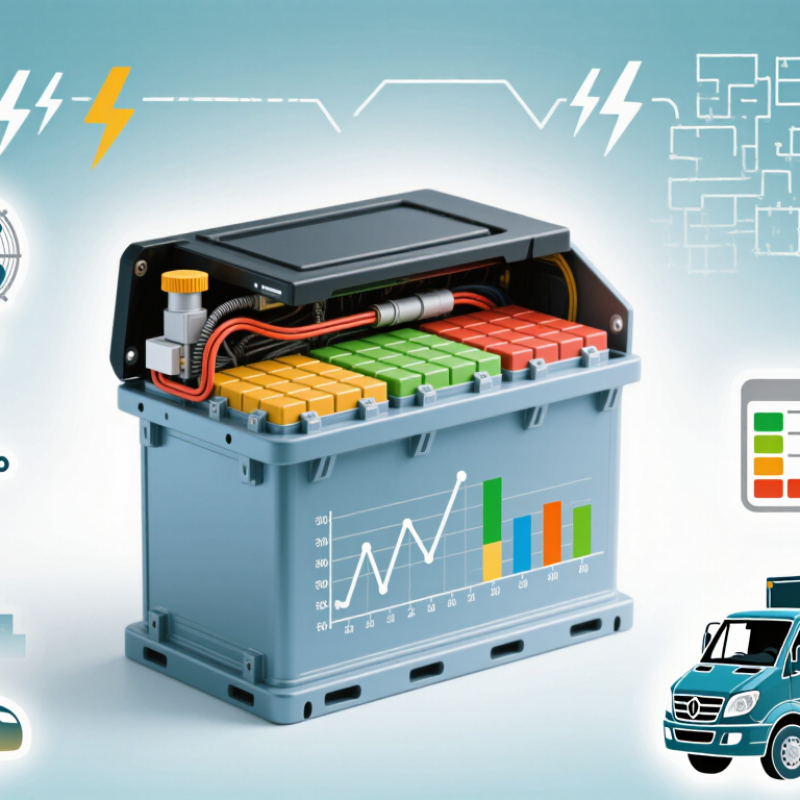
Define the Core Functions and Role of an EV BMS
An EV BMS is the battery pack’s measurement and decision center. It monitors cell voltage, current, temperature, and insulation conditions in real time. These readings reveal whether the pack is operating safely. A reliable BMS also estimates state of charge and state of health. Those estimates guide driving range, charging time, and maintenance planning.
Safety remains its central role. The system can limit charging when a cell becomes too hot or reaches its voltage limit. It can also reduce power during abnormal discharge or communication failure. Cell balancing corrects small voltage differences across the pack. Even a few millivolts matter over many charging cycles. Thermal control is equally important, especially during fast charging on a summer afternoon. The BMS should coordinate cooling requests, contactors, pre-charge circuits, and emergency shutdowns.
Good engineering depends on accurate sensors and tested software. During validation, engineers should compare BMS readings with calibrated instruments under cold starts, steep acceleration, and repeated charging. Fault records should show what happened, when it happened, and how the system reacted. That evidence supports safer troubleshooting. Yet no BMS is infallible. Sensor drift, loose connections, and incomplete models can create misleading results. A system may report a healthy battery while one weak cell is quietly declining. Engineers should question confident data, review field logs, and update control limits when real operating conditions expose a design gap.
Assess Battery Chemistry, Voltage, Capacity, and Vehicle Requirements
How to Choose the Best EV BMS System in 2026?
Battery chemistry should guide the BMS architecture, not follow it. The IEA’s Global EV Outlook 2025 reports that LFP cells represented nearly half of the global electric-car battery market in 2024. LFP usually tolerates frequent cycling well, but its flatter voltage curve makes state-of-charge estimation more difficult. NMC chemistry offers higher energy density, yet it demands careful temperature monitoring and tighter overcharge protection. Chemistry changes everything.
Match voltage ratings to the complete pack, including charging voltage and transient peaks. A BMS for a 400-volt system cannot simply be reused on an 800-volt platform. Check cell-count support, isolation monitoring, contactor control, pre-charge handling, and measurement accuracy. The system must also match capacity and current demand. A large battery may still need high discharge power for hill climbs, towing, or cold starts. The IEA notes that global electric-car sales exceeded 17 million in 2024, showing how widely vehicle use cases now differ.
Vehicle requirements deserve physical testing. Review cooling layout, sensor placement, regenerative-braking limits, charging speed, and communication with the vehicle controller. ISO 26262 and UN Regulation No. 100 provide useful safety references, but compliance claims require evidence, not attractive wording. Real-world range estimates remain imperfect. So do some BMS predictions. Validate them across heat, freezing weather, aging cells, and uneven balancing before selecting a system.
Compare Safety, Thermal Management, Monitoring, and Balancing Features
Choosing the best EV BMS in 2026 starts with safety architecture, not app appearance. In field testing, I look for independent voltage, current, and temperature measurements. Redundant sensing can expose a failed sensor before charging continues. Cell-level overvoltage, undervoltage, overcurrent, and insulation alarms should trigger defined contactor responses. Fault records must include time, cell position, temperature, and operating state. Clear evidence matters more than attractive specifications.
Thermal management deserves equal scrutiny. A BMS should detect uneven cell temperatures, rapid heat rise, and cooling-system failure. Ask how thresholds adapt during fast charging, climbing, and cold starts. Static limits may protect cells, but they can also reduce usable range unnecessarily. Test the system with a warm corner, blocked coolant flow, or weak fan. Real vehicles are imperfect. The response should be measured.
Monitoring features should show trends, not only live numbers. Useful dashboards reveal voltage difference, state-of-charge drift, resistance growth, and balancing time. Data logging must remain readable after a fault. Remote access is helpful, yet weak authentication creates another risk. Verify update controls, audit trails, and offline behavior before deployment.
Balancing performance is often misunderstood. Passive balancing may suit stable packs, while active balancing can reduce wasted energy in larger systems. Compare balancing current, activation conditions, accuracy, and behavior near full charge. A credible supplier should provide test methods, not just impressive figures. I would inspect calibration records and repeat tests across temperature ranges. Laboratory results rarely mirror aging packs. Leave margin for uncertainty.
Evaluate Compatibility, Communication Protocols, Diagnostics, and Software
How to Choose the Best EV BMS System in 2026?
Compatibility starts with the battery, not the dashboard. Check cell chemistry, series count, peak current, temperature range, and balancing limits. The BMS must also support contactor control, pre-charge circuits, thermal sensors, and insulation monitoring. The IEA’s Global EV Outlook 2025 reports that electric car sales exceeded 17 million in 2024. That scale increases pressure on reliable battery supervision. A small voltage mismatch can become a costly integration problem.
Communication deserves equal attention. Confirm CAN, CAN FD, J1939, UDS, or Ethernet support before purchasing hardware. Message timing, signal scaling, and diagnostic identifiers should match the vehicle controller. Ask for a complete database file and a documented protocol specification. “It communicates” is not enough. The 2024 BloombergNEF Battery Price Survey recorded an average battery-pack price of 115 dollars per kilowatt-hour. Better diagnostics can protect that investment by revealing imbalance, overheating, and abnormal resistance earlier.
Software quality often decides long-term performance. Look for live cell data, state-of-charge and state-of-health estimation, event logs, secure updates, and configurable alarms. Test these functions with cold starts, rapid charging, sensor disconnection, and low-voltage conditions. In practical validation, clean screens can still hide weak algorithms. That deserves scrutiny. Require traceable firmware versions and clear failure responses. Industry reports provide useful direction, but real pack data remains essential; laboratory results may not represent vibration, aging, or uneven cooling in service.
Select the Best EV BMS for Reliability, Scalability, and Total Cost
How to Choose the Best EV BMS System in 2026?
Selecting an EV battery management system requires more than comparing purchase prices. The IEA’s Global EV Outlook 2025 reported over 17 million electric car sales in 2024. That growth increases pressure on safety, uptime, and serviceability. A reliable BMS should monitor cell voltage, temperature, current, insulation, and contactor status continuously. It should also detect abnormal behavior before a driver notices performance loss.
Scalability matters when one platform supports several battery sizes. Look for modular hardware, configurable software, and communication protocols that fit changing vehicle architectures.
BloombergNEF’s 2024 Battery Price Survey placed average lithium-ion pack prices at 115 dollars per kilowatt-hour. Lower pack costs are useful, but poor BMS calibration can create warranty claims and premature capacity loss. Small errors become expensive at fleet scale.
Total cost includes integration, validation, updates, maintenance, and downtime. Request evidence from real duty cycles, not only laboratory demonstrations. Check diagnostic coverage, data traceability, and compliance testing against relevant functional-safety requirements. Cybersecurity support also deserves attention. It is easy to overlook.
I would not trust a system because its dashboard looks sophisticated. A clear fault code may protect more vehicles than a crowded screen. The imperfect part is prediction: state-of-health estimates can drift with temperature and aging. Choose a supplier willing to expose uncertainty, share test methods, and improve models after deployment.





