How to Choose the Best erw Carbon Steel Tube Mill for Your Needs?
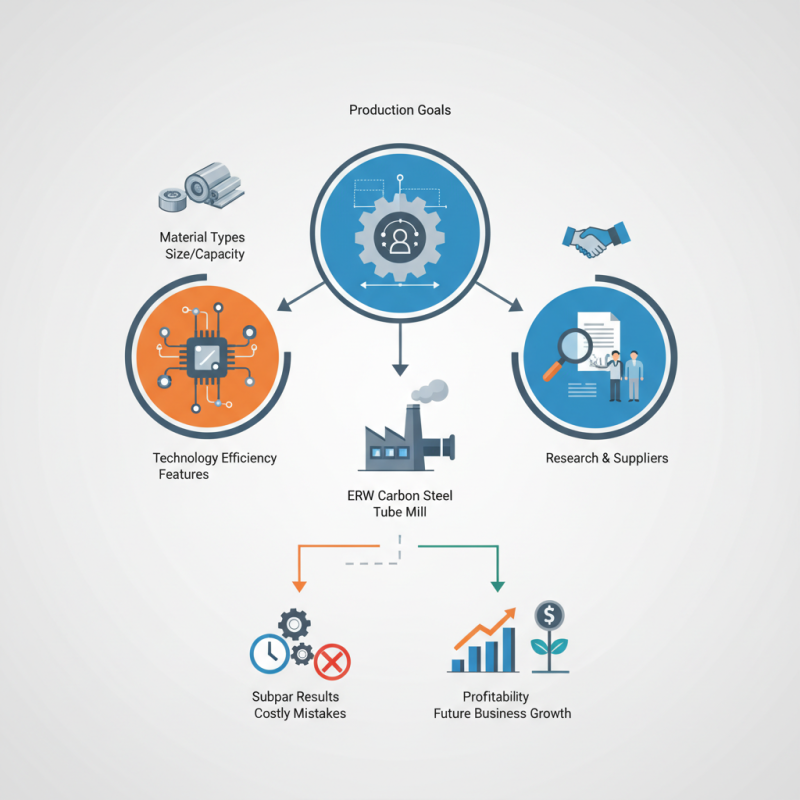
Choosing the right erw carbon steel tube mill can be challenging. Industry expert James Taylor emphasizes, “Selecting the right mill is crucial for quality production.” Finding the perfect mill involves understanding your specific needs, material types, and production goals.
Different mills offer various features, which can impact efficiency and output. Consideration must be given to the size, capacity, and technology of the mill. Often, manufacturers overlook essential aspects, leading to subpar results. Mistakes can be costly in terms of resources and time.
Investing time in research is vital. Engaging with suppliers and assessing their track records builds reliability. Having clear objectives helps narrow down choices. This process not only impacts profitability but also shapes future business growth in the competitive market of erw carbon steel tube mills.
Understanding ERW Carbon Steel Tube Mills and Their Applications
ERW (Electric Resistance Welded) carbon steel tube mills are vital in various industries. They produce pipes used in construction, automotive, and oil sectors. Understanding their functionality and applications is crucial for effective procurement. Production capacity is a key differentiator among mills. Some mills can produce over 100,000 tons annually, while others might struggle to meet half that. This discrepancy affects both scale and cost efficiency.
The applications of ERW tubes extend to structural supports in buildings and pipelines for transporting fluids. According to a recent industry report, the global ERW pipe market was valued at approximately $30 billion in 2022, with a projected growth rate of 5% annually. This growth is driven by increased demand from emerging markets. However, not all mill operations deliver the same quality or efficiency.
Choosing a mill also involves assessing its technology. Advances in automation have improved production precision. Despite these advancements, equipment maintenance remains a concern. Mills often report downtime due to technical issues. This can impact operational efficiency and lead to unanticipated costs. Therefore, evaluating mill reliability and service responsiveness is crucial for long-term success.
Key Factors to Consider When Choosing an ERW Tube Mill
When choosing the best ERW carbon steel tube mill, several key factors can significantly influence your decision. Understanding the specifications is crucial. Focus on the mill's production capacity, as this will dictate your output. Also, consider the thickness range of tubes that the mill can produce. This is essential for meeting project requirements.
Tips: Assess the speed and efficiency of the mill before making a choice. Faster mills may seem appealing, but ensure they maintain quality standards. Delve into the technology used. Advanced mills often feature automation, which can enhance productivity and reduce labor costs. However, be wary of overly complex systems requiring extensive training.
Another factor to evaluate is the service and support provided by the manufacturer. A reliable support system is vital to minimize downtime. Check if they offer maintenance packages and quick responses to technical issues. Remember, investing in a mill is a long-term commitment, so weigh your options carefully.
Tips: Engage with other users in the industry. Their insights can reveal potential issues or advantages of specific models. Always perform a thorough risk assessment. This will help you to understand the implications of your purchase better. Taking time to reflect on these factors can lead to a more informed decision.
Comparing Different Models and Features of ERW Tube Mills
When selecting an ERW (Electric Resistance Welded) tube mill, it's essential to compare different models and features. Focus on the mill's design and capabilities. Look closely at the wall thickness and diameter range. The right specifications will determine suitability for your projects.
Consider the material handling system. Some mills offer advanced automation, enhancing efficiency. Others might rely on manual processes, which can slow down production. Assessing the ease of maintenance is also vital. A mill that requires frequent repairs may disrupt operations and lead to hidden costs.
Different models come with unique features. Some prioritize speed, while others focus on precision. Examine the potential trade-offs. A high-speed mill might compromise quality, or a precise machine may work slower. Take the time to reflect on your production needs. Ultimately, understanding these nuances will help you make an informed decision.
Evaluating Costs and Budget Considerations for Tube Mill Purchase
When considering the purchase of an ERW carbon steel tube mill, evaluating costs is crucial. Start by assessing your budget. Determine how much you can spend without compromising other operations. Factor in both the initial cost and ongoing expenses, such as maintenance and repairs. These costs can accumulate quickly.
Moreover, it's vital to get quotes from multiple suppliers. Prices can vary significantly. Don't overlook hidden costs, like shipping and installation fees. Also, consider the energy consumption of the mill. A machine that uses too much power can lead to increased operating costs over time. Research energy-efficient models.
Reflect on the long-term benefits versus upfront costs. Sometimes, investing more initially leads to better quality and efficiency. However, always weigh your options. Ask industry experts for advice. Their experience can provide valuable insights. Finding a balance is key to making a sound investment in your tube mill.
Seeking Professional Advice and Recommendations for Optimal Choice
Choosing the right erw carbon steel tube mill is crucial for your production needs. Professional advice can guide you toward the best options. Industry experts often suggest evaluating the specifications, productivity, and energy efficiency of various mills. Thoroughly assessing these factors helps in making informed choices. Collecting information from multiple sources is essential.
Additionally, consider your specific production requirements. Are you focusing on high-volume output or specialized sizes? Engage with professionals who have extensive experience in this field. They can provide insights about common pitfalls and inefficiencies. Sometimes, recommendations can contradict your initial assumptions, leading to deeper insights.
Visiting facilities and analyzing machine performance in real-world scenarios can be beneficial. Observing how different mills operate under load can provide clarity. Don't hesitate to ask questions about maintenance and after-sales support. These conversations can reveal potential challenges you might face. Remember, a well-informed decision today can prevent costly mistakes tomorrow.
How to Choose the Best ERW Carbon Steel Tube Mill for Your Needs?
| Dimension | Description | Importance | Recommended Range |
| Tube Diameter | Measurement of the tube’s width across the circular section. | Crucial for determining application and compatibility with fittings. | 20mm - 500mm |
| Wall Thickness | Thickness of the tube walls affecting strength and weight. | Key factor in the tube’s pressure rating and durability. | 1mm - 20mm |
| Production Speed | Speed at which the mill produces tubes. | Affects output volume and operational efficiency. | 10m/min - 100m/min |
| Energy Consumption | Amount of energy used during production. | Important for calculating operational costs. | 50 kW - 500 kW |
| Automation Level | Degree to which the mill operates automatically. | Influences labor costs and production consistency. | Semi-automatic - Fully automatic |