How to Choose the Best Drone Detector?

Choosing the best Drone Detector is rarely a simple matter of comparing prices and advertised range. A reliable decision begins with the site itself. A busy airport, a private warehouse, and a public event create different detection challenges. Buildings can block radio signals. Trees can weaken radar performance. Wi-Fi traffic can also create confusing alerts.

Arthur Holland Michel, a respected counter-drone researcher, has often emphasized a practical reality: “There is no silver bullet.” His observation remains valuable because every Drone Detector has limits. Radio-frequency systems may identify control links, while radar can notice movement patterns. Cameras may confirm visual details, but darkness, glare, and weather can reduce their usefulness. Strong systems often combine several detection methods.

Experience matters here.

A responsible buyer should examine detection range, false-alarm rates, update support, installation requirements, and data security. Ask whether the device has been tested in conditions resembling the actual site. A brochure cannot reveal everything. Request independent performance evidence, clear warranty terms, and transparent maintenance costs. The best choice may not be the system with the longest advertised range. It may be the one that gives operators understandable alerts beside a loading dock at night.

There is room for doubt. Marketing claims can sound more precise than field results. Human review still matters, especially when birds, machinery, or nearby wireless devices trigger warnings. Select equipment only for lawful, authorized monitoring and safety purposes. A thoughtful Drone Detector protects people, supports informed decisions, and respects privacy without promising perfect visibility.

How to Choose the Best Drone Detector?

What Is a Drone Detector and How Does It Work?

A drone detector is a security system that identifies unmanned aircraft near a protected area. It does not automatically remove or control the aircraft. Instead, it observes signals, movement, sound, or visual shapes.

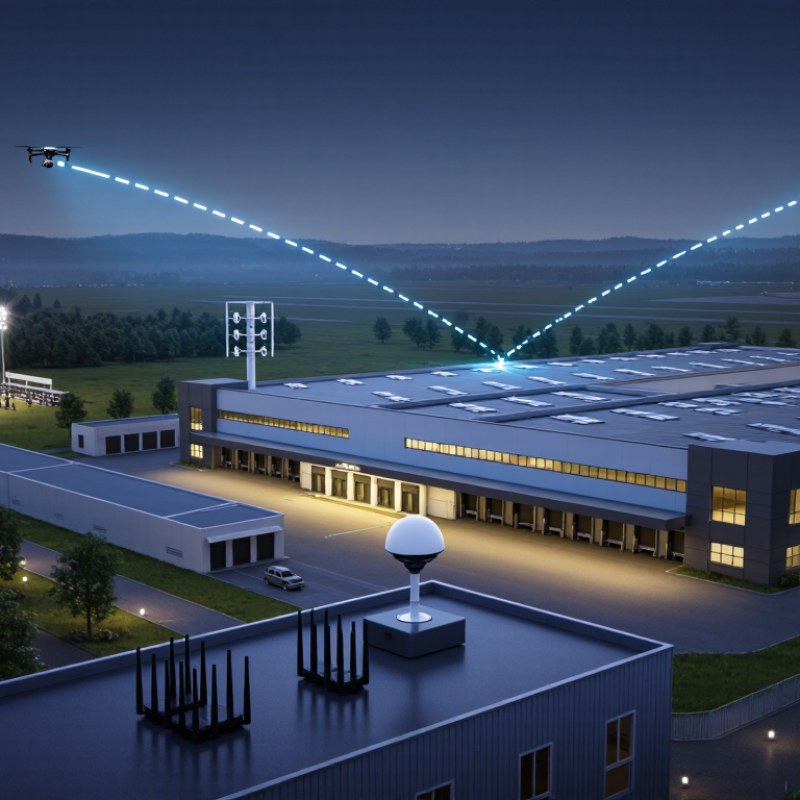
Radio-frequency sensors listen for communication links between a drone and its controller. Radar tracks small flying objects and measures their distance, speed, and direction. Cameras can confirm shape and movement, while acoustic sensors analyze rotor noise.

Each method has weaknesses. Buildings can block radio signals. Birds may confuse radar. Wind can reduce acoustic accuracy. Night conditions challenge ordinary cameras.

Sensor fusion improves confidence. The system compares several clues before creating an alert. According to the Federal Aviation Administration’s Aerospace Forecast 2024–2044, the United States had more than 835,000 registered drones in early 2024. That growing aircraft population increases the value of reliable detection, especially around airports, public venues, and industrial sites. The 2024 MarketsandMarkets Counter-UAS Market report also identifies radar, radio-frequency detection, electro-optical systems, and acoustic sensing as major technology categories.

When choosing a detector, examine its detection range, update speed, false-alarm rate, environmental rating, and evidence quality. A clear map and time-stamped alert can matter more than an impressive range claim. Ask for independent testing data, not only laboratory figures. Also check whether the system can operate with local privacy and aviation requirements.

No detector is perfect. A quiet aircraft may be missed. A flock of birds may trigger uncertainty. The best choice is usually a layered system, installed by trained professionals and reviewed regularly.

Which Drone Detection Technologies Should You Compare?

How to Choose the Best Drone Detector?

Which Drone Detection Technologies Should You Compare?

Choosing a drone detector starts with the environment, not the feature list. A quiet rural site may favor radio-frequency monitoring. An industrial area needs stronger filtering against machinery and wireless networks. Compare detection range, update speed, false alarm rates, and performance in rain, darkness, and crowded airspace. A useful system should show the drone’s location, direction, confidence level, and time of detection. Clear evidence matters.

Radio-frequency detection can identify communication signals before a drone becomes visible. It may struggle with autonomous flights or heavy signal congestion. Radar measures movement and distance, including objects beyond direct view. However, birds, cranes, and weather can create confusing returns.

Optical cameras provide visual confirmation, while thermal cameras help at night. Both need a clear line of sight. Acoustic sensors listen for rotor patterns, but wind and traffic reduce their value.

Do not judge one technology alone. Compare how sensors work together. A practical trial should place test drones at different heights and distances, then record missed detections and false alerts. Review the operator interface too. Can trained staff understand it quickly? Can the system store time-stamped evidence securely? These details often matter more than impressive specifications.

I have found that real sites expose weaknesses quickly. No sensor is perfect. Even a well-designed setup may need seasonal tuning, better mounting positions, or human review. That is not failure; it is part of responsible evaluation.

How to Match Detection Range, Accuracy, and Coverage to Your Needs

Choosing the best drone detector starts with the site, not the advertised maximum range. Measure the actual area that needs protection. A detector rated for five kilometers may perform differently near buildings, trees, power lines, or uneven ground. Clear sightlines matter. So does installation height.

Match detection range to realistic operating conditions. A small facility may need close, reliable coverage rather than extreme distance. A large open site may require overlapping detection zones. Coverage gaps are easy to miss on a map. Walk the perimeter and mark blocked corners, entrances, rooftops, and low approaches. Detection range is useful only where the sensor can “see.”

Accuracy deserves equal attention. Ask how the system handles common false signals, changing weather, and crowded radio environments. Detection should not depend on one impressive test result. Request performance data from conditions similar to your location. Review alert logs, response times, and missed detections. Short tests can hide weaknesses.

Field testing reveals more than specifications. Use authorized, controlled flights when permitted, and test several distances and directions. Check alerts behind partial obstructions. Check them again in rain or strong wind. I have found that coverage assumptions are often too optimistic. That is worth questioning. A slightly shorter range with stable accuracy may serve better than a powerful detector with frequent false alarms. Allow space for maintenance, calibration, and future expansion.

What Legal, Environmental, and Privacy Factors Should You Consider?

Choosing a drone detector starts with the rules around its use. Requirements vary by country, state, and even airport zone. Check aviation guidance, spectrum regulations, and property boundaries before comparing technical features. A device that passively receives authorized broadcast data may be treated differently from equipment that disrupts communications. Do not assume a general security license covers every installation. Written advice from a qualified local professional is safer than relying on a sales brochure.

Privacy deserves equal attention. Some detectors identify radio signatures, while others use cameras, microphones, or networked sensors. Ask what data is collected, where it is stored, and who can view it. Favor systems with local processing, short retention periods, encryption, and role-based access. Test alerts with consent, especially near homes, schools, hospitals, or public events. A false alert can expose an innocent visitor to unnecessary scrutiny. That risk is easy to underestimate.

Environmental conditions also shape a responsible choice. Night lighting, microphones, and repeated alarms can disturb wildlife and nearby residents. Select adjustable detection zones, low-power operation, and quiet notification methods. Check performance in rain, fog, tree cover, and dense urban reflections. Keep a maintenance log and review false positives monthly. A blind trial can help, though one trial is never enough. Independent test results matter, but local conditions may still surprise you.

How to Choose the Best Drone Detector?

Legal, environmental, and privacy considerations by detection technology

Scores use a 1–5 decision scale, where 5 indicates a stronger advantage for the selection factor. Radio-frequency systems can identify communication signals without recording images, radar provides non-visual object detection, optical systems may create greater privacy obligations because they capture imagery, and acoustic systems can be affected by ambient noise. Local aviation, telecommunications, surveillance, and spectrum regulations should always be checked before deployment.

How to Evaluate, Install, and Maintain a Drone Detection System?

How to Choose the Best Drone Detector?

How to Evaluate, Install, and Maintain a Drone Detection System?

A reliable drone detection system begins with a clear site assessment. Walk the property at different times, noting trees, buildings, hills, and radio interference. These details can weaken detection performance. Compare systems using measured range, false alarm rates, weather tolerance, and response speed. Request independent test reports, not only sales claims. Check whether the equipment detects different flight patterns and operating conditions. No system is perfect. I have seen strong equipment perform poorly when installed behind metal structures.

Tips: Test before buying. Record results. Ask for local support and training. Protect personal privacy during monitoring. Follow applicable aviation, radio, and data protection requirements.

Installation should match the site’s real layout. Place sensors with a clear view, stable power, and suitable network connections. Use more than one sensor when terrain creates blind areas. A qualified technician should confirm coverage through practical testing, not software maps alone. Keep cables protected and label every connection. Small mistakes matter.

Maintenance needs a written schedule. Inspect mounts, seals, antennas, batteries, and network links regularly. Review alerts after storms or construction work. Recheck detection zones when trees grow or buildings change. Keep firmware and security controls current through approved procedures. Store test records with dates, weather conditions, and observed gaps. Honest records reveal weaknesses before an incident does. Reassess the system annually, because the environment will change.

How to Choose the Best Drone Detector? – How to Evaluate, Install, and Maintain a Drone Detection System?
Evaluation Dimension What to Evaluate Typical Technical Benchmark Installation Guidance Maintenance Requirement Priority
Detection Technology Determine whether the system uses radio-frequency detection, radar, electro-optical or infrared cameras, acoustic sensors, or a combination of technologies. Multi-sensor systems generally provide better coverage and confirmation than a single detection method. Use complementary sensors when buildings, vegetation, weather, or radio interference may block one detection method. Check sensor status, firmware, calibration records, and communication links according to the supplier's service schedule. Very High
Detection Range Compare the stated range for early warning, reliable classification, and visual confirmation rather than relying on one maximum-distance figure. Typical ranges may vary from approximately 1–3 km for compact systems to more than 5 km for larger radar-based deployments, depending on target size and conditions. Install sensors with a clear line of sight and place them above nearby obstructions where permitted. Recheck coverage after construction, landscaping, antenna changes, or other physical changes near the site. Very High
Detection Accuracy Review the probability of detection, false-alarm rate, minimum detectable target size, and performance against low, slow, or hovering drones. A practical acceptance target is high detection probability with a low false-alarm rate under representative site conditions; results should be verified by field testing. Conduct acceptance tests using authorized targets or controlled simulations at different approach angles and heights. Analyze false alarms monthly and update exclusion zones, signal libraries, and detection rules when necessary. Very High
Radio-Frequency Coverage Assess supported frequency bands, protocol recognition, encrypted or unknown signal handling, and performance in congested wireless environments. Many systems monitor commonly used control and navigation bands, but frequency coverage differs by region and equipment configuration. Perform a radio-frequency survey before installation and keep antennas separated from high-power transmitters. Review the local spectrum environment and update software-defined detection libraries when supported. High
Radar Performance Evaluate range resolution, azimuth accuracy, elevation coverage, target tracking, and performance in clutter. Short-range security radars commonly provide meter-level range resolution, while angular accuracy depends on antenna design, target distance, and environment. Mount the radar on a stable structure with an unobstructed view and avoid nearby moving objects that may create clutter. Inspect mounting stability, radome condition, alignment, and environmental sealing; recalibrate after structural movement. High
Camera Verification Check daylight resolution, low-light performance, infrared capability, optical zoom, stabilization, and automatic tracking. Visual identification depends on distance, lighting, weather, lens selection, and target size; camera specifications alone do not guarantee recognition. Position cameras to overlap important approach corridors and avoid direct glare, reflective surfaces, and strong backlighting. Clean lenses, inspect wipers or heaters where fitted, verify focus, and test day/night switching on a scheduled basis. High
Acoustic Detection Assess microphone sensitivity, noise filtering, wind tolerance, and the ability to distinguish drone signatures from vehicles, machinery, and aircraft. Acoustic systems are generally most useful at shorter distances and in relatively quiet environments; performance decreases with wind, rain, and high background noise. Install microphones away from HVAC outlets, generators, busy roads, and large reflective walls. Check microphone covers, moisture protection, signal quality, and background-noise changes. Medium
Weather Resistance Review operating temperature, humidity tolerance, rain protection, wind resistance, icing limits, and ingress protection. Outdoor equipment should normally be rated for continuous exposure to local environmental conditions; an IP rating alone does not define full weather performance. Use suitable enclosures, drainage, surge protection, grounding, and heating or cooling where required. Inspect seals, connectors, cable glands, drainage paths, heaters, fans, and corrosion-prone parts. High
Coverage and Site Layout Map protected zones, likely approach routes, blind spots, restricted areas, and sensor overlap before selecting equipment quantities. Coverage should be calculated using terrain, buildings, trees, sensor height, antenna patterns, and the smallest target that must be detected. Use a site survey and coverage model; provide overlapping detection areas for critical approaches where practical. Repeat the coverage assessment after major site modifications or changes in threat profile. Very High
Alert Speed and Tracking Measure the time from initial detection to operator alert, target classification, track creation, and camera cueing. For security operations, alerts should be generated within seconds and should include location, direction, altitude estimate, confidence, and sensor source. Connect sensors to a synchronized command platform and test network latency under normal and backup conditions. Review event logs, time synchronization, alert delivery, and tracking continuity during routine tests. Very High
Integration Capability Check compatibility with video management systems, access control, security operations software, mapping tools, and approved response procedures. Open, documented interfaces and standard network protocols generally simplify integration and future expansion. Define network architecture, cybersecurity zones, user permissions, and data-retention requirements before deployment. Patch connected systems, review user access, test interfaces, and maintain current network diagrams. High
Cybersecurity Evaluate encryption, secure boot, authentication, role-based access, vulnerability management, and audit logging. Remote administration should use strong authentication, encrypted connections, least-privilege access, and controlled software updates. Place management interfaces on protected networks and disable unused services, ports, and default credentials. Apply approved security patches, review logs, rotate credentials, and test backup and recovery procedures. Very High
Power and Communications Assess power consumption, battery backup, network bandwidth, wired or wireless connectivity, and failover options. Critical installations should have backup power sufficient to maintain detection and communications during expected outages. Use protected cabling, surge suppression, grounding, network redundancy, and a documented power budget. Test batteries, uninterruptible power supplies, network failover, connectors, and cable integrity. High
Installation and Commissioning Confirm site survey quality, equipment positioning, sensor calibration, network setup, alarm configuration, and operator training. A complete commissioning process should include documented performance tests for detection, classification, tracking, alerts, recording, and system recovery. Use a formal installation checklist, measured sensor coordinates, synchronized system time, and clearly marked maintenance access points. Keep as-built drawings, configuration backups, calibration records, test results, and training records. Very High
Routine Maintenance Define preventive, corrective, and emergency maintenance responsibilities and response times. A practical program may include daily system-status checks, monthly functional tests, quarterly physical inspections, and annual performance validation. Provide safe access, weather-protected service areas, spare parts, and procedures for maintenance during live operations. Document all inspections, faults, repairs, software changes, false alarms, and post-maintenance verification tests. Very High
Regulatory and Privacy Compliance Review local requirements for radio monitoring, radar operation, surveillance recording, data protection, and airspace-related procedures. Legal requirements vary by jurisdiction, operating frequency, site type, and whether cameras or personal data are involved. Obtain required approvals before installation and define camera masking, retention periods, signage, and access controls. Audit compliance records, privacy settings, retention rules, permissions, and regulatory changes. Very High
Total Cost of Ownership Include equipment, installation, civil works, network services, software licenses, training, calibration, energy, repairs, and replacement cycles. A lower purchase price may result in higher long-term costs if the system requires frequent manual verification, proprietary upgrades, or specialized servicing. Compare lifecycle costs over at least five years and include expansion capacity for additional sensors or protected zones. Track annual operating costs, spare-part usage, downtime, support response, and upgrade requirements. High
Important: Technical performance varies with drone size, flight profile, terrain, weather, radio interference, buildings, vegetation, sensor height, and local regulations. All stated ranges and benchmarks should be verified through a site survey, controlled acceptance testing, and applicable legal review before deployment.
Benchmark values are representative industry planning ranges rather than guarantees for a specific system or operating environment.

Powder Coat Booths

For those larger-sized parts, or smaller quantity runs, we have 2 independent powder coat booths and ovens. The quality, durability and affordability of today’s powder coating finishes make this the process of choice for world-class companies.

Powder coating advantages over other forms of coating are many. Materials used in the Powder coating process can be metals and non-metals that come in a multitude of thicknesses, textures, colors, etc. Another of Powder coating’s biggest advantages over conventional coatings is its ability to create finishes in many different textures. Powder Coating Booths allow us the ability to apply these advantages to large products.

Wet Paint Line

Tri-State Fabricators runs a full-service conveyor line for painting. Wet painting can provide protection or decoration to many different part styles. From start to finish, every project is easier to undergo random and point-based inspection by our skilled painting team.

Advantages to our Wet Paint Line are these lines start with product prep and ends with a thorough inspection of a high quality finished product. Our ability to complete large and small projects with a superior finish and doing so in a timely and economical fashion. This passes along the savings in production to our customers. When powder coating ins not an option, our Wet Paint Line gets the job done right the first time.

Wet Paint Booths

When the parts get big and heavy we roll-out our custom paint racks and oversize booth. By utilizing our partnerships with all the major paint brands, we can match virtually any color with wet paint.

The advantages of having access to a Wet Paint Booth are many. Large projects of many different shapes can be loaded into the booth. The Wet Paint Booth offers an environment that is much more controlled than a typical parts painting operation.

Not only are they used because of their controlled environment, but they’re are also advantageous when it comes to applying paint to parts that are needed in industries that require specialty coatings such as medical, aerospace, etc.

Military CARC

Our military forces have some very high standards when it comes to the finish of their vehicles and equipment. From the first pre-treatment step to final coat, it takes a great deal of knowledge and experience to protect the men and women of our armed forces. They deserve only the best, and Tri-State Fabricators provides it.

All of our processes are closely monitored by our staff and management teams. Both of which are highly trained in the processes of metal fabrication and finishing. Tri-State Fabricators’ goal is to always fully satisfy each and every customer, including the military. We will always put a 110% into what we do.

Glass-Bead Blasting

Abrasive media blasting is an excellent way to remove old paint, rust, and increase the paint/powder adhesion. Glass beads produce a much smoother and brighter finish than angular abrasives; leaving the part clean yet without any dimensional change. Chemically inert and environmentally friendly, we can recycle our beads approximately 30 times; making them a more preferred method of metal cleaning or surface finishing.

Advantages to Glass Bead Blasting are many. Glass bead blast media is used when a project is needing rough surfaces need to become smooth for applications of coatings such as paint. It is typically used to clean paint and rust from a product surface without deforming the surface it is being used on. Overall, compared to many other blasting media, Glass Bead Blasting is a very economical choice and those savings are always passed on to our customers.

Part Washing

Tri-State Fabricators utilize a zinc phosphate wash to clean and etch the material to ensure the best paint adhesion possible. The unique design of our 3-stage wash system does the work like a 5-stage. From Cleaning and rinsing to conversion coating and post-treatment, Our Part Washing process is a complete service and works throughout the fabrication service and the finishing service.

Along with the previously mentioned benefits, Curing is a vital chemical reaction that leaves the product finish hard and relatively safe from mild abrasion and aggressive corrosion. This process can be done in more than one way; ambient air-dry or in curing ovens at temps that exceed 240°.

Burn-Off Oven

From fixing paint mistakes (someone else’s of course) to simply cleaning our paint line hooks, our burn-off oven is put to good use. After a quick burn-off, a little clean up, and a fresh coat of paint, your parts will look better than new.

Why does our Burn-Off Oven work so well? Because super heating the air around parts turns the materials into ashes. From paint and powder coatings to rubber and machining oils, high temps do the job without degrading the integrity of the part.

Masking

Masking is a vital part of producing high quality products. We have die-cut masking patterns to protect machined surfaces as well as a wide range of plugs and caps to protect threaded holes and bolts. We provide permanent and temporary masking.

Masking allows the selected sections of a product to be protected from a fabrication or finishing service. This can be with both chemicals when etching and tapes, paints when only finishing just a section of the product. Masking is great in aiding the customization process of a project.

Screen Printing

Screen printing is a photographic process that transfers artwork onto a porous nylon screen which allows colored ink to flow through the screen and be deposited on an aluminum or plastic component. We can generally have just about any design created onto a screen for your parts.

Some of the advantages of Screen Printing are, brand recognition for your business displaying on your products, assembly instructions, product warnings/hazards, etc. Tri-State Fabricators produces Screen Printing of the highest quality so you know it’s durable.

Metal Finishing

Metal Finishing is the art of treating the exterior portion of product, often metal but can also be made of other materials, so that the surface is clean and free of any debris. Then the process of applying coats or either paint of powder coat takes place. This coating process improves the quality of the product in both appearance and resistance to wear and corrosion.

Tri-State Fabricators, Inc., understands that a project typically isn’t complete until a high-quality finish has been added to your product. This is why our painting and powder coating teams continuously inspect the products throughout the Metal Finishing process.