


Choosing a Dressing Table is less about finding the most impressive piece and more about fitting your daily routine. Interior designer Nate Berkus has said, “Your home should tell the story of who you are, and be a collection of what you love brought together under one roof.” That idea applies to a dressing area, too: the table should feel at home in your room, not merely look polished in a product photo. Measure the available wall space, including room to pull out a chair and open drawers. Small details matter. A drawer that catches your knees gets old quickly.
The best choice depends on what you actually use. If you apply makeup each morning, look for a clear, evenly lit mirror and a surface large enough for your essentials. If the room is narrow, a compact table with shallow storage may work better than a wide vanity. Check the finish, drawer construction, assembly requirements, and return policy before buying. Solid wood can last, but it may cost more and feel visually heavy in a small bedroom. There is no perfect option. Style can distract from comfort, and storage can tempt you to buy more furniture than you need. A useful Dressing Table should make getting ready easier, keep everyday items within reach, and leave enough breathing room around it. That balance is often less dramatic than a showroom setup. It is also more livable.
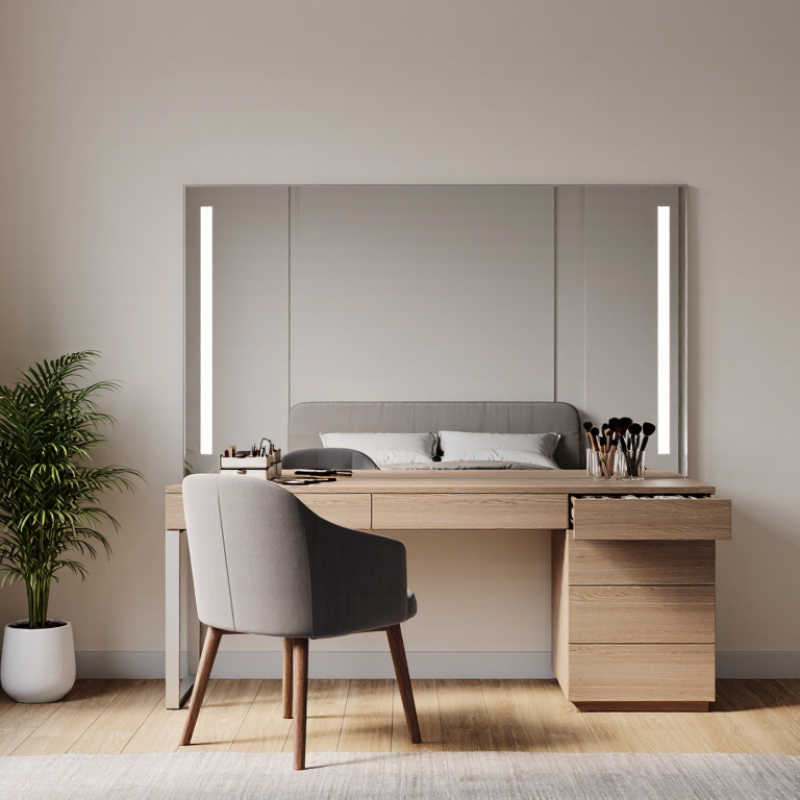
A dressing table is a small, dedicated surface for getting ready. It usually combines a tabletop, a mirror, and storage such as drawers or compartments. Some designs include a matching stool; others work with a chair already at home. The purpose is practical: keep daily essentials together and provide a comfortable place to use them. It can hold a hairbrush, skincare products, jewelry, or a few cosmetics without turning the bathroom counter into a crowded shelf. Keep it simple.
How it is used depends on the person and the room. Sit close enough to see the mirror clearly, and choose lighting that shows your face without casting harsh shadows. Store frequently used items in easy reach, then place occasional items in drawers to clear the surface. A stable tabletop matters, especially when handling small containers or delicate accessories.
That matters.
A dressing table is not essential for everyone, and a poorly placed one can become little more than a catch-all. Before buying, consider available space, chair height, storage needs, and whether the mirror suits your routine. I would not assume more drawers always mean better organization; too many compartments can hide clutter rather than solve it.

What Is the Best Dressing Table to Buy?
How to Match a Dressing Table to Your Space and Routine
Start with the room, not the mirror. Measure the wall, chair space, and drawer clearance before shopping. A narrow table may suit a small bedroom, but check that your knees fit comfortably underneath. If you use several skincare bottles or hair tools each morning, drawers can hide clutter while keeping essentials close. For occasional use, a simple tabletop and a separate mirror may take up less space. Measure twice.
Match the table to your routine and lighting. A window can provide useful daylight, but direct sun may create glare. Place a lamp to one side, then check your reflection from the seated position. Houzz’s 2024 U.S. Houzz & Home Study reported a $24,000 median renovation spend among homeowners who renovated in 2023. That figure covers home renovations broadly, not dressing tables, but it is a reminder to plan furniture costs alongside other room updates. There is no perfect setup; a beautiful mirror can still cast shadows.
Tips: Tape the table’s dimensions onto the floor before buying. Sit in your usual chair and test the drawer reach. Leave enough room to pull the chair back. If you share the space, a smaller tabletop may be easier to keep clear.
| Dressing Table Type | Typical Size (W × D × H) | Best for | Storage and Setup | Points to Check Before Buying |
|---|---|---|---|---|
| Compact wall-mounted table | 60–90 × 30–40 × 75–80 cm | Small bedrooms, studio apartments, and occasional grooming routines. | Usually has a shallow drawer or shelf; leaves floor space clear. Pair with a separate wall mirror. | Check wall type, fixing requirements, and whether the table can support the items you plan to store. |
| Narrow console-style table | 80–110 × 30–40 × 75–80 cm | Narrow rooms or spaces where a full-depth vanity would obstruct movement. | Often includes one or two drawers for everyday makeup, brushes, or accessories. | Measure the chair or stool as well as the table, and allow room to pull the seat out comfortably. |
| Standard single-user vanity | 90–120 × 40–50 × 75–80 cm | Daily grooming, skincare, and makeup routines in a typical bedroom. | Often offers several drawers and enough surface area for a mirror and frequently used products. | Confirm that drawer handles do not hit nearby furniture and that the mirror suits your seated eye level. |
| Desk-and-vanity combination | 100–140 × 45–60 × 74–76 cm | Multi-purpose rooms where the same surface needs to serve as a dressing table and desk. | May include drawers or a clear central leg space; use a removable mirror or a hinged mirror to switch functions. | Check knee clearance and make sure cosmetics can be stored away when the surface is used for work. |
| Corner dressing table | 90–120 cm per side × 75–80 cm high | Rooms with an unused corner and limited uninterrupted wall space. | Can make use of a corner that might otherwise be empty; storage layout varies by design. | Measure both walls and check that nearby doors, windows, drawers, and electrical outlets remain accessible. |
| Wide vanity with extended storage | 120–160 × 45–55 × 75–80 cm | Longer routines, larger collections, or users who want several items within reach. | Typically provides more drawer space and a larger worktop for organizers, lighting, and a mirror. | Ensure the room can accommodate the full width and that the extra surface will not become cluttered. |
Measurement tip: Sizes are typical examples and vary by design. Measure the available floor and wall space, check the seat clearance, and leave a clear path around the table before choosing.
When comparing dressing table styles, start with the space you actually have. A freestanding table with deep drawers suits a larger bedroom and keeps cosmetics, brushes, and cables out of sight. In a narrow room, a slim console or wall-mounted design leaves more floor visible. Measure the table, then mark its footprint with tape. Small rooms matter.
Next, compare mirror and storage configurations. A fixed mirror is simple and sturdy, while a tilting mirror helps when applying makeup from different angles. Some tables include side compartments or shallow top drawers, which make small items easier to find. Check that drawer openings will not hit a bed or wardrobe. A stool should slide underneath without catching on the legs.
Materials and lighting affect daily use more than photographs suggest. A smooth, wipeable surface handles powder and spills better than a delicate finish, though it may show scratches sooner. If the table faces a window, daylight can reveal uneven makeup; a nearby lamp with even, soft light can help. Sit at the table before choosing, if possible. I once favored extra drawers, then found the deep ones awkward for everyday items. Convenience is personal.
A good dressing table should feel steady before it looks elegant. Solid wood can be durable, while well-finished engineered wood may offer better value and resist everyday changes in room humidity. Check the joints, drawer runners, and edges; rough corners can snag clothing. Storage should fit your routine, not just look generous. A shallow drawer keeps brushes visible, while a deeper one can hide bottles and spare towels. Looks matter, but so does reach.
Lighting and mirrors affect how useful the table feels each morning. A mirror should show your face without obvious waviness, and its size should suit the space around it. Side lighting often reveals detail more evenly than a single overhead bulb, which can cast shadows under the eyes. Choose a comfortable, consistent light color, and test it near a window if possible. I’ve found that a beautiful setup can still feel awkward when the chair blocks a drawer. That part is easy to overlook.
Tips: Sit at the table before buying, and check that your knees fit beneath it. Open every drawer. Look at the mirror from your usual standing and seated positions. If the room is dim, leave space for a lamp. A little mismatch between style and daily use is normal; notice which one you’ll regret more.
What Is the Best Dressing Table to Buy?
How to Choose the Best Dressing Table for Your Budget
The best dressing table is one that fits your room, routine, and budget—not simply the one with the most drawers. Start by measuring the wall, including space for a chair and open drawers. A narrow top may suit a small bedroom, while deeper drawers can keep hair tools and skincare off the surface. Check the material, hardware, assembly requirements, and return policy before comparing prices. A low sticker price can hide flimsy runners or difficult assembly.
For a wider budget reference, Houzz’s 2024 U.S. Bedroom Trends Study reported a $6,000 median spend on primary-bedroom renovations. That figure covers a full renovation, not a dressing table, so treat it as context rather than a shopping target. Set a firm table budget, then compare options with similar dimensions and storage. Solid construction may cost more upfront, but a stable frame and smooth drawer runners matter during daily use. Still, paying extra for features you will rarely use is easy to regret.
Tips: Measure twice, and mark the table’s footprint with masking tape. Check whether the mirror is included. If your budget is tight, prioritize sturdy drawers and a finish that is easy to clean; add a separate mirror later. A small flaw in the plan? Assembly time is often underestimated.


For those larger-sized parts, or smaller quantity runs, we have 2 independent powder coat booths and ovens. The quality, durability and affordability of today’s powder coating finishes make this the process of choice for world-class companies.
Powder coating advantages over other forms of coating are many. Materials used in the Powder coating process can be metals and non-metals that come in a multitude of thicknesses, textures, colors, etc. Another of Powder coating’s biggest advantages over conventional coatings is its ability to create finishes in many different textures. Powder Coating Booths allow us the ability to apply these advantages to large products.
Tri-State Fabricators runs a full-service conveyor line for painting. Wet painting can provide protection or decoration to many different part styles. From start to finish, every project is easier to undergo random and point-based inspection by our skilled painting team.
Advantages to our Wet Paint Line are these lines start with product prep and ends with a thorough inspection of a high quality finished product. Our ability to complete large and small projects with a superior finish and doing so in a timely and economical fashion. This passes along the savings in production to our customers. When powder coating ins not an option, our Wet Paint Line gets the job done right the first time.
When the parts get big and heavy we roll-out our custom paint racks and oversize booth. By utilizing our partnerships with all the major paint brands, we can match virtually any color with wet paint.
The advantages of having access to a Wet Paint Booth are many. Large projects of many different shapes can be loaded into the booth. The Wet Paint Booth offers an environment that is much more controlled than a typical parts painting operation.
Not only are they used because of their controlled environment, but they’re are also advantageous when it comes to applying paint to parts that are needed in industries that require specialty coatings such as medical, aerospace, etc.
Our military forces have some very high standards when it comes to the finish of their vehicles and equipment. From the first pre-treatment step to final coat, it takes a great deal of knowledge and experience to protect the men and women of our armed forces. They deserve only the best, and Tri-State Fabricators provides it.
All of our processes are closely monitored by our staff and management teams. Both of which are highly trained in the processes of metal fabrication and finishing. Tri-State Fabricators’ goal is to always fully satisfy each and every customer, including the military. We will always put a 110% into what we do.
Abrasive media blasting is an excellent way to remove old paint, rust, and increase the paint/powder adhesion. Glass beads produce a much smoother and brighter finish than angular abrasives; leaving the part clean yet without any dimensional change. Chemically inert and environmentally friendly, we can recycle our beads approximately 30 times; making them a more preferred method of metal cleaning or surface finishing.
Advantages to Glass Bead Blasting are many. Glass bead blast media is used when a project is needing rough surfaces need to become smooth for applications of coatings such as paint. It is typically used to clean paint and rust from a product surface without deforming the surface it is being used on. Overall, compared to many other blasting media, Glass Bead Blasting is a very economical choice and those savings are always passed on to our customers.
Tri-State Fabricators utilize a zinc phosphate wash to clean and etch the material to ensure the best paint adhesion possible. The unique design of our 3-stage wash system does the work like a 5-stage. From Cleaning and rinsing to conversion coating and post-treatment, Our Part Washing process is a complete service and works throughout the fabrication service and the finishing service.
Along with the previously mentioned benefits, Curing is a vital chemical reaction that leaves the product finish hard and relatively safe from mild abrasion and aggressive corrosion. This process can be done in more than one way; ambient air-dry or in curing ovens at temps that exceed 240°.
From fixing paint mistakes (someone else’s of course) to simply cleaning our paint line hooks, our burn-off oven is put to good use. After a quick burn-off, a little clean up, and a fresh coat of paint, your parts will look better than new.
Why does our Burn-Off Oven work so well? Because super heating the air around parts turns the materials into ashes. From paint and powder coatings to rubber and machining oils, high temps do the job without degrading the integrity of the part.
Masking is a vital part of producing high quality products. We have die-cut masking patterns to protect machined surfaces as well as a wide range of plugs and caps to protect threaded holes and bolts. We provide permanent and temporary masking.
Masking allows the selected sections of a product to be protected from a fabrication or finishing service. This can be with both chemicals when etching and tapes, paints when only finishing just a section of the product. Masking is great in aiding the customization process of a project.
Screen printing is a photographic process that transfers artwork onto a porous nylon screen which allows colored ink to flow through the screen and be deposited on an aluminum or plastic component. We can generally have just about any design created onto a screen for your parts.
Some of the advantages of Screen Printing are, brand recognition for your business displaying on your products, assembly instructions, product warnings/hazards, etc. Tri-State Fabricators produces Screen Printing of the highest quality so you know it’s durable.
Metal Finishing is the art of treating the exterior portion of product, often metal but can also be made of other materials, so that the surface is clean and free of any debris. Then the process of applying coats or either paint of powder coat takes place. This coating process improves the quality of the product in both appearance and resistance to wear and corrosion.
Tri-State Fabricators, Inc., understands that a project typically isn’t complete until a high-quality finish has been added to your product. This is why our painting and powder coating teams continuously inspect the products throughout the Metal Finishing process.

