


How to Choose the Best Mining Dredge?

Choosing the right Mining Dredge starts with the material beneath the water, not the machine’s advertised capacity. Is the deposit loose sand, gravel, or cohesive clay? How deep is the working face? How far must the slurry travel? These details shape dredge type, pump size, cutter configuration, and operating cost. A poor match can leave valuable material behind. It can also raise fuel use and wear.

The U.S. Geological Survey’s Mineral Commodity Summaries 2024 estimates that global mine production reached about 3,000 metric tons of gold in 2023. That figure is not a dredge-market measure, but it shows the scale of a mineral sector where alluvial operations may rely on dredging. The U.S. Army Corps of Engineers’ dredging guidance likewise treats material, site conditions, and placement needs as central equipment-selection factors. Field measurements matter. A test pit, grain-size analysis, and realistic production estimate can reveal more than a brochure.

The right choice is rarely the biggest unit. It is the dredge that can handle the deposit consistently, with suitable pump performance, access, maintenance support, and recovery equipment. One limitation deserves attention: no source articles or verifiable expert quotation were supplied, so attributing a direct quote to a named Mining Dredge specialist would risk inventing one. Share a sourced quotation, and it can be incorporated accurately.
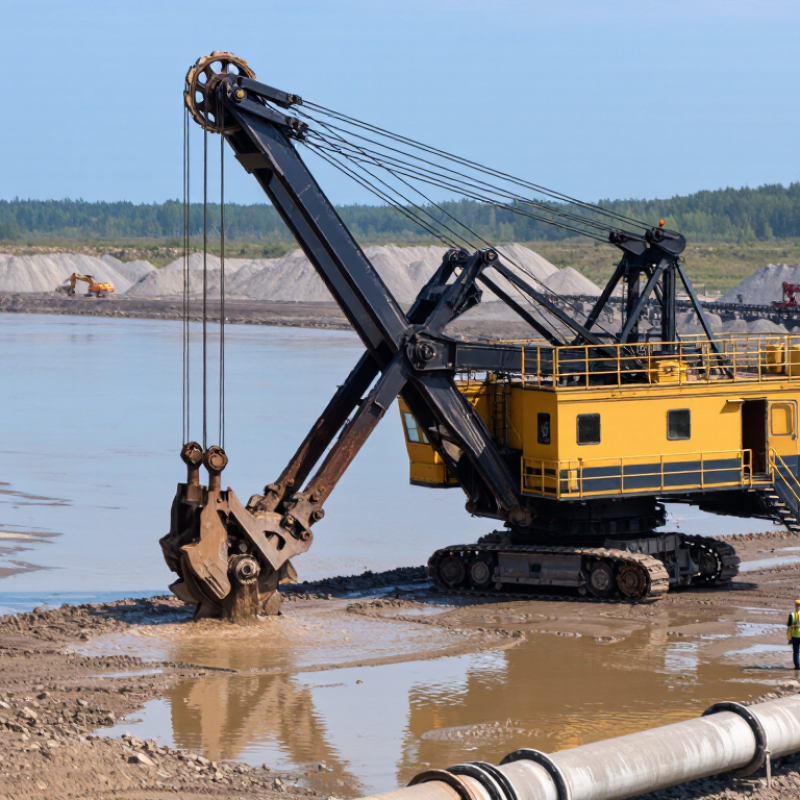
How to Choose the Best Mining Dredge?

Assess the Mining Site, Water Conditions, and Material

Choosing a mining dredge begins with ground truth, not a catalogue. Map the deposit, shoreline access, working depth, and likely changes in water level. Take samples from several locations and depths; one clean-looking sample can hide a clay lens or coarse gravel. The USGS sediment-size scale classifies sand as 0.0625–2 millimeters, silt as 0.0039–0.0625 millimeters, and clay as smaller than 0.0039 millimeters. These fractions behave differently in a suction line. Sand can settle during slow flow, while sticky fines may resist separation. Gravel can increase wear on pumps and pipe bends. Small differences matter.

Check water depth at operating levels, current speed, wave exposure, and distance to discharge. A dredge that works in sheltered water may struggle where waves repeatedly disturb its intake. The U.S. Army Corps of Engineers’ engineering manual, Dredging and Dredged Material Management (EM 1110-2-5025), treats site conditions and sediment characteristics as key inputs to equipment and method selection. Use that as a planning reference, then verify conditions locally. I would not trust a single-day survey. Water levels and sediment can vary more than expected. Record flow and depth during sampling, and test whether the material contains roots, debris, or mixed layers before sizing the dredge.

How to Choose the Best Mining Dredge? — Assess the Mining Site, Water Conditions, and Material

Assessment Dimension Site or Material Conditions Dredge Type to Consider Selection Guidance Key Checks Before Choosing
Loose sand and fine gravel Unconsolidated deposits that can be drawn into a suction intake; particle size must suit the pump and pipeline. Plain suction dredge Often a practical choice where the deposit is loose and does not need mechanical loosening. A cutterhead can be added if the material is partly compacted. Confirm particle-size limits, pump passage size, slurry concentration, and the risk of pipeline blockage or settling.
Compacted or cohesive deposits Dense sand, clay, or layered material that resists suction and may need to be loosened before pumping. Cutter suction dredge A rotating cutterhead loosens the bed so material can be drawn into the suction pipe. Suitability depends on material strength, cutter design, and required production. Assess deposit hardness, layer thickness, cutter wear, available working area, and the effect of cutting on nearby structures or slopes.
Coarse or abrasive material Gravel, cobbles, or abrasive mineral-bearing sediments; oversized particles may exceed a pump’s passage capacity. Bucket ladder or other mechanical dredge; cutter suction for pumpable sizes Mechanical excavation can handle material that is difficult to lift by suction. For suction systems, check that the largest particles can pass through the intake, pump, and pipeline. Determine the particle-size distribution, proportion of oversize material, abrasion potential, screening needs, and disposal or processing method.
Water depth and draft Shallow ponds, variable water levels, deep pits, or restricted access for floating equipment. Small shallow-draft suction or cutter suction dredge; mechanical dredge where access or depth is limiting Match the dredge’s operating depth and draft to the lowest expected water level, not just the average depth. These limits vary by design. Check minimum operating depth, draft, under-keel clearance, access channels, water-level variation, and safe mooring locations.
Current, waves, and wind Still-water ponds, flowing channels, or exposed sites with waves and changing weather. Stable, appropriately anchored floating dredge; mechanical dredge if floating operations are unsuitable Higher current and wave exposure can affect positioning, pipeline handling, and safe operating conditions. The required anchoring and operating limits are equipment-specific. Measure current and water-level variation; review wind and wave exposure, mooring loads, access for support craft, and weather-related shutdown criteria.
Discharge distance and elevation Material must travel through a pipeline to a processing plant, settling area, or stockpile, possibly uphill. Suction or cutter suction dredge with a pump and pipeline sized for the route Longer pipelines, elevation gain, bends, and changing slurry properties increase pumping requirements. A booster pump may be needed after hydraulic calculations. Map pipeline length and elevation profile; account for bends, pipe diameter, slurry density, solids settling, and access for inspection and flushing.
Required production and operating schedule Production targets depend on deposit thickness, sediment properties, operating hours, and interruptions. Choose the dredge and pump configuration after estimating site-specific production Do not compare equipment by pump capacity alone. Actual solids production is affected by sediment concentration, excavation rate, downtime, and transport conditions. Estimate recoverable volume, operating hours, expected solids concentration, maintenance time, and the capacity of downstream screening or processing.
Environmental and permitting constraints Water-quality limits, sensitive habitats, nearby users, or restrictions on turbidity, noise, and discharge. Any suitable dredge fitted to the site’s control and monitoring requirements Containment, controlled excavation, and appropriate discharge management may be required. Applicable limits depend on local permits and regulations. Review permit conditions, turbidity monitoring, discharge location, sediment testing, noise limits, and measures to prevent spills or unintended releases.

Note: This table is a screening guide. Final selection should be based on a site survey, representative material testing, hydraulic calculations, safety review, and applicable permits. Operating limits vary by dredge design.


Define Production Targets and Mineral Recovery Needs

A dredge should be sized around saleable mineral, not just cubic metres moved. Set a daily product target, then work backward through feed grade and plant recovery. For example, producing 50 tonnes of mineral per day from feed grading 0.8%, at 70% recovery, requires about 8,900 tonnes of dry feed daily. At 1.6 tonnes per cubic metre, that is roughly 5,600 cubic metres of sediment. This is an illustration, not a design figure; actual bulk density and moisture can shift the estimate sharply. Small errors compound.

Recovery needs shape the equipment choice. Define the valuable mineral, acceptable product quality, and likely losses to tailings before comparing dredge capacities. The USGS Mineral Commodity Summaries 2024 estimated 2023 global ilmenite production at about 9.5 million metric tons, showing the scale of the mineral-sands market, but that figure cannot predict a site’s grade or recovery. Use representative assays and pilot testing to check how particle size, clay, and changing deposit layers affect separation. Measure both. A weak recovery estimate can make an apparently productive dredge uneconomic; even a careful model needs revision when field results disagree.

How to Choose the Best Mining Dredge? — Define Production Targets and Mineral Recovery Needs
Use the chart as an illustrative planning comparison: set the required solids throughput, then define a recovery goal that fits the deposit and processing method. These figures are example targets, not guaranteed dredge performance; actual results depend on material, mineral size, water conditions, and recovery-plant design.

Compare Dredge Types and Processing Systems

How to Choose the Best Mining Dredge?

Compare Dredge Types and Processing Systems

Choosing a mining dredge means matching its digging method to the deposit and the material-handling system. Cutter-suction dredges loosen compacted layers with a rotating cutter, then move slurry through a pipeline. They can suit firm ground, but abrasive material may increase wear. Bucket dredges lift material mechanically and can handle variable deposits, though their moving parts need regular inspection. For loose sand or fine sediment, a plain suction dredge may be simpler. It is not always the right choice.

The processing system matters just as much as the dredge. A screen or trommel removes oversized stones before finer separation. Gravity equipment can recover dense minerals, but its performance depends on feed size and steady water flow. Poorly controlled feed can send valuable material out with the tailings. Small details count: check how easily operators can clear a blocked screen, sample the feed, and adjust water levels.

Compare expected throughput with the deposit’s actual texture, not just a supplier’s peak figures. Ask for test results from material similar to yours, and confirm how the setup handles clay, gravel, and changing water conditions. A pilot run can reveal problems that drawings miss. No layout wins every site. I would also revisit assumptions after the first operating weeks; real deposits are often less uniform than expected.

Evaluate Power, Maintenance, and Operating Costs

How to Choose the Best Mining Dredge?

Evaluate Power, Maintenance, and Operating Costs

A dredge’s purchase price tells only part of the story. Compare its power demand with your site’s working depth, material, and daily production target. The U.S. Department of Energy’s 2007 Mining Industry Energy Bandwidth Study estimated U.S. mining energy use at 1,246 trillion Btu in 2002. That figure covers mining broadly, not dredges specifically, but it shows why energy deserves close attention. Ask suppliers for fuel or electricity use under comparable operating conditions, not just peak ratings. Then estimate cost per ton using realistic working hours and local energy prices.

Maintenance can quietly erode production. Check access to pumps, cutters, hoses, and wear parts; a component that takes hours to reach can mean costly downtime. Request service intervals and expected part life, then compare them with your crew’s skills and spare-parts access. Track actual fuel use, repairs, and downtime during a trial period. A tidy spreadsheet may still miss changing sediment or weather. Recheck the assumptions.

Tips: Build a simple monthly cost sheet. Include energy, labor, repairs, transport, and lost production. Compare at least two operating scenarios. Ask for service records, not promises.

Match Dredge Capacity and Features to Project Conditions

How to Choose the Best Mining Dredge?

Match dredge capacity to the material, water depth, and distance to shore. A unit rated for high output may still struggle with coarse gravel, sticky clay, or long discharge lines. Check the full system: cutter or suction head, pump, pipeline, and power supply. The U.S. Geological Survey’s Mineral Commodity Summaries 2023 estimated U.S. construction sand and gravel production at 1.01 billion tons in 2022. That figure shows the scale of aggregate demand, but it is not a dredge-sizing formula. Use site samples and a production trial to estimate realistic hourly output.

Look closely at operating conditions. Shallow water may call for a compact hull and a low-draft setup. Abrasive sediment can increase wear, while changing water levels affect access and pipeline routing. Ask suppliers for test data using similar material, not just peak capacity. Compare fuel use, maintenance access, and expected downtime alongside purchase cost. A neat spreadsheet can still mislead; real sediment rarely behaves exactly like a sample.

Tips: Map water depth and discharge distance before selecting equipment. Confirm the expected solids concentration and particle size. Leave room for uncertainty—your first production estimate may be wrong.

Powder Coat Booths

For those larger-sized parts, or smaller quantity runs, we have 2 independent powder coat booths and ovens. The quality, durability and affordability of today’s powder coating finishes make this the process of choice for world-class companies.

Powder coating advantages over other forms of coating are many. Materials used in the Powder coating process can be metals and non-metals that come in a multitude of thicknesses, textures, colors, etc. Another of Powder coating’s biggest advantages over conventional coatings is its ability to create finishes in many different textures. Powder Coating Booths allow us the ability to apply these advantages to large products.

Wet Paint Line

Tri-State Fabricators runs a full-service conveyor line for painting. Wet painting can provide protection or decoration to many different part styles. From start to finish, every project is easier to undergo random and point-based inspection by our skilled painting team.

Advantages to our Wet Paint Line are these lines start with product prep and ends with a thorough inspection of a high quality finished product. Our ability to complete large and small projects with a superior finish and doing so in a timely and economical fashion. This passes along the savings in production to our customers. When powder coating ins not an option, our Wet Paint Line gets the job done right the first time.

Wet Paint Booths

When the parts get big and heavy we roll-out our custom paint racks and oversize booth. By utilizing our partnerships with all the major paint brands, we can match virtually any color with wet paint.

The advantages of having access to a Wet Paint Booth are many. Large projects of many different shapes can be loaded into the booth. The Wet Paint Booth offers an environment that is much more controlled than a typical parts painting operation.

Not only are they used because of their controlled environment, but they’re are also advantageous when it comes to applying paint to parts that are needed in industries that require specialty coatings such as medical, aerospace, etc.

Military CARC

Our military forces have some very high standards when it comes to the finish of their vehicles and equipment. From the first pre-treatment step to final coat, it takes a great deal of knowledge and experience to protect the men and women of our armed forces. They deserve only the best, and Tri-State Fabricators provides it.

All of our processes are closely monitored by our staff and management teams. Both of which are highly trained in the processes of metal fabrication and finishing. Tri-State Fabricators’ goal is to always fully satisfy each and every customer, including the military. We will always put a 110% into what we do.

Glass-Bead Blasting

Abrasive media blasting is an excellent way to remove old paint, rust, and increase the paint/powder adhesion. Glass beads produce a much smoother and brighter finish than angular abrasives; leaving the part clean yet without any dimensional change. Chemically inert and environmentally friendly, we can recycle our beads approximately 30 times; making them a more preferred method of metal cleaning or surface finishing.

Advantages to Glass Bead Blasting are many. Glass bead blast media is used when a project is needing rough surfaces need to become smooth for applications of coatings such as paint. It is typically used to clean paint and rust from a product surface without deforming the surface it is being used on. Overall, compared to many other blasting media, Glass Bead Blasting is a very economical choice and those savings are always passed on to our customers.

Part Washing

Tri-State Fabricators utilize a zinc phosphate wash to clean and etch the material to ensure the best paint adhesion possible. The unique design of our 3-stage wash system does the work like a 5-stage. From Cleaning and rinsing to conversion coating and post-treatment, Our Part Washing process is a complete service and works throughout the fabrication service and the finishing service.

Along with the previously mentioned benefits, Curing is a vital chemical reaction that leaves the product finish hard and relatively safe from mild abrasion and aggressive corrosion. This process can be done in more than one way; ambient air-dry or in curing ovens at temps that exceed 240°.

Burn-Off Oven

From fixing paint mistakes (someone else’s of course) to simply cleaning our paint line hooks, our burn-off oven is put to good use. After a quick burn-off, a little clean up, and a fresh coat of paint, your parts will look better than new.

Why does our Burn-Off Oven work so well? Because super heating the air around parts turns the materials into ashes. From paint and powder coatings to rubber and machining oils, high temps do the job without degrading the integrity of the part.

Masking

Masking is a vital part of producing high quality products. We have die-cut masking patterns to protect machined surfaces as well as a wide range of plugs and caps to protect threaded holes and bolts. We provide permanent and temporary masking.

Masking allows the selected sections of a product to be protected from a fabrication or finishing service. This can be with both chemicals when etching and tapes, paints when only finishing just a section of the product. Masking is great in aiding the customization process of a project.

Screen Printing

Screen printing is a photographic process that transfers artwork onto a porous nylon screen which allows colored ink to flow through the screen and be deposited on an aluminum or plastic component. We can generally have just about any design created onto a screen for your parts.

Some of the advantages of Screen Printing are, brand recognition for your business displaying on your products, assembly instructions, product warnings/hazards, etc. Tri-State Fabricators produces Screen Printing of the highest quality so you know it’s durable.

Metal Finishing

Metal Finishing is the art of treating the exterior portion of product, often metal but can also be made of other materials, so that the surface is clean and free of any debris. Then the process of applying coats or either paint of powder coat takes place. This coating process improves the quality of the product in both appearance and resistance to wear and corrosion.

Tri-State Fabricators, Inc., understands that a project typically isn’t complete until a high-quality finish has been added to your product. This is why our painting and powder coating teams continuously inspect the products throughout the Metal Finishing process.
