


A Detachable Sunroom can turn a patio, deck, or garden corner into a sheltered place for morning coffee, meals, or quiet reading. But “best” depends on your space and how you plan to use it. A compact enclosure may suit a small paved area, while a larger model needs room for doors, chairs, and safe access around its frame. Measure the site, including overhead clearance, before comparing products. A tape measure and a simple sketch can prevent an expensive mismatch.
Look closely at the frame, cover, anchoring system, and instructions—not just the product photos. Aluminum frames are often lighter to move, while steel can feel sturdier but may be heavier. Fabric panels should have clear care guidance, and the design should allow ventilation on warm days. Check how the unit attaches to the ground and whether the maker specifies conditions for use or removal. Weather resistance varies. No portable structure should be assumed safe in every storm.
Think through daily use, too. Can one person assemble it, or will you need help? Where will the panels go when the season changes? Compare dimensions, materials, replacement-part availability, warranty terms, and customer feedback from verified buyers. A low price may look appealing, but unclear instructions or hard-to-find parts can become frustrating later. I would not choose by appearance alone; even a handsome enclosure can feel cramped once a table and four chairs are inside. The sections ahead explain how to weigh these practical details and choose a model that fits your site, budget, and routine.
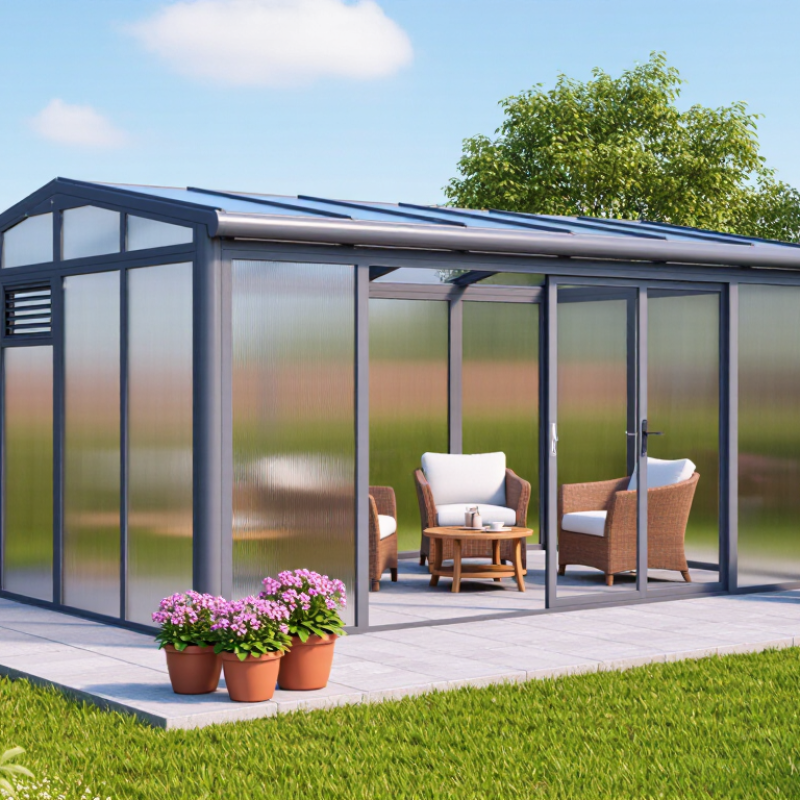
A detachable sunroom is an enclosed outdoor space designed to be assembled and taken down without becoming a permanent room addition. Its frame, roof, and wall panels connect through removable fittings rather than fixed construction. Depending on the design, the walls may use clear panels, mesh, or a mix of both. Think of a patio shelter with more protection from wind, insects, and light rain. Not a year-round insulated extension.
The practical details matter more than the label. Check how the frame attaches to the ground, how long setup takes, and whether panels can be replaced individually. A soft floor on uneven paving may wobble, while tightly sealed panels can trap heat on a sunny afternoon. Airflow matters. Measure the doorway and the furniture you plan to keep inside; a narrow entrance can make a roomy-looking structure awkward to use. Also review the care instructions and local weather limits before buying. “Detachable” does not automatically mean easy to move or suitable for every season. That distinction is easy to miss. A useful choice fits your patio, storage space, and tolerance for taking it down when conditions turn rough.
A detachable sunroom is an enclosure designed to be removed or disassembled, rather than permanently built as an addition. The best choice depends on your climate, intended use, installation surface, and local building requirements.
| Type | Typical enclosure | Best suited for | Weather protection | Removal and storage | Key buying checks |
|---|---|---|---|---|---|
| Seasonal fabric sunroom | Fabric panels on a lightweight frame; some designs include screened sections. | Warm-weather use, shade, and basic protection from insects. | Generally intended for mild conditions. Fabric enclosures should not be assumed to withstand heavy snow or strong winds unless specifically rated for them. | Often easier to take down and store than rigid-panel structures; fabric must be dry before storage to help prevent mildew. | Check frame anchoring, fabric care instructions, wind guidance, and whether replacement panels are available. |
| Screened seasonal enclosure | Mesh screens with a frame, sometimes with removable weather panels. | Outdoor dining and relaxing where airflow and insect control matter more than full weather protection. | Screens do not provide a sealed barrier against rain, cold, or wind. Optional panels may improve protection but vary by design. | Usually designed for seasonal use; confirm how screens and any added panels attach and store. | Look for secure door closures, repairable mesh, stable anchoring, and clear guidance for panel installation. |
| Rigid-panel modular enclosure | Framed sections with clear rigid panels, commonly designed to be assembled in modules. | Users who want more shelter and a sturdier feel than a fabric or screen enclosure. | Protection depends on panel material, seals, frame, anchoring, and the structure’s tested limits. It is not automatically suitable for year-round use. | Can be disassembled, but rigid parts may be heavier and need more protected storage than fabric components. | Verify panel replacement options, connection details, drainage, wind and snow limits, and whether the base must be fixed in place. |
| Freestanding portable sun shelter | A separate framed shelter with open, screened, or removable side panels. | A patio or garden where the enclosure should not attach directly to the house. | Varies by roof and side-panel design; open-sided versions provide shade but limited protection from driving rain and cold. | May be movable or dismantled, but size, frame weight, and required anchoring affect how practical that is. | Check footprint, surface requirements, anchoring method, drainage, and whether the unit must be taken down in severe weather. |
Quick guide: Choose a screened enclosure for airflow and insect control, a fabric design for seasonal flexibility, or a rigid-panel modular design when greater shelter is a priority. Before buying, confirm the structure’s weather limits, anchoring requirements, removal process, and any local permit or building-code requirements.

Detachable sunrooms usually come in four forms: mesh screen rooms, fabric enclosures, three-season panel systems, and insulated modular rooms. Mesh versions keep bugs out while allowing breezes through. They suit patios used in mild weather. Fabric models are lighter and easier to store, but wind and rain can limit their comfort. Check how the frame anchors to the ground or house.
Three-season systems use removable glazed panels, often with aluminum frames. They block wind better than screens, though they may feel cold in winter. Insulated modular rooms add tighter joints and better-performing glazing. The U.S. Department of Energy estimates that windows account for 25–30% of home heating and cooling energy use. That figure makes glazing worth checking, not just the frame. Good for longer seasons.
Look for the window’s U-factor and solar heat gain coefficient, then compare them with your climate and sun exposure. In practice, seals and drainage can matter as much as the advertised panel type. A small gap may bring in drafts or rain. Also ask whether panels can be removed without tools, and inspect how replacement parts are handled. No system is entirely maintenance-free.
When comparing detachable sunrooms, start with the frame and connection points. A rigid frame should feel steady, while its joints should lock without excessive force. Check how the structure is anchored; soft ground, paving, and a wooden deck may need different solutions.
Small details matter. Inspect seams and zippers, too. These often face repeated strain when panels are opened or removed.
Next, consider the panels and the weather where you live. Clear panels bring in light, but can trap heat on sunny afternoons. Mesh windows improve airflow, though they offer less protection from wind and insects.
Look for materials that suit your typical rain and sun exposure, and check whether replacement panels are available. A tiny sample may not show how a large panel feels in strong wind.
Ease of setup matters if you plan to take the room down seasonally. Check the stated assembly time, packed size, and whether the instructions show each connection clearly.
Also measure the doorway and the space around it; an awkward entrance can make a roomy structure feel cramped. I would not choose by floor area alone.
I might still miss something, but repair access and storage are easy to overlook until the first teardown.
Choosing the best detachable sunroom starts with measuring the space you actually have. Include room for doors to open, chairs to move, and people to pass without brushing the walls. A compact unit can feel brighter and easier to manage, while a larger one offers more seating but may need stronger anchoring. Measure the ground, too. A slightly uneven patio can make setup frustrating.
Materials affect comfort and upkeep. Aluminum frames are light and resist rust, while steel may feel sturdier but needs protection from corrosion. Fabric walls are easy to handle, yet they can sag or wear if left exposed for long periods. Clear panels block wind better and preserve the view, though they may trap heat on sunny afternoons. Small detail, big difference.
Weather resistance depends on more than the frame. Check the roof seams, zippers, corner joints, and how the structure attaches to the ground. Water often finds the weakest seam. For a breezy location, look for secure anchoring and a design suited to regular wind; no detachable shelter should be treated as storm-proof. I would also consider whether parts can be replaced. That detail is easy to overlook, and I still find the trade-offs less tidy than product descriptions suggest.
Choosing a detachable sunroom starts with the space you have, not the largest model you can afford. Measure the patio or deck, then check that doors can open and walkways remain clear. Note afternoon sun, prevailing wind, and nearby trees. These details affect comfort and upkeep. A compact room may feel more useful than a larger one that blocks access or overheats. Check the frame, panel material, ventilation, and anchoring method. Match them to your local weather, and follow the maker’s installation guidance.
Set a complete budget before comparing options. Include delivery, assembly tools, flooring, and replacement panels—not just the listed price. A sturdy frame and repairable panels may cost more initially but can reduce frustration later. Still, no detachable room is maintenance-free. Fabric can need cleaning, and clear panels may show scratches or condensation. Ask how parts are replaced and what care the materials require. If possible, inspect a display model; photos can hide cramped corners and awkward entryways.
Tips: Measure twice, including the height beneath eaves. Test your layout with tape on the ground. Leave room for airflow and furniture. Keep a little budget aside for unexpected setup needs. That cushion matters. A sunroom that fits your routine and site is usually a better buy than one chosen on appearance alone.


For those larger-sized parts, or smaller quantity runs, we have 2 independent powder coat booths and ovens. The quality, durability and affordability of today’s powder coating finishes make this the process of choice for world-class companies.
Powder coating advantages over other forms of coating are many. Materials used in the Powder coating process can be metals and non-metals that come in a multitude of thicknesses, textures, colors, etc. Another of Powder coating’s biggest advantages over conventional coatings is its ability to create finishes in many different textures. Powder Coating Booths allow us the ability to apply these advantages to large products.
Tri-State Fabricators runs a full-service conveyor line for painting. Wet painting can provide protection or decoration to many different part styles. From start to finish, every project is easier to undergo random and point-based inspection by our skilled painting team.
Advantages to our Wet Paint Line are these lines start with product prep and ends with a thorough inspection of a high quality finished product. Our ability to complete large and small projects with a superior finish and doing so in a timely and economical fashion. This passes along the savings in production to our customers. When powder coating ins not an option, our Wet Paint Line gets the job done right the first time.
When the parts get big and heavy we roll-out our custom paint racks and oversize booth. By utilizing our partnerships with all the major paint brands, we can match virtually any color with wet paint.
The advantages of having access to a Wet Paint Booth are many. Large projects of many different shapes can be loaded into the booth. The Wet Paint Booth offers an environment that is much more controlled than a typical parts painting operation.
Not only are they used because of their controlled environment, but they’re are also advantageous when it comes to applying paint to parts that are needed in industries that require specialty coatings such as medical, aerospace, etc.
Our military forces have some very high standards when it comes to the finish of their vehicles and equipment. From the first pre-treatment step to final coat, it takes a great deal of knowledge and experience to protect the men and women of our armed forces. They deserve only the best, and Tri-State Fabricators provides it.
All of our processes are closely monitored by our staff and management teams. Both of which are highly trained in the processes of metal fabrication and finishing. Tri-State Fabricators’ goal is to always fully satisfy each and every customer, including the military. We will always put a 110% into what we do.
Abrasive media blasting is an excellent way to remove old paint, rust, and increase the paint/powder adhesion. Glass beads produce a much smoother and brighter finish than angular abrasives; leaving the part clean yet without any dimensional change. Chemically inert and environmentally friendly, we can recycle our beads approximately 30 times; making them a more preferred method of metal cleaning or surface finishing.
Advantages to Glass Bead Blasting are many. Glass bead blast media is used when a project is needing rough surfaces need to become smooth for applications of coatings such as paint. It is typically used to clean paint and rust from a product surface without deforming the surface it is being used on. Overall, compared to many other blasting media, Glass Bead Blasting is a very economical choice and those savings are always passed on to our customers.
Tri-State Fabricators utilize a zinc phosphate wash to clean and etch the material to ensure the best paint adhesion possible. The unique design of our 3-stage wash system does the work like a 5-stage. From Cleaning and rinsing to conversion coating and post-treatment, Our Part Washing process is a complete service and works throughout the fabrication service and the finishing service.
Along with the previously mentioned benefits, Curing is a vital chemical reaction that leaves the product finish hard and relatively safe from mild abrasion and aggressive corrosion. This process can be done in more than one way; ambient air-dry or in curing ovens at temps that exceed 240°.
From fixing paint mistakes (someone else’s of course) to simply cleaning our paint line hooks, our burn-off oven is put to good use. After a quick burn-off, a little clean up, and a fresh coat of paint, your parts will look better than new.
Why does our Burn-Off Oven work so well? Because super heating the air around parts turns the materials into ashes. From paint and powder coatings to rubber and machining oils, high temps do the job without degrading the integrity of the part.
Masking is a vital part of producing high quality products. We have die-cut masking patterns to protect machined surfaces as well as a wide range of plugs and caps to protect threaded holes and bolts. We provide permanent and temporary masking.
Masking allows the selected sections of a product to be protected from a fabrication or finishing service. This can be with both chemicals when etching and tapes, paints when only finishing just a section of the product. Masking is great in aiding the customization process of a project.
Screen printing is a photographic process that transfers artwork onto a porous nylon screen which allows colored ink to flow through the screen and be deposited on an aluminum or plastic component. We can generally have just about any design created onto a screen for your parts.
Some of the advantages of Screen Printing are, brand recognition for your business displaying on your products, assembly instructions, product warnings/hazards, etc. Tri-State Fabricators produces Screen Printing of the highest quality so you know it’s durable.
Metal Finishing is the art of treating the exterior portion of product, often metal but can also be made of other materials, so that the surface is clean and free of any debris. Then the process of applying coats or either paint of powder coat takes place. This coating process improves the quality of the product in both appearance and resistance to wear and corrosion.
Tri-State Fabricators, Inc., understands that a project typically isn’t complete until a high-quality finish has been added to your product. This is why our painting and powder coating teams continuously inspect the products throughout the Metal Finishing process.

