


Choosing the right Crushing Machine in 2026 requires more than comparing price tags and motor power. A suitable model must match the material, required output, feed size, site conditions, and maintenance capacity. A jaw crusher may handle hard rock reliably, while an impact crusher can produce a better-shaped aggregate for construction projects. Cone crushers often suit secondary or tertiary stages, but their performance depends heavily on correct settings and steady feeding.
Start with the material.
Consider abrasiveness, moisture, hardness, and contamination. A quarry processing granite needs different wear parts than a recycling yard handling concrete and steel fragments. Operators should inspect discharge size, production records, dust controls, noise limits, and emergency systems before making a purchase. Energy use matters too, especially where fuel costs and emissions targets affect daily operations. Manufacturer specifications provide useful guidance, but field tests and references from similar sites are more dependable.
No machine is perfect. A powerful unit may create higher maintenance costs. A compact design may limit future capacity. These trade-offs deserve honest review. Ask suppliers about liner life, spare-part availability, service response times, training, and warranty exclusions. Reliable decisions also require checking local safety standards and environmental requirements. A detailed comparison may reveal that the cheapest Crushing Machine becomes expensive after several months of downtime. Practical experience, verified data, and independent technical advice can reduce that risk, although unexpected conditions will still challenge even a carefully selected system.
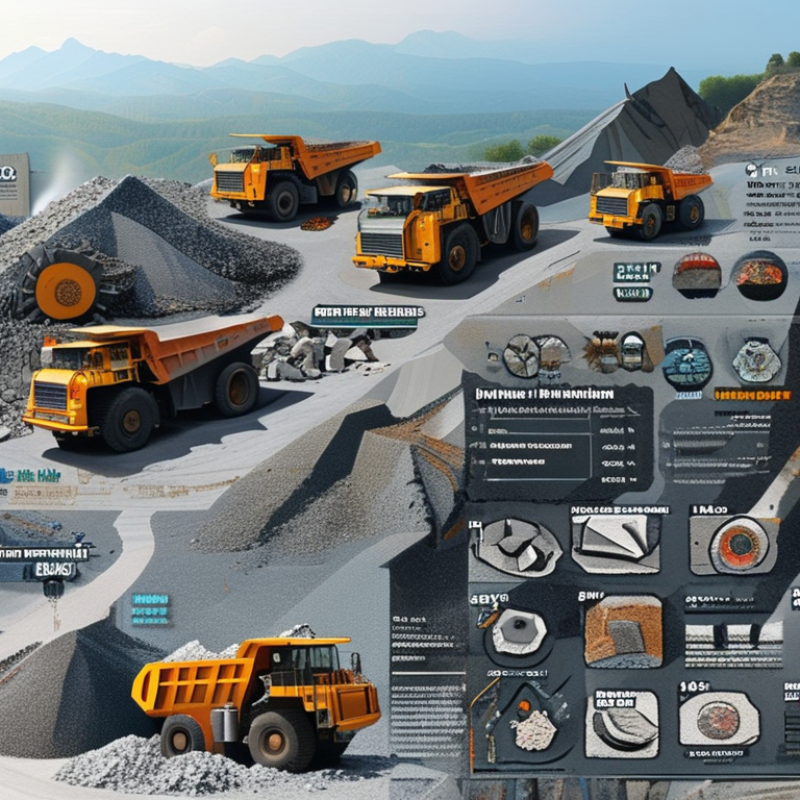
Start with measurable feed data, not a machine catalogue. Record the largest lump in mm, typical feed size, moisture, and rock hardness. A 900 mm boulder needs a different inlet than 250 mm quarry feed. The U.S. Geological Survey estimated U.S. crushed-stone production at about 1.5 billion metric tons in 2023. That scale shows why small capacity errors can become expensive quickly.
State capacity as a real operating range in t/h. Do not rely only on the advertised maximum. Ask for performance at your feed gradation, moisture level, and closed-side setting. Then define the product target in mm, such as 0–25 mm or 10–40 mm. Include fines limits and oversize tolerance. A target of 100 t/h at 25 mm is incomplete without a specified feed size and material type. I have seen projects miss forecasts because “capacity” meant ideal, dry-feed conditions. That assumption deserves challenge.
Tips: Measure the feed pile over several shifts. Keep laboratory sieve results, not visual estimates. Compare P80 and final-screen cuts. Leave practical margin for wear, wet weather, and operator changes. A 10% buffer may be sensible, but it should come from site records, not habit.
Reference: U.S. Geological Survey, Mineral Commodity Summaries 2024, “Stone, Crushed.”

Choosing the best crushing machine in 2026 starts with the rock, not the price tag. Match hardness and abrasion before comparing capacity or power.
The Mohs scale estimates how easily minerals scratch. Soft limestone may sit near 3, while quartz-rich rock approaches 7. This difference affects crushing force, chamber design, and liner selection. Hard stone usually demands stronger compression. Brittle stone may respond well to impact crushing, but abrasive stone can quickly damage blow bars and other wear parts.
A·I. Wear Index A·I. Wear Index adds another practical layer. It estimates how aggressively material wears steel during crushing. A high index signals higher maintenance risk, even when the rock is not extremely hard. Ask for the test method, sample condition, and laboratory results. Values can vary between procedures. Do not treat one number as absolute.
Watch the feed, too.
A field sample with sharp quartz grains can cut equipment faster than a smoother sample with similar Mohs hardness. Moisture, particle size, and feeding habits also change performance. A careful trial should record throughput, product shape, power use, and wear after a measured tonnage. This takes time, but guessing often costs more. I have found that a simple hardness chart is useful, yet incomplete. Real quarry material is uneven, and laboratory confidence should never replace site evidence.
The useful starting point is the reduction ratio: feed size divided by product size. A 6:1 ratio means a 600-millimeter feed may produce 100-millimeter material. In 2024, the U.S. Geological Survey’s Mineral Commodity Summaries 2025 estimated domestic crushed stone output at about 1.5 billion metric tons. That scale makes energy, wear, and grading practical concerns, not brochure claims.
Test the actual feed. Not the catalog sample.
Jaw crushers suit primary crushing, with a typical planning range of 6:1–8:1. They accept large, irregular rock and create a manageable downstream feed.
Cone crushers commonly operate at 3:1–6:1. Their narrower reduction often suits secondary or tertiary stages. A lower ratio does not mean weaker performance. It may provide steadier grading and lower unnecessary wear.
Impact crushers can reach about 10:1, making them attractive for sharper reduction in softer or moderately abrasive materials. That sounds attractive. However, high reduction can increase wear, fines, and energy demand when the feed is hard.
Moisture also changes real performance. Use laboratory trials and sieve analysis under ASTM C136/C136M before choosing equipment. A 10:1 claim may collapse in the field.
This is where my own judgment needs restraint: ratio alone cannot predict capacity, product shape, or maintenance cost.
How to Choose the Best Crushing Machine in 2026?
Energy consumption should be measured before comparing machine prices. Bond’s Law estimates grinding energy from feed size, product size, and ore hardness. The common formula uses the Bond Work Index, F80, and P80 values. F80 describes the feed size, while P80 describes the final product size. A laboratory work index test gives more reliable results than a supplier’s general estimate. Real ore is inconsistent. Moisture, clay, and fractures can change power demand during one shift.
Operating cost per tonne provides a clearer purchasing comparison. Divide total hourly costs by the actual tonnes produced per hour. Include electricity, wear parts, labor, maintenance, and planned downtime. For example, a 250 kW machine may appear efficient at 100 tonnes per hour. Its cost rises sharply if blocked material reduces output to 65 tonnes. Record amperage, belt scale readings, liner life, and stoppage minutes during site trials. Do not trust nameplate capacity alone.
Tips: Request energy data using your actual F80 and P80 targets. Confirm whether the quoted Bond Work Index uses metric or short-ton units. Measure wet and dry feed separately. Keep a small reserve for seasonal moisture changes. I have seen low-cost selections fail because wear costs were ignored. That mistake is expensive. A spreadsheet should show cost per tonne under normal, wet, and reduced-throughput conditions.
Start with safety. Check fixed guards, emergency stops, clear warning labels, and safe access around the feed opening. A practical site test should confirm that controls remain reachable during dust, noise, and poor visibility. Ask for risk assessments, operator instructions, and conformity documents. Do not trust appearance alone. A clean machine can still hide worn bearings or damaged wiring.
Measure emissions before purchase. Review dust-control performance, noise levels, fuel use, and exhaust treatment for engine-powered equipment. Confirm whether the machine meets the environmental limits applying to your location in 2026. Requirements may differ between regions and project types. Request recent test records, not only sales estimates. Electric drives can reduce local exhaust emissions, but their full impact depends on the electricity source and maintenance quality. Small detail, big consequence.
Maintenance decides long-term reliability. Inspect inspection doors, lubrication points, belt tension systems, liners, and replacement access. Ask how quickly common wear parts can be changed on site. A machine that needs special tools may lose valuable production hours. Keep digital or paper service records, including vibration readings and filter changes. My own evaluation would include a trial with the actual feed material, because laboratory results can look better than field conditions. Leave room for doubt. Recheck the supplier’s 2026 compliance claims with the relevant authority or an independent technical specialist.


For those larger-sized parts, or smaller quantity runs, we have 2 independent powder coat booths and ovens. The quality, durability and affordability of today’s powder coating finishes make this the process of choice for world-class companies.
Powder coating advantages over other forms of coating are many. Materials used in the Powder coating process can be metals and non-metals that come in a multitude of thicknesses, textures, colors, etc. Another of Powder coating’s biggest advantages over conventional coatings is its ability to create finishes in many different textures. Powder Coating Booths allow us the ability to apply these advantages to large products.
Tri-State Fabricators runs a full-service conveyor line for painting. Wet painting can provide protection or decoration to many different part styles. From start to finish, every project is easier to undergo random and point-based inspection by our skilled painting team.
Advantages to our Wet Paint Line are these lines start with product prep and ends with a thorough inspection of a high quality finished product. Our ability to complete large and small projects with a superior finish and doing so in a timely and economical fashion. This passes along the savings in production to our customers. When powder coating ins not an option, our Wet Paint Line gets the job done right the first time.
When the parts get big and heavy we roll-out our custom paint racks and oversize booth. By utilizing our partnerships with all the major paint brands, we can match virtually any color with wet paint.
The advantages of having access to a Wet Paint Booth are many. Large projects of many different shapes can be loaded into the booth. The Wet Paint Booth offers an environment that is much more controlled than a typical parts painting operation.
Not only are they used because of their controlled environment, but they’re are also advantageous when it comes to applying paint to parts that are needed in industries that require specialty coatings such as medical, aerospace, etc.
Our military forces have some very high standards when it comes to the finish of their vehicles and equipment. From the first pre-treatment step to final coat, it takes a great deal of knowledge and experience to protect the men and women of our armed forces. They deserve only the best, and Tri-State Fabricators provides it.
All of our processes are closely monitored by our staff and management teams. Both of which are highly trained in the processes of metal fabrication and finishing. Tri-State Fabricators’ goal is to always fully satisfy each and every customer, including the military. We will always put a 110% into what we do.
Abrasive media blasting is an excellent way to remove old paint, rust, and increase the paint/powder adhesion. Glass beads produce a much smoother and brighter finish than angular abrasives; leaving the part clean yet without any dimensional change. Chemically inert and environmentally friendly, we can recycle our beads approximately 30 times; making them a more preferred method of metal cleaning or surface finishing.
Advantages to Glass Bead Blasting are many. Glass bead blast media is used when a project is needing rough surfaces need to become smooth for applications of coatings such as paint. It is typically used to clean paint and rust from a product surface without deforming the surface it is being used on. Overall, compared to many other blasting media, Glass Bead Blasting is a very economical choice and those savings are always passed on to our customers.
Tri-State Fabricators utilize a zinc phosphate wash to clean and etch the material to ensure the best paint adhesion possible. The unique design of our 3-stage wash system does the work like a 5-stage. From Cleaning and rinsing to conversion coating and post-treatment, Our Part Washing process is a complete service and works throughout the fabrication service and the finishing service.
Along with the previously mentioned benefits, Curing is a vital chemical reaction that leaves the product finish hard and relatively safe from mild abrasion and aggressive corrosion. This process can be done in more than one way; ambient air-dry or in curing ovens at temps that exceed 240°.
From fixing paint mistakes (someone else’s of course) to simply cleaning our paint line hooks, our burn-off oven is put to good use. After a quick burn-off, a little clean up, and a fresh coat of paint, your parts will look better than new.
Why does our Burn-Off Oven work so well? Because super heating the air around parts turns the materials into ashes. From paint and powder coatings to rubber and machining oils, high temps do the job without degrading the integrity of the part.
Masking is a vital part of producing high quality products. We have die-cut masking patterns to protect machined surfaces as well as a wide range of plugs and caps to protect threaded holes and bolts. We provide permanent and temporary masking.
Masking allows the selected sections of a product to be protected from a fabrication or finishing service. This can be with both chemicals when etching and tapes, paints when only finishing just a section of the product. Masking is great in aiding the customization process of a project.
Screen printing is a photographic process that transfers artwork onto a porous nylon screen which allows colored ink to flow through the screen and be deposited on an aluminum or plastic component. We can generally have just about any design created onto a screen for your parts.
Some of the advantages of Screen Printing are, brand recognition for your business displaying on your products, assembly instructions, product warnings/hazards, etc. Tri-State Fabricators produces Screen Printing of the highest quality so you know it’s durable.
Metal Finishing is the art of treating the exterior portion of product, often metal but can also be made of other materials, so that the surface is clean and free of any debris. Then the process of applying coats or either paint of powder coat takes place. This coating process improves the quality of the product in both appearance and resistance to wear and corrosion.
Tri-State Fabricators, Inc., understands that a project typically isn’t complete until a high-quality finish has been added to your product. This is why our painting and powder coating teams continuously inspect the products throughout the Metal Finishing process.

