How to Choose the Best CNC Bending Machine for Your Needs?
Choosing the best Cnc Bending Machine is crucial for any manufacturing business. The right machine can enhance productivity and ensure precision in metal fabrication. However, the flood of options can often overwhelm buyers.
When selecting a CNC bending machine, it is essential to consider multiple factors. For instance, think about your production volume and the types of materials you'll use. This choice directly affects the machine's capacity and capabilities. Many companies underestimate the importance of these details. They end up with machines that do not meet their actual needs.
Additionally, evaluate the machine's features and specifications thoroughly. Look for advanced technology that boosts efficiency and reduces errors. Reliability is key; you want a machine that performs consistently. Ignoring these aspects can lead to costly mistakes. So, take your time, and don’t rush. The acquisition of your CNC bending machine should reflect your requirements and future goals.
Understanding CNC Bending Machines: Types and Applications
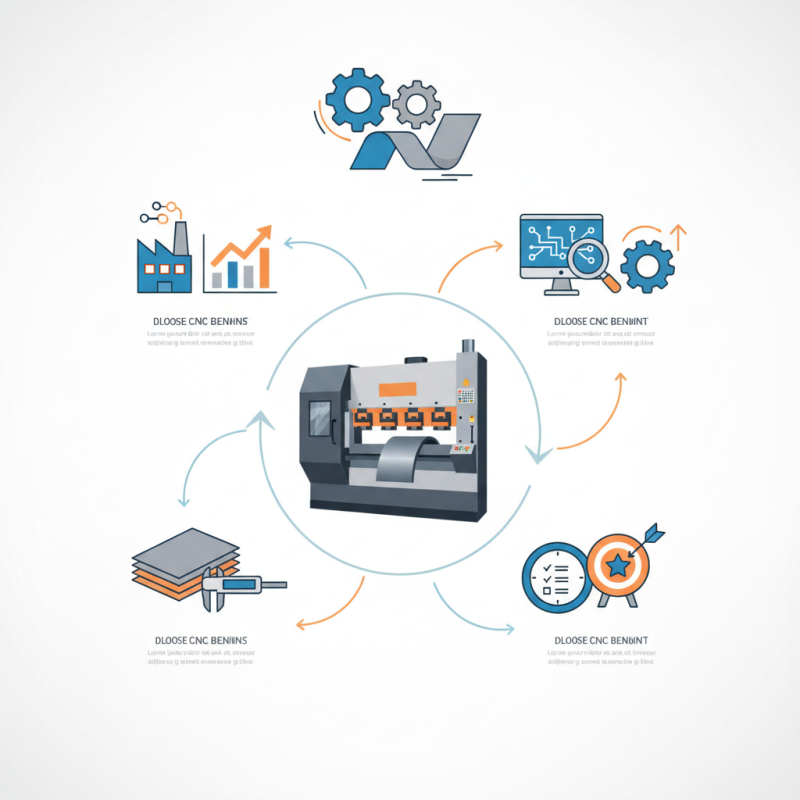
CNC bending machines play a crucial role in metal fabrication. They are utilized in various industries, including automotive, aerospace, and construction. Understanding the types and applications of these machines helps in selecting the best one for your needs. According to industry reports, the global CNC bending machine market is expected to grow by 5.6% annually. This growth is driven by advancements in automation and the increasing demand for precision.
There are several types of CNC bending machines available today. Press brakes are commonly used for bending sheet metal. These machines can handle various thicknesses and materials. A hydraulic press brake offers high force and precision, making it suitable for heavy-duty applications. On the other hand, electric bending machines provide energy efficiency and lower operational costs. It’s critical to assess your specific applications, as the wrong machine can lead to inefficiencies.
Applications for CNC bending machines vary greatly. They are used to create components like frames, brackets, and enclosures. The accuracy achieved with CNC technology can significantly reduce waste and rework. However, choosing the wrong type based on material or thickness can lead to challenges. Manufacturers often struggle with adapting machines to different production needs. Understanding these nuances is essential in ensuring your operation runs smoothly.
Comparison of Different Types of CNC Bending Machines
Assessing Your Production Needs: Volume and Material Considerations
Choosing the right CNC bending machine requires careful consideration of your production needs, particularly the volume and material types you will work with. According to industry reports, nearly 70% of manufacturers experience inefficiencies due to misjudged capacity needs. Understanding your production volume is essential. A low-volume operation may require less expensive and simpler machines. In contrast, high-volume production benefits from more advanced, automated equipment.
Material considerations significantly impact your decision as well. Different materials require different bending techniques. For instance, aluminum and steel have unique properties. For example, the bending angle of aluminum is more forgiving than that of stainless steel. Reports indicate that about 40% of bending mistakes derive from selecting the wrong settings for specific materials.
Assessing both your volume and material needs will help refine your requirements. Machines that are under or over-specified can lead to significant costs. It’s important to reflect on your production goals and make adjustments as needed. Analyzing past data can offer insights, but flexibility is vital as trends evolve. Errors in initial assessments can affect long-term productivity. Making informed choices now will serve you better in the future.
Key Features to Evaluate: Accuracy, Speed, and Control Systems
When selecting a CNC bending machine, three key features stand out: accuracy, speed, and control systems. Accuracy is vital for ensuring that your bends meet precise specifications. Machines with higher accuracy minimize errors and reduce material waste. A small deviation can lead to costly mistakes in production. Look for machines that offer enhanced measuring and feedback systems to improve precision.
Speed is another crucial factor. A fast machine increases productivity and reduces lead times. However, speed should not compromise the quality of bends. It is essential to find a balance between quick operations and the integrity of the final product. Machines that allow users to adjust speed settings can be beneficial. This flexibility ensures you can meet varying project demands.
Control systems play a pivotal role in usability and automation. Advanced control systems simplify operation, making it easier to create complex bends. User-friendly interfaces can reduce training time for operators. However, technology can overwhelm users if not intuitive enough. Ensure that the machine’s controls are accessible and manageable for your team. These features will help you optimize your production process effectively.
Budgeting for a CNC Bending Machine: Costs and Return on Investment
When investing in a CNC bending machine, it’s essential to consider budgeting thoroughly. The initial cost is crucial, but you must also factor in operational costs. Maintenance fees, utilities, and tooling expenses can add up quickly. Establishing a clear budget helps avoid overspending and ensures you get the best return on investment.
**Tips:** Research various models to compare features and prices. Look for machines that offer reliability and efficiency to minimize costs over time. Evaluate your production needs carefully. If you’re producing custom parts, choose a machine that provides the flexibility to adapt.
Don’t overlook the potential costs associated with downtime. Selecting a machine with a sturdy reputation could reduce unexpected repair expenses. Evaluate warranties and support options as part of your decision. A machine with good customer support can enhance your operational reliability, ultimately impacting your bottom line.
How to Choose the Best CNC Bending Machine for Your Needs? - Budgeting for a CNC Bending Machine: Costs and Return on Investment
| Feature | Standard Option | High-End Option | Estimated Cost (USD) | ROI (Years) |
| Material Type | Mild Steel | Alloy Steel | $50,000 | 2-3 Years |
| Bending Capacity | 100 tons | 200 tons | $80,000 | 1-2 Years |
| Automation Level | Semi-Automatic | Fully Automatic | $120,000 | 2-4 Years |
| Software Compatibility | Basic CAD | Advanced CAD/CAM | $90,000 | 3-5 Years |
| Operating Speed | 15 mm/sec | 30 mm/sec | $110,000 | 2-3 Years |
Choosing the Right Manufacturer: Reputation, Support, and Warranty Options
When selecting a CNC bending machine, choosing the right manufacturer is crucial. A manufacturer's reputation can reflect the quality of their machines. According to industry reports, companies with a solid reputation often invest in advanced technology and skilled engineering teams. This leads to higher-quality products suited for various bending applications.
Support is another critical aspect. Reliable manufacturers provide extensive support, including training and maintenance services. A survey by the Metal Fabrication Association found that 78% of businesses rated post-purchase support as a key factor in their satisfaction. Good support can make a difference when facing technical challenges.
Warranty options are equally important. A robust warranty indicates a manufacturer's confidence in their machines. Typically, warranties should cover major components for at least two years. However, some manufacturers may offer shorter warranties, prompting users to examine their reliability carefully. Incomplete or ambiguous warranty terms can lead to uncertainty. Thus, potential buyers must ask direct questions regarding what is covered and for how long. Evaluating these factors can lead to a more informed decision when choosing a CNC bending machine.





