


Choosing China’s best Oilfield Mud Pump supplier requires more than comparing prices or viewing polished factory photos. Drilling teams need dependable equipment, responsive communication, and evidence of consistent manufacturing quality. A pump may look powerful on paper, yet fail under abrasive mud, high pressure, or long operating hours. That difference matters in the field.
Experience should be visible in practical details. Ask how the supplier selects fluid-end materials, tests pistons, and controls assembly tolerances. Request performance curves, pressure ratings, inspection records, and clear spare-parts lists. Reliable manufacturers can explain maintenance intervals without vague promises. They should also provide installation guidance, operator training, and reachable after-sales support. Small details count. A well-packed valve assembly can prevent costly damage during transport. A clear serial-number system can simplify future service.
Certifications and factory audits add credibility, but documents alone cannot prove performance. Contact previous customers when possible. Ask about delivery accuracy, replacement parts, and response times during unexpected downtime. No checklist is perfect. Some buyers focus heavily on initial cost and overlook energy use or maintenance access. That mistake deserves reflection. The strongest supplier is not always the largest or cheapest. It is the partner that matches pump capacity, drilling conditions, compliance needs, and long-term operating goals. Careful comparison creates confidence before the purchase order is signed.
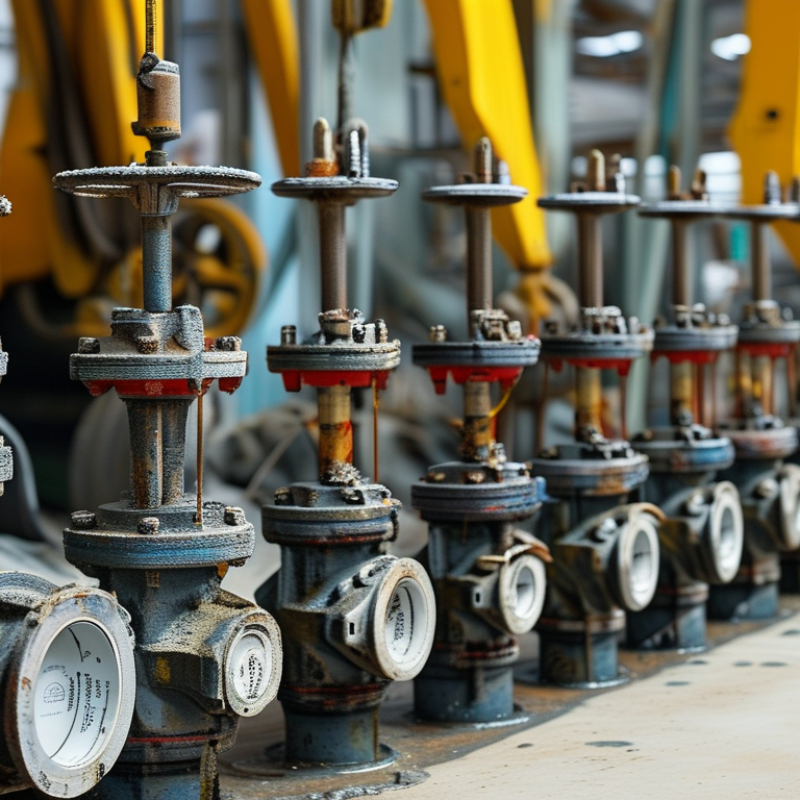
Before contacting a supplier, describe the drilling environment in measurable terms. Record required flow rate, working pressure, fluid density, and operating hours. Include the mud temperature and expected solids content. A pump handling abrasive fluid needs different wear protection than one moving clean water-based mud.
Check the rig’s available power and connection dimensions. Confirm whether the pump will operate continuously, intermittently, or under frequent pressure changes. These details affect piston size, stroke rate, cooling, and spare-parts selection. A practical specification sheet prevents vague quotations. It also helps engineers compare suppliers fairly. Small omissions can create costly delays.
Tips: Ask for pressure-flow curves, material certificates, inspection records, and recommended maintenance intervals. Request test data from conditions similar to yours. Verify noise limits, sealing performance, and emergency shutdown arrangements. Do not accept “high performance” without numbers. A supplier should explain assumptions clearly. That matters in the field.
An experienced supplier will question unrealistic requirements instead of simply accepting them. For example, maximum pressure and maximum flow may not be achievable together. I have seen specifications copied from old projects, with unsuitable temperatures and outdated power data. That mistake is easy to repeat. Review the sheet with operators, maintenance staff, and a qualified drilling engineer before requesting a final offer.

How to Choose China Best Oilfield Mud Pump Supplier?
Choosing a China-based mud pump supplier requires more than comparing prices. Start with pump type. Triplex pumps offer smoother discharge and lower pulsation, while duplex pumps may provide simpler maintenance. Compare rated flow, maximum pressure, stroke length, liner diameter, hydraulic efficiency, and power input. API Spec 7K provides a useful reference for drilling equipment requirements. A supplier should also show tested performance curves, not only catalog figures.
A practical comparison begins with your drilling program. For example, a pump rated at 5,000 psi may not safely deliver that pressure at its maximum flow. Check the pressure-flow envelope carefully. The U.S. Department of Energy identifies pumping systems as important industrial energy-saving targets, so motor efficiency and transmission losses deserve attention. I once overvalued maximum horsepower. That was a poor shortcut. Seal life, fluid-end material, spare-part availability, and vibration data often affect operating cost more than headline power.
Tips: Request a factory acceptance test using documented flow and pressure measurements. Ask for API 7K compliance evidence, inspection records, and at least three operating references. Compare liner life under your expected mud density and solids content. Review the pulsation dampener design. A cheaper pump can become expensive when valves, liners, and expendable parts fail early. Also check welding controls, machining tolerances, quality certificates, and after-sales response times. Independent inspection is worthwhile before shipment, although it cannot replace field testing.
When choosing China’s best oilfield mud pump supplier, inspect the factory, not only the sales presentation.
Manufacturing depth appears in machining accuracy, welding control, assembly space, and testing equipment. Ask to see crankcase machining, fluid-end assembly, and spare-parts storage. Measure how clearly staff explain tolerances, materials, and inspection records.
A reliable supplier should provide traceable heat numbers and documented inspection points. Review ISO 9001 procedures, and request applicable API compliance evidence for the pump design. Certificates alone are not enough. An impressive document may hide weak process control. That possibility deserves attention.
Quality should be tested under conditions resembling your operation. Request hydrostatic tests, pressure records, vibration checks, and performance curves. Confirm who calibrates instruments and how often.
Examine weld reports, nondestructive testing, coating thickness, and final assembly checklists. Talk with technicians, not only managers. Experienced technicians often reveal recurring seal failures or delivery bottlenecks.
Ask for anonymized service data from comparable mud systems. Also verify engineering support, training, warranty terms, and response times. Do not ignore small details. A missing serial plate or vague acceptance test can create costly confusion later.
Supplier evaluation is never perfectly objective. I may overvalue a clean workshop while underestimating after-sales discipline. Use a written scoring sheet, then challenge your own assumptions.
How to Choose China Best Oilfield Mud Pump Supplier?
A reliable supplier should provide verifiable certifications, not scanned documents alone. Check the certificate number, issuing body, validity period, and covered product models. Quality systems such as ISO 9001 can show process control, but they do not prove pump performance. For drilling equipment, confirm whether relevant product standards apply to the exact pump configuration. Request factory test reports, material certificates, and pressure-test records. A short video call with the quality manager can reveal more than a polished brochure. Details matter.
Service support often decides whether a pump stays productive after delivery. Ask about commissioning, operator training, troubleshooting, and emergency response hours. Get these promises written into the quotation or service agreement. Confirm the engineer’s field experience with fluid pressure, valve wear, liner damage, and pulsation problems. Remote support is useful, but not always enough. I would also request two recent customer references, while accepting that every project has different conditions.
Spare parts planning needs careful attention. Request a recommended two-year parts list, prices, interchangeability data, and warehouse locations. Confirm stock for liners, pistons, valves, seals, and expendable fasteners. Delivery terms must state Incoterms, packing standards, inspection arrangements, insurance, documents, and shipment milestones. Clarify who pays for delays or damaged wooden cases. A low initial price can become expensive through missing parts and unclear transport duties. We sometimes overlook this. Do not rely on verbal assurances.
| Evaluation Area | Verification Dimension | Evidence to Request | Recommended Acceptance Benchmark | Potential Risk Signal | Priority | Weight |
|---|---|---|---|---|---|---|
| Certifications | Quality management certification | Current ISO 9001 certificate showing the legal manufacturer, certificate scope, manufacturing location, validity period, and certification body. | The certificate scope should cover the design, manufacture, testing, or servicing of oilfield equipment relevant to the mud pump. | Expired certificate, unclear scope, different legal entity, or certificate that cannot be verified with the issuing body. | High | 10% |
| Certifications | API equipment compliance | Applicable API documentation, license information, product specification, and a current listing in the official API directory when an API monogram or license is claimed. | Confirm that the claimed API requirement applies to the exact mud-pump model, manufacturing site, and ordered configuration. | Generic “API standard” wording without a license number, model scope, current status, or traceable supporting documents. | High | 12% |
| Certifications | Pressure, performance, and material documentation | Factory acceptance test records, hydrostatic or pressure-test records, performance curves, material certificates, and inspection plans. | Test records should identify the pump serial number, test date, test pressure, measured output, test medium, acceptance criteria, and inspector approval. | Only catalog data is provided; no serial-number-based test records or material traceability is available. | High | 10% |
| Certifications | Market-specific conformity | CE documentation for applicable European-market equipment, or other legally required conformity documents for the destination country. | Documents should match the final equipment configuration and identify the applicable regulations, standards, and responsible entity. | A CE logo is shown without a Declaration of Conformity, technical file support, or equipment-specific documentation. | Medium | 5% |
| Technical Capability | Hydraulic and mechanical suitability | Data sheet covering maximum pressure, rated flow, liner size, stroke length, strokes per minute, power requirement, fluid compatibility, and overall dimensions. | The proposed pump should meet the operating pressure and flow requirements with an engineering safety margin defined in the purchase specification. | Pressure and flow are presented without operating conditions, pump speed, liner size, or power-consumption information. | High | 12% |
| Service Support | Technical response and troubleshooting | Written service procedure, contact escalation list, remote troubleshooting process, service-hour coverage, and sample service reports. | A practical procurement benchmark is acknowledgement within one business day and a documented troubleshooting action plan within two business days. | Support is limited to a sales contact, with no named service engineer, escalation route, or response commitment. | High | 10% |
| Service Support | Installation, commissioning, and training | Installation method statement, commissioning checklist, operator manual, maintenance schedule, training agenda, and available field-service options. | Documentation should cover alignment, lubrication, relief-valve checks, start-up, shutdown, preventive maintenance, and troubleshooting. | Manuals are incomplete, translated poorly, or unavailable before purchase; commissioning responsibility is not defined. | Medium | 8% |
| Spare Parts | Critical spare-parts availability | Recommended spare-parts list with part numbers, drawings, material specifications, unit prices, stock status, and replenishment lead times. | The package should identify consumables and critical items such as liners, pistons, valves, seats, packing, seals, bearings, gaskets, and expendable fasteners. | Parts are listed only by informal names, cannot be cross-referenced to drawings, or are available only after a new production run. | High | 10% |
| Spare Parts | Interchangeability and lifecycle support | Parts interchangeability statement, revision-controlled drawings, service-life guidance, warranty terms, and written support-period commitment. | All replacement parts should be traceable to the exact pump model and revision, with clear identification of compatible and non-compatible versions. | Design revisions are not controlled, dimensions differ between documents, or the supplier cannot guarantee future parts support. | High | 8% |
| Delivery Terms | Manufacturing lead time and production schedule | Written quotation showing manufacturing lead time, production milestones, inspection date, packing date, and estimated shipment date. | The supplier should distinguish engineering approval, material procurement, fabrication, testing, packing, and transport time instead of giving one unexplained total. | Lead time begins before technical approval, excludes testing or export documentation, or is described only as “fast delivery.” | High | 8% |
| Delivery Terms | Incoterms and logistics responsibility | Quotation using Incoterms® 2020, named place or port, packing specifications, shipping documents, insurance responsibility, and export-clearance responsibility. | The contract should state the exact delivery term, named location, transfer point of risk, documentation responsibility, and treatment of local charges. | “FOB” or “CIF” is quoted without a named port, or freight, insurance, customs, and unloading responsibilities are not defined. | High | 7% |
| Delivery Terms | Inspection, acceptance, and warranty | Inspection and test plan, factory acceptance test procedure, nonconformity process, warranty period, warranty exclusions, and claim-response procedure. | Payment milestones should be linked to document approval, successful testing, shipment readiness, and agreed acceptance conditions. | Full payment is required before inspection, warranty exclusions are broad, or no remedy is defined for failed acceptance testing. | High | 10% |
| Total Recommended Evaluation Weight | 100% | |||||
When choosing China’s best oilfield mud pump supplier, assess total cost rather than purchase price.
The Energy Institute Statistical Review 2024 recorded global oil production at about 96.4 million barrels per day in 2023. Demand remains significant.
The IEA Oil 2024 report projects demand to reach 105.4 million barrels per day by 2030.
This supports long-term drilling activity, but equipment value still depends on field performance.
Request a complete cost model.
Include freight, commissioning, spare parts, power consumption, maintenance labor, and expected downtime. Check API 7K compliance, pressure-test records, material certificates, and factory acceptance testing. Ask for references from comparable formations and operating pressures.
A low-priced pump may hide expensive valve wear or delayed parts. No scorecard is perfect. Field conditions will expose weak assumptions.
Supplier reliability also means clear warranty terms, remote troubleshooting, technician availability, and realistic delivery dates.
Tips:
Compare five-year ownership cost, not only the quotation. Ask for a recommended spare-parts list and actual lead times. Visit the factory when possible. Inspect machining, assembly control, and testing procedures. Evaluate whether the supplier can modify fluid ends, provide training, and document engineering changes. A dependable partnership should survive pressure, schedule changes, and honest technical disagreement. Erotidme


For those larger-sized parts, or smaller quantity runs, we have 2 independent powder coat booths and ovens. The quality, durability and affordability of today’s powder coating finishes make this the process of choice for world-class companies.
Powder coating advantages over other forms of coating are many. Materials used in the Powder coating process can be metals and non-metals that come in a multitude of thicknesses, textures, colors, etc. Another of Powder coating’s biggest advantages over conventional coatings is its ability to create finishes in many different textures. Powder Coating Booths allow us the ability to apply these advantages to large products.
Tri-State Fabricators runs a full-service conveyor line for painting. Wet painting can provide protection or decoration to many different part styles. From start to finish, every project is easier to undergo random and point-based inspection by our skilled painting team.
Advantages to our Wet Paint Line are these lines start with product prep and ends with a thorough inspection of a high quality finished product. Our ability to complete large and small projects with a superior finish and doing so in a timely and economical fashion. This passes along the savings in production to our customers. When powder coating ins not an option, our Wet Paint Line gets the job done right the first time.
When the parts get big and heavy we roll-out our custom paint racks and oversize booth. By utilizing our partnerships with all the major paint brands, we can match virtually any color with wet paint.
The advantages of having access to a Wet Paint Booth are many. Large projects of many different shapes can be loaded into the booth. The Wet Paint Booth offers an environment that is much more controlled than a typical parts painting operation.
Not only are they used because of their controlled environment, but they’re are also advantageous when it comes to applying paint to parts that are needed in industries that require specialty coatings such as medical, aerospace, etc.
Our military forces have some very high standards when it comes to the finish of their vehicles and equipment. From the first pre-treatment step to final coat, it takes a great deal of knowledge and experience to protect the men and women of our armed forces. They deserve only the best, and Tri-State Fabricators provides it.
All of our processes are closely monitored by our staff and management teams. Both of which are highly trained in the processes of metal fabrication and finishing. Tri-State Fabricators’ goal is to always fully satisfy each and every customer, including the military. We will always put a 110% into what we do.
Abrasive media blasting is an excellent way to remove old paint, rust, and increase the paint/powder adhesion. Glass beads produce a much smoother and brighter finish than angular abrasives; leaving the part clean yet without any dimensional change. Chemically inert and environmentally friendly, we can recycle our beads approximately 30 times; making them a more preferred method of metal cleaning or surface finishing.
Advantages to Glass Bead Blasting are many. Glass bead blast media is used when a project is needing rough surfaces need to become smooth for applications of coatings such as paint. It is typically used to clean paint and rust from a product surface without deforming the surface it is being used on. Overall, compared to many other blasting media, Glass Bead Blasting is a very economical choice and those savings are always passed on to our customers.
Tri-State Fabricators utilize a zinc phosphate wash to clean and etch the material to ensure the best paint adhesion possible. The unique design of our 3-stage wash system does the work like a 5-stage. From Cleaning and rinsing to conversion coating and post-treatment, Our Part Washing process is a complete service and works throughout the fabrication service and the finishing service.
Along with the previously mentioned benefits, Curing is a vital chemical reaction that leaves the product finish hard and relatively safe from mild abrasion and aggressive corrosion. This process can be done in more than one way; ambient air-dry or in curing ovens at temps that exceed 240°.
From fixing paint mistakes (someone else’s of course) to simply cleaning our paint line hooks, our burn-off oven is put to good use. After a quick burn-off, a little clean up, and a fresh coat of paint, your parts will look better than new.
Why does our Burn-Off Oven work so well? Because super heating the air around parts turns the materials into ashes. From paint and powder coatings to rubber and machining oils, high temps do the job without degrading the integrity of the part.
Masking is a vital part of producing high quality products. We have die-cut masking patterns to protect machined surfaces as well as a wide range of plugs and caps to protect threaded holes and bolts. We provide permanent and temporary masking.
Masking allows the selected sections of a product to be protected from a fabrication or finishing service. This can be with both chemicals when etching and tapes, paints when only finishing just a section of the product. Masking is great in aiding the customization process of a project.
Screen printing is a photographic process that transfers artwork onto a porous nylon screen which allows colored ink to flow through the screen and be deposited on an aluminum or plastic component. We can generally have just about any design created onto a screen for your parts.
Some of the advantages of Screen Printing are, brand recognition for your business displaying on your products, assembly instructions, product warnings/hazards, etc. Tri-State Fabricators produces Screen Printing of the highest quality so you know it’s durable.
Metal Finishing is the art of treating the exterior portion of product, often metal but can also be made of other materials, so that the surface is clean and free of any debris. Then the process of applying coats or either paint of powder coat takes place. This coating process improves the quality of the product in both appearance and resistance to wear and corrosion.
Tri-State Fabricators, Inc., understands that a project typically isn’t complete until a high-quality finish has been added to your product. This is why our painting and powder coating teams continuously inspect the products throughout the Metal Finishing process.

