


How to Choose the Best Chemical Eyewash Supplier in China?

Selecting the best Chemical Eyewash supplier in China means looking beyond price and polished product photos. In a plant, workshop, or laboratory, an eyewash unit must be reachable, clearly marked, and dependable when a splash occurs. Seconds matter. The supplier should explain how the unit is activated, what water supply it requires, and how its flow and spray pattern are checked. Ask for current product specifications, installation guidance, maintenance instructions, and traceable quality records. These details help you judge whether equipment suits your site, rather than simply matching a catalog image.

Look closely at materials, connection options, delivery arrangements, and access to replacement parts. A responsive supplier should answer technical questions clearly and identify any limits in the product’s intended use. Request drawings or product documentation before confirming an order, and check that the proposed model fits the installation space and water conditions. A polished brochure can still leave practical questions unanswered; I would not treat it as proof. That is easy to overlook. Compare suppliers using the same criteria, and note where information is missing. A lower quote may be reasonable, but only when the product, support, and documentation are also clear. Careful verification takes time, and no supplier can remove every installation risk. It can, however, make the decision more informed and the equipment easier to maintain.
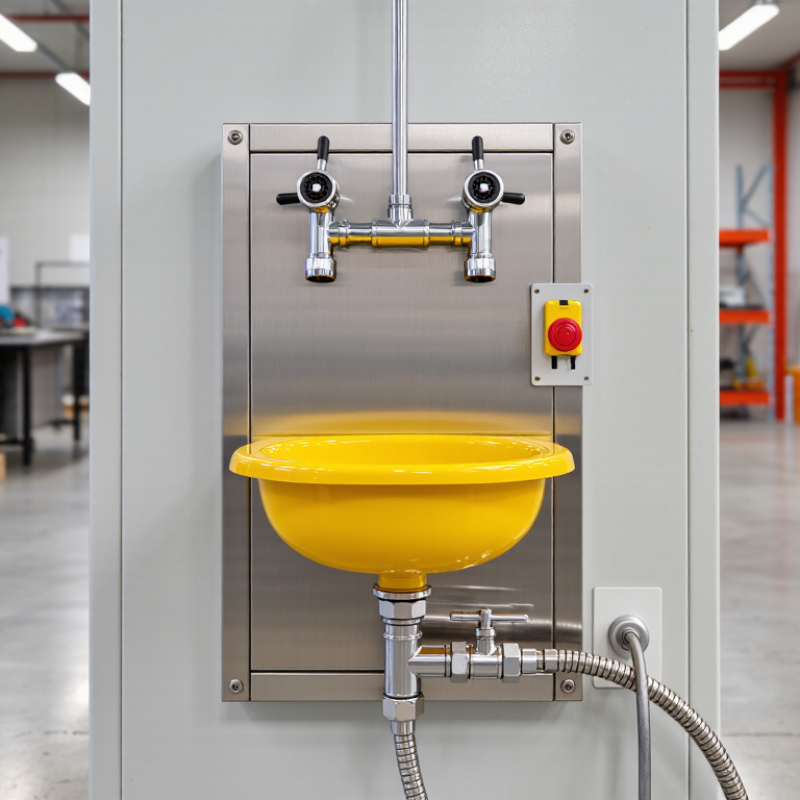
How to Choose the Best Chemical Eyewash Supplier in China?

Define Your Chemical Eyewash Requirements and Workplace Risks

Before comparing chemical eyewash suppliers in China, map the hazards at each workstation. List the chemicals, concentrations, likely splash points, and whether exposure could affect the eyes or face. Check safety data sheets and ask workers where spills or transfer tasks actually happen. Know the splash, not just the room.

Then define practical equipment needs. A bench using corrosive liquids may need an eyewash close to the task, while a larger mixing area may require an eyewash and safety shower. Consider access routes, water supply, drainage, temperature, and freeze risk. Small details matter. A unit blocked by a pallet is not useful in an emergency. A common planning mistake is choosing by price before checking water flow, activation, materials, and maintenance access. The assessment may still miss something; review it with operators and update it after process changes.

Give suppliers a written specification and ask for product drawings, material details, flow-test records, and installation guidance. Confirm how the proposed unit fits your chemicals and site conditions, and check relevant standards for your market. Clear requirements make quotations easier to compare and reduce costly guesswork.


Check Applicable Safety Standards and Product Certifications

When choosing a chemical eyewash supplier in China, check which safety standards apply to your facility and destination market. ANSI/ISEA Z358.1 and EN 15154 are widely used references, but requirements can differ by location and application. Ask the supplier to identify the exact standard and clauses covered by each product. A certificate alone is not enough; confirm it names the same model, configuration, and manufacturer shown in the quotation. Details matter.

Request current test reports, not only a certificate image. Check the issuing laboratory, test date, and whether the report covers water flow, activation, materials, and other relevant performance requirements. Compare the report with the product datasheet and installation instructions. For example, a wall-mounted unit’s bowl, spray heads, and valve should match the tested configuration. Ask for traceable model numbers and clear maintenance guidance in a language your team can use. I would not assume every unit is identical just because paperwork looks complete; that check is easy to miss.

Tips: Ask for the standard number, report, and model match in writing. Verify documents with the issuing body when possible. Keep a copy for purchasing and site inspections. A short video of activation can help, but it does not replace independent test evidence.

Evaluate Supplier Experience, Manufacturing Capacity, and Quality Control

How to Choose the Best Chemical Eyewash Supplier in China?

Evaluate Supplier Experience, Manufacturing Capacity, and Quality Control

A supplier’s experience matters most when it reflects relevant projects, not just years in business. Ask about eyewash units supplied for laboratories, factories, or other workplaces with chemical exposure risks. Request product specifications, installation guidance, and references you can verify. In practice, a polished brochure proves little. Specific answers matter more.

Check manufacturing capacity before relying on promised delivery dates. Ask how production is scheduled, which components are made in-house, and how peak orders affect lead times. A factory tour, live or in person, can reveal assembly steps and storage conditions. Look for organized work areas. Still, a neat floor alone cannot confirm consistent output; ask how the supplier handles defects and replacement parts.

Quality control should cover incoming materials, assembly, and finished-unit testing. Request records showing checks for leaks, spray pattern, water flow, and drainage. Confirm that the test method matches the product configuration you plan to buy. Ask how each batch is identified and whether inspection documents can be shared. Don’t skip the details. No supplier is flawless, and test records may vary in depth. Compare evidence across suppliers, then clarify gaps before placing an order.

How to Choose the Best Chemical Eyewash Supplier in China? — Evaluate Supplier Experience, Manufacturing Capacity, and Quality Control

Use this supplier-evaluation matrix to compare candidates. Assign each criterion a score from 1 (weak or unverified) to 5 (strong and supported by evidence), then calculate the weighted score.

Evaluation Dimension Suggested Weight What to Verify Useful Evidence or Questions Score (1–5)
Industry Experience 15% Relevant experience producing emergency eyewash and safety-shower equipment, rather than general plumbing products alone. Ask for years of relevant production, product history, anonymized project references, and examples of installations in comparable industries. _____
Manufacturing Capacity 20% Whether production equipment, staffing, and processes can support the required model, quantity, and delivery schedule. Request a live or third-party factory audit, production-flow overview, stated lead times, capacity planning details, and information on subcontracted processes. _____
Quality Management and Traceability 20% Documented incoming, in-process, and final inspections, plus a way to trace products and address defects. Review applicable quality-system certificates and their scope, inspection records, material traceability, corrective-action procedures, and sample test reports. Verify certificates with the issuing body where possible. _____
Standards and Product Compliance 15% Whether the offered model has been assessed against the standards and regulations relevant to the destination market and intended application. Ask which edition and clauses of applicable standards, such as ANSI/ISEA Z358.1 or the relevant EN 15154 parts, are claimed. Request model-specific test evidence and confirm local requirements independently. _____
Functional Testing 10% Checks for operation, leakage, flushing performance, and other requirements applicable to the selected product design. Request the written test procedure, acceptance criteria, calibrated-instrument records where applicable, and batch or serial-number-linked results. _____
Materials and Corrosion Suitability 8% Suitability of wetted and exposed materials for the site’s water quality, chemicals, temperature, and environment. Confirm material grades and component specifications in writing; request material certificates or inspection records where needed. Evaluate chemical compatibility for the actual site conditions. _____
Customization and Documentation 7% Ability to meet agreed connection, mounting, material, labeling, and documentation requirements without compromising safety or compliance. Review drawings, datasheets, installation and maintenance instructions, spare-parts lists, and change-control arrangements before approving production. _____
Delivery and Export Readiness 3% Clarity of production lead time, packaging, shipping arrangements, and export documentation for the destination country. Confirm the quoted lead time in the contract, packaging protection, shipping terms, document list, and responsibility for any required destination-market paperwork. _____
Warranty and After-Sales Support 2% Availability of replacement parts, response procedures, and clearly defined warranty coverage. Check warranty terms, exclusions, spare-parts availability, response channels, and the process for reporting and resolving product issues. _____
Total Weighted Score 100% Weighted score = sum of (criterion score ÷ 5 × criterion weight). Maximum score: 100 points. _____ / 100

Evaluation note: Treat unverified claims as unconfirmed. A high weighted score should not replace technical review, destination-market compliance checks, or confirmation that the selected product is suitable for the site’s hazards and installation conditions.

Compare Eyewash Designs, Materials, and Customization Options

When evaluating a chemical eyewash supplier in China, compare the station design, not just the catalogue photograph. A wall-mounted unit can save floor space, while a floor-standing model may suit an open production area. Check bowl depth, spray-head position, and whether users can reach the activation handle quickly. Small details matter.

Material choice should reflect the chemicals, cleaning routines, and environment around the station. Stainless steel may suit some settings, while coated surfaces or specific plastics may be more appropriate elsewhere. Compatibility varies. Ask the supplier to explain the materials used in the bowl, pipework, valves, and seals, and verify them against your site conditions. A polished finish looks reassuring, but appearance alone proves little.

Customization can include inlet and drain locations, pipe connections, signage, and mounting height. Share a layout drawing and expected water-supply details before requesting a quotation. Ask for product drawings, material specifications, and inspection records, then clarify how the supplier checks spray alignment and operation before shipment. There is no perfect layout. A custom option can solve one problem and create another, so review maintenance access and installation space with the people who will use and service the station.

Review Pricing, Delivery, Installation, and After-Sales Support

How to Choose the Best Chemical Eyewash Supplier in China?

A low quotation can hide costs for freight, fittings, commissioning, or replacement parts. Ask for an itemized price that specifies the eyewash model, materials, included accessories, and warranty terms. Check whether the unit suits your site’s water supply and installation conditions. A clear drawing can prevent a costly mismatch between pipe connections and the planned location.

Tips: Request a written delivery schedule, not just an estimated dispatch date. Confirm packaging protects the bowl, nozzles, and valves during transport. Ask who handles installation guidance and what information they need from your site team. Small details matter.

After delivery, confirm the supplier can provide setup instructions, operating checks, and accessible spare parts. Ask how quickly technical support responds, and whether help is available across your time zone. Request a simple commissioning checklist covering water flow, valve operation, and leak inspection. Keep records of the checks. I have seen purchasing decisions lean too heavily on price; it is easy to overlook support until a fitting fails. Compare suppliers using the same written questions, then weigh the full cost and practical service—not just the first quote.

How to Choose the Best Chemical Eyewash Supplier in China

Suggested evaluation weights for comparing suppliers

Use these suggested weights as a starting point, not as market survey results. Compare written quotations, confirmed lead times, installation scope, warranty and service terms, and documentation against your site’s applicable safety requirements.

Powder Coat Booths

For those larger-sized parts, or smaller quantity runs, we have 2 independent powder coat booths and ovens. The quality, durability and affordability of today’s powder coating finishes make this the process of choice for world-class companies.

Powder coating advantages over other forms of coating are many. Materials used in the Powder coating process can be metals and non-metals that come in a multitude of thicknesses, textures, colors, etc. Another of Powder coating’s biggest advantages over conventional coatings is its ability to create finishes in many different textures. Powder Coating Booths allow us the ability to apply these advantages to large products.

Wet Paint Line

Tri-State Fabricators runs a full-service conveyor line for painting. Wet painting can provide protection or decoration to many different part styles. From start to finish, every project is easier to undergo random and point-based inspection by our skilled painting team.

Advantages to our Wet Paint Line are these lines start with product prep and ends with a thorough inspection of a high quality finished product. Our ability to complete large and small projects with a superior finish and doing so in a timely and economical fashion. This passes along the savings in production to our customers. When powder coating ins not an option, our Wet Paint Line gets the job done right the first time.

Wet Paint Booths

When the parts get big and heavy we roll-out our custom paint racks and oversize booth. By utilizing our partnerships with all the major paint brands, we can match virtually any color with wet paint.

The advantages of having access to a Wet Paint Booth are many. Large projects of many different shapes can be loaded into the booth. The Wet Paint Booth offers an environment that is much more controlled than a typical parts painting operation.

Not only are they used because of their controlled environment, but they’re are also advantageous when it comes to applying paint to parts that are needed in industries that require specialty coatings such as medical, aerospace, etc.

Military CARC

Our military forces have some very high standards when it comes to the finish of their vehicles and equipment. From the first pre-treatment step to final coat, it takes a great deal of knowledge and experience to protect the men and women of our armed forces. They deserve only the best, and Tri-State Fabricators provides it.

All of our processes are closely monitored by our staff and management teams. Both of which are highly trained in the processes of metal fabrication and finishing. Tri-State Fabricators’ goal is to always fully satisfy each and every customer, including the military. We will always put a 110% into what we do.

Glass-Bead Blasting

Abrasive media blasting is an excellent way to remove old paint, rust, and increase the paint/powder adhesion. Glass beads produce a much smoother and brighter finish than angular abrasives; leaving the part clean yet without any dimensional change. Chemically inert and environmentally friendly, we can recycle our beads approximately 30 times; making them a more preferred method of metal cleaning or surface finishing.

Advantages to Glass Bead Blasting are many. Glass bead blast media is used when a project is needing rough surfaces need to become smooth for applications of coatings such as paint. It is typically used to clean paint and rust from a product surface without deforming the surface it is being used on. Overall, compared to many other blasting media, Glass Bead Blasting is a very economical choice and those savings are always passed on to our customers.

Part Washing

Tri-State Fabricators utilize a zinc phosphate wash to clean and etch the material to ensure the best paint adhesion possible. The unique design of our 3-stage wash system does the work like a 5-stage. From Cleaning and rinsing to conversion coating and post-treatment, Our Part Washing process is a complete service and works throughout the fabrication service and the finishing service.

Along with the previously mentioned benefits, Curing is a vital chemical reaction that leaves the product finish hard and relatively safe from mild abrasion and aggressive corrosion. This process can be done in more than one way; ambient air-dry or in curing ovens at temps that exceed 240°.

Burn-Off Oven

From fixing paint mistakes (someone else’s of course) to simply cleaning our paint line hooks, our burn-off oven is put to good use. After a quick burn-off, a little clean up, and a fresh coat of paint, your parts will look better than new.

Why does our Burn-Off Oven work so well? Because super heating the air around parts turns the materials into ashes. From paint and powder coatings to rubber and machining oils, high temps do the job without degrading the integrity of the part.

Masking

Masking is a vital part of producing high quality products. We have die-cut masking patterns to protect machined surfaces as well as a wide range of plugs and caps to protect threaded holes and bolts. We provide permanent and temporary masking.

Masking allows the selected sections of a product to be protected from a fabrication or finishing service. This can be with both chemicals when etching and tapes, paints when only finishing just a section of the product. Masking is great in aiding the customization process of a project.

Screen Printing

Screen printing is a photographic process that transfers artwork onto a porous nylon screen which allows colored ink to flow through the screen and be deposited on an aluminum or plastic component. We can generally have just about any design created onto a screen for your parts.

Some of the advantages of Screen Printing are, brand recognition for your business displaying on your products, assembly instructions, product warnings/hazards, etc. Tri-State Fabricators produces Screen Printing of the highest quality so you know it’s durable.

Metal Finishing

Metal Finishing is the art of treating the exterior portion of product, often metal but can also be made of other materials, so that the surface is clean and free of any debris. Then the process of applying coats or either paint of powder coat takes place. This coating process improves the quality of the product in both appearance and resistance to wear and corrosion.

Tri-State Fabricators, Inc., understands that a project typically isn’t complete until a high-quality finish has been added to your product. This is why our painting and powder coating teams continuously inspect the products throughout the Metal Finishing process.
