


Choosing the China best Boltless Rivet Rack is not simply a price comparison. It is a storage decision with long-term consequences. A rack may look strong in a product photograph, yet feel unstable after repeated loading. The difference often hides in steel thickness, beam connections, bracing, and quality control.
James A. Tompkins, a respected warehouse design expert, once stated, “The warehouse is a system, not simply a building.” This principle matters when selecting a Boltless Rivet Rack from China. The rack must fit your products, floor space, handling methods, and expected growth. Measure pallet sizes, carton depths, aisle widths, and ceiling height before contacting suppliers. Ask for load ratings based on actual shelf levels, not attractive maximum figures. Request steel grades, coating details, tolerance data, and assembly instructions.
Look closely at the rivet connections. They should seat firmly, without excessive movement or sharp edges. Check whether the shelf panels remain level under realistic loads. A sample order can reveal more than polished brochures. It may also expose weaknesses.
Do not ignore factory evidence. Review production photos, inspection records, welding or forming processes, and export experience. Independent load testing can add confidence, especially for heavy-duty applications. Certifications help, but they do not replace practical verification. This is where many buyers become careless.
The cheapest Boltless Rivet Rack may create higher replacement, labor, and safety costs later. Still, no supplier is perfect. Specifications can be misunderstood, and small installation errors can reduce performance. A careful buyer compares evidence, tests assumptions, and chooses a manufacturer that answers difficult questions clearly. That is the more dependable path to a suitable China best Boltless Rivet Rack.
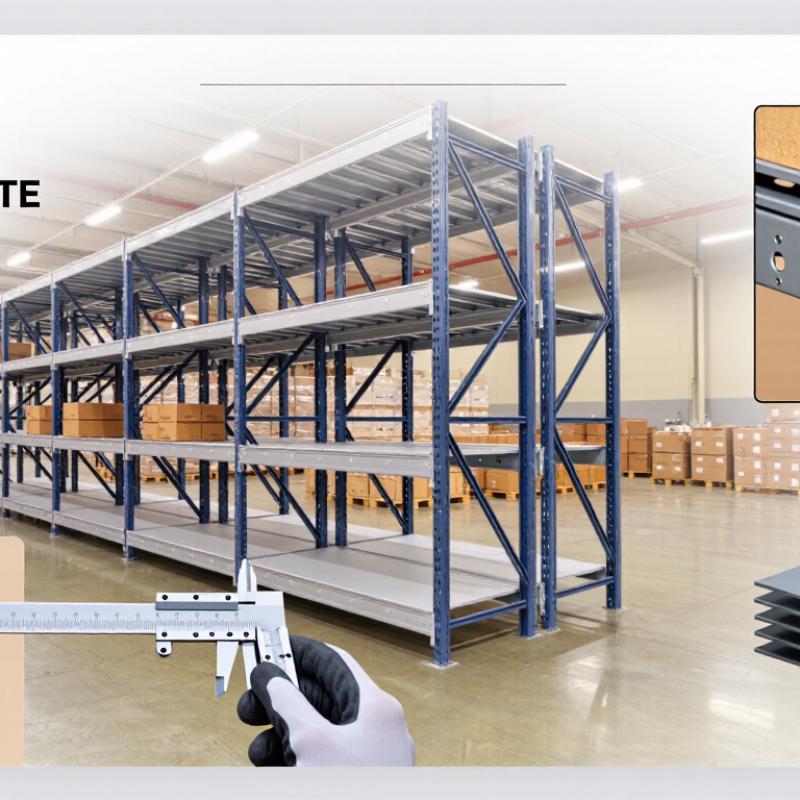
How to Choose China Best Boltless Rivet Rack?
What Is a Boltless Rivet Rack?
A boltless rivet rack is a modular storage system assembled without nuts, bolts, or welding. Its upright frames contain punched slots, while horizontal beams use rivets that fit into those slots. A rubber mallet usually locks the connections tightly. Shelves may use steel panels, particle boards, or wire decking.
This structure is practical for warehouses, workshops, archives, and stockrooms. It handles cartons, tools, spare parts, and medium-weight materials. The open design allows quick access from both sides. However, “boltless” does not mean maintenance-free. Uneven floors, overloaded shelves, or damaged rivets can reduce stability. Check the rated load for each shelf, not only the total rack capacity. Ask for clear drawings, steel thickness, surface treatment details, and load-test information before purchasing from China.
Tips: Measure the room carefully, including doorways and sprinkler clearance. Confirm shelf dimensions, beam height adjustment, and decking strength. Inspect samples for sharp edges, bent uprights, and loose connections. A rack may look strong but feel unstable after assembly. That warning matters. Keep heavier cartons on lower levels, and use floor anchors when the installation environment requires them. Review the supplier’s instructions with an experienced installer, because small assembly errors can create larger problems.

How to Choose China Best Boltless Rivet Rack?
Which Storage Requirements Should You Define First?
The best boltless rivet rack depends on your storage requirements, not its appearance. Begin with the available floor area, ceiling height, and aisle width. Measure doors, columns, sprinklers, and other fixed obstacles. A 2.4-meter rack may fit the room but block lighting or equipment access. Record the usable dimensions carefully. Small errors can create expensive installation problems.
Define the load before comparing suppliers. List the weight of each carton, bin, or component. Also record its size, shape, and handling frequency. Heavy steel parts need stronger beams and stable decking. Smaller packages may need closer shelf spacing. Ask for clearly stated load ratings under evenly distributed conditions. Do not accept vague claims. In practical warehouse inspections, uneven loading is a common weakness. It can reduce stability and damage shelves over time.
Your environment matters too. A dry stockroom differs from a humid workshop or dusty production area. Consider corrosion protection, cleaning needs, temperature, and fire-safety clearances. Decide whether workers will pick items by hand or use ladders and lifting equipment. Future growth deserves attention. Leave some capacity for new inventory, but avoid buying oversized racks without a plan. I once specified extra levels that looked useful, yet reduced picking speed. That decision needed more reflection. Check assembly instructions, replacement parts, packaging quality, and after-sales technical support before placing an order.
How to Choose China Best Boltless Rivet Rack?
How to Evaluate Rack Materials, Size, and Load Capacity
Choosing a boltless rivet rack starts with its material, not its appearance. In warehouse inspections, I check upright thickness, beam shape, weld quality, and surface coating. Cold-rolled steel usually offers dependable strength for storage work. A powder-coated finish helps resist scratches and everyday humidity. However, thick paint cannot repair weak steel.
Measure the storage area before selecting rack size. Record floor width, ceiling height, aisle space, and door clearance. A rack that fits tightly may reduce access and create handling problems. Shelf depth should match your cartons, tools, or containers. Leave a small rear gap when ventilation or wall clearance matters. Short shelves fail quickly.
Load capacity needs careful reading. Ask whether the rating applies to each shelf or the complete bay. Confirm that the figure assumes evenly distributed weight. A concentrated load, such as one dense machine part, can stress the deck and beams. Check the recommended safety factor and request load-test records from the supplier. During one project, I trusted a general capacity label and missed the beam-span condition. That mistake changed the layout. I would now test the heaviest real item before ordering. Assembly quality also matters; loose rivets, uneven floors, or missing braces can reduce practical capacity.
| Evaluation Dimension | Recommended Specification | Typical Data or Range | Why It Matters | Inspection Points Before Purchase |
|---|---|---|---|---|
| Upright Frame Material | Cold-formed carbon steel | Common thickness: approximately 1.5–2.5 mm, depending on rack height and rated load | Uprights carry the vertical load and resist bending and sway. Thicker steel is generally suitable for taller or heavier-duty configurations. | Confirm steel grade, thickness measured after coating, upright profile, hole spacing, and the manufacturer’s tested load rating. |
| Beam Material | Roll-formed carbon steel with reinforced profile | Common thickness: approximately 1.2–2.0 mm for light- to medium-duty boltless racks | Beam strength affects shelf capacity, deflection, and the stability of the complete bay. | Check beam length, beam profile, connector engagement, weld quality, and whether the rating applies to an evenly distributed load. |
| Shelf Material | Steel panels, wire decking, or wood-based panels | Typical shelf thickness: approximately 0.6–1.2 mm for steel panels; wood panels vary by construction and thickness | The shelf surface must support the actual load without excessive deflection or local damage. | Verify panel thickness, reinforcement ribs, corrosion protection, edge treatment, and compatibility with the beam system. |
| Surface Finish | Powder coating or galvanized steel | Powder coating is common for dry indoor areas; galvanizing is more suitable for humid or corrosive environments | A suitable finish helps reduce corrosion and extends service life. | Look for uniform coverage, good adhesion, no exposed steel, and a finish appropriate for the storage environment. |
| Typical Rack Width | Choose according to load length and available space | Common widths: approximately 900, 1200, 1500, and 1800 mm | Longer beams usually experience greater bending under the same load, so beam length must be considered together with capacity. | Measure the longest stored item, required clearance, aisle width, and distance from walls or doors. |
| Typical Rack Depth | Choose according to product depth and access requirements | Common depths: approximately 300, 400, 450, 600, and 900 mm | Depth affects storage volume, accessibility, stability, and the amount of usable floor space. | Allow clearance for handling. Avoid storing items so far back that they cannot be safely retrieved. |
| Typical Rack Height | Select a height that matches the room and safe manual access | Common heights: approximately 1200–2400 mm; taller systems may require additional stability controls | Higher racks increase storage density but also increase the importance of leveling, anchoring, and safe loading. | Measure ceiling height, sprinkler clearance, door access, floor levelness, and the need for ladders or lifting equipment. |
| Shelf Load Capacity | Use the manufacturer’s tested rating for the exact configuration | Typical light- to medium-duty range: approximately 100–500 kg per shelf with evenly distributed loading | Load capacity depends on beam length, shelf depth, steel thickness, shelf reinforcement, number of levels, and rack height. | Confirm whether the rating is per shelf or per bay, and whether it assumes evenly distributed rather than point loading. |
| Total Bay Capacity | Calculate from the complete rack configuration | Example: 4 shelves × 250 kg per shelf = 1000 kg theoretical shelf-load total, subject to the complete rack rating | The total capacity may be limited by the uprights, connectors, bracing, floor condition, or stability rather than the shelves alone. | Request a load chart for the selected width, depth, height, shelf count, and shelf spacing. |
| Load Distribution | Distribute weight evenly across the shelf surface | Heavy items should be stored on lower levels; avoid concentrated loads unless specifically approved | Uneven or point loading can cause local deformation and may reduce the safe working capacity. | Check the location of heavy cartons, the support span, shelf deflection, and whether additional decking is required. |
| Rivet Connection | Fully engaged, tight-fitting rivet beams and uprights | Connections should seat completely with no visible gap or looseness after assembly | Correctly engaged rivets transfer load between beams and uprights and help prevent accidental disengagement. | Inspect connector fit, locking tabs, assembly tolerances, and whether a rubber mallet is required for proper seating. |
| Bracing and Stability | Use back or side bracing when required by height, load, or site conditions | Bracing requirements vary with rack geometry, floor conditions, and local safety rules | Bracing reduces sway and improves resistance to racking forces during loading and use. | Ask for stability guidance, anti-tip options, wall or floor anchoring details, and the recommended maximum height-to-depth ratio. |
| Floor Requirements | Level, firm, and capable of supporting the rack and stored goods | The required floor capacity depends on the total loaded weight and contact area of the feet | An uneven or weak floor can cause instability, uneven loading, or premature deformation. | Check floor levelness, concrete condition, moisture exposure, footplate size, and whether shims or anchors are allowed. |
| Safety Clearance | Maintain practical clearance around shelves and access routes | Clearance should be based on product size, handling method, aisle equipment, and local regulations | Adequate clearance reduces collision risk and makes loading and retrieval safer. | Plan aisle width, shelf overhang, sprinkler clearance, emergency exits, and pedestrian or equipment traffic paths. |
| Best Use Case | Manual storage of cartons, tools, spare parts, archives, and small components | Most suitable for organized indoor storage with regular inspection and controlled loading | Boltless rivet racks are quick to assemble and flexible, but they are not automatically suitable for every heavy-industrial application. | Choose a heavier-duty system or professional engineering review for pallets, forklifts, impact-prone areas, or very high loads. |
| Quality Documentation | Obtain configuration-specific technical documents | Useful documents include assembly instructions, load charts, material specifications, and inspection guidance | Documentation allows the buyer to verify that the quoted capacity matches the exact rack being supplied. | Ensure drawings and load ratings show dimensions, shelf count, spacing, material thickness, and loading conditions. |
| Important: The capacities and dimensions above are typical industry ranges for evaluation purposes, not universal guarantees. Always use the supplier’s tested rating for the exact rack configuration and comply with applicable local storage and workplace-safety requirements. | ||||
Check the production process carefully. Rivet beams should fit upright columns without excessive force or visible gaps. Place a calibrated load on a sample bay, then inspect beam deflection and connector movement. Request testing under the intended load, not an attractive showroom configuration. ISO 9001 certification supports process control, but it does not guarantee every rack is safe or consistent. That distinction matters.
Compare at least three factories using the same specification sheet. Review material thickness, steel yield strength, shelf capacity, paint adhesion, packaging, and replacement-part support. The World Steel Association reported global crude steel production of about 1.89 billion tonnes in 2023, yet steel availability does not prove correct rack design. A cheaper quote may hide thinner steel or weaker rivet geometry. A polished sample can mislead. I would repeat the load test after transport, because vibration and careless handling can change the result. Small details often expose large quality differences.
Choosing China’s best boltless rivet rack requires more than comparing catalog photos. I have inspected storage frames where clean paint concealed weak welds and uneven uprights. Ask for load tests, material grades, beam deflection limits, and inspection records. Request a sample or factory video showing assembly under realistic weight. Check the locking pins. A rack should stand level, resist sway, and keep connectors fully seated. The supplier should explain whether stated capacity applies per shelf or per entire bay.
Pricing needs a written breakdown, not a tempting headline figure. Compare steel thickness, shelf panels, surface treatment, packaging, and delivery terms. Confirm whether installation tools, replacement parts, taxes, and port charges are included. Ask for a quotation with currency, validity period, lead time, and payment milestones. An unusually low price may reflect thinner steel or missing safety accessories. That is not always obvious. I would request two comparable quotations, then challenge every unexplained difference. Maybe my first comparison is imperfect; shipping damage and local labor can change the real cost.
After-sales support becomes visible when a beam arrives bent or hardware is missing. Before ordering, test the response with specific questions and a small technical drawing. Reliable teams provide assembly instructions, spare-part procedures, and a named contact. Clarify warranty coverage, response times, evidence requirements, and who pays replacement freight. Keep photographs, serial details, and receiving records. They protect both sides. Do not accept vague promises such as “lifetime service.” A dependable agreement defines measurable remedies and practical communication channels.


For those larger-sized parts, or smaller quantity runs, we have 2 independent powder coat booths and ovens. The quality, durability and affordability of today’s powder coating finishes make this the process of choice for world-class companies.
Powder coating advantages over other forms of coating are many. Materials used in the Powder coating process can be metals and non-metals that come in a multitude of thicknesses, textures, colors, etc. Another of Powder coating’s biggest advantages over conventional coatings is its ability to create finishes in many different textures. Powder Coating Booths allow us the ability to apply these advantages to large products.
Tri-State Fabricators runs a full-service conveyor line for painting. Wet painting can provide protection or decoration to many different part styles. From start to finish, every project is easier to undergo random and point-based inspection by our skilled painting team.
Advantages to our Wet Paint Line are these lines start with product prep and ends with a thorough inspection of a high quality finished product. Our ability to complete large and small projects with a superior finish and doing so in a timely and economical fashion. This passes along the savings in production to our customers. When powder coating ins not an option, our Wet Paint Line gets the job done right the first time.
When the parts get big and heavy we roll-out our custom paint racks and oversize booth. By utilizing our partnerships with all the major paint brands, we can match virtually any color with wet paint.
The advantages of having access to a Wet Paint Booth are many. Large projects of many different shapes can be loaded into the booth. The Wet Paint Booth offers an environment that is much more controlled than a typical parts painting operation.
Not only are they used because of their controlled environment, but they’re are also advantageous when it comes to applying paint to parts that are needed in industries that require specialty coatings such as medical, aerospace, etc.
Our military forces have some very high standards when it comes to the finish of their vehicles and equipment. From the first pre-treatment step to final coat, it takes a great deal of knowledge and experience to protect the men and women of our armed forces. They deserve only the best, and Tri-State Fabricators provides it.
All of our processes are closely monitored by our staff and management teams. Both of which are highly trained in the processes of metal fabrication and finishing. Tri-State Fabricators’ goal is to always fully satisfy each and every customer, including the military. We will always put a 110% into what we do.
Abrasive media blasting is an excellent way to remove old paint, rust, and increase the paint/powder adhesion. Glass beads produce a much smoother and brighter finish than angular abrasives; leaving the part clean yet without any dimensional change. Chemically inert and environmentally friendly, we can recycle our beads approximately 30 times; making them a more preferred method of metal cleaning or surface finishing.
Advantages to Glass Bead Blasting are many. Glass bead blast media is used when a project is needing rough surfaces need to become smooth for applications of coatings such as paint. It is typically used to clean paint and rust from a product surface without deforming the surface it is being used on. Overall, compared to many other blasting media, Glass Bead Blasting is a very economical choice and those savings are always passed on to our customers.
Tri-State Fabricators utilize a zinc phosphate wash to clean and etch the material to ensure the best paint adhesion possible. The unique design of our 3-stage wash system does the work like a 5-stage. From Cleaning and rinsing to conversion coating and post-treatment, Our Part Washing process is a complete service and works throughout the fabrication service and the finishing service.
Along with the previously mentioned benefits, Curing is a vital chemical reaction that leaves the product finish hard and relatively safe from mild abrasion and aggressive corrosion. This process can be done in more than one way; ambient air-dry or in curing ovens at temps that exceed 240°.
From fixing paint mistakes (someone else’s of course) to simply cleaning our paint line hooks, our burn-off oven is put to good use. After a quick burn-off, a little clean up, and a fresh coat of paint, your parts will look better than new.
Why does our Burn-Off Oven work so well? Because super heating the air around parts turns the materials into ashes. From paint and powder coatings to rubber and machining oils, high temps do the job without degrading the integrity of the part.
Masking is a vital part of producing high quality products. We have die-cut masking patterns to protect machined surfaces as well as a wide range of plugs and caps to protect threaded holes and bolts. We provide permanent and temporary masking.
Masking allows the selected sections of a product to be protected from a fabrication or finishing service. This can be with both chemicals when etching and tapes, paints when only finishing just a section of the product. Masking is great in aiding the customization process of a project.
Screen printing is a photographic process that transfers artwork onto a porous nylon screen which allows colored ink to flow through the screen and be deposited on an aluminum or plastic component. We can generally have just about any design created onto a screen for your parts.
Some of the advantages of Screen Printing are, brand recognition for your business displaying on your products, assembly instructions, product warnings/hazards, etc. Tri-State Fabricators produces Screen Printing of the highest quality so you know it’s durable.
Metal Finishing is the art of treating the exterior portion of product, often metal but can also be made of other materials, so that the surface is clean and free of any debris. Then the process of applying coats or either paint of powder coat takes place. This coating process improves the quality of the product in both appearance and resistance to wear and corrosion.
Tri-State Fabricators, Inc., understands that a project typically isn’t complete until a high-quality finish has been added to your product. This is why our painting and powder coating teams continuously inspect the products throughout the Metal Finishing process.

