


Choosing the right Battery Laser Welder is not simply a matter of comparing power ratings or advertised speed. The weld must suit the battery’s materials, joint design, production volume, and quality requirements. A copper tab and a thin nickel strip behave differently under a focused beam. Small changes in fit-up can matter, too. A promising sample weld may look tidy under workshop lights, yet fail when tested for strength or consistency.
Battery joining engineer Maya Chen sums up the selection challenge: “Choose the process around the joint, not the machine around the brochure.” Treat that as a practical reminder, not a substitute for testing. Ask suppliers to weld your actual materials and inspect the results. Look for repeatable seams, limited heat impact, stable settings, and clear process records. Watch the weld area closely. Does the beam reach the joint without damaging nearby components? Can the system maintain focus across the parts you plan to produce?
A good choice also fits the people and space around it. Consider operator training, maintenance access, safety features, and the time needed to change jobs. Ask how the system handles variation in part position. These details can be easy to overlook. I would not choose from a polished demonstration alone; real production conditions are less forgiving. This guide explains what to compare, which questions to ask, and how to judge whether a Battery Laser Welder fits your application.
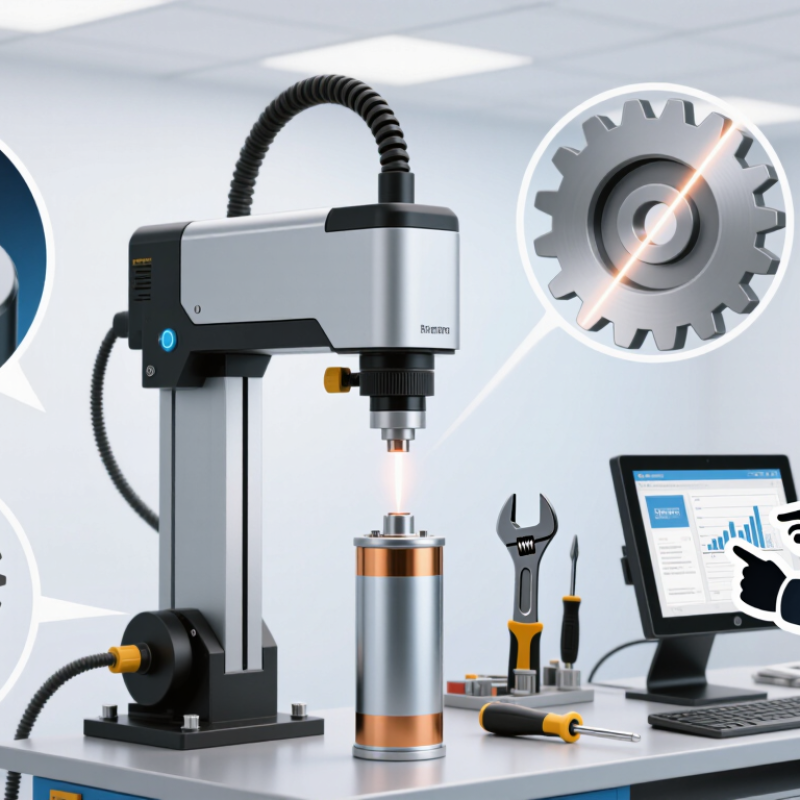
A battery laser welder is a machine designed to join battery parts, such as cell terminals, metal tabs, and busbars. It directs a concentrated laser beam onto a small joint, heating the metal until it melts and fuses. The weld then cools into a solid connection. This distinction matters. The IEA’s Global EV Outlook 2024 reports that electric-car battery demand reached about 750 GWh in 2023, 40% above 2022. That figure reflects battery demand, not laser-welding output, but it shows why repeatable joining matters in high-volume production.
Inside the machine, a laser source sends light through optics to a focusing head. A fixture holds the parts in position while the beam follows a programmed path. Power, pulse duration, focus, and travel speed shape the weld. For example, a copper tab and an aluminum terminal may need different settings because they absorb and conduct heat differently. Too little energy can leave a weak joint; too much can cause spatter or damage nearby material. Small setup changes matter.
Operators may monitor the seam with cameras or sensors and inspect sample joints for consistency. These checks help catch variation, though they cannot make every weld perfect. A practical setup also considers part fit, fume extraction, shielding, and access for maintenance. A neat-looking seam is not proof of a reliable connection. Testing the joint is essential.

Start with the cell, tab, and joint—not the machine’s headline power. Record the materials, thicknesses, coating, and joint geometry. A copper-to-aluminum connection behaves differently from two nickel-plated steel tabs. Note whether the weld is a lap joint, seam, or stack of thin layers. Then define acceptable weld strength, electrical resistance, appearance, and leak or burn-through limits. These details guide trials and inspection. They also prevent a fast weld from becoming an expensive reject.
Production volume matters. The International Energy Agency’s Global EV Outlook 2024 reports nearly 14 million electric cars were sold in 2023, about 18% of global car sales. That figure signals a large and growing battery market, but it does not specify your line’s needs. Estimate daily output, changeover frequency, and available cycle time. Decide whether operators need recipe storage, automated vision checks, or traceable weld records. Consider fixtures, fume extraction, shielding gas, and service access too. Small setup gaps can disrupt an otherwise capable process.
Tips: Bring actual production samples to supplier trials. Ask for cross-sections, pull-test results, and resistance measurements—not just a bright weld photo. Test the thinnest and thickest parts. Check for spatter, discoloration, and distortion. A checklist can still miss an awkward fixture or cable route; inspect the proposed cell layout before purchase.
Power, precision, and compatibility determine whether a battery laser welder suits your actual work. A high power rating can help with thicker material, but it may be excessive for thin sheet, where heat can distort edges. Match the welder’s stated capacity to the metal type and thickness you expect to join. Then check duty cycle and battery runtime, not just peak output. That matters. A tool that runs out during repeated welds can slow a small repair job. It is tempting to choose the strongest model, but I would pause and compare it with the workbench’s real needs.
Precision comes from controllable settings, a stable beam, and a focus that fits the joint. Look for clear adjustment ranges and test guidance for different materials; tiny seams need different handling than wider joints. Compatibility also includes battery voltage, pack availability, charger type, and replacement parts. Check the fit. Confirm that the battery system supports the expected workload and that the machine includes appropriate safety features and operating instructions. In a shared workshop, fume extraction and suitable laser protection matter too. A specification sheet cannot show how comfortable the tool feels after an hour. If possible, inspect a sample weld or arrange a supervised test before deciding.
When choosing a battery laser welder, inspect its safety controls before comparing power or speed. A covered work area, secure access interlocks, and a reachable emergency stop help limit exposure if a setup shifts. Check that the supplied protective eyewear matches the laser’s specified wavelength and operating conditions. Do not assume ordinary shop glasses are enough. Small details matter.
Battery protection deserves equal attention. Look for clear charge-status and temperature warnings, plus protection against overheating and electrical faults. The pack should sit firmly in its bay, without damaged cables or loose connectors. If the machine feels unusually hot or shows an error, stop and follow the manufacturer’s service instructions rather than continuing a weld. A spec sheet can sound reassuring; real controls and clear manuals matter more.
Maintenance features affect safety over time. Ask how to inspect the protective window, clean the lens, and replace dust or fume filters. Access should be straightforward, but optical parts should not require casual handling. Check whether cooling vents are easy to clear and whether the unit indicates a cooling fault. Keep a simple log of cleaning, warning messages, and battery condition. I would not judge upkeep by convenience alone: an easy-to-open panel is useful only if the instructions explain what can safely be serviced by the operator.
| Evaluation area | Feature to evaluate | What to check | Evidence or practical test | Priority |
|---|---|---|---|---|
| Laser enclosure | Beam containment and access control | Confirm the enclosure is designed for the laser’s wavelength and output, and that access doors prevent laser operation when open. | Review the laser safety documentation and test the door interlock using the manufacturer’s procedure. | Essential |
| Emergency controls | Emergency stop and safe shutdown | Check that the emergency stop is easy to reach and that the machine’s response to activation is clearly documented. | Verify the stop function during commissioning and confirm how the system is reset safely. | Essential |
| Operator protection | Laser eyewear and warning labels | If eyewear is required for the setup, its wavelength range and optical density must match the hazard assessment and applicable rules. Eyewear does not replace a properly enclosed system. | Check eyewear markings, condition, and the machine’s laser classification and warning labels. | Essential |
| Battery-work safeguards | Cell handling, fixturing, and isolation procedures | Look for clear procedures for positioning cells or packs, preventing unintended shorts, and managing damaged or abnormal cells. Battery hazards depend on cell chemistry and state of charge. | Review the work instructions and confirm that fixtures hold parts securely without damaging cells or insulation. | Essential |
| Fire and thermal risk | Risk controls for heat, sparks, and battery incidents | Assess the process for hot workpieces, ignition sources, and possible cell failure. Use site-specific emergency procedures and suitable fire-response arrangements. | Review the risk assessment, emergency plan, and operator training records for the battery chemistry being processed. | Essential |
| Fume management | Local exhaust ventilation and filtration | Determine whether the materials and process generate fumes or particles, and whether extraction is needed. Filtration requirements depend on the materials and system design. | Check airflow or filter-status indicators, service intervals, and the recommended filter type. | High |
| Process control | Parameter control and recipe protection | Evaluate controls for laser power, pulse or weld settings, and repeatable recipes. Check whether access permissions can reduce unintended setting changes. | Run a representative sample weld and confirm that approved settings can be saved, recalled, and documented. | High |
| Cooling system | Cooling alarms and routine checks | For water-cooled equipment, check temperature and flow monitoring, alarm behavior, coolant specifications, and leak inspection requirements. Air-cooled systems have different service needs. | Review the maintenance schedule and confirm that coolant checks and alarm tests are included where applicable. | High |
| Optics and beam path | Protective windows and inspection access | Check how optical surfaces are protected from spatter and contamination, and whether inspection or replacement can be performed using a safe, documented procedure. | Inspect the protective window and ask for cleaning methods, replacement intervals, and approved consumables. | High |
| Electrical safety | Grounding, cables, and service isolation | Check grounding instructions, cable condition, electrical ratings, and isolation procedures for servicing. Follow applicable electrical safety requirements at the installation site. | Inspect cables and connectors, and confirm that maintenance staff have access to the correct isolation instructions. | Essential |
| Maintenance support | Service access, diagnostics, and spare parts | Evaluate whether routine service tasks are clearly documented and whether essential consumables and replacement parts are available within a practical timeframe. | Review the maintenance manual, service intervals, diagnostic messages, and parts list before purchase. | Medium–High |
| Records and training | Operator training and maintenance logs | Confirm that operators can be trained on safe operation, setup, cleaning, fault response, and battery-specific hazards, with maintenance activities recorded. | Check the training materials, logbook or digital record functions, and procedures for reporting faults. | High |
Evaluate each machine against its intended materials, production setup, manufacturer instructions, and applicable local safety requirements. A feature list alone does not replace a site-specific risk assessment.
Comparing battery laser welders starts with the cells and joints you actually make. Check the battery chemistry, tab material, and thickness range in each model’s specifications. A unit suited to thin nickel tabs may not handle thicker copper connections consistently. Review pulse energy, spot size, and adjustment range, then request sample welds using your materials. Numbers alone can mislead.
Look beyond maximum output. Compare repeatability, cooling requirements, control options, and display clarity. For a small workshop, footprint and extraction needs matter; production teams may prioritize duty cycle and service access. Check for training, maintenance guidance, and realistic test data. More power is not automatically better. Thin tabs can deform or burn through, and a neat surface bead does not prove a strong joint.
Tips: Ask for weld samples using your exact cell and tab combination. Inspect both sides, pull-test several joints, and record settings. Compare total cost, including fixtures, ventilation, training, and upkeep. Test first. If results vary, review fit-up before increasing energy.


For those larger-sized parts, or smaller quantity runs, we have 2 independent powder coat booths and ovens. The quality, durability and affordability of today’s powder coating finishes make this the process of choice for world-class companies.
Powder coating advantages over other forms of coating are many. Materials used in the Powder coating process can be metals and non-metals that come in a multitude of thicknesses, textures, colors, etc. Another of Powder coating’s biggest advantages over conventional coatings is its ability to create finishes in many different textures. Powder Coating Booths allow us the ability to apply these advantages to large products.
Tri-State Fabricators runs a full-service conveyor line for painting. Wet painting can provide protection or decoration to many different part styles. From start to finish, every project is easier to undergo random and point-based inspection by our skilled painting team.
Advantages to our Wet Paint Line are these lines start with product prep and ends with a thorough inspection of a high quality finished product. Our ability to complete large and small projects with a superior finish and doing so in a timely and economical fashion. This passes along the savings in production to our customers. When powder coating ins not an option, our Wet Paint Line gets the job done right the first time.
When the parts get big and heavy we roll-out our custom paint racks and oversize booth. By utilizing our partnerships with all the major paint brands, we can match virtually any color with wet paint.
The advantages of having access to a Wet Paint Booth are many. Large projects of many different shapes can be loaded into the booth. The Wet Paint Booth offers an environment that is much more controlled than a typical parts painting operation.
Not only are they used because of their controlled environment, but they’re are also advantageous when it comes to applying paint to parts that are needed in industries that require specialty coatings such as medical, aerospace, etc.
Our military forces have some very high standards when it comes to the finish of their vehicles and equipment. From the first pre-treatment step to final coat, it takes a great deal of knowledge and experience to protect the men and women of our armed forces. They deserve only the best, and Tri-State Fabricators provides it.
All of our processes are closely monitored by our staff and management teams. Both of which are highly trained in the processes of metal fabrication and finishing. Tri-State Fabricators’ goal is to always fully satisfy each and every customer, including the military. We will always put a 110% into what we do.
Abrasive media blasting is an excellent way to remove old paint, rust, and increase the paint/powder adhesion. Glass beads produce a much smoother and brighter finish than angular abrasives; leaving the part clean yet without any dimensional change. Chemically inert and environmentally friendly, we can recycle our beads approximately 30 times; making them a more preferred method of metal cleaning or surface finishing.
Advantages to Glass Bead Blasting are many. Glass bead blast media is used when a project is needing rough surfaces need to become smooth for applications of coatings such as paint. It is typically used to clean paint and rust from a product surface without deforming the surface it is being used on. Overall, compared to many other blasting media, Glass Bead Blasting is a very economical choice and those savings are always passed on to our customers.
Tri-State Fabricators utilize a zinc phosphate wash to clean and etch the material to ensure the best paint adhesion possible. The unique design of our 3-stage wash system does the work like a 5-stage. From Cleaning and rinsing to conversion coating and post-treatment, Our Part Washing process is a complete service and works throughout the fabrication service and the finishing service.
Along with the previously mentioned benefits, Curing is a vital chemical reaction that leaves the product finish hard and relatively safe from mild abrasion and aggressive corrosion. This process can be done in more than one way; ambient air-dry or in curing ovens at temps that exceed 240°.
From fixing paint mistakes (someone else’s of course) to simply cleaning our paint line hooks, our burn-off oven is put to good use. After a quick burn-off, a little clean up, and a fresh coat of paint, your parts will look better than new.
Why does our Burn-Off Oven work so well? Because super heating the air around parts turns the materials into ashes. From paint and powder coatings to rubber and machining oils, high temps do the job without degrading the integrity of the part.
Masking is a vital part of producing high quality products. We have die-cut masking patterns to protect machined surfaces as well as a wide range of plugs and caps to protect threaded holes and bolts. We provide permanent and temporary masking.
Masking allows the selected sections of a product to be protected from a fabrication or finishing service. This can be with both chemicals when etching and tapes, paints when only finishing just a section of the product. Masking is great in aiding the customization process of a project.
Screen printing is a photographic process that transfers artwork onto a porous nylon screen which allows colored ink to flow through the screen and be deposited on an aluminum or plastic component. We can generally have just about any design created onto a screen for your parts.
Some of the advantages of Screen Printing are, brand recognition for your business displaying on your products, assembly instructions, product warnings/hazards, etc. Tri-State Fabricators produces Screen Printing of the highest quality so you know it’s durable.
Metal Finishing is the art of treating the exterior portion of product, often metal but can also be made of other materials, so that the surface is clean and free of any debris. Then the process of applying coats or either paint of powder coat takes place. This coating process improves the quality of the product in both appearance and resistance to wear and corrosion.
Tri-State Fabricators, Inc., understands that a project typically isn’t complete until a high-quality finish has been added to your product. This is why our painting and powder coating teams continuously inspect the products throughout the Metal Finishing process.

