How to Choose the Best Battery Bank for Your Needs?
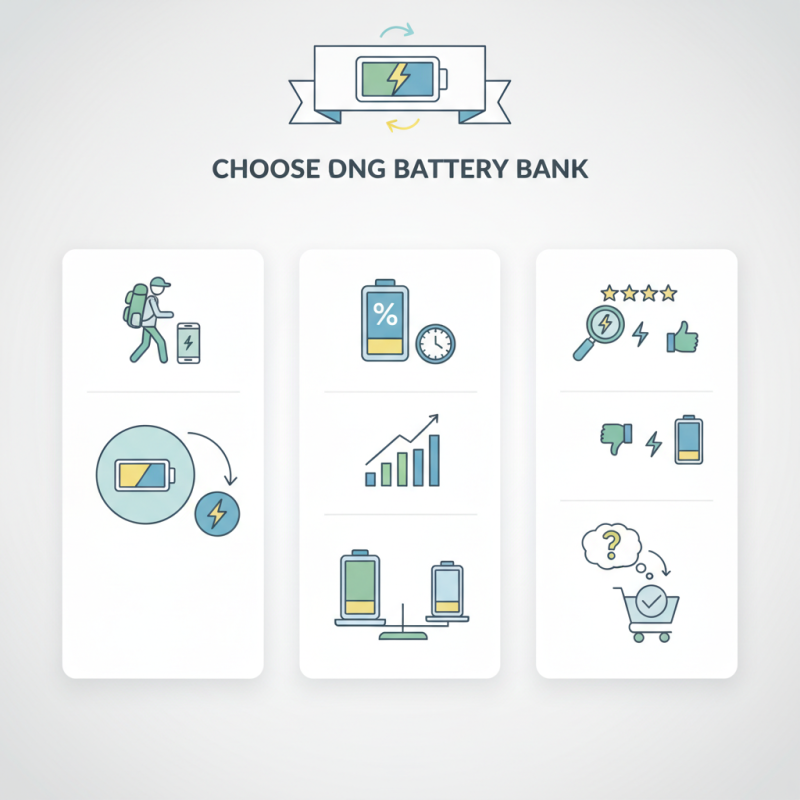
When choosing a Battery Bank, it's crucial to assess your specific needs. A reliable battery bank can enhance your mobile lifestyle and keep your devices powered. Different applications, such as camping or emergency preparedness, require distinct characteristics in a battery bank.
Consider factors like capacity, portability, and charging speed. A higher capacity means more charge cycles for your devices, ideal for long trips. However, portability may be more essential for hikers and backpackers. Battery banks vary in weight and size, impacting usability.
Many brands claim to offer the best options, but not all live up to their promises. Researching user reviews and comparing features is vital. A seemingly perfect battery bank may fall short in real-world scenarios. Reflection on these aspects can guide you to a purchase that genuinely meets your requirements.
Understanding Battery Bank Basics: Types and Functions
When considering battery banks, understanding the types and functions is essential. Battery banks can be grouped into two main categories: lead-acid and lithium-ion. Lead-acid batteries are more affordable, but they have a shorter lifespan. According to industry reports, lead-acid batteries can last 3-5 years, while lithium-ion batteries can last up to 10 years. This difference in longevity can significantly impact long-term costs.
Another factor to consider is capacity. Battery capacity is measured in amp-hours (Ah) or watt-hours (Wh). For example, a 100Ah battery can theoretically provide 100 amps for one hour. This makes capacity a crucial feature when choosing a battery bank. Some reports indicate that consumers often underestimate their power needs. This miscalculation can lead to overloading your battery bank, potentially shortening its life.
Portability is another aspect to reflect on. Some battery banks are quite heavy, hindering their use in outdoor settings. A lightweight option may make transporting easier, but it might compromise energy capacity. Assessing your specific needs is crucial; a one-size-fits-all approach often leads to disappointment. While it can be tempting to prioritize cost, remember the potential for long-term savings with quality choices.
Evaluating Your Power Needs: Capacity and Output Considerations
When selecting a battery bank, evaluating your power needs is crucial. Understanding capacity and output will help you make an informed choice. The capacity, measured in milliamp hours (mAh) or watt-hours (Wh), indicates how long a battery can supply power. A higher capacity means more devices can be powered longer. However, more capacity often means a larger, heavier unit. Balancing capacity with portability is essential.
Output is another key consideration. This refers to the power delivered by the bank. Output ratings are often listed in volts (V) and amps (A). Look for a battery bank that can deliver enough voltage and current for your devices. If you plan to charge multiple devices, consider one with multiple output ports. Devices like laptops may require a higher output, while smartphones and tablets can work well with lower ratings.
Reflecting on these parameters can sometimes lead to confusion. You might find options that seem perfect but may fall short in real-world usage. Think about how often you travel or use devices away from home. Often, the ideal battery bank is one that meets your daily needs without excess. Prioritize simplicity and reliability in your choice, ensuring you invest in a solution that truly fits your lifestyle.
Portability vs. Power: Choosing the Right Size and Weight
When selecting a battery bank, portability and power are crucial factors. Portability is often about size and weight. A lightweight model is easier to carry on trips. However, smaller units may sacrifice power capacity. Industry data shows that a battery bank should ideally have a capacity of 20,000 mAh for most users. This capacity weighs around 0.5 kg, striking a balance between usability and power.
Tip: Always consider your typical usage. If you’re charging multiple devices daily, aim for higher mAh capacity. For short outings, a compact battery of around 10,000 mAh may suffice.
Power and portability often trade-off. A compact bank may have fewer ports. This can limit simultaneous device charging. Some models offer quick charge capabilities, but often at the cost of size. Even popular specifications can vary widely in user experience.
Tip: Review user feedback on battery banks. Look for insights on real-world performance and durability. It’s all about finding the right fit for your lifestyle.
Battery Bank Selection: Portability vs. Power
Identifying Key Features: Ports, Durability, and Smart Technology
When choosing a battery bank, focus on key features. Ports are essential. Look for a variety of outputs: USB-A, USB-C, and even AC ports. Research shows that devices with multiple ports can charge up to three devices simultaneously. This is crucial for users with multiple gadgets, especially during travel. Consider the maximum output. Some battery banks can deliver over 100W, which is perfect for laptops and high-demand electronics.
Durability matters. A robust design can withstand drops and extreme conditions. According to industry reports, well-constructed battery banks typically last 30% longer under stress than their cheaper counterparts. Waterproof or shockproof features provide extra reliability for outdoor enthusiasts. They may add weight but offer peace of mind.
Smart technology is an emerging essential feature. Some battery banks now include built-in chips for efficient charging and discharging. Reports suggest these advancements could improve charging speed by 20%, preserving battery health. However, users should verify compatibility with their devices. Not all battery banks with smart technology will work seamlessly with all gadgets. Finding the right balance between features and price is key.
How to Choose the Best Battery Bank for Your Needs?
| Feature | Description | Importance |
| Ports | Number and type of charging ports (USB-A, USB-C, etc.) | High |
| Capacity | Measured in mAh, indicates how much power the bank can store | High |
| Durability | Resistance to drops, water, and dust | Medium |
| Smart Technology | Features like automatic power adjustment and overcharge protection | High |
| Weight | Overall weight affects portability | Medium |
| Charging Speed | Speed of charging devices (fast charging support) | High |
Budgeting for Quality: Balancing Cost and Performance in Battery Banks
When it comes to selecting a battery bank, the balance between cost and performance is crucial. A higher price often indicates better performance, but it's not a guarantee. It's essential to analyze the specifications and features relevant to your needs. For example, consider the capacity and output. A larger capacity means longer usage time, but it may also come at a premium price.
Budgeting effectively can feel overwhelming. Many users chase the latest technology, thinking it’s the best choice. However, older models might offer sufficient power at a lower cost. Reflecting on your actual usage can help determine if the extra features are necessary. Prioritize quality over flashy additions; a reliable battery bank can outlast cheaper models. Research from experts can guide your decision, helping to ensure your investment is worthwhile.
It’s easy to fall into the trap of unnecessary spending. Finding the sweet spot requires diligence and foresight. Establish realistic budgets, and allow room for potential upgrades down the line. Evaluating warranty options can add value to your investment, offering peace of mind. Balancing performance and cost can be challenging but is essential for long-term satisfaction.