


How to Choose the Best Automatic Gate for Your Needs?

Choosing the best Automatic Gate is not simply a matter of selecting the most attractive design. It requires a careful balance between security, access, safety, durability, and daily convenience. A residential driveway may need quiet operation and smart-phone control. A commercial entrance may demand heavier construction, faster opening, and reliable access records. The right decision begins with the site, not the brochure.

Richard Yeo, founder of Gate Safe and a respected gate-safety advocate, states, “Safety must always come first.” That principle deserves attention. Before comparing motors or finishes, measure the opening, check ground levels, and observe how vehicles and pedestrians move nearby. Consider wind exposure, drainage, power availability, and emergency access. Sliding gates often suit narrow driveways, while swing gates may offer a more traditional appearance. Neither option is automatically better.

Small details matter.

A weak hinge, poor sensor position, or undersized motor can create expensive problems later. Certified safety devices and professional installation should never be treated as optional extras. Local conditions also matter more than many buyers expect. Dust, salt air, freezing temperatures, and frequent deliveries can shorten equipment life. Some online recommendations sound confident but ignore these realities. That is where careful judgment is needed. No checklist is perfect, and personal preferences can still influence the final choice. However, comparing performance, maintenance needs, safety features, and long-term value creates a much more dependable path toward selecting an Automatic Gate that works well every day.
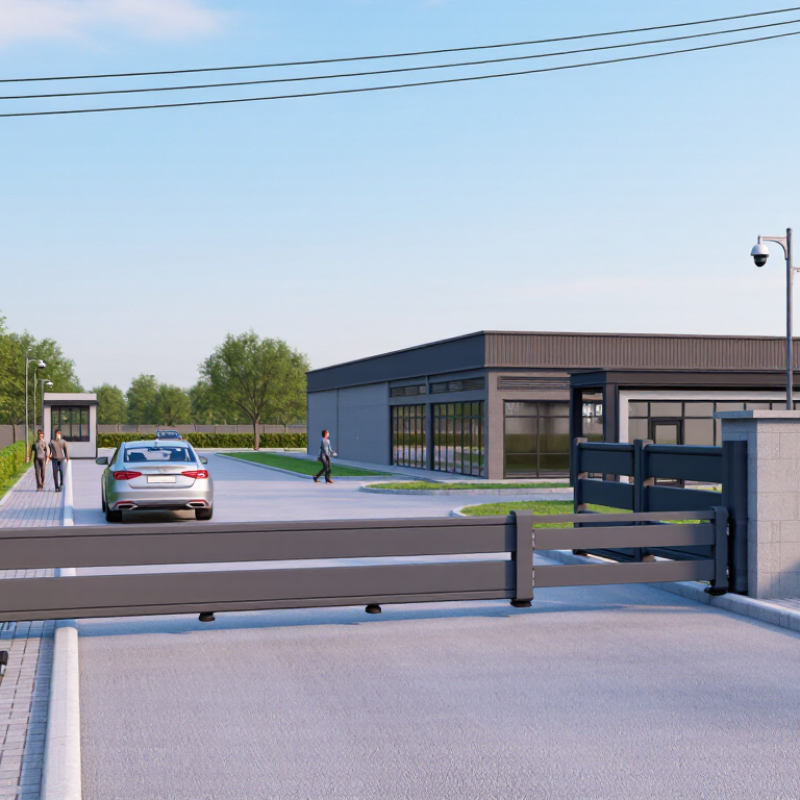
How to Choose the Best Automatic Gate for Your Needs?

Understanding Automatic Gate Types and Operating Mechanisms

Choosing an automatic gate starts with movement, space, and daily traffic. Sliding gates travel along a ground track or cantilever frame, making them practical for narrow driveways. Swing gates open like doors and need clear space behind the entrance. Barrier arms suit controlled vehicle access, not property security. Folding gates can help where side clearance is limited, but their hinges need careful maintenance.

Operating mechanisms matter as much as gate style. Electromechanical motors are common for residential gates because they are relatively quiet and efficient. Hydraulic operators handle heavier gates and frequent cycles, although leaks and servicing can become costly. Photoelectric sensors, pressure edges, manual release systems, and battery backup improve safety during obstruction or power failure. The 2024 MarketsandMarkets report projects the automatic gate and door opening system market to grow from about USD 6.9 billion in 2023 to USD 10.3 billion by 2028. That growth reflects demand for convenience, but it does not make every system suitable.

Tips: Count daily opening cycles before choosing a motor. Measure slope, wind exposure, and available clearance. Check whether the installer follows UL 325 safety requirements and local standards. Ask for tested safety-device performance, not vague promises. I have seen buyers focus on remote controls while ignoring drainage around the motor. That mistake is easy to repeat. Also, “maintenance-free” is rarely literal; tracks, hinges, sensors, and batteries still need inspection.

How to Choose the Best Automatic Gate for Your Needs? - Understanding Automatic Gate Types and Operating Mechanisms

Automatic Gate Type Operating Mechanism How It Works Best Suited For Typical Opening Time Main Advantages Important Considerations
Sliding Gate Rack-and-pinion electric motor The gate moves horizontally along a track or is supported by a cantilever system. A motor-driven gear engages a toothed rack attached to the gate. Driveways with limited depth, sloped entrances, or wide openings Approximately 15–35 seconds, depending on gate width and motor settings Does not swing into the driveway; suitable for large and heavy gates; performs well on inclined sites Requires sufficient side clearance; ground tracks need regular cleaning and alignment
Swing Gate Linear arm, articulated arm, or underground actuator One or two leaves rotate around hinges, usually inward or outward, as an actuator applies force to the gate leaf. Residential entrances and properties with adequate front and rear clearance Approximately 15–30 seconds for a 90-degree opening Simple appearance; generally quiet; suitable for single- or double-leaf designs Needs a level swing path; wind resistance and gate weight affect actuator selection
Barrier Arm Gate Counterbalanced motor and gearbox A lightweight horizontal arm pivots upward or downward from a fixed cabinet to control vehicle access. Parking facilities, toll areas, checkpoints, and managed entrances Approximately 1.5–6 seconds, depending on arm length and control settings Fast operation; clear visual status; effective for high-frequency vehicle access Does not provide a solid security barrier; requires vehicle detection and safety controls
Vertical Lift Gate Hydraulic or electromechanical lifting system The entire gate rises vertically between guide posts instead of moving across the ground or swinging outward. Sites with very limited side and front clearance, steep slopes, or restricted roadways Approximately 10–25 seconds, depending on gate height and system design Saves horizontal space; works where sliding and swing movement is impractical Requires overhead clearance and strong structural supports; installation is usually more complex
Bi-Folding Gate Motor-driven hinges with synchronized folding leaves Two or more connected gate sections fold together as they move, reducing the required travel distance. Commercial entrances and locations requiring faster opening with limited setback space Approximately 8–20 seconds, depending on the number and size of leaves Faster than many conventional swing gates; needs less depth than a full swing configuration Has more hinges and moving components; requires accurate alignment and regular maintenance
Telescopic Sliding Gate Synchronized rack-and-pinion drives Multiple gate panels slide behind one another, allowing a wide opening within a shorter side space. Wide entrances where the available side clearance is shorter than the opening width Approximately 20–45 seconds, depending on panel coordination and opening size Maximizes usable opening width in restricted side spaces; suitable for large access points More complex synchronization; installation must account for several tracks, rollers, or support points

Note: Opening times are typical planning ranges rather than guaranteed performance figures. Actual speed depends on gate dimensions, weight, wind exposure, duty cycle, site conditions, safety requirements, and local regulations.


Assessing Your Property, Security, and Access Requirements

How to Choose the Best Automatic Gate for Your Needs?
Assessing Your Property, Security, and Access Requirements

Choosing an automatic gate starts with studying the property, not browsing product features. Measure the driveway width, slope, turning space, and distance from nearby walls. A vehicle may need more clearance than expected, especially on narrow approaches. Watch the entrance during busy hours. Delivery vans, bicycles, pedestrians, and family vehicles may all compete for the same space.

Security requirements should match genuine risks. A solid gate can improve privacy, while open designs may provide better visibility. Consider lighting, intercom access, camera placement, and manual release options during power failures. A gate should control entry without creating a dangerous blind spot. Local building, fire, accessibility, and electrical requirements also deserve professional review. Rules vary by location.

Access convenience matters every day. Keypads, remote controls, vehicle detection, and smartphone access each suit different households. Keep emergency access practical. Test the opening speed and noise level before installation. Small details matter. A heavy gate may require stronger hinges, posts, and drainage than an owner first expects. One common planning mistake is focusing on the motor while ignoring the surrounding structure. I would reassess the design after observing real traffic for a week. The first plan is not always the best one. Choose qualified installers, request clear maintenance guidance, and keep safety sensors properly tested.

Comparing Gate Materials, Sizes, and Design Options

Choosing an automatic gate starts with the material, because each option behaves differently outdoors. Steel offers strong security and a solid appearance, but it may need regular rust protection in wet climates. Aluminum is lighter and resists corrosion, although it can dent more easily. Timber creates warmth and privacy, yet it requires sealing and careful inspection. I have seen attractive wooden gates warp after one neglected winter.

Gate size should match both the entrance and the automation system. Measure the opening, nearby walls, driveway slope, and vehicle turning space. Measure twice. A wide gate may look impressive, but heavy panels place greater pressure on hinges and motors. For a narrow driveway, a sliding design can save valuable clearance. Swing gates need enough room to open safely without striking parked vehicles, walls, or pedestrians.

Design choices should support daily use, not only curb appeal. Solid panels provide privacy but catch more wind, especially in exposed gardens. Slatted or open designs reduce wind resistance and allow more visibility. Consider lighting, drainage, remote access, and manual release during power failures. Weather, maintenance time, and household traffic should influence every decision. My own preference for a minimalist design changed after I noticed how quickly dust collected in its narrow decorative channels. A simpler surface would have been easier to clean.

How to Choose the Best Automatic Gate for Your Needs?

Compare common automatic gate designs by typical clear opening width. Larger openings generally require stronger motors, reinforced posts, and more precise installation.

Material Selection Reference

Material Typical Mass Best Suited For
Aluminum 5–10 kg/m² Wide openings, lower motor load, corrosion-prone locations
Steel 15–30 kg/m² Security-focused installations and modern designs
Timber 20–40 kg/m² Traditional appearance and privacy-focused designs
Wrought Iron 30–50 kg/m² Decorative entrances requiring rigid construction

The chart uses typical residential planning dimensions: single swing gates are commonly around 3 m wide, while double swing and sliding gates often accommodate openings of approximately 6 m. Actual limits depend on site conditions, gate weight, wind exposure, hardware, and motor specifications.

Evaluating Automation Features, Safety Systems, and Controls

Choosing the best automatic gate starts with its control system, not its appearance. A reliable setup should support keypads, remote controls, mobile access, and manual release. During site checks, test the gate in rain, darkness, and power failure conditions. A smooth opening is useful. Predictable closing matters more.

Safety features deserve closer attention. Look for photoelectric sensors, pressure-sensitive edges, obstacle detection, warning lights, and adjustable closing force. The gate should stop or reverse when a child’s bicycle crosses its path. UL 325 and ASTM F2200 provide useful safety benchmarks for powered gates in North America. Local requirements may differ, so an installer should verify them before purchase. I still prefer physical safety devices over software promises. Sensors can become dirty or misaligned.

Controls also create cybersecurity risks. Verizon’s 2024 Data Breach Investigations Report found that the human element appeared in 68% of breaches. Use unique passwords, two-factor authentication, limited user permissions, and automatic firmware updates. MarketsandMarkets projects the broader access-control market to grow from 9.9 billion dollars in 2023 to 14.9 billion by 2028. That growth reflects demand for connected entry systems, but convenience can hide weak account management. Keep a physical key or manual release available. No system is flawless. Test every control monthly, including remote access, sensors, battery backup, and emergency release.

Estimating Installation Costs, Maintenance Needs, and Lifespan

How to Choose the Best Automatic Gate for Your Needs?

Installation cost depends on more than the gate panel. Excavation, wiring, drainage, access controls, and emergency release hardware can change the estimate quickly. RSMeans 2025 Construction Cost Data shows that regional labor and material prices vary significantly, so a national average can mislead. The U.S. Bureau of Labor Statistics also reports wide wage differences across construction occupations and locations. Ask for a site-based quote. My first estimate would be too optimistic without checking soil, cable distance, and existing power.

Maintenance needs depend on traffic and weather. A residential gate opening ten times daily faces less wear than an apartment entrance opening hundreds of times. DASMA technical guidance stresses regular inspection of hinges, rollers, chains, limit settings, and entrapment protection. Test photo eyes and safety edges often. Keep leaves and gravel away from moving parts. Small neglect becomes expensive. Harsh coastal air may demand more frequent cleaning and corrosion checks.

Lifespan is usually shaped by duty cycle, installation quality, and replacement-part availability. A light-duty operator may struggle on a heavy gate, even when the specification appears acceptable. UL 325 requirements address important automated gate safety features, but compliance does not remove the need for maintenance. Request the rated cycles, warranty terms, service intervals, and estimated replacement costs. A cheaper installation can become costly when the motor, controls, and foundation age at different speeds.

Powder Coat Booths

For those larger-sized parts, or smaller quantity runs, we have 2 independent powder coat booths and ovens. The quality, durability and affordability of today’s powder coating finishes make this the process of choice for world-class companies.

Powder coating advantages over other forms of coating are many. Materials used in the Powder coating process can be metals and non-metals that come in a multitude of thicknesses, textures, colors, etc. Another of Powder coating’s biggest advantages over conventional coatings is its ability to create finishes in many different textures. Powder Coating Booths allow us the ability to apply these advantages to large products.

Wet Paint Line

Tri-State Fabricators runs a full-service conveyor line for painting. Wet painting can provide protection or decoration to many different part styles. From start to finish, every project is easier to undergo random and point-based inspection by our skilled painting team.

Advantages to our Wet Paint Line are these lines start with product prep and ends with a thorough inspection of a high quality finished product. Our ability to complete large and small projects with a superior finish and doing so in a timely and economical fashion. This passes along the savings in production to our customers. When powder coating ins not an option, our Wet Paint Line gets the job done right the first time.

Wet Paint Booths

When the parts get big and heavy we roll-out our custom paint racks and oversize booth. By utilizing our partnerships with all the major paint brands, we can match virtually any color with wet paint.

The advantages of having access to a Wet Paint Booth are many. Large projects of many different shapes can be loaded into the booth. The Wet Paint Booth offers an environment that is much more controlled than a typical parts painting operation.

Not only are they used because of their controlled environment, but they’re are also advantageous when it comes to applying paint to parts that are needed in industries that require specialty coatings such as medical, aerospace, etc.

Military CARC

Our military forces have some very high standards when it comes to the finish of their vehicles and equipment. From the first pre-treatment step to final coat, it takes a great deal of knowledge and experience to protect the men and women of our armed forces. They deserve only the best, and Tri-State Fabricators provides it.

All of our processes are closely monitored by our staff and management teams. Both of which are highly trained in the processes of metal fabrication and finishing. Tri-State Fabricators’ goal is to always fully satisfy each and every customer, including the military. We will always put a 110% into what we do.

Glass-Bead Blasting

Abrasive media blasting is an excellent way to remove old paint, rust, and increase the paint/powder adhesion. Glass beads produce a much smoother and brighter finish than angular abrasives; leaving the part clean yet without any dimensional change. Chemically inert and environmentally friendly, we can recycle our beads approximately 30 times; making them a more preferred method of metal cleaning or surface finishing.

Advantages to Glass Bead Blasting are many. Glass bead blast media is used when a project is needing rough surfaces need to become smooth for applications of coatings such as paint. It is typically used to clean paint and rust from a product surface without deforming the surface it is being used on. Overall, compared to many other blasting media, Glass Bead Blasting is a very economical choice and those savings are always passed on to our customers.

Part Washing

Tri-State Fabricators utilize a zinc phosphate wash to clean and etch the material to ensure the best paint adhesion possible. The unique design of our 3-stage wash system does the work like a 5-stage. From Cleaning and rinsing to conversion coating and post-treatment, Our Part Washing process is a complete service and works throughout the fabrication service and the finishing service.

Along with the previously mentioned benefits, Curing is a vital chemical reaction that leaves the product finish hard and relatively safe from mild abrasion and aggressive corrosion. This process can be done in more than one way; ambient air-dry or in curing ovens at temps that exceed 240°.

Burn-Off Oven

From fixing paint mistakes (someone else’s of course) to simply cleaning our paint line hooks, our burn-off oven is put to good use. After a quick burn-off, a little clean up, and a fresh coat of paint, your parts will look better than new.

Why does our Burn-Off Oven work so well? Because super heating the air around parts turns the materials into ashes. From paint and powder coatings to rubber and machining oils, high temps do the job without degrading the integrity of the part.

Masking

Masking is a vital part of producing high quality products. We have die-cut masking patterns to protect machined surfaces as well as a wide range of plugs and caps to protect threaded holes and bolts. We provide permanent and temporary masking.

Masking allows the selected sections of a product to be protected from a fabrication or finishing service. This can be with both chemicals when etching and tapes, paints when only finishing just a section of the product. Masking is great in aiding the customization process of a project.

Screen Printing

Screen printing is a photographic process that transfers artwork onto a porous nylon screen which allows colored ink to flow through the screen and be deposited on an aluminum or plastic component. We can generally have just about any design created onto a screen for your parts.

Some of the advantages of Screen Printing are, brand recognition for your business displaying on your products, assembly instructions, product warnings/hazards, etc. Tri-State Fabricators produces Screen Printing of the highest quality so you know it’s durable.

Metal Finishing

Metal Finishing is the art of treating the exterior portion of product, often metal but can also be made of other materials, so that the surface is clean and free of any debris. Then the process of applying coats or either paint of powder coat takes place. This coating process improves the quality of the product in both appearance and resistance to wear and corrosion.

Tri-State Fabricators, Inc., understands that a project typically isn’t complete until a high-quality finish has been added to your product. This is why our painting and powder coating teams continuously inspect the products throughout the Metal Finishing process.
