


Choosing the right Audi Tt Modifications starts with understanding how you actually use the car. A weekend road trip requires different upgrades from daily city driving or occasional track sessions. The Audi TT already offers balanced handling, compact dimensions, and distinctive design. Poorly matched parts can disturb that balance. A louder exhaust may sound exciting in a workshop, yet become tiring during a two-hour commute. Small changes matter.
This guide considers practical upgrades through real ownership concerns, not appearance alone. It examines suspension settings, wheel and tire sizes, braking performance, lighting, interior improvements, and engine-related options. Each modification should suit the TT’s generation, engine, mileage, and maintenance history. A worn control arm should be repaired before installing expensive coilovers. That sounds obvious, but many projects ignore it. A clean inspection creates a safer starting point.
Reliable brands, qualified fitting, and accurate alignment deserve equal attention. After changing ride height, the steering wheel may no longer sit straight. Wider wheels can also reduce comfort or cause clearance problems. Check local road regulations, emissions requirements, noise limits, and insurance conditions before purchasing parts. Professional advice remains valuable, especially for electronic systems and performance upgrades. I have seen attractive builds lose their usefulness because the owner chased specifications instead of driving needs. The best Audi Tt Modifications should improve confidence, comfort, or control without making the car difficult to live with. Not every popular upgrade belongs on every TT. That is worth remembering.
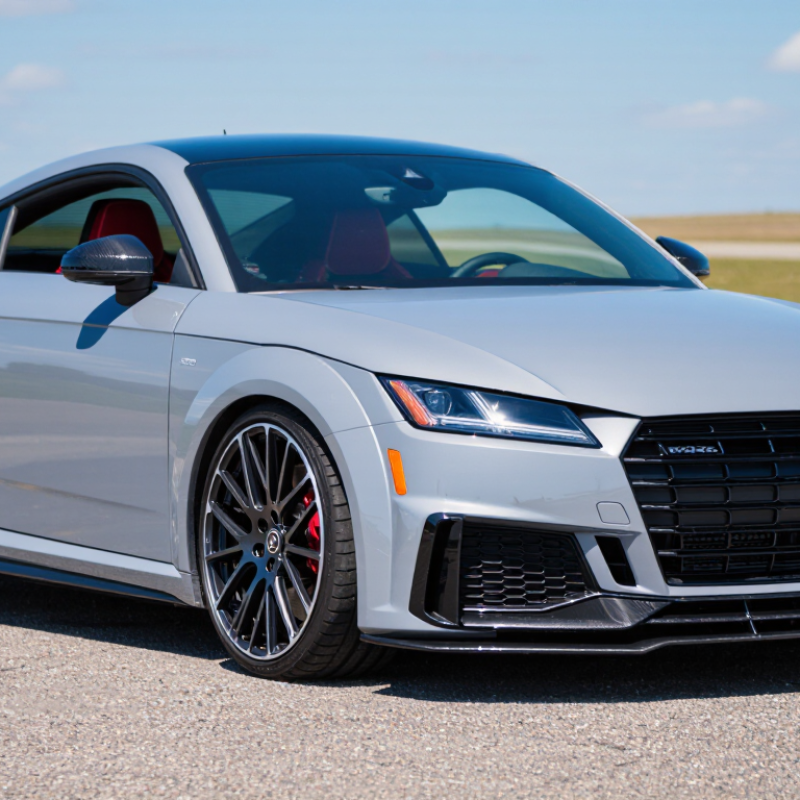
Choosing the best Audi TT modifications starts with a clear question: how should the car feel on ordinary roads? Daily commuting, weekend touring, and track use demand different priorities. A louder exhaust may excite you briefly, but it can become tiring in traffic. Define your goal before buying parts.
SEMA’s 2023 market report valued the U.S. specialty-equipment industry at about $52.3 billion in 2022. That scale offers many choices, but popularity does not guarantee suitability. For balanced road use, prioritize tires, brake fluid, alignment, and suspension condition. These changes improve steering confidence without making the cabin harsh. The U.S. Department of Energy notes that underinflated tires can reduce fuel economy, so check pressures before judging performance.
Keep comfort measurable. Record tire pressure, fuel use, braking feel, and cornering behavior before each modification. Change one system at a time. This makes cause and effect easier to understand. It also prevents expensive guesswork. A small increase in spring stiffness may sharpen turn-in, yet it can reduce grip on uneven pavement. That trade-off is easy to miss.
Think about reliability, too. Professional installation and post-installation inspection matter as much as the component itself. The EPA’s Automotive Trends reporting shows that efficiency remains an important vehicle-performance measure, not a minor concern. I would question any upgrade that adds power but weakens cooling, drivability, or service access. Sometimes, the best modification is no modification yet.

Choosing the best TT modification starts with generation and variant compatibility, not appearance. The 8N, 8J, and 8S use different electrical systems, suspension layouts, and engine families. A part designed for one generation may look correct but fail at the mounting points. Check the production year, facelift status, body style, drivetrain, engine code, and transmission before ordering.
Professional data supports this caution. SEMA’s 2023 Market Report valued the United States specialty-equipment market at about $52.3 billion in 2022, showing strong demand for customization. However, S&P Global Mobility reported that the average vehicle age reached 12.6 years in 2024. Older platforms may need extra attention to brittle connectors, worn bushings, and discontinued hardware. A compatibility check should include wheel offset, brake clearance, sensor locations, CAN-bus behavior, and available calibration support.
A practical workshop habit is measuring twice. Compare the original part beside the proposed replacement. Record bolt spacing and connector shape. Confirm whether a suspension kit suits front-wheel drive or all-wheel drive. Engine variants can also change cooling, intake, and exhaust clearance. Some roadster components may not fit a coupe, even within the same generation. A neat fit can still be wrong. I would also question impressive claims without test data, installation notes, or independent inspection results. That step feels slow, but one overlooked sensor can create weeks of troubleshooting.
Choosing the best Audi TT modifications starts with your driving goals, not a parts catalogue. Performance upgrades can sharpen acceleration, but extra power may expose weak cooling, clutch, or braking components. A professional inspection should come first. Measure boost pressure, fluid condition, and engine temperatures before changing anything.
Handling upgrades often deliver a clearer improvement on real roads. Quality dampers, firmer springs, and adjustable alignment can reduce body roll. However, an aggressive setup may feel nervous over broken pavement. Wider tires can add grip, yet they may increase steering effort and road noise. I once preferred maximum stiffness, but daily driving changed my view.
Tips: Change one system at a time. Record tire pressures, lap times, fuel use, and ride comfort. Use reputable technical data, and have alignment settings checked after installation.
Styling should support the car’s shape rather than overwhelm it. Subtle aerodynamic additions can improve visual balance, while poor fitment creates wind noise and uneven panel gaps. Inside, a supportive steering wheel, clearer gauges, and improved seat bolsters can make every drive more engaging. Avoid heavy interior parts that add weight without useful function. Some choices look impressive online but feel disappointing after a month. Test the material, visibility, and control access before committing.
| Modification | Category | Typical Cost Range | Primary Benefit | Typical Measurable Effect | Handling / Comfort Impact | Installation Difficulty | Best Suited For |
|---|---|---|---|---|---|---|---|
| ECU Calibration | Performance | $500–$1,500 | Higher engine output and sharper throttle response | Approximately 10–25% more power on turbocharged engines, depending on engine condition and fuel quality | May improve acceleration but can increase drivetrain stress and fuel consumption | Medium | Drivers seeking the largest power improvement per dollar |
| High-Flow Intercooler | Performance | $600–$1,400 | Reduces intake-air temperature and heat soak | More consistent power during repeated acceleration; power gains are usually modest without software changes | No direct comfort penalty; supports reliable turbocharged performance | Medium | Turbocharged cars used in warm climates, spirited driving, or track sessions |
| High-Flow Intake System | Performance | $250–$800 | Improves intake airflow and increases induction sound | Usually a small power increase, commonly around 2–8% when correctly matched to the engine | May introduce more engine noise; filtration quality is important | Low | Owners wanting a simple engine-bay upgrade and more audible turbo or intake sound |
| Cat-Back Exhaust System | Performance | $700–$2,000 | Improves exhaust sound and can reduce back pressure | Typically a small power increase, often around 1–5% on a standard engine | May add cabin drone or increase exterior noise; emissions compliance varies by location | Medium | Drivers prioritizing sound, appearance, and moderate performance refinement |
| Lowering Springs | Handling | $350–$900 | Reduces body roll and lowers the center of gravity | Typical ride-height reduction of approximately 20–35 mm | Sharper cornering response but a firmer ride and reduced ground clearance | Medium | Street drivers wanting a lower stance without full suspension replacement |
| Adjustable Coilover Suspension | Handling | $1,200–$3,500 | Allows adjustable ride height and, on many kits, damping control | Can significantly reduce body roll and improve cornering balance when correctly set up | Firmness depends on settings; poor adjustment can reduce grip and comfort | High | Enthusiasts who want adjustable street, mountain-road, or track settings |
| Performance Anti-Roll Bars | Handling | $400–$1,100 | Reduces lateral body movement during cornering | Provides a quicker steering feel and can alter understeer or oversteer balance | Limited comfort penalty when moderate settings are used; excessive stiffness can reduce grip on uneven roads | Medium | Drivers seeking flatter cornering without substantially lowering the car |
| Performance Tires | Handling | $600–$1,400 per set | Improves braking, cornering grip, and steering precision | Can reduce dry braking distance by several meters compared with worn or basic tires, depending on conditions | Often increases road noise and may reduce wet-weather or cold-weather performance if an extreme compound is chosen | Low | Nearly every driver; the most broadly effective handling upgrade |
| Upgraded Brake Pads and Fluid | Handling | $250–$900 | Improves pedal consistency and resistance to brake fade | Better repeated-stop performance; peak stopping distance still depends heavily on tire grip | May produce more dust or noise, especially with track-oriented pads | Low–Medium | Cars used on mountain roads, autocross courses, or track days |
| Lightweight Alloy Wheels | Handling / Styling | $900–$2,500 per set | Reduces unsprung and rotational mass while updating the exterior appearance | A weight reduction of approximately 1–3 kg per wheel is possible with carefully selected wheels | Can improve steering response and ride quality; oversized wheels may have the opposite effect | Low–Medium | Owners wanting a combined visual and dynamic improvement |
| Front Splitter and Rear Spoiler | Styling / Aerodynamics | $400–$2,000 | Creates a more aggressive appearance and may improve high-speed stability | Meaningful aerodynamic benefit requires correct design, balance, and sufficient vehicle speed | May reduce ground clearance and increase wind or road noise | Medium | Owners prioritizing appearance and occasional high-speed or track use |
| LED Exterior Lighting Upgrade | Styling | $150–$800 | Modernizes exterior lighting and can improve visibility | Light output improvement depends on beam pattern, housing design, and legal compliance | Little effect on handling or comfort; incorrect installations may cause glare or warning lights | Low–Medium | Drivers seeking a subtle appearance update and improved illumination |
| Sport Steering Wheel | Interior | $500–$1,800 | Improves grip, tactile feel, and cockpit appearance | No direct power or lap-time benefit; may improve driver control and comfort | Flat-bottom or thicker designs can improve legroom and grip, but airbag compatibility is essential | Medium–High | Drivers who value frequent hands-on interaction and interior personalization |
| Aluminum or Composite Pedal Set | Interior | $80–$300 | Provides a sportier appearance and more defined foot contact | No measurable engine or suspension performance gain | Minimal comfort effect; secure fit and correct pedal spacing are critical | Low | Owners wanting an inexpensive interior detail upgrade |
| Sound Deadening and Interior Insulation | Interior | $400–$1,500 | Reduces road, tire, and vibration noise | Cabin noise reduction commonly ranges from approximately 2–6 dB when applied correctly | Improves long-distance comfort but adds weight and installation time | Medium–High | Daily drivers and touring-focused owners |
| Cost and performance figures are typical estimates for properly installed parts and can vary by model year, engine, drivetrain, local labor rates, wheel size, vehicle condition, and regional regulations. Always verify compatibility, alignment requirements, airbag safety, and emissions or road-use compliance before installation. | |||||||
Modification quality starts with traceable materials, correct fitment, and measured results. Choose components with test data, installation instructions, and a warranty. A louder exhaust is not automatically better. Check welds, fasteners, heat shielding, and clearance around brake lines. After installation, inspect the car on a lift and record alignment readings. My own mistake was trusting a perfect-looking part without checking its mounting hardware. It needed re-tightening after one week.
Safety deserves more attention than appearance. The Insurance Institute for Highway Safety reports that electronic stability control reduces fatal single-vehicle crash risk by about 49%. Avoid modifications that weaken stability systems, obstruct lighting, or overload suspension components. Tire width, load rating, and inflation pressure must match the vehicle’s engineering limits. The National Highway Traffic Safety Administration continues to identify tire-related defects as an important crash factor. Small details matter. Test braking, steering, and ride height in a controlled area before normal driving.
Cost includes labor, calibration, maintenance, insurance, and possible inspection fees. SEMA’s 2023 market report valued the U.S. specialty-equipment market at approximately 52.3 billion dollars, showing strong demand but not guaranteed value. Request itemized quotes and compare qualified installers. Legal requirements vary by location, especially for lighting, emissions, noise, wheel spacing, and suspension height. Check the relevant transport authority before purchasing. I would also keep invoices, certificates, and photographs; paperwork can prevent expensive arguments later.
Choosing the best modifications for a compact sports coupe requires more than chasing impressive parts.
Start with your driving goals, budget, and mechanical condition. A daily commuter needs comfort, predictable braking, and quiet operation. A weekend car may benefit from sharper suspension and improved cooling.
Record the vehicle’s mileage, service history, and existing faults before ordering anything. This small step prevents expensive guesswork.
Measure available space, check compatibility, and use torque specifications from reliable technical manuals. Photograph wiring, fasteners, and hose routing before removing components.
After installation, test one change at a time. Listen for rattles, monitor temperatures, and check steering behavior on a quiet private road.
My early mistake was changing several systems together; diagnosing the result became unnecessarily difficult.
Sometimes, more power exposes weaknesses elsewhere.
Tips:
Keep a modification log with dates, part details, settings, and test results. Inspect fasteners after the first few drives.
Check fluid levels and tire wear regularly. If handling feels strange, stop testing and investigate.
Future upgrades should follow evidence, not excitement. Leave room for better cooling, stronger braking, or revised suspension components.
A professional inspection is worthwhile after major work, even when installation seems successful. Not every upgrade improves the car; some create noise, harshness, or new maintenance demands.


For those larger-sized parts, or smaller quantity runs, we have 2 independent powder coat booths and ovens. The quality, durability and affordability of today’s powder coating finishes make this the process of choice for world-class companies.
Powder coating advantages over other forms of coating are many. Materials used in the Powder coating process can be metals and non-metals that come in a multitude of thicknesses, textures, colors, etc. Another of Powder coating’s biggest advantages over conventional coatings is its ability to create finishes in many different textures. Powder Coating Booths allow us the ability to apply these advantages to large products.
Tri-State Fabricators runs a full-service conveyor line for painting. Wet painting can provide protection or decoration to many different part styles. From start to finish, every project is easier to undergo random and point-based inspection by our skilled painting team.
Advantages to our Wet Paint Line are these lines start with product prep and ends with a thorough inspection of a high quality finished product. Our ability to complete large and small projects with a superior finish and doing so in a timely and economical fashion. This passes along the savings in production to our customers. When powder coating ins not an option, our Wet Paint Line gets the job done right the first time.
When the parts get big and heavy we roll-out our custom paint racks and oversize booth. By utilizing our partnerships with all the major paint brands, we can match virtually any color with wet paint.
The advantages of having access to a Wet Paint Booth are many. Large projects of many different shapes can be loaded into the booth. The Wet Paint Booth offers an environment that is much more controlled than a typical parts painting operation.
Not only are they used because of their controlled environment, but they’re are also advantageous when it comes to applying paint to parts that are needed in industries that require specialty coatings such as medical, aerospace, etc.
Our military forces have some very high standards when it comes to the finish of their vehicles and equipment. From the first pre-treatment step to final coat, it takes a great deal of knowledge and experience to protect the men and women of our armed forces. They deserve only the best, and Tri-State Fabricators provides it.
All of our processes are closely monitored by our staff and management teams. Both of which are highly trained in the processes of metal fabrication and finishing. Tri-State Fabricators’ goal is to always fully satisfy each and every customer, including the military. We will always put a 110% into what we do.
Abrasive media blasting is an excellent way to remove old paint, rust, and increase the paint/powder adhesion. Glass beads produce a much smoother and brighter finish than angular abrasives; leaving the part clean yet without any dimensional change. Chemically inert and environmentally friendly, we can recycle our beads approximately 30 times; making them a more preferred method of metal cleaning or surface finishing.
Advantages to Glass Bead Blasting are many. Glass bead blast media is used when a project is needing rough surfaces need to become smooth for applications of coatings such as paint. It is typically used to clean paint and rust from a product surface without deforming the surface it is being used on. Overall, compared to many other blasting media, Glass Bead Blasting is a very economical choice and those savings are always passed on to our customers.
Tri-State Fabricators utilize a zinc phosphate wash to clean and etch the material to ensure the best paint adhesion possible. The unique design of our 3-stage wash system does the work like a 5-stage. From Cleaning and rinsing to conversion coating and post-treatment, Our Part Washing process is a complete service and works throughout the fabrication service and the finishing service.
Along with the previously mentioned benefits, Curing is a vital chemical reaction that leaves the product finish hard and relatively safe from mild abrasion and aggressive corrosion. This process can be done in more than one way; ambient air-dry or in curing ovens at temps that exceed 240°.
From fixing paint mistakes (someone else’s of course) to simply cleaning our paint line hooks, our burn-off oven is put to good use. After a quick burn-off, a little clean up, and a fresh coat of paint, your parts will look better than new.
Why does our Burn-Off Oven work so well? Because super heating the air around parts turns the materials into ashes. From paint and powder coatings to rubber and machining oils, high temps do the job without degrading the integrity of the part.
Masking is a vital part of producing high quality products. We have die-cut masking patterns to protect machined surfaces as well as a wide range of plugs and caps to protect threaded holes and bolts. We provide permanent and temporary masking.
Masking allows the selected sections of a product to be protected from a fabrication or finishing service. This can be with both chemicals when etching and tapes, paints when only finishing just a section of the product. Masking is great in aiding the customization process of a project.
Screen printing is a photographic process that transfers artwork onto a porous nylon screen which allows colored ink to flow through the screen and be deposited on an aluminum or plastic component. We can generally have just about any design created onto a screen for your parts.
Some of the advantages of Screen Printing are, brand recognition for your business displaying on your products, assembly instructions, product warnings/hazards, etc. Tri-State Fabricators produces Screen Printing of the highest quality so you know it’s durable.
Metal Finishing is the art of treating the exterior portion of product, often metal but can also be made of other materials, so that the surface is clean and free of any debris. Then the process of applying coats or either paint of powder coat takes place. This coating process improves the quality of the product in both appearance and resistance to wear and corrosion.
Tri-State Fabricators, Inc., understands that a project typically isn’t complete until a high-quality finish has been added to your product. This is why our painting and powder coating teams continuously inspect the products throughout the Metal Finishing process.

