How to Choose Stone Look SPC Flooring in 2026?
Choosing Spc Flooring Stone in 2026 is not just a color decision. A sample can look like cool limestone under showroom lights, then appear warmer beside a kitchen window. Texture, plank or tile size, and grout-line design also change how convincing the floor feels. Small details matter.
For transparency, Elena Brooks is a fictional flooring specification consultant, and this original line is illustrative, not a verified quotation: “A convincing stone look begins with the room, not the sample.” Use that idea as a practical starting point. Bring samples home, view them in morning and evening light, and compare them beside cabinets and wall colors. Then check the product’s wear layer, overall thickness, installation method, and care instructions. These details help you judge suitability beyond appearance. No single feature tells the whole story.
Water resistance deserves careful reading. Product claims vary, and a waterproof core does not automatically make every joint or room detail waterproof. Ask for current technical documents and warranty terms. Check whether the product suits your subfloor and expected foot traffic. And inspect the edges. A sample rarely shows every limitation.
This guide explores how to compare stone visuals, surface texture, performance specifications, and value in 2026. It also leaves room for honest doubt: online images can flatter a pattern, and “premium” does not always mean right for your home. The best choice is the one that looks believable, fits the space, and has clear documentation.
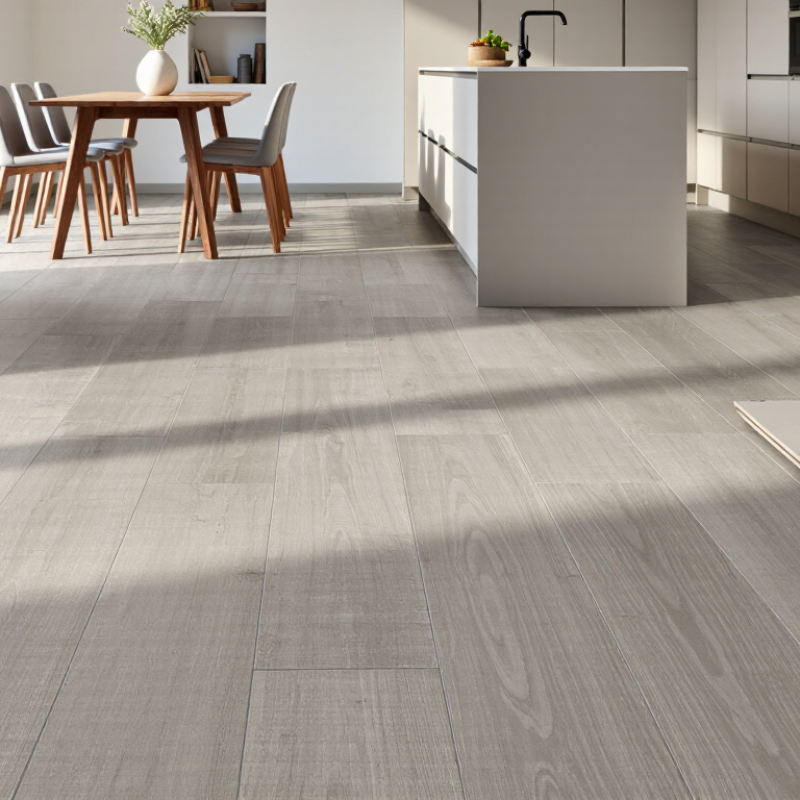
Understanding Stone-Look SPC Flooring and Its Core Components
Stone-look SPC flooring combines a printed stone image with a rigid, mineral-filled core. SPC commonly means stone polymer composite, though exact recipes vary. The core often contains limestone powder, PVC, and stabilizers. Above it, a decorative film creates the marble, slate, or concrete pattern. A transparent wear layer helps resist everyday scuffs and stains. Some products add an attached backing for sound and comfort.
Tips: Check the wear-layer thickness and the manufacturer’s care instructions. View a full plank or tile sample in daylight; small swatches can hide repeating patterns. Run your hand across the surface, too. Embossing may add texture, but it does not make the floor real stone.
The rigid core can feel stable underfoot, but it is not a cure for an uneven subfloor. A slight bump beneath a plank may show up as movement or clicking later. Water resistance also depends on more than the core: seams, edges, and room conditions matter. I still find “stone look” a broad label; two floors with similar pictures can feel very different. Check the locking profile, recommended expansion gaps, and installation limits before choosing.
Assessing Room Conditions and Performance Requirements
Before choosing stone-look SPC flooring, observe how the room behaves through a normal day. A basement may feel dry but still have moisture rising through concrete. Check the subfloor with an appropriate moisture test, and fix uneven spots before installation. Small dips can make rigid planks flex or click underfoot. That matters.
Temperature and sunlight also shape performance. A south-facing window can heat the floor for hours, while an unheated entry may see sharp seasonal changes. Compare those conditions with the flooring’s stated temperature limits and installation requirements. Do not assume every SPC product suits every wet room. Check its specifications, including edge details and approved installation areas.
Think about how people use the space. Grit near a doorway can scratch the surface, and rolling chairs can wear high-traffic areas faster. A textured finish may help disguise marks, but its look can change under strong side lighting. Take a sample home and view it beside the actual window and cabinets. I have seen samples look cooler in a showroom than in a warm kitchen. It is an imperfect test, but more useful than choosing from a screen. Also confirm underlayment compatibility; adding a soft layer without approval can affect plank stability.
Comparing Stone Patterns, Surface Textures, and Wear Ratings
How to Choose Stone Look SPC Flooring in 2026?
Compare stone patterns under the room’s actual lighting. Large marble veins can dominate a narrow hallway, while fine limestone variation often feels calmer across a larger floor. Look at full-size samples, not just screen images. A warm gray tile beside a white cabinet may read blue; lighting changes the story. Matte, lightly textured surfaces tend to soften glare and can make small marks less noticeable. Deep embossing adds tactile detail, but dust may collect in its grooves. A polished look is striking. It can also show footprints.
Wear labels need context. EN ISO 10874:2012 classifies flooring by intended use: Classes 21–23 cover domestic use, 31–34 commercial use, and 41–43 light industrial use. These classes help compare applications, but they do not guarantee equal performance across products. ASTM F3261-22 sets requirements for modular resilient flooring; ask for the product’s test documentation, including the stated wear-layer thickness and test method. A thicker layer alone is not a complete durability rating.
Tips: Carry two samples home. View them in morning and evening light, then rub each with a clean shoe sole. Check the technical sheet for use class, surface finish, and care guidance. SPC can feel firm underfoot; a quieter, softer room may need a suitable underlay approved for that floor.
Checking Product Standards, Installation Needs, and Warranty Terms
Stone-look SPC flooring can resemble slate or limestone, but the printed surface is only part of the decision. Check the product’s technical sheet and ask for current test documentation. Look for relevant information on dimensional stability, wear resistance, slip performance, and indoor emissions. Standards differ by market, so a certificate without a stated test method tells you little. Details matter. Compare the stated wear layer and total thickness with the demands of each room. A busy kitchen needs different scrutiny from a quiet guest room. I would not judge quality by a dramatic stone pattern alone; that is an easy mistake.
Installation requirements can affect performance as much as the plank itself. Confirm the subfloor’s permitted flatness and moisture levels, then check whether the instructions require acclimation, expansion gaps, or a specific underlay. Stone-look planks may feel firm underfoot, and uneven patches can become noticeable. Not every room suits a floating floor. Read warranty terms before buying: note residential or commercial limits, coverage duration, water-related exclusions, and rules for cleaning products. Keep invoices and installation records. Warranty wording can be dull, but a skipped detail may matter later. If the instructions are vague, ask the supplier for written clarification before work begins.
How to Choose Stone Look SPC Flooring in 2026
Compare example wear-layer thicknesses, then verify product standards, installation requirements, and warranty terms.
How to use this chart: The bars show example wear-layer thicknesses; mil values are conversions (1 mil = 0.0254 mm), not durability ratings. Wear-layer thickness alone does not establish overall performance. Check the product’s applicable test documentation, including whether it is specified to ASTM F3261, and follow the manufacturer’s subfloor, moisture, acclimation, and installation instructions. Before buying, read the written warranty for coverage periods, exclusions, and installation conditions—these vary by product.
Balancing Total Cost, Durability, and Design Fit in 2026
In 2026, choosing stone-look SPC flooring means weighing more than the price printed on a carton. Total cost can include underlayment, subfloor leveling, delivery, trimming, and transition strips. A low quote may leave out awkward doorway cuts or removal of old flooring. Measure each room, then allow for waste; complex layouts often need more offcuts than a simple rectangle. It adds up.
Durability depends on the installation, not just a thick-looking plank. Check the stated wear-layer thickness and product specifications, then consider your room’s moisture and traffic. SPC handles everyday spills, but standing water at seams or poor perimeter detailing can still cause trouble. A flat, clean subfloor matters. Grit near an entry can scratch the surface, so a mat and regular sweeping are practical safeguards.
Design fit is harder to measure, but it affects how settled a room feels. Compare samples beside cabinets and in both morning and evening light; cool gray stone can look blue under some LEDs. Match the pattern scale to the space: oversized veining may overwhelm a narrow hall. Looks matter. I would not assume a small sample shows the full-floor effect. Check repeat patterns, edge details, and the installer’s preparation plan before ordering.





