How to Choose Steel Prefab Buildings for Your Project?
Choosing Steel Prefab Buildings is not simply a decision about price, speed, or appearance. It is a project-specific evaluation of structural loads, site access, climate, fire performance, energy use, and long-term maintenance. A warehouse near a coastal port faces different risks from a rural workshop. Salt air can attack exposed connections, while limited road access can complicate the delivery of oversized frames.
Industry research supports prefabrication, but it also demands careful interpretation. McKinsey’s report, “Modular construction: From projects to products,” suggests that industrialized construction may reduce project schedules by 20% to 50% and lower costs by up to 20% under suitable conditions. These figures are potential outcomes, not promises. The World Steel Association’s Steel Statistical Yearbook 2024 also highlights steel’s global production scale and strong recyclability, supporting its role in durable and adaptable building systems. However, recycled content, transport distance, protective coatings, and future disassembly still affect the project’s environmental performance.
The right building begins with verified information. Compare suppliers using engineered drawings, material certificates, connection details, corrosion protection, insulation values, and documented installation procedures. Check whether the proposed system matches local codes and the site’s wind, snow, seismic, and fire requirements. A lower quotation may conceal thicker insulation needs, difficult foundations, or expensive crane access.
Small details matter. They often decide the final budget. Reflect carefully before selecting a standard package, because customization can change both schedule and structural efficiency. This guide explains how to assess Steel Prefab Buildings with practical criteria, reliable evidence, and realistic expectations.
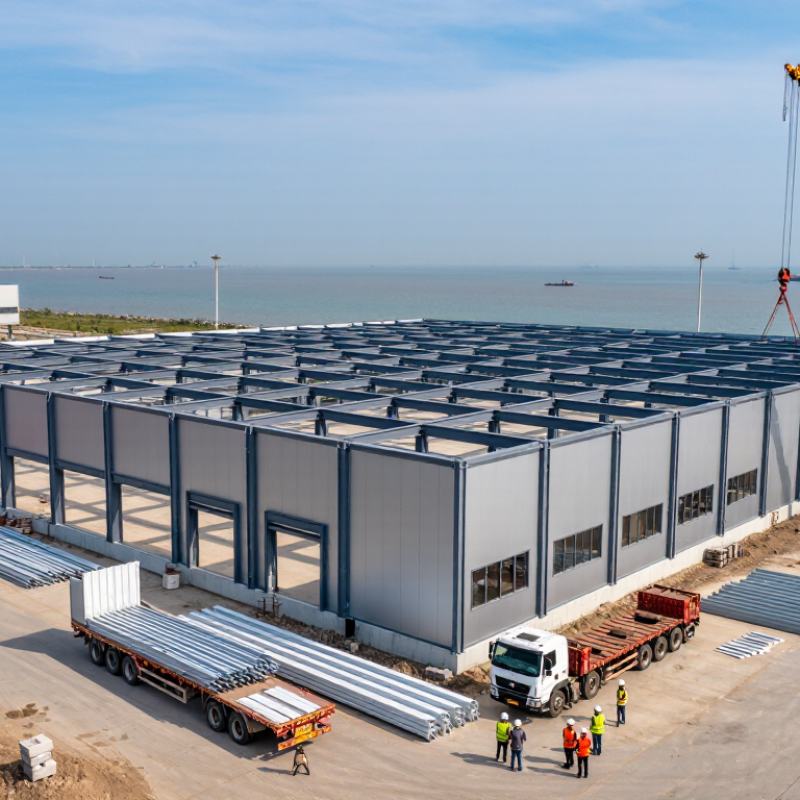
Define the Project’s Purpose, Size, and Performance Requirements
How to Choose Steel Prefab Buildings for Your Project?
A steel prefab building should begin with a clear purpose, not a catalog image. A storage warehouse needs different planning from a workshop, retail space, or site office. Record daily activities, equipment dimensions, occupancy, and possible expansion. A forklift aisle may need more width than expected. Small details matter. If employees will use the building, define lighting, ventilation, toilets, accessibility, and emergency exits before requesting prices. This practical checklist helps reveal missing allowances and supports fair comparisons between proposals.
Size involves more than floor area. Measure clear height, door openings, loading zones, internal columns, and service routes. Leave room for maintenance access. Early estimates are often wrong. A building that fits today may restrict production next year. Review the site survey, ground conditions, drainage, and delivery access with qualified professionals. These factors can influence the foundation, frame arrangement, installation schedule, and total cost.
Performance requirements should match the local climate and building use. Check design loads for wind, snow, seismic activity, suspended equipment, and stored materials. Specify insulation, condensation control, fire resistance, daylight, acoustic comfort, and corrosion protection. A warm office beside a cold warehouse needs separate envelope expectations. Ask for structural calculations, material specifications, inspection records, and clear warranty terms. One detail is easy to overlook: future replacement of panels, doors, or mechanical systems. Planning that access now can prevent expensive disruption later.
Compare Steel Building Types, Materials, and Structural Systems
Choosing a steel prefab building starts with its use, not its appearance. A warehouse needs clear spans and forklift access. An office requires insulation, daylight, and stable indoor temperatures. Agricultural buildings may need open bays and corrosion-resistant finishes. Common types include rigid-frame buildings, modular units, and light-gauge steel systems. Rigid frames suit wide spaces with few interior columns. Modular units offer faster installation but may limit future changes. Light-gauge systems work well for smaller loads and repeated room layouts. Site wind, snow, soil, and seismic conditions must guide the choice. Guessing here is expensive.
Material selection affects safety, maintenance, and service life. Hot-rolled sections provide strength for larger spans and heavy loads. Cold-formed galvanized steel is lighter and efficient for walls, roofs, and modules. Check yield strength, coating thickness, fire protection, and connection details. A qualified engineer should review load paths, not only supplier drawings. Ask for mill certificates, calculations, and inspection records. These documents make comparisons more reliable. Still, paperwork cannot replace a site visit. I have seen plans miss drainage problems beside loading doors.
Tips: Compare total installed cost, not the frame price alone. Include foundations, transport, lifting, insulation, fire protection, finishes, and future modifications. Request two or three structural options with identical design loads. Then compare span, deflection, erection time, and maintenance access. Leave room for change. A slightly stronger frame may support new equipment later, but overdesign wastes steel and money. Local code review remains essential because climate and approvals vary.
Evaluate Site Conditions, Codes, Permits, and Foundation Needs
Choosing a steel prefab building starts long before drawings reach the fabricator. Walk the site after rain, not only on a dry inspection day. Note standing water, soft soil, slope, wind exposure, and access for delivery trucks. A narrow gate can change panel sizes and lifting plans. I once treated a level-looking lot as ready. A later survey found fill near one corner. That mistake changed the foundation budget and schedule.
Local building codes govern more than snow and wind loads. Check seismic criteria, fire separation, energy performance, occupancy classification, and accessibility rules. Ask the permitting office for current requirements before selecting a standard layout. Some jurisdictions require stamped structural drawings and soil reports. Others request drainage plans or traffic controls. Keep written answers. Verbal guidance can be misunderstood, especially when staff or project details change.
Foundation design must match actual soil behavior, building loads, and frost depth. A slab may suit stable, well-drained ground, while piers or reinforced footings may fit sloped sites. Confirm anchor-bolt locations against the steel drawings before concrete placement. Small errors become expensive when columns arrive. Include utility penetrations early. I recommend allowing modest contingency for excavation surprises. My early estimates were too confident; soil is rarely as predictable as a spreadsheet suggests. Review the plan with a qualified engineer and local officials.
Review Installation, Maintenance, Expansion, and Long-Term Value
How to Choose Steel Prefab Buildings for Your Project?
Choose a steel prefab building by reviewing its entire service life, not only its purchase price. Installation quality begins with accurate surveys, level foundations, and clear connection drawings. A small anchor-bolt error can delay crane work and create expensive field modifications. Ask for erection sequencing, tolerance limits, and inspection records before signing. The 2023 UNEP Global Status Report states that buildings and construction consumed about 34% of global energy. Therefore, specify insulated panels, thermal breaks, and airtight doors early. These details influence operating costs more than a slightly cheaper frame.
Maintenance should remain practical after handover. Request corrosion protection suited to local humidity, salt, chemicals, and temperature changes. Check roof fasteners, sealants, gutters, and panel joints on a documented schedule. The U.S. Energy Information Administration’s 2018 CBECS found space heating represented 32% of commercial building energy use. Poor insulation can quietly erase expected savings. Expansion also needs planning. Reserve clear structural zones, accessible utilities, and spare electrical capacity. A building that cannot grow may become a costly obstacle.
Tips: Compare maintenance access, not just steel thickness. Ask how replacement panels are sourced. Review a ten-year repair budget. Leave room for imperfect forecasts; business needs often change faster than drawings. In my view, the weakest decision is promising “maintenance-free” performance. Steel is durable, but drainage, coatings, and workmanship still require attention. Use lifecycle cost analysis, supported by EIA energy data and UNEP emissions guidance, before approving the final layout.
How to Choose Steel Prefab Buildings for Your Project?
Steel prefab buildings are commonly evaluated by installation speed, maintenance requirements, future expansion, and service life. The chart shows representative planning benchmarks for early-stage project comparison; actual results depend on design, climate, site conditions, materials, and construction standards.
Benchmark interpretation: installation may be approximately 30–50% faster than conventional on-site construction; routine maintenance is often planned at about 1–2% of replacement value annually; modular extensions may be completed in roughly 4–8 weeks after design approval; properly protected steel structures commonly target a service life of 50 years or more.





