How to Choose Soundproof Aluminum Folding Doors in 2026?
Choosing Soundproof aluminum folding doors in 2026 requires more than comparing product photographs or promising acoustic ratings. The real question is practical: how will the door perform when traffic passes outside, children speak nearby, or wind presses against the panels? Dr. Lily Wang, an architectural acoustics specialist, offers a useful reminder: “A door is only as quiet as its weakest edge.” That principle should guide every decision.
Soundproof aluminum folding doors combine slim frames, movable panels, acoustic glass, compression seals, and folding hardware. Each element matters. A high STC or Rw rating may look impressive, yet poor installation can create a narrow sound path around the frame. Check tested assemblies, not isolated glass performance. Look for continuous gaskets, strong corner joints, stable rollers, and carefully sealed thresholds. Touch the seals. Watch the panels close. Small gaps are not small acoustically.
Room use also changes the right choice. A home office may need speech reduction, while a hotel lounge may need stronger control of music and street noise. Ask about laboratory testing, field installation, maintenance, and replacement parts. Do not trust vague terms like “maximum silence.” They sound attractive. They are not measurements.
Budget deserves honesty. The quietest folding system may demand heavier glass, reinforced tracks, and skilled fitting. That can increase cost and reduce opening speed. A compromise may be necessary. In 2026, the best choice will balance acoustic evidence, energy performance, durability, and daily convenience. It should close smoothly, seal consistently, and remain reliable after thousands of movements. Perfect silence is unlikely. Measurable improvement is realistic.
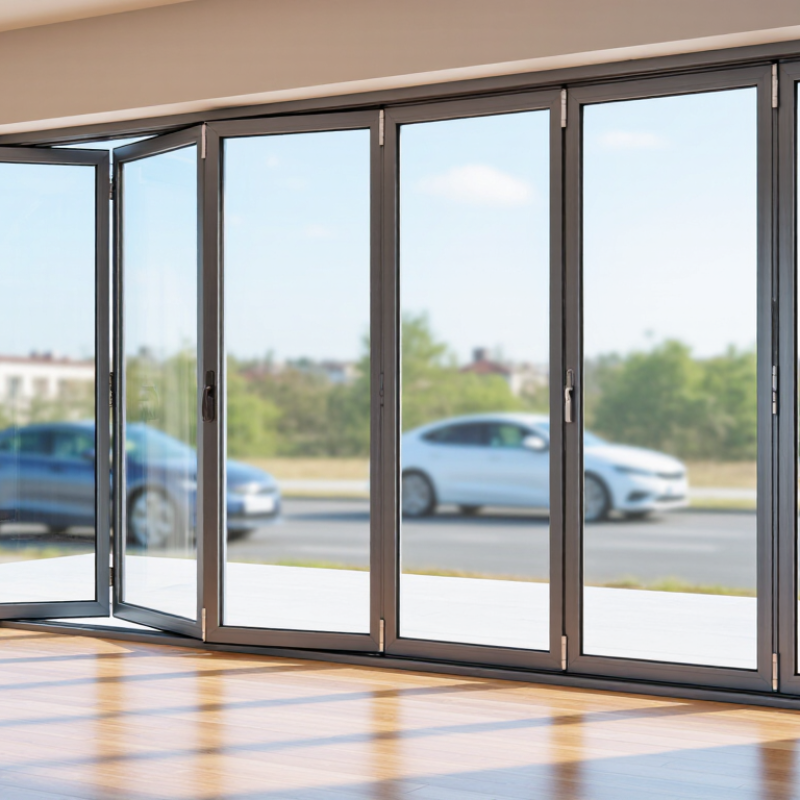
What Soundproof Aluminum Folding Doors Are and How They Work
An aluminum folding door is a connected acoustic system, not just a metal frame. Its panels fold on hinges and slide along a track, creating a wide opening. Sound travels through weak points, especially glass, meeting rails, gaps, and the threshold. The aluminum frame mainly provides stiffness and accurate panel alignment.
Acoustic performance depends on mass, airtightness, and separation. Laminated glass uses a flexible interlayer to reduce vibration. Multiple compression seals close the narrow lines between panels. Interlocking stiles limit direct air paths, while a thermally broken frame can reduce vibration transfer. The floor track also matters. A small uneven section may leave a visible acoustic leak.
The World Health Organization’s Environmental Noise Guidelines for the European Region (2018) recommend keeping nighttime indoor noise below 30 dB for bedrooms. This target is demanding. ASTM E90 measures airborne sound transmission in laboratories, while ASTM E413 converts results into an STC rating. A higher STC generally indicates better insulation, but it does not mean the door blocks every sound. A laboratory rating may also differ from field performance.
For example, a busy street produces low-frequency traffic noise, while voices contain stronger mid-frequency energy. The same door may handle these sounds differently. Ask for tested data for the complete assembly, including glass, seals, frame, and installation. An impressive glass rating alone can mislead. Even experienced installers sometimes underestimate the threshold.
How to Choose Soundproof Aluminum Folding Doors in 2026?
Soundproof aluminum folding doors reduce airborne noise through a combination of sealed joints, rigid aluminum frames, laminated or insulated glazing, and multiple locking points. The chart shows representative sound transmission loss values across common octave-band frequencies. Higher values indicate better noise reduction.
These reference values reflect typical acoustic behavior of common glazing and door constructions. Actual results depend on frame design, seals, installation quality, glass thickness, air gaps, and laboratory testing under standards such as ISO 10140 and ISO 717-1.
Key Soundproofing and Aluminum Door Specifications to Compare
Choosing soundproof aluminum folding doors requires more than checking glass thickness. Compare the complete door assembly, including panels, seals, hinges, tracks, and installation joints. ISO 10140 defines laboratory methods for measuring airborne sound insulation, while field results can differ significantly. A door with impressive laboratory numbers can still leak sound through installation gaps.
Look for tested Rw or STC ratings, but do not treat them as identical. Rw is commonly used under ISO standards, while STC follows ASTM methods. Compare the same rating system. The World Health Organization recommends indoor bedroom noise below 30 dB LAeq for good sleep. This target gives buyers a practical reference, not a guaranteed door result. Check the acoustic report, test conditions, panel thickness, glazing type, and frame configuration. Aluminum improves structural stability, but thin frames may transmit vibration unless they include thermal breaks and dense seals.
Tips: Request a full-size test report, not only a product brochure. Inspect the bottom track carefully. Even a small gap can weaken performance. Ask how the folding panels meet at the center. That junction is often overlooked. Consider wind pressure, water drainage, and daily cycle testing too. Acoustic performance may decline when seals harden or tracks become misaligned. This is where many specifications look perfect, yet real rooms sound disappointing.
How to Evaluate Acoustic Ratings, Glass, Seals, and Door Frames
How to Choose Soundproof Aluminum Folding Doors in 2026?
Soundproof aluminum folding doors should be judged by tested performance, not marketing language. Check the acoustic rating, such as STC or Rw, and request a complete laboratory report. Higher numbers usually indicate better sound reduction, but installation can change the result. A door with excellent glass may perform poorly when its panels do not close evenly. In 2026, compare current test methods and local building requirements carefully.
Glass thickness, laminated layers, and air gaps affect acoustic control. Ordinary double glazing may not block traffic noise effectively. Laminated acoustic glass often performs better, especially against voices and sharp outdoor sounds. The seals deserve equal attention. Look for continuous compression seals around every panel and at the meeting joints. Tiny gaps can become audible paths. They can also admit dust and drafts.
Tips: Test a sample corner before ordering. Close the panels slowly and inspect the seals with a thin paper strip. If the paper slides freely, compression may be weak. Ask how the frame is fixed to the wall, because movement can reduce long-term performance. Aluminum frames should remain rigid, but oversized folding systems may still flex under repeated use. Do not rely on one impressive rating. The final result depends on glass, seals, frame geometry, wall construction, and workmanship. Some specifications sound convincing, yet real rooms may reveal compromises. Reflect on the noise source before choosing the highest number.
How to Choose the Right Folding Door Size, Configuration, and Operation
How to Choose Soundproof Aluminum Folding Doors in 2026?
Choosing a soundproof aluminum folding door starts with the opening, not the product catalog. Measure width, height, and wall plumb at three points. Record the smallest measurement. This prevents binding after installation. Allow extra clearance for floor finishes, handles, and stacked panels. A 3.6-meter opening may need four panels, while a narrow opening may work better with two larger panels. Panel width affects weight, movement, and the amount of sound leakage between joints.
Configuration should match the room’s daily use. An even split offers balanced access, while an asymmetrical layout creates a wider active passage. Decide whether panels stack left, right, or on both sides. Check furniture, curtains, and nearby walls before choosing the stacking direction. Top-hung systems can provide smoother floors, but they require a strong overhead structure. Bottom-rolling systems may suit heavier panels, although the track needs frequent cleaning. Small debris matters.
Operation depends on seals and hardware, not aluminum alone. Look for continuous compression gaskets, adjustable rollers, secure multipoint locks, and a threshold suited to the room. Ask for tested acoustic data, installation conditions, and the frequency range measured. A high laboratory rating may fall in a room with poor wall joints or an uneven floor. That detail is often overlooked. In practice, careful installation can matter as much as the door specification. Recheck measurements before ordering; one missed millimeter can become an expensive correction.
How to Check Installation Quality, Maintenance Needs, and Long-Term Value
How to Choose Soundproof Aluminum Folding Doors in 2026?
How to Check Installation Quality, Maintenance Needs, and Long-Term Value
A high acoustic rating means little if the installation leaves a 3-millimeter gap. Check the frame with a flashlight, then inspect corner joints, floor tracks, and compression seals. The installer should provide laboratory test results based on ISO 10140 or ASTM E90, not vague claims such as “maximum soundproofing.” Field performance can be lower. That gap is easy to miss.
Use the WHO Environmental Noise Guidelines for Europe as a practical reference. They recommend less than 45 dB Lnight for road traffic noise. A door alone cannot guarantee this indoor level, because walls, ceilings, and ventilation also transmit sound. Ask for the complete assembly’s tested Rw or STC value. Hinges should move smoothly, panels should align evenly, and locking points must compress seals without excessive force.
Tips: Record the door’s acoustic rating, glass specification, seal type, and installation date. Test the closed door during nearby traffic hours. Listen near every corner. Clean tracks monthly and replace damaged seals promptly. Avoid spraying oil into drainage channels. Aluminum needs little corrosion care, but blocked tracks can overload rollers. The IEA Buildings 2023 report states that buildings use about 30% of global energy demand. Better sealing may reduce drafts and heating losses, although actual savings depend on climate and operation. Do not judge long-term value by price alone; include repairs, replacement seals, hardware access, and warranty response. A beautiful door can still be a costly mistake.





