


Why Choose Socket Weld Stub Ends for Industrial Piping?

Industrial piping choices are rarely decided by fitting price alone. Reliability, access, pressure class, material compatibility, and weld quality all shape the decision. The International Energy Agency’s World Energy Investment 2024 report estimated global energy investment at about $3.1 trillion for that year. That scale of infrastructure spending underscores the value of dependable components, though it does not prove one fitting type is superior.

A Socket Weld Stub End provides a socket connection for pipe attachment, but its suitability depends on the service and design. ASME B16.11 covers forged socket-welding fittings, while ASME B31.3 sets requirements for process piping design, fabrication, inspection, and testing. These standards offer a sound starting point; engineers still need to verify dimensions, materials, pressure-temperature limits, and project specifications. Fit matters. So does workmanship.

This article examines why industrial teams may choose socket-weld connections, where their compact geometry can help, and what installation details deserve close attention. Deloitte’s 2025 Engineering and Construction Industry Outlook discusses continuing cost and productivity pressures across the sector—factors that make maintainability and fabrication quality practical concerns. Still, a socket-weld option is not automatically the best one. Service conditions, inspection access, and the consequences of a weld defect require honest review before selection.
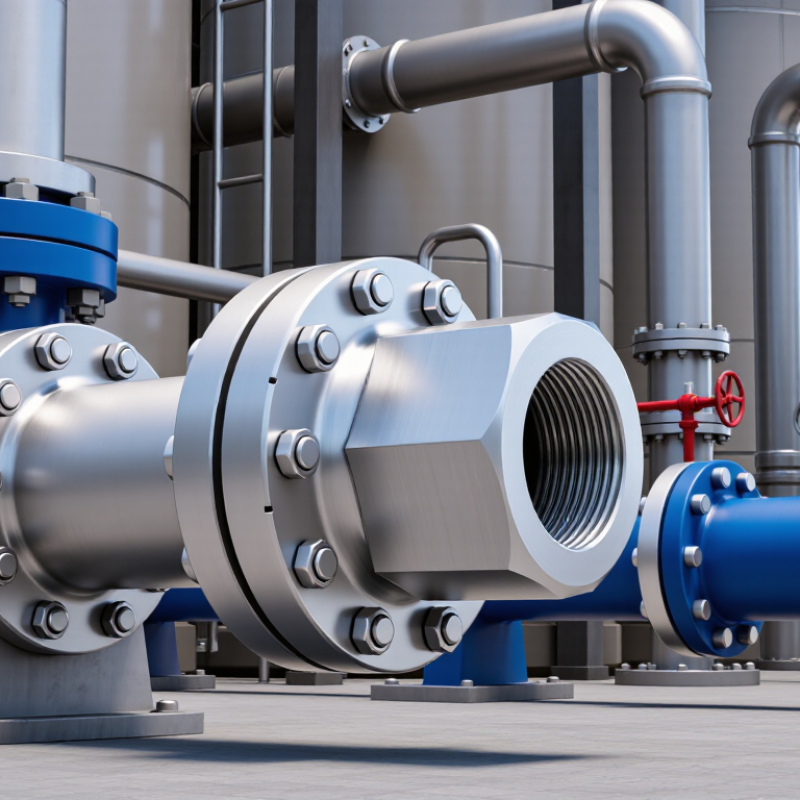
Why Choose Socket Weld Stub Ends for Industrial Piping?

What Is a Socket Weld Stub End?

A socket weld stub end is a short pipe fitting with a recessed socket at one end. The pipe slips into this pocket, which helps align the parts before welding. A fillet weld is then made around the outside edge. It is commonly used on smaller-bore piping where a compact, rigid connection is needed.

Small details matter.

The pipe should not be pushed hard against the socket bottom; a slight gap allows room for heat-related expansion during welding. The required gap and weld dimensions depend on the applicable design rules and fitting specifications. Check the pipe schedule, fitting bore, material, and service conditions before installation. A mismatch can leave an internal step that disrupts flow or creates a spot where residue collects.

The name can cause confusion.

“Stub end” often refers to a different fitting used with a lap-joint flange, while “socket weld” describes a specific pipe connection. In practice, terminology may vary between suppliers and drawings. Confirm the fitting’s shape and dimensions rather than relying on its label alone. The connection is strong, but it is not easy to dismantle. Weld access and inspection deserve attention, especially in tight spaces.


How Is a Socket Weld Stub End Designed?

A socket-weld stub end is designed around the pipe bore, socket depth, and weld access. The pipe enters the socket, leaving room for a fillet weld around the joint. A small root gap helps reduce thermal-expansion stress, but it must be controlled during fit-up. Too little clearance can cause poor penetration. Too much can weaken the connection.

ASME B16.11 covers standard forged socket-weld fittings from NPS 1/8 through NPS 4. That range is useful when selecting a fitting, but it does not automatically define every custom stub-end geometry. Designers should check the specified pressure class, material, wall thickness, and end dimensions against the project piping requirements.

ASME B31.3 provides process-piping design rules for evaluating pressure and service conditions. Details matter.

In practice, the stub end should align cleanly with the mating pipe, without forcing the parts together. A mismatch can create uneven weld thickness or leave a hard-to-inspect crevice.

One design compromise is compactness: a short socket saves space, yet can make welding and inspection less forgiving.

I would verify the actual fit-up on a sample assembly, especially when pipe tolerances vary. A drawing alone may not reveal the problem.

How Does It Connect to Industrial Piping?

A socket-weld stub end connects by receiving the plain end of a pipe inside its recessed socket. The installer checks alignment and insertion depth, then applies an external fillet weld around the joint. The fit should be clean and square. Small errors matter.

ASME B31.3, paragraph 328.5.2, calls for withdrawing the pipe about 1/16 inch (1.5 mm) from the socket shoulder before welding. This small clearance helps prevent the pipe from bottoming out as heat is applied. It is easy to overlook during fit-up, especially in a crowded rack. ASME B16.11 lists socket-welding fitting classes 3000, 6000, and 9000; these class labels are not standalone pressure ratings. Confirm suitability against material, size, temperature, and the piping design conditions. A qualified welder should follow the approved welding procedure, while inspection checks the weld profile and alignment before the line enters service. The joint is compact, but access for inspection can be awkward.

Where Are Socket Weld Stub Ends Commonly Used?

Why Choose Socket Weld Stub Ends for Industrial Piping?

Where Are Socket Weld Stub Ends Commonly Used?

Socket-weld stub ends are commonly specified for small-bore process lines, utility piping, and equipment connections. You may find them around pumps, compressors, instrument takeoffs, and compact pipe racks. Their socket connection lets the pipe fit into the fitting before welding, which can help maintain alignment in tight spaces. They suit services such as water, oil, and steam when the fitting material, pressure rating, and temperature range match the system design. Details matter.

Tips: Check the piping drawings and applicable specifications before ordering. “Stub end” can also refer to a lap-joint component, which works differently. Confirm the end connection, dimensions, material, and pressure class; do not rely on the name alone.

For maintenance teams, socket-weld connections can be practical where small pipes need a compact welded joint and frequent flange access is not required. They are less suitable when routine disassembly is important, since removal involves cutting the weld. Also consider inspection and service conditions: trapped crevices may be a concern in some corrosive or cyclic applications. A fitting that works well on a steady utility line may not be the right choice for every process line. Verify the design with qualified piping personnel.

What Factors Guide Stub End Selection?

Socket weld stub end selection starts with the pipe, not the fitting catalog. Confirm the pipe’s outside diameter, wall schedule, and bore match the stub end. Even a small mismatch can create a poor fit or restrict flow. Check the design pressure and temperature too. A compact connection is useful, but it must suit the operating conditions.

Material compatibility matters. Compare the stub end alloy with the pipe and process fluid, especially where corrosion or temperature cycling is expected. Review the applicable project specifications and dimensions before ordering. In the field, allow enough clearance for the socket weld, inspection, and later maintenance. Vibration and piping loads deserve attention as well; a neat joint can still be poorly supported. Keep weld quality in view. Socket depth, insertion gap, and weld access affect the finished connection. There is no universal pick. One detail is easy to miss: confirm requirements with the responsible piping engineer, because service conditions and local specifications vary. A final drawing check may feel repetitive, but it can catch a schedule or material mismatch before installation.

Why Choose Socket Weld Stub Ends? Key Material Selection Factor

Thermal expansion can affect piping stress as temperatures change. This chart compares typical linear thermal expansion coefficients near room temperature; actual values vary with alloy composition and temperature.

Selection note: Check pressure and temperature ratings, material compatibility, corrosion conditions, pipe dimensions, and applicable code requirements. Stub ends are generally butt-weld components used with lap-joint flanges; socket-weld connections are typically made with socket-weld fittings. Confirm the required connection type before specifying components.

Article Source:

Powder Coat Booths

For those larger-sized parts, or smaller quantity runs, we have 2 independent powder coat booths and ovens. The quality, durability and affordability of today’s powder coating finishes make this the process of choice for world-class companies.

Powder coating advantages over other forms of coating are many. Materials used in the Powder coating process can be metals and non-metals that come in a multitude of thicknesses, textures, colors, etc. Another of Powder coating’s biggest advantages over conventional coatings is its ability to create finishes in many different textures. Powder Coating Booths allow us the ability to apply these advantages to large products.

Wet Paint Line

Tri-State Fabricators runs a full-service conveyor line for painting. Wet painting can provide protection or decoration to many different part styles. From start to finish, every project is easier to undergo random and point-based inspection by our skilled painting team.

Advantages to our Wet Paint Line are these lines start with product prep and ends with a thorough inspection of a high quality finished product. Our ability to complete large and small projects with a superior finish and doing so in a timely and economical fashion. This passes along the savings in production to our customers. When powder coating ins not an option, our Wet Paint Line gets the job done right the first time.

Wet Paint Booths

When the parts get big and heavy we roll-out our custom paint racks and oversize booth. By utilizing our partnerships with all the major paint brands, we can match virtually any color with wet paint.

The advantages of having access to a Wet Paint Booth are many. Large projects of many different shapes can be loaded into the booth. The Wet Paint Booth offers an environment that is much more controlled than a typical parts painting operation.

Not only are they used because of their controlled environment, but they’re are also advantageous when it comes to applying paint to parts that are needed in industries that require specialty coatings such as medical, aerospace, etc.

Military CARC

Our military forces have some very high standards when it comes to the finish of their vehicles and equipment. From the first pre-treatment step to final coat, it takes a great deal of knowledge and experience to protect the men and women of our armed forces. They deserve only the best, and Tri-State Fabricators provides it.

All of our processes are closely monitored by our staff and management teams. Both of which are highly trained in the processes of metal fabrication and finishing. Tri-State Fabricators’ goal is to always fully satisfy each and every customer, including the military. We will always put a 110% into what we do.

Glass-Bead Blasting

Abrasive media blasting is an excellent way to remove old paint, rust, and increase the paint/powder adhesion. Glass beads produce a much smoother and brighter finish than angular abrasives; leaving the part clean yet without any dimensional change. Chemically inert and environmentally friendly, we can recycle our beads approximately 30 times; making them a more preferred method of metal cleaning or surface finishing.

Advantages to Glass Bead Blasting are many. Glass bead blast media is used when a project is needing rough surfaces need to become smooth for applications of coatings such as paint. It is typically used to clean paint and rust from a product surface without deforming the surface it is being used on. Overall, compared to many other blasting media, Glass Bead Blasting is a very economical choice and those savings are always passed on to our customers.

Part Washing

Tri-State Fabricators utilize a zinc phosphate wash to clean and etch the material to ensure the best paint adhesion possible. The unique design of our 3-stage wash system does the work like a 5-stage. From Cleaning and rinsing to conversion coating and post-treatment, Our Part Washing process is a complete service and works throughout the fabrication service and the finishing service.

Along with the previously mentioned benefits, Curing is a vital chemical reaction that leaves the product finish hard and relatively safe from mild abrasion and aggressive corrosion. This process can be done in more than one way; ambient air-dry or in curing ovens at temps that exceed 240°.

Burn-Off Oven

From fixing paint mistakes (someone else’s of course) to simply cleaning our paint line hooks, our burn-off oven is put to good use. After a quick burn-off, a little clean up, and a fresh coat of paint, your parts will look better than new.

Why does our Burn-Off Oven work so well? Because super heating the air around parts turns the materials into ashes. From paint and powder coatings to rubber and machining oils, high temps do the job without degrading the integrity of the part.

Masking

Masking is a vital part of producing high quality products. We have die-cut masking patterns to protect machined surfaces as well as a wide range of plugs and caps to protect threaded holes and bolts. We provide permanent and temporary masking.

Masking allows the selected sections of a product to be protected from a fabrication or finishing service. This can be with both chemicals when etching and tapes, paints when only finishing just a section of the product. Masking is great in aiding the customization process of a project.

Screen Printing

Screen printing is a photographic process that transfers artwork onto a porous nylon screen which allows colored ink to flow through the screen and be deposited on an aluminum or plastic component. We can generally have just about any design created onto a screen for your parts.

Some of the advantages of Screen Printing are, brand recognition for your business displaying on your products, assembly instructions, product warnings/hazards, etc. Tri-State Fabricators produces Screen Printing of the highest quality so you know it’s durable.

Metal Finishing

Metal Finishing is the art of treating the exterior portion of product, often metal but can also be made of other materials, so that the surface is clean and free of any debris. Then the process of applying coats or either paint of powder coat takes place. This coating process improves the quality of the product in both appearance and resistance to wear and corrosion.

Tri-State Fabricators, Inc., understands that a project typically isn’t complete until a high-quality finish has been added to your product. This is why our painting and powder coating teams continuously inspect the products throughout the Metal Finishing process.
