How to Choose Silicon Carbide Balls for Global Sourcing?
Choosing Silicon Carbide Balls for global sourcing requires more than comparing catalog prices. The right decision begins with the application. A kiln support system, pump seal, grinding mill, or laboratory reactor may require different grades, dimensions, and surface finishes.
Dr. John Palmour, a recognized silicon-carbide technology expert, has emphasized, “The value of silicon carbide comes from its combination of properties.” That principle matters during supplier evaluation. High hardness alone is not enough. Buyers should review silicon carbide purity, bulk density, open porosity, crushing strength, dimensional tolerance, and thermal stability. A ball with a polished surface may suit precision equipment, while a rougher grade may perform better in abrasive processing.
Small details matter.
Ask for a technical data sheet, inspection report, certificate of analysis, and representative samples. Check whether the stated diameter matches actual measurements from several production batches. Examine packaging carefully. Broken corners, mixed sizes, or visible dust may reveal weak handling controls before shipment.
Global sourcing also requires practical verification. Review production capacity, minimum order quantities, lead times, export experience, and agreed delivery terms. An attractive quotation can become expensive after repacking, testing, transport, and rejected material.
There is no perfect supplier search. I would not assume that a large factory always offers better consistency. A smaller producer may provide closer technical communication, but its backup capacity could be limited. Compare evidence, not promises. This guide explains how to assess Silicon Carbide Balls systematically, reduce avoidable purchasing risks, and select a supplier that can support repeatable quality across international orders.
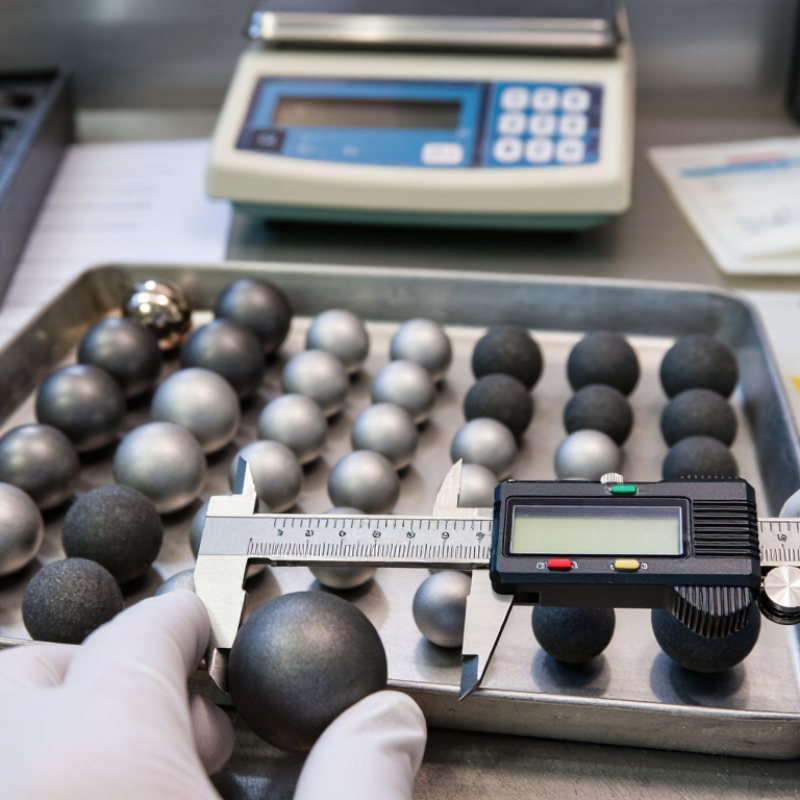
Define the Performance Requirements for Silicon Carbide Balls
Performance requirements should be written before comparing global suppliers. For silicon carbide balls, define service temperature, load, speed, fluid chemistry, and contamination limits. Start with failure risk. ISO 3290-2 lists ceramic ball grades from G3 to G1000, creating a practical roundness framework. Choose the grade from measured runout needs, not a catalog default. For a high-temperature seal, thermal shock resistance may matter more than visual polish. That distinction is often missed.
Material data must be equally specific. Request SiC purity, density, open porosity, hardness, fracture toughness, and surface roughness, each linked to a test method. The 2024 USGS Mineral Commodity Summaries estimated global silicon carbide production at about 2.9 million metric tons in 2023. That large bulk figure does not prove ball consistency. Powder origin and forming methods can change pores, inclusions, and final strength. Ask for batch-level certificates, not only generic datasheets. Include sample inspection. Measure diameter variation, sphericity, roughness, and crush strength on retained samples.
Global sourcing needs acceptance rules that survive distance. Specify sampling frequency, packaging, lot traceability, and retest rights before purchasing. ISO 3290-2 can structure dimensional grades, but it cannot replace application testing. Pilot tests should reproduce pressure, temperature cycling, lubricant, and duty hours. One uncomfortable truth remains: a harder ball is not always safer. Excessive brittleness can turn small defects into sudden damage. Review the specification after testing; the first version may be wrong.
Compare Silicon Carbide Ball Grades and Material Properties
Silicon carbide balls differ sharply by grade, density, porosity, and manufacturing route. Pressureless-sintered SiC usually offers high purity and strong wear resistance. Reaction-bonded grades contain residual silicon, often near 10–20%. This can reduce chemical resistance in aggressive environments. Hot-pressed SiC provides very low porosity, but costs more and may limit large-volume sourcing.
The ASM Handbook, Volume 4A, lists SiC density near 3.1–3.2 g/cm³ and Mohs hardness around 9–9.5. Reported thermal conductivity commonly ranges from 80 to over 200 W/m·K, depending on microstructure and purity. These figures matter when balls face heat, abrasion, or sudden temperature changes. For pump seals or grinding systems, I would request density, open-porosity, hardness, crushing-load, and dimensional data for every batch. ASTM C20-style absorption testing can help expose hidden porosity. Small gaps matter.
The U.S. Department of Energy’s 2023 advanced-materials assessments identify SiC’s high-temperature stability and low wear as major industrial advantages. However, a higher purity grade is not automatically better. Reaction-bonded balls may be adequate for moderate wear and lower budgets. High-purity sintered balls suit corrosive or electrically sensitive service more reliably. Global buyers should compare mill certificates, inspection methods, tolerance limits, and packaging controls. I would also verify thermal-shock performance under the actual process cycle. Laboratory values can mislead. Surface damage during transport remains an overlooked sourcing risk.
Evaluate Suppliers, Quality Standards, and Global Certifications
How to Choose Silicon Carbide Balls for Global Sourcing?
Evaluate Suppliers, Quality Standards, and Global Certifications
Choosing silicon carbide balls begins with measurable performance, not attractive product photos. Request data for purity, diameter tolerance, sphericity, density, porosity, and crushing strength. A reliable supplier should explain its testing methods and provide recent batch records. Ask for samples from the same production line used for regular orders. Samples matter.
During supplier evaluation, review quality procedures, equipment maintenance, and operator training. Check whether each batch has a traceable lot number, inspection report, and certificate of analysis. Independent testing can verify chemical composition through XRF or ICP analysis. Dimensional checks may require optical measurement or calibrated gauges. Do not guess. A polished certificate means little if its issuing laboratory, test date, or scope remains unclear.
Global certifications require careful reading. Confirm the certificate’s registration number, validity period, covered facility, and applicable standard. ISO 9001 can indicate controlled processes, but it does not guarantee perfect silicon carbide balls. Environmental and material declarations may support regional purchasing requirements, depending on the destination market. Ask suppliers how they manage nonconforming products, corrective actions, packaging, and moisture protection during transport. I have seen complete documents fail to explain basic production limits. That gap deserves attention. Keep records. Recheck critical specifications when changing lots, factories, or shipping routes.
Verify Pricing, Packaging, Shipping, and Import Requirements
Choosing silicon carbide balls for global sourcing requires more than comparing unit prices. Ask suppliers for ball diameter, tolerance, density, purity, hardness, and crush strength. Request a recent certificate of analysis and a small production sample. A low quotation may hide sorting fees, testing charges, or high rejection rates. I have seen “competitive” offers change after these details appeared.
Packaging affects both cost and performance. Confirm the quantity per inner bag, carton weight, pallet layout, and moisture protection. Hard ceramic balls can damage cartons when containers shift during ocean transport. Use sealed bags, cushioning, and visible lot numbers. Include product size and batch details on every package. Small labels matter.
Shipping terms must identify who pays freight, insurance, customs handling, and destination charges. Compare the landed cost, not only the factory price. Ask for the estimated transit time, port options, and documents supplied before dispatch. Import requirements may vary by country and product application. Verify tariff classification, origin documents, testing records, and labeling rules with a qualified customs broker. Do not assume the supplier knows your local process. A missing document can hold a shipment for days. Build extra time into the purchase plan, because my earlier schedules were too optimistic. Samples should also travel in their final packaging, when possible. That test may reveal weak seals, broken cartons, or confusing marks before a full order moves.
How to Choose Silicon Carbide Balls for Global Sourcing?
Verify pricing, packaging, shipping weight, and import requirements before comparing supplier quotations.
The chart estimates the net mass of 100 dense, solid silicon carbide balls at common diameters. Calculations use a theoretical SiC density of 3.21 g/cm³ and exclude packaging, void space, pallets, and moisture. Use the result to check whether a quoted price is based on pieces, kilograms, or metric tons, and to estimate freight weight.
Before placing an order, confirm ball diameter tolerance, grade and purity, actual bulk density, inner and outer packaging, Incoterms, freight dimensions, commercial invoice, packing list, certificate of origin, safety documentation, and the applicable customs classification. HS 2849.20 is commonly associated with silicon carbide, but the final classification and import taxes should be confirmed with the destination-country customs authority or a licensed broker.





